Deadline’s 2026 Contenders Film Portrait Studio puts portraiture at the center of the conversation around movies. The title identifies a portrait feature, rather than a film whose story can be reviewed. Its appeal nevertheless raises a question that belongs at the heart of film criticism: what happens when we look at a performer’s face and believe we already understand the person behind it?
A portrait offers the pleasure of concentrated attention. A performance asks us to sustain that attention as circumstances change. For movie lovers, the distinction matters. The face that attracts us to a film may become most interesting when the character does something that unsettles our first impression.
This is spoiler-free commentary on portraiture and screen performance. It does not assess individual photographs in the feature or attribute attendance, roles, or quotations to particular participants.
The Portrait Gives Us Time to Look
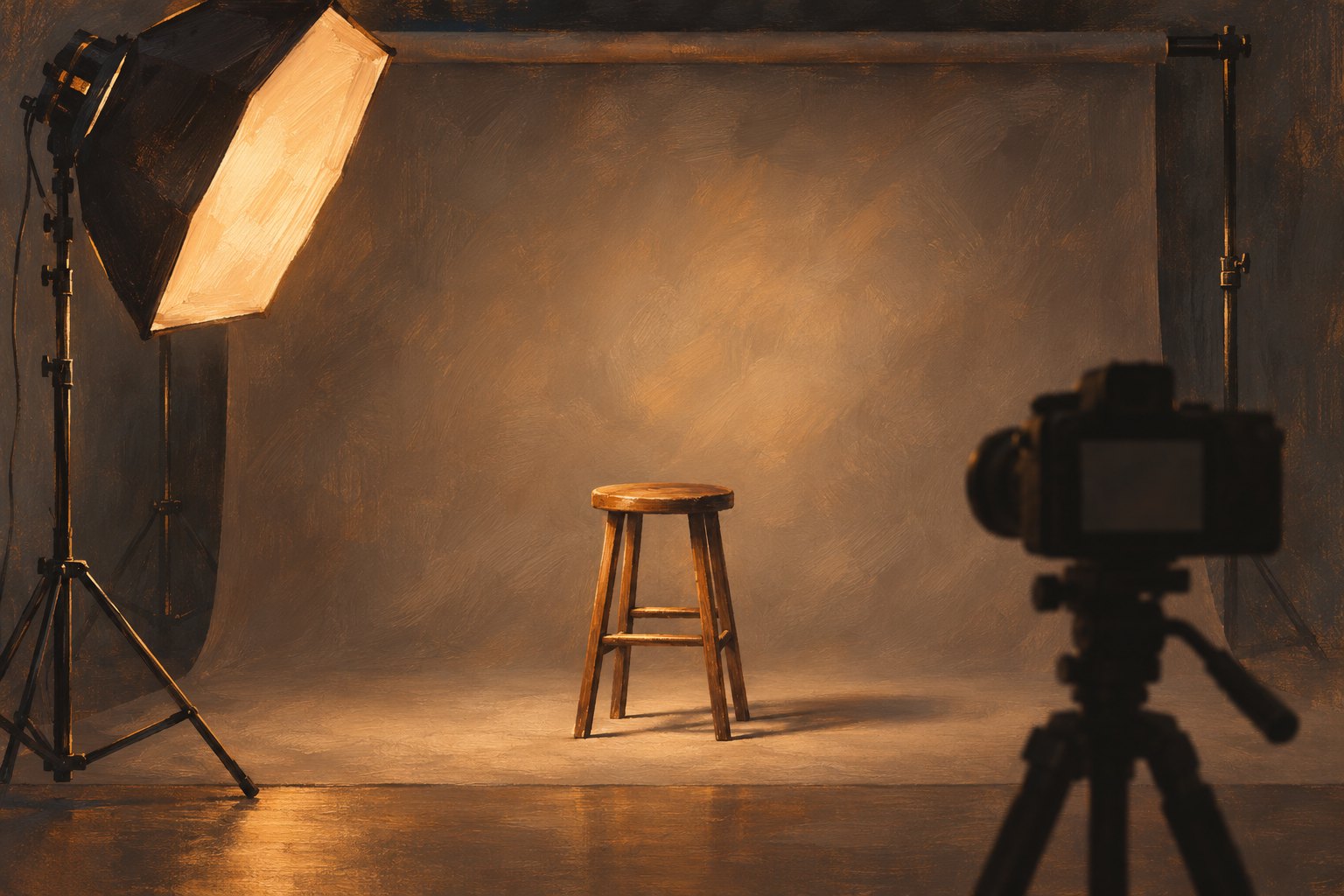
Movie publicity often moves quickly: a trailer cuts between dramatic moments, an interview produces a short answer, and a poster compresses an entire story into one image. A studio portrait offers a different invitation. Stay with this face. Notice the eyes, the posture, the relationship between the subject and the space around them.
That can be a worthwhile pleasure in itself. Portrait photography has its own expressive tools. Framing can make a subject seem enclosed or expansive. Lighting can emphasize texture or soften it. The distance between camera and subject changes the viewer’s sense of intimacy. None of these choices needs to reveal a private truth to create an affecting image.
The critical mistake comes when an impression hardens into a claim. A solemn expression does not establish seriousness as an artist. An easy smile does not prove an easy working relationship. Even a seemingly unguarded moment remains a moment selected for presentation. We can describe how an image strikes us without pretending that it gives us access to someone’s inner life.
A Public Face Is Not a Character’s Point of View
The portrait-studio setting makes an actor available to be seen as a recognizable individual. A film can ask that same actor to become legible in a very different way: through what a character wants, fears, misunderstands, or refuses to admit.
Watching from a character’s perspective begins with the information available to that character. What do they know when they enter a room? What are they hoping the other person will say? What would count as a defeat? These questions bring a performance into focus more reliably than deciding whether the actor looks transformed.
Consider a hypothetical scene in which someone waits for an apology. A steady gaze might initially suggest confidence. As the conversation continues, that same stillness might begin to look like effort: the character is struggling to avoid revealing disappointment. The dramatic achievement lies in the change in our understanding, even if the actor barely moves.
A portrait can suggest several possible stories. A movie gives those possibilities consequences. This is why our retrospective on the American Pie ensemble and their defining roles treats performers’ careers and fictional characters as related subjects that still require separate attention.
What Happens Between Expressions
A striking still can preserve the visible result of an emotion. Screen acting often becomes compelling in the interval before that result: a delayed answer, an interrupted gesture, a breath taken and then held. The audience watches someone decide how much to reveal.
Those intervals also complicate the familiar division between large and restrained performances. A quiet expression is not automatically subtle. A forceful outburst is not automatically excessive. Either can be convincing if the scene establishes why this person responds this way, at this moment, to this particular pressure.
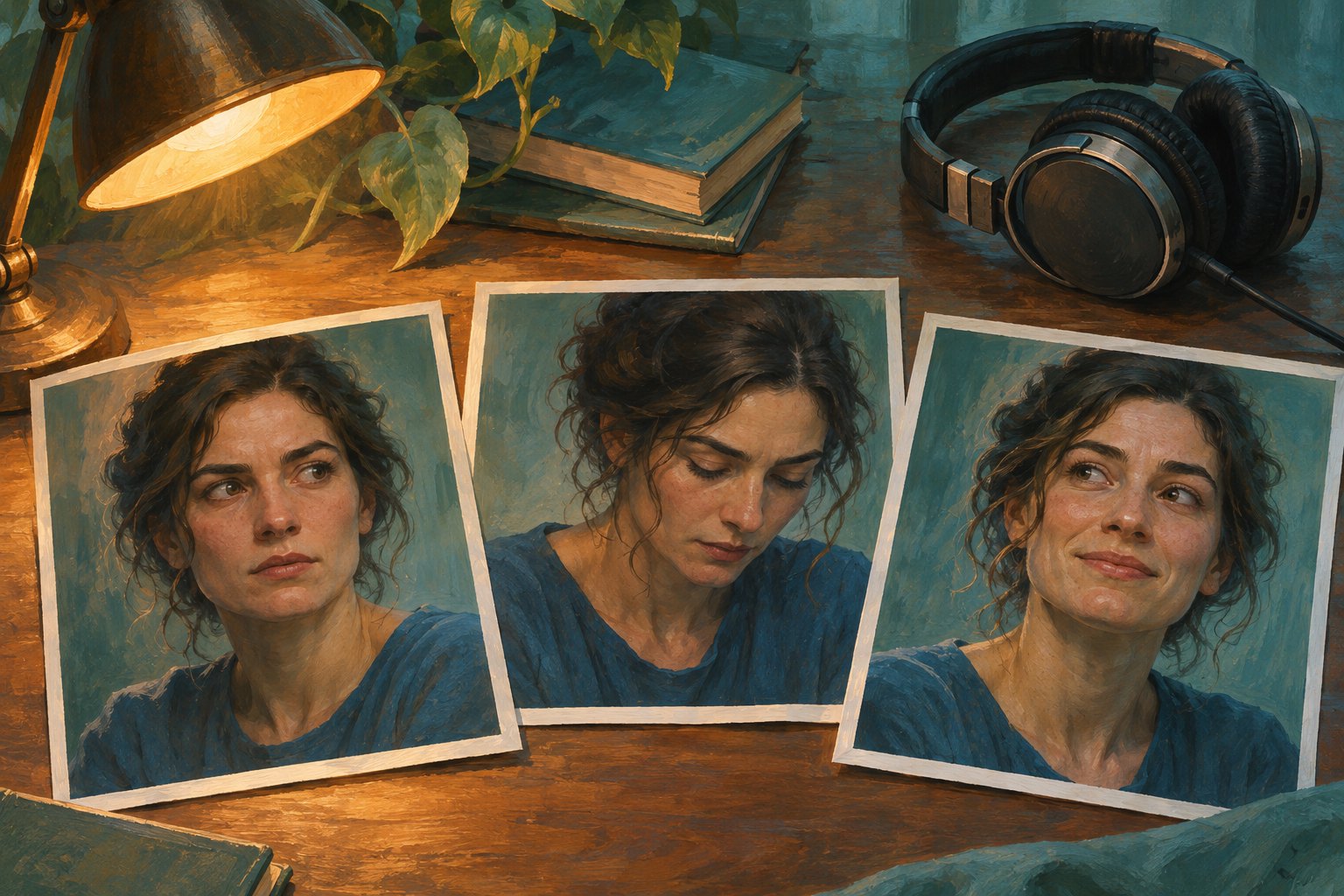
For viewers, a useful exercise is to watch the listener during a conversation. Does the character prepare a response before the other person finishes? Does new information actually seem to reach them? Do they change tactics? An actor can make listening feel like an active struggle, giving the scene movement even while another performer carries the dialogue.
The comparison with portraiture becomes especially revealing here. A photograph allows us to explore an expression at our own pace. A film controls how long we have to register it and what we see next. The experience depends on duration as much as appearance.
The Close-Up Is a Shared Achievement
Our attention naturally settles on the face in a close-up, but the effect belongs to more than the performer. Camera distance, focus, lighting, sound, and editing shape what we notice. A reaction held for several seconds can feel uncomfortable; a brief glimpse of the same reaction can remain elusive.
That does not diminish acting. It helps explain why a performance lives inside a film rather than outside its construction. A movement that seems almost invisible in a wide shot may become decisive in close-up. Silence may feel peaceful or threatening depending on the surrounding sound.
Our discussion of editing and emotional clarity in Project Hail Mary approaches the related question of how selected moments become a coherent experience. When assessing a performance, it is worth asking both what the actor contributes and how the film teaches us to see it.
How to Take the Portrait Back to the Movie
The most productive response to a portrait feature is curiosity. A familiar face may encourage a revisit; an unfamiliar one may prompt further exploration. Once the movie starts, however, the character deserves room to establish a different identity.
- Notice your first assumption. Are you expecting authority, vulnerability, charm, or menace because of the performer’s public image?
- Find the character’s immediate objective. Look for what they are trying to obtain in the scene, rather than assigning them a permanent personality trait.
- Track an adjustment. Watch for the point when persuasion becomes defensiveness, confidence becomes uncertainty, or avoidance becomes confrontation.
- Reconsider the opening impression. Ask whether the film deepens it, contradicts it, or simply repeats it.
These questions make room for surprise. They also help separate admiration for a celebrity from a judgment about a particular performance. We can enjoy someone’s presence while still asking whether the character’s decisions feel coherent.
The Face Matters Because It Can Change Meaning
The deeper interest of the 2026 Contenders Film Portrait Studio as a subject is the tension between recognition and discovery. Portraiture invites recognition: here is someone worth looking at. Drama can turn that invitation into discovery: here is someone whose behavior you have not yet understood.
To my eye, the richest screen performances keep that second possibility alive. They allow an expression to acquire new meaning through a relationship, a choice, or an uncomfortable consequence. The viewer looks again because the story has changed what looking can reveal.
A portrait gives a face its own space. A movie surrounds that face with other people, competing desires, and time. Appreciating both forms means enjoying the concentrated image while remaining open to everything a performance can do beyond it.
Original content by this site's editorial team. Published: November 14, 2026 at 23:42:24 PST (Los Angeles time)