Wildwood makes Portland’s proximity to the forest the foundation of a fairy tale. LAIKA’s stop-motion film transforms recognizable urban places into a constructed world where everyday familiarity and extraordinary danger can exist almost side by side. The appeal extends beyond recognizing a bridge or a bookstore: a rescue story gains emotional weight when the world being left behind feels specific enough to call home.
OPB’s reporting describes Portland landmarks rebuilt and stylized for the film, including Powell’s City of Books, the St. Johns Bridge, and the city’s Benson Bubblers. Those details establish the central attraction of this version of Portland: recognizable places translated into a shared visual language.
Spoiler note: This analysis discusses the publicly described premise and documented production design, without revealing the ending. It is a critical reading of those elements, rather than a review based on a complete screening; performance judgments and unverified dialogue are therefore excluded.
Portland Gives the Fantasy Something to Lose
A fantasy landscape becomes more compelling when leaving home has a cost. A generic starting point can establish that a character lives somewhere. A particular city can suggest habits, attachments, and the everyday experiences that make returning matter.
That distinction is especially useful for Wildwood. In the distributor’s synopsis, teenager Prue McKeel enters the Impassable Wilderness after crows abduct her baby brother. Her classmate Curtis Mehlberg accompanies her. The goal begins with a family emergency, even as the adventure draws them into a larger conflict.
Read through that premise, Portland serves as an emotional reference point. The audience can understand what Prue wants before learning the forest’s unfamiliar rules: she wants her brother back. The city gives that desire a destination. Home is a place to return to together, rather than simply the location where the adventure started.
Our discussion of how a film location can shape character and atmosphere considers a related question. Here, the interesting distinction is that Portland is deliberately reconstructed. Every recognizable feature becomes a choice about what the story needs its city to express.
Prue’s View: A Beautiful Forest Can Still Be an Obstacle
For the audience, an enchanted woodland promises discovery. For someone searching for an abducted sibling, it presents uncertainty. That difference offers a useful way to assess the film’s fantasy imagery: what delights us may complicate Prue’s task.
Her objective supplies a practical measure for each encounter. Does this place help her move forward? Does this stranger deserve trust? Does learning something new bring her closer to her brother? Those questions keep a sprawling invented world connected to an understandable need.
My reading of the premise is that its strongest dramatic possibility lies in the friction between curiosity and urgency. Wonder invites attention; rescue demands action. A story built around both can make exploration emotionally complicated, because enjoying the journey and completing it are not necessarily the same thing.
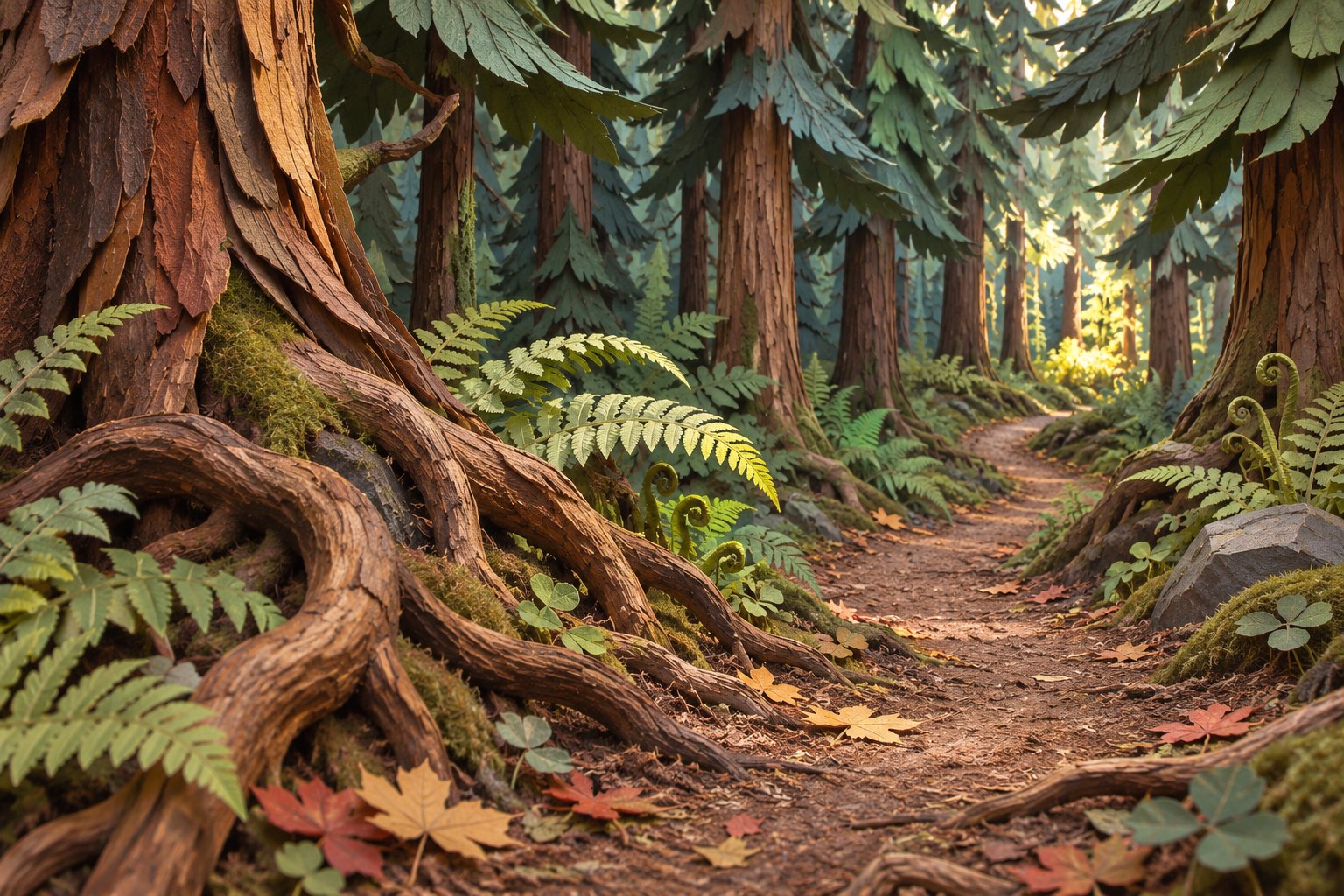
This also gives the setting a character-centered purpose. A towering tree can signify beauty to a spectator and exposure to a traveler. A winding path can promise discovery while concealing the route ahead. Scale becomes dramatically meaningful when it changes how secure a person feels.
Curtis Makes the Journey a Shared Responsibility
The official synopsis identifies Curtis as Prue’s loyal classmate. That relationship introduces an important difference in motivation: the missing child is Prue’s brother, while Curtis participates through his connection to her.
It would be premature to assign him a complete emotional arc from that description. Still, the relationship offers a concrete lens for watching. Prue has an immediate family obligation. Curtis’s involvement raises questions about what friendship asks of someone when another person’s crisis becomes dangerous.
Companionship can also change how a landscape functions. Traveling alone means interpreting every threat yourself. Traveling with another person makes disagreement possible: whether to continue, whom to believe, and how much risk is acceptable. A forest can become the place where different judgments must coexist.
The meaningful test is whether both characters influence the journey. Friendship becomes persuasive through consequential choices, especially when helping requires more than keeping pace. That is the standard I would bring to their partnership, rather than assuming that two young travelers automatically produce an affecting bond.
Why Rebuilding Portland Matters
OPB’s account emphasizes that the landmarks were adapted to fit the film’s world. That is a more interesting artistic decision than exact replication alone. Recognizability gives viewers a point of entry; stylization allows the city and its imagined surroundings to belong to the same story.
Consider the problem a fantasy film faces when moving from an ordinary neighborhood into an extraordinary environment. If their visual languages are too disconnected, the journey can feel like a switch between unrelated worlds. A consistently shaped environment can make the extraordinary feel concealed within the familiar.
Stop-motion’s physical surfaces offer one way to create that connection. Objects occupy space, cast shadows, and meet other surfaces. Their appeal is not simply that considerable work went into making them. It is that those properties can help an invented environment feel available to touch—and therefore vulnerable to damage or loss.
Craft alone does not establish dramatic success. As our discussion of animation craft and artistic judgment explores, understanding a production method and evaluating its expressive effect are related tasks. The question for Wildwood is what its tangible world helps us feel about the people moving through it.
A Deeper Reading: Home Has Edges We Do Not Understand
The most suggestive idea in Wildwood is geographical: the unfamiliar exists close to home. That arrangement challenges the comforting assumption that knowing your surroundings means understanding everything nearby.
Through Prue’s rescue mission, the boundary becomes personal. Caring for someone requires entering a place she cannot approach with the confidence of familiarity. In that sense, the premise offers a useful image of growing responsibility: your obligations can extend farther than your knowledge.
Portland’s transformation matters because it preserves the possibility of recognition inside that uncertainty. A city can remain home while the world around it becomes more complicated. The deeper promise of Wildwood is that fantasy might change the meaning of familiar places—not merely decorate them. Its most compelling critical question is whether the wonder surrounding Prue makes her need to bring her brother home feel more urgent, more difficult, and more human.
Original content by this site's editorial team. Published: November 7, 2026 at 10:24:10 PST (Los Angeles time)