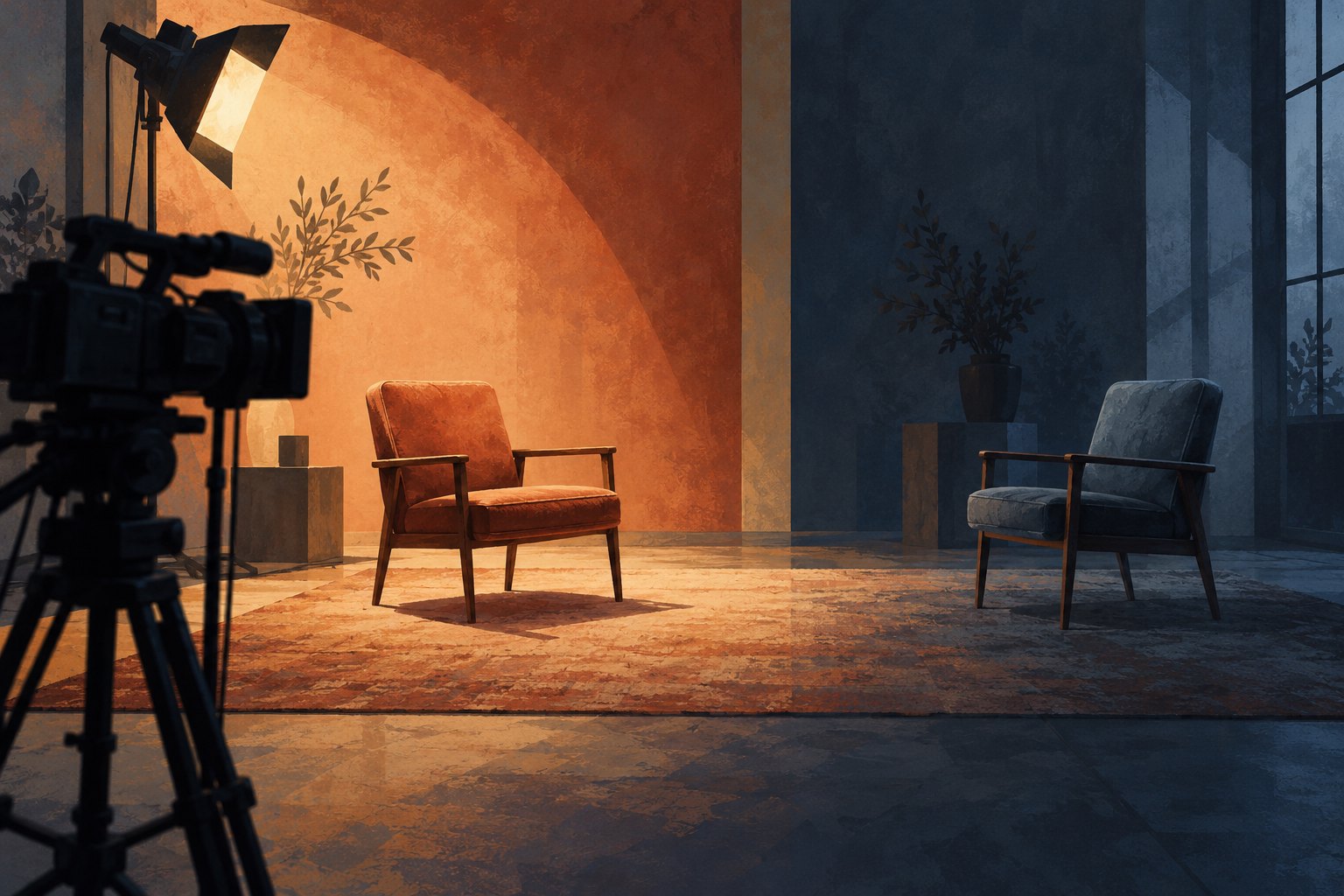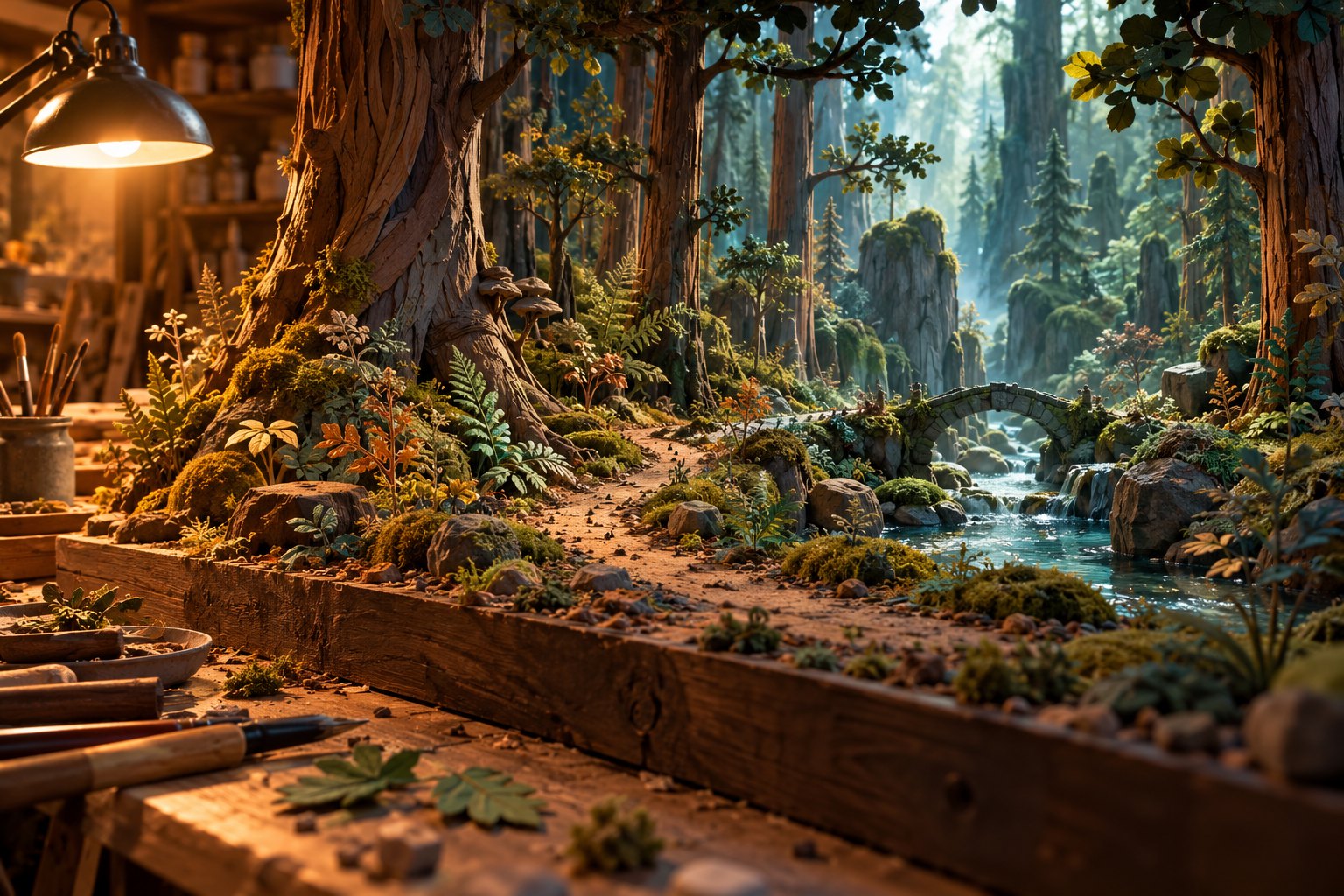
Wildwood brings a compelling question into focus for LAIKA: what does twenty years of learning look like when it becomes a movie? The answer cannot rest entirely on elaborate scenery or the difficulty of moving puppets one frame at a time. For an audience, accumulated experience matters most when it makes a character easier to understand, a place more convincing, or a moment more emotionally precise.
The Verge’s framing of Wildwood as the culmination of LAIKA’s first two decades offers a useful starting point. The film’s reception also foregrounds its handmade fantasy world and a forest divided by competing factions. Together, those ideas suggest a productive way to approach the movie: consider how the craft directs our attention toward the people living inside that world.
This spoiler-free critical essay examines that relationship. It is not a scene-by-scene review or an assessment of the ending.
Twenty Years of Experience Is a Creative Resource
A studio’s history can become an awkward burden for a new film. Calling something a culmination raises expectations before its characters have had time to establish themselves. Every image begins to carry a second assignment: entertain the viewer while demonstrating how far its makers have come.
My view is that this framing is most useful when it describes a growing capacity for expression. A more accomplished production should have more choices available to it. It can fill a frame, simplify one, emphasize a gesture, or let a figure recede into an environment. The achievement lies in selecting the choice that serves the moment.
That distinction matters especially for Wildwood. A forest fantasy invites visual abundance almost automatically. Branches, foliage, costumes, and inhabited spaces can all compete for attention. Experience becomes dramatically valuable when the filmmakers can organize that abundance so that the viewer understands where to look and why.
Twenty years should therefore be understood as a reservoir of possible decisions. It does not automatically establish that every decision in a particular film succeeds. Keeping that distinction intact allows admiration for LAIKA’s persistence to coexist with serious criticism.
A Forest Must Be Experienced From Somewhere
The description of Wildwood’s forest as a place of warring factions introduces a challenge beyond constructing an attractive setting. A divided world needs to feel different depending on who is moving through it. A place that offers safety to one inhabitant might announce danger to another.
This is where character perspective gives worldbuilding its dramatic purpose. Viewers need more than an understanding of what exists. They need to understand what a character notices, what that character misreads, and which details become significant under pressure. Otherwise, even an extraordinarily detailed environment can feel like an exhibition.
Consider the difference between looking at a passage through trees and looking for a way through them. The physical elements may be identical, but the dramatic relationship changes. One encourages appreciation; the other makes distance, visibility, and obstruction matter. This is a general principle of visual storytelling, rather than a claim about a specific Wildwood shot.
Our earlier discussion of Wildwood’s rescue story and emotional stakes approaches the film through personal responsibility. The craft-centered question is complementary: how does a densely imagined setting preserve the clarity of an individual need?
The Small Gesture Is a Serious Technical Achievement
Stop-motion invites attention to physical objects. A sleeve has a surface; a hand has a shape; a body occupies space relative to another body. Those qualities can help establish a character’s presence, but their expressive force depends on timing and arrangement.
A gesture becomes meaningful through context. An extended hand might express confidence, hesitation, invitation, or an attempt to control someone. Its position alone does not settle the interpretation. The surrounding performance determines how we read it, including what happens just before the movement and how another character responds.

This makes restraint a demanding measure of animation craft. A large action announces itself. A small change must be legible without becoming exaggerated. The viewer needs to recognize an intention while continuing to believe in the character, rather than becoming distracted by the mechanism of the performance.
For me, this is the strongest critical implication of the twenty-year argument. The most persuasive evidence of artistic development may be an increased ability to communicate with less movement. Scale attracts attention, but precision gives that attention somewhere to settle.
Handmade Beauty Does Not Settle the Storytelling Question
The attention paid to Wildwood’s handcrafted world is understandable. Material detail offers pleasures that deserve consideration in their own right. Yet craftsmanship and dramatic effectiveness remain related, separate judgments. A beautiful environment can support a scene without resolving problems in its pacing, motivation, or point of view.
A useful assessment asks whether the film gives viewers time to absorb the details that matter. Constant visual novelty can make an environment seem expansive, but it can also prevent individual places from acquiring emotional meaning. Returning to a familiar space under changed circumstances may communicate more than introducing another elaborate location.
Similarly, the presence of rival groups does not by itself produce complexity. Complexity emerges when differences affect choices and those choices carry consequences. Our discussion of the political interpretation of Wildwood’s divided forest explores that thematic territory. Here, the relevant question is how clearly the filmmaking lets an audience perceive those differences.
That is a fair standard for an ambitious production. Respect for difficult work should encourage close attention to its results. It should also leave room for viewers whose admiration for an image exceeds their involvement in the story surrounding it.
What to Watch for Beyond the Spectacle
Three aspects of the viewing experience can help turn an appreciation of technique into a more specific judgment:
- Attention: Does the composition make the character’s immediate concern clear, even when the setting is elaborate?
- Performance: Do changes in posture, movement, and stillness communicate distinct intentions?
- Consequence: Does a new location or encounter change someone’s understanding, options, or relationships?
These questions do not require knowledge of animation equipment. They describe what reaches the screen. They also prevent production scale from becoming a substitute for an account of how a movie actually engages its audience.
The Deeper Meaning of LAIKA’s Long Build
Wildwood’s place in LAIKA’s history invites an interpretation of craft as accumulated attention. Repeated practice can expand what artists notice: how a body holds tension, how a material catches light, or how an environment can express a character’s uncertainty. Technical knowledge becomes artistically valuable when it sharpens those observations.
That is the promise contained in the idea of a twenty-year journey. A studio develops the means to express increasingly particular experiences. The audience, meanwhile, encounters those experiences as immediate events rather than as a record of development.
My critical position is that Wildwood deserves to be approached with both curiosity about its construction and demanding attention to its characters. The most meaningful culmination would be a fantasy whose painstakingly built world makes individual lives feel more vivid. That is where a history of craftsmanship becomes a reason to care.
Original content by this site's editorial team. Published: October 24, 2026 at 14:26:50 PDT (Los Angeles time)