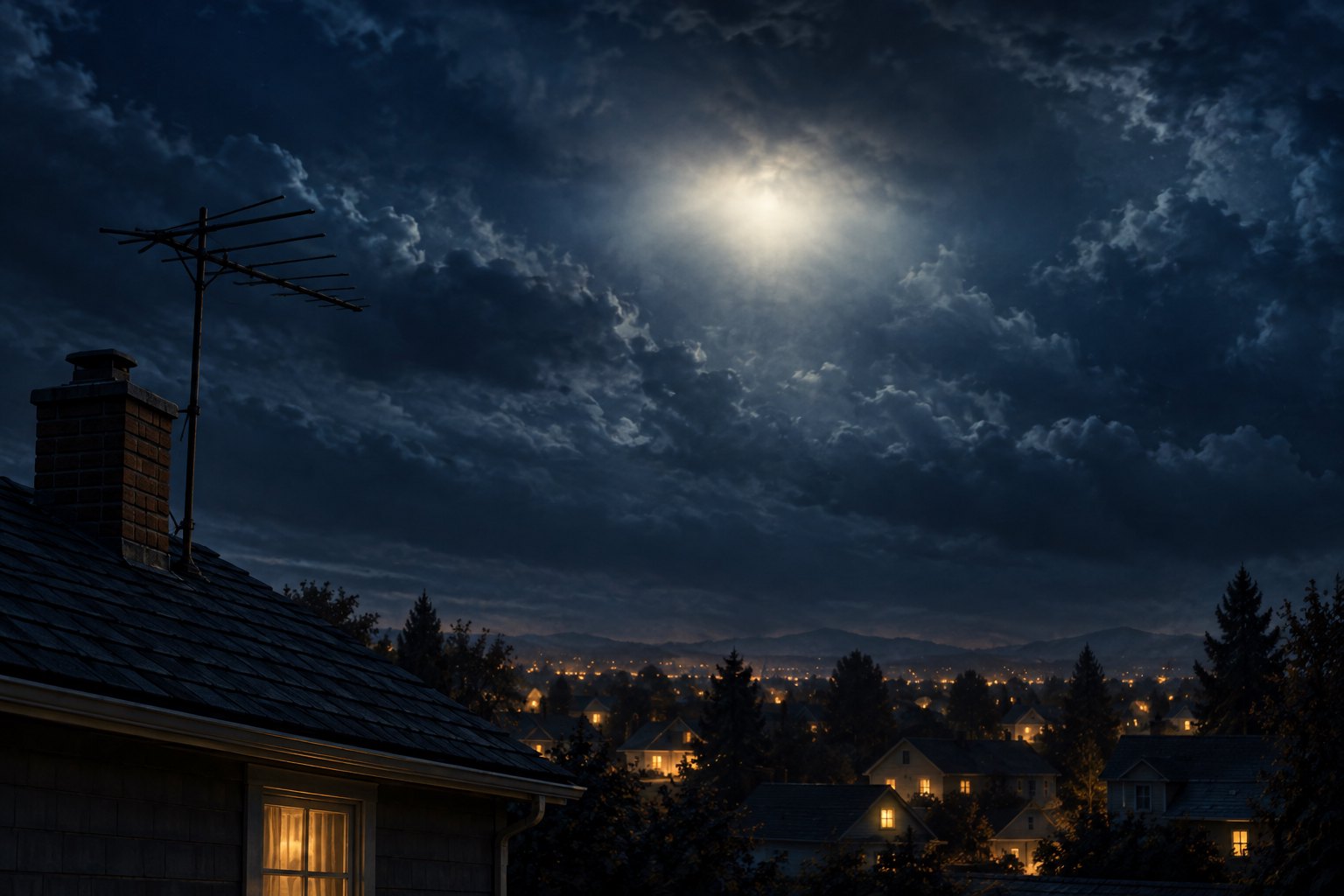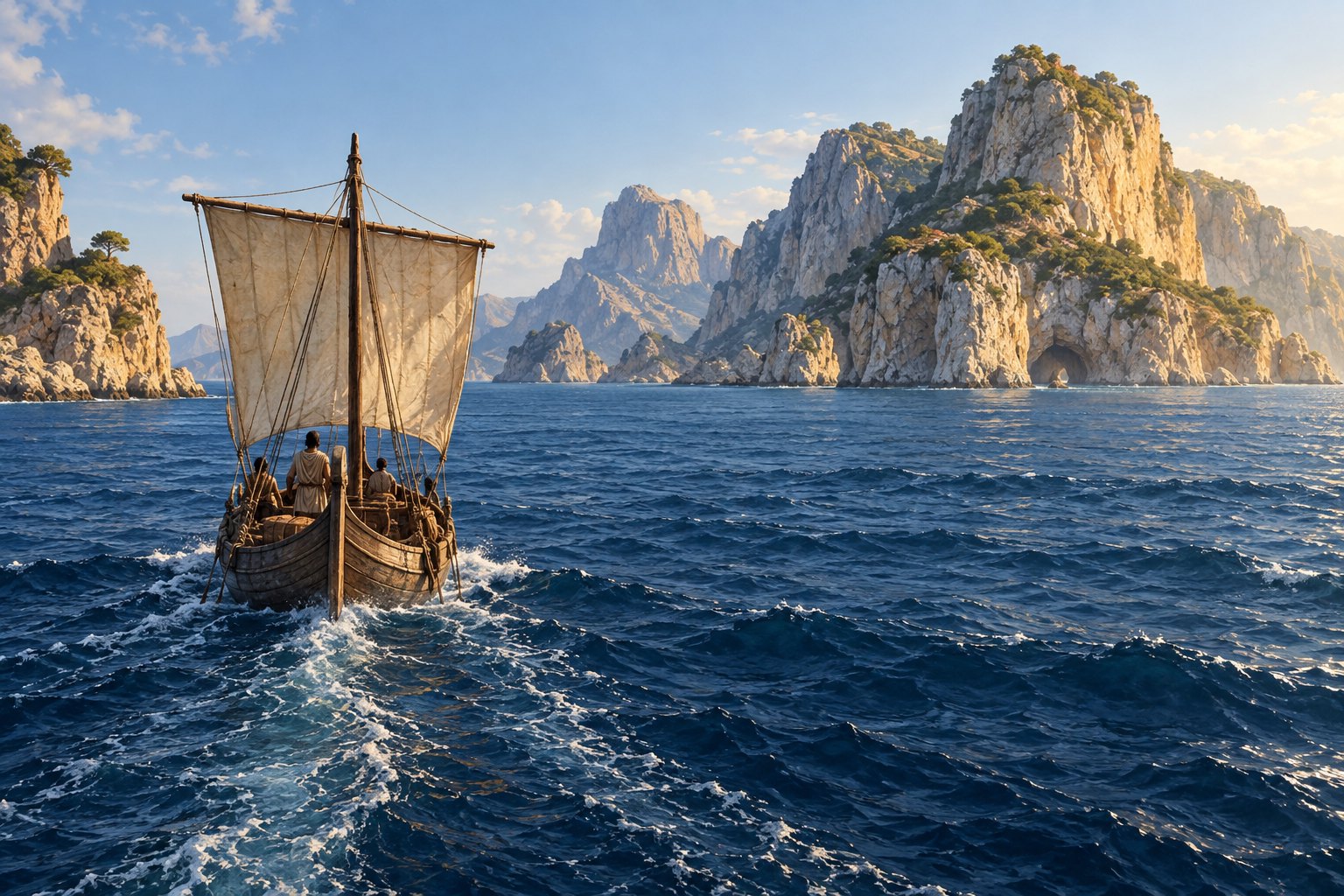
Christopher Nolan’s The Odyssey filmed across Morocco, Greece, Italy, Iceland, Scotland, and the United States. Its location story also includes reported underwater work in Malta and filming near Dakhla in Western Sahara. The essential distinction: the places where the cameras stood are not necessarily the places the characters inhabit. The film’s Ithaca, for example, combines an Italian exterior with a California studio interior.
That geographical patchwork has a dramatic purpose. Odysseus needs the world to become navigable again; Penelope needs home to remain recognizable. Looking at their surroundings through those competing needs makes a location guide more revealing than a checklist of beautiful beaches.
Spoiler note: This article discusses reported settings and character premises. Its criticism focuses on location choices and documented material, rather than offering a scene-by-scene screening review.
The Odyssey filming locations at a glance
The Worldwide Guide to Movie Locations identifies these principal setting-to-location connections:
- Troy: Aït Ben Haddou, Morocco; Essaouira supplies the beach associated with the Trojan horse.
- Ithaca: Castello di Santa Caterina on Favignana, Italy, supplies the palace exterior; its interior was constructed in Los Angeles.
- The Cyclopes’ island: Voidokilia Beach and Nestor’s Cave in Greece’s southwestern Peloponnese.
- Aeolia and maritime hazards: the Aeolian Islands north of Sicily, including locations around Lipari and Basiluzzo.
- Aeaea: Culbin Forest and the area around Findlater Castle in Scotland.
- The underworld: the volcanic landscape around Hjörleifshöfði in southern Iceland.
- Ogygia: Dune Blanche near Dakhla, Western Sahara.
- Underwater photography: Mediterranean Film Studios in Kalkara, Malta, according to the guide.
Treat these as production-location identifications, not proof of where Homer’s imaginary encounters historically occurred. A landscape can convincingly portray a mythical island without establishing an archaeological claim.
How to organize the locations on a map
A useful personal map should distinguish filming place, screen setting, and access information. Put the real place first in each pin’s name. Searching only for “Ithaca palace” risks sending you toward the story’s geography instead of the production’s.
Map group one: Sicily and its surrounding islands
Start with Sicily as your reference point. Keep Favignana, to its west, separate from the Aeolian Islands to its north. These island groups should not be treated as neighboring stops on one casual afternoon outing. Label the palace exterior separately from the sea locations so the map remains useful even without following the film’s narrative order.
Map group two: the Greek mainland
Group Voidokilia and Nestor’s Cave under the southwestern Peloponnese. Search by both the attraction name and the region, since transliterations can vary. A pin establishes where a feature is; it does not establish whether its entrance is open or whether a filming viewpoint is publicly accessible.
Map group three: the Atlantic and northern landscapes
Create separate groups for Morocco, Western Sahara, Scotland, and Iceland. Keep Dakhla labeled as Western Sahara rather than casually folding it into a Moroccan itinerary. Distinguish outdoor sites from studio facilities, too: a production credit does not imply that a set survives or can be toured.
This organization also prevents a common misunderstanding. A film cuts instantly between distant places. Your map should preserve their actual separation instead of presenting the editing pattern as a practical travel route.
Odysseus: when beautiful scenery becomes an obstacle
Matt Damon’s Odysseus is a returning warrior whose physical displacement intersects with damaged memory. The BFI’s interviews and accompanying account describe him trying to recover memories of Penelope and Telemachus while with Calypso. That makes the landscape emotionally unstable: somewhere lovely can still be somewhere he must escape.
“Tell me what you remember,” Calypso says in the official trailer. The line turns the usual location question inside out. Before Odysseus can identify where he belongs, he must recover the relationships that give a destination meaning.
My reading is that the geographical variety works best when it puts pressure on that vulnerability. An unfamiliar shore offers no reassurance simply because it is magnificent. For someone trying to return to his family, another spectacular horizon can represent another interruption.
“Help me go home,” Odysseus asks in trailer dialogue. Its plainness matters. Against an enormous visual world, his desire remains small enough to express in five words. The tension between an epic production and an ordinary human need is more interesting than scale alone.
Penelope: home is a place under pressure
Anne Hathaway’s Penelope occupies the other side of the journey: the household toward which Odysseus directs his longing. Yet home cannot function only as his reward. The presence of suitors means it is also a contested space with its own urgency.
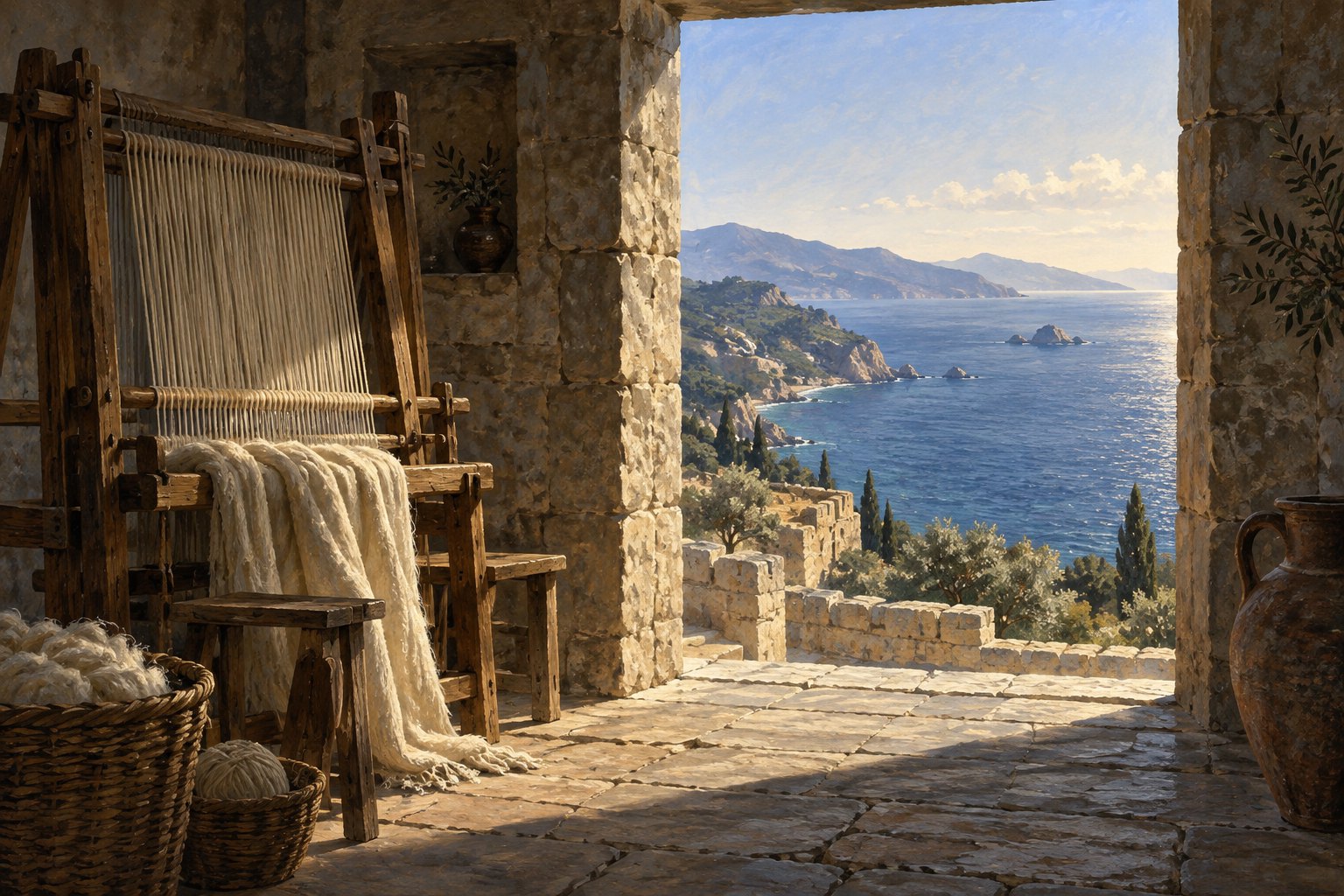
A palace looks different depending on whose experience organizes the image. From a returning traveler’s perspective, it promises shelter and recognition. From the perspective of someone managing unwanted claimants, the same grandeur can suggest exposure: a desirable household attracts people who want to possess it.
The critical question is therefore how much freedom a character has within an impressive setting. Walls may protect a person, contain them, or do both. That is also the useful question behind our discussion of how architecture develops a screen presence: buildings matter when they shape behavior.
The crew’s journey gives the scenery its weight
The voyage belongs to people beyond its king. Himesh Patel’s Eurylochus and the other sailors make leadership a shared physical problem: a decision about where to land or sail exposes other bodies to its consequences.
In the BFI interview, Patel describes difficult conditions in Iceland and additional simulated rain during filming. Damon describes a production in which the company experienced the elements together. Those accounts establish the physical circumstances of performance; they do not automatically establish artistic success.
For me, the relevant test is whether the environments make dependence visible. Does a shore feel reachable? Does a boat seem capable of protecting its occupants? Can the viewer understand why exhausted people accept uncertain shelter? Those questions connect spectacle to character judgment. They also connect with our argument about judging a cinematic hero through responsibility.
What the filming geography ultimately means
The strongest interpretation of this location pattern is that home requires more than arrival. Odysseus has to recover a sense of belonging; Penelope has to preserve a life that his absence has changed. A map can locate a castle or a beach, but it cannot measure that distance between people.
That is why the most useful answer to “Where was The Odyssey filmed?” contains two layers. The production assembled its world from distinct real landscapes and constructed spaces. The drama gives those spaces meaning through longing, uncertainty, and responsibility. The scenery becomes significant when we stop asking only how spectacular it looks and begin asking what it costs the characters to cross it.
Original content by this site's editorial team. Published: September 20, 2026 at 18:58:26 PDT (Los Angeles time)