
Star Trek borrowing from Crimson Tide makes dramatic sense because both can turn command into a moral problem. A vessel carries extraordinary destructive power. Its officers share a mission but disagree about what fulfilling it requires. Suddenly, the most consequential action available to a character is refusing an order.
Space reports that Jonathan Goldstein and John Francis Daley have named Crimson Tide among the inspirations for their developing Star Trek film. Its comparison with the Strange New Worlds episode “Orders of Magnitude” suggests a useful direction. Inspiration, however, establishes neither the finished film’s plot nor its success. The real opportunity is to make disagreement as gripping as a battle.
Spoiler warning: The following review discusses major developments and the ending of Crimson Tide, plus the central command conflict reported in “Orders of Magnitude.”
The interrupted message that makes everyone choose
Tony Scott’s 1995 thriller places Captain Frank Ramsey, played by Gene Hackman, and executive officer Ron Hunter, played by Denzel Washington, aboard the nuclear missile submarine USS Alabama. Their confrontation develops from a crucial distinction: the submarine receives an authenticated launch order, then an incomplete second transmission. The initial instruction is clear. What might have changed is not.
Ramsey intends to execute the last confirmed order. Hunter insists that the interrupted message could cancel it and refuses to concur with the launch. That sequence matters. Ramsey is not proposing to fire nuclear weapons because he cannot understand a garbled instruction. He believes an existing obligation remains binding; Hunter believes potentially superseding information makes immediate obedience intolerably dangerous.
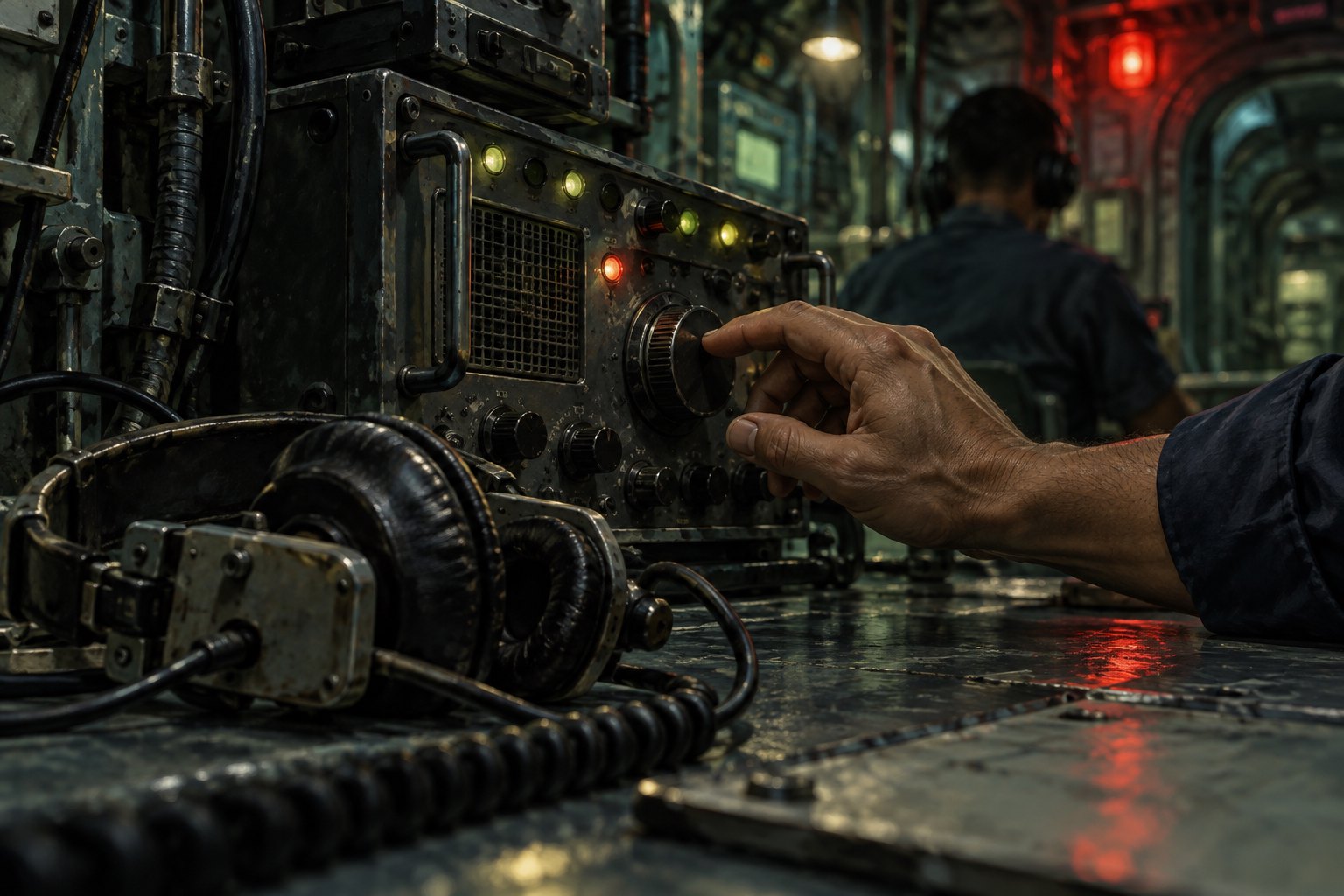
The screenplay’s strongest device is giving uncertainty a physical location. Somewhere inside the damaged communications system is information that might avert catastrophe. Repairing a radio becomes as consequential as operating a weapon. The suspense asks whether the crew can preserve enough time to learn something.
Ramsey makes authority feel reassuring—until it closes off thought
Hackman gives Ramsey the confidence of someone accustomed to having a room arrange itself around him. His manner can be personable without suggesting equality. Approval comes from above, and everyone understands where above is.
His memorable declaration, “We’re here to preserve democracy—not to practice it,” compresses that worldview into a joke with a hard edge. Within the film, it also reveals his vulnerability: he struggles to distinguish a challenge to his judgment from a threat to the ship’s ability to function.
That is why Ramsey works as an antagonist. His commitment to readiness is comprehensible. A captain who hesitates can endanger a crew, and experience can teach habits that look inflexible to people who have never needed them. Hackman makes those habits feel earned before their limitations become frightening.
My reservation is that the later escalation sometimes makes the argument easier than its beginning promises. As intimidation takes over, the audience has less reason to entertain Ramsey’s position. The film is richest when we can understand why another sailor might trust him, even while recognizing that his certainty has become dangerous.
Hunter’s restraint is an active form of command
Washington’s performance makes listening look strenuous. Hunter must absorb an insult, assess a changing situation, and choose words that can survive being repeated as evidence against him. His composure carries pressure rather than releasing it.
At dinner, his statement that “in the nuclear world, the true enemy is war itself” establishes a different measure of success. Destroying an opponent does not automatically mean protecting the people a commander serves. A weapon’s power changes the meaning of victory.
Yet Hunter is not written as someone who can escape ugly decisions by maintaining better principles. During the submarine’s flooding emergency, he orders a compartment sealed with sailors inside to save the vessel. That decision matters to the character analysis: he can accept immediate, terrible sacrifice. His resistance to Ramsey therefore cannot be reduced to an inability to act.
Hunter distinguishes an emergency he can assess from a strategic decision resting on information he knows is incomplete. Washington makes that distinction emotionally legible without turning it into a comfortable ethical formula. Both situations involve lives. They demand different judgments.
The crew makes the argument bigger than two performances
The officers and sailors around Ramsey and Hunter give their dispute practical consequences. An order requires someone to acknowledge it, transmit it, unlock something, or stand aside. Authority becomes visible through these small acts of cooperation.
The Chief of the Boat’s support for Hunter’s initial intervention is particularly important because it rests on procedure rather than affection. The film allows a person to defend a safeguard without endorsing every judgment made by the person invoking it. That is a more interesting model of loyalty than simply choosing the more likable officer.
Scott’s compressed spaces intensify this pressure. People cannot leave an uncomfortable conversation and return when tempers cool. Faces, doorways, and control stations repeatedly share the frame with the consequences of a decision. The submarine feels like a workplace whose everyday relationships have become impossible to separate from survival.
This also connects with the question of institutional belonging explored in our discussion of Tessa in Prima Facie: understanding a system’s rules can give a character both a place within it and the means to challenge it.
What Strange New Worlds changes about the dilemma
According to Space’s account of “Orders of Magnitude,” Admiral Simon Reeger takes command of the Enterprise, with James T. Kirk serving as his temporary first officer. Their confrontation centers on Reeger’s order to devastate a planet’s surface to stop a suspected enemy vessel, putting innocent lives at risk. The account also identifies personal loss and revenge as factors in Reeger’s conduct.
That shifts the comparison. Hunter disputes whether an earlier order still applies. Kirk faces a commander whose proposed action demands a moral challenge. The shared mechanism is a subordinate forced to decide whether obedience would betray the responsibility that made obedience meaningful in the first place.
For a future film, the valuable lesson is to make such resistance specific. Who is endangered? What does the dissenting officer know? What alternatives remain? How much time would those alternatives require? Without clear answers, a command dispute risks becoming two speeches performed beside flashing lights.
The character scale matters as much as the threatened destruction. As our commentary on the personal stakes behind monumental screen adventures considers, enormous scope becomes meaningful through the people carrying it. A threatened planet needs more dramatic weight than a large number in dialogue.
The ending’s deeper lesson: leave room to be corrected
Communications are restored in Crimson Tide, and the completed message cancels the launch. Hunter’s insistence on waiting prevents a disastrous act. The subsequent inquiry nevertheless examines both officers’ conduct, complicating the emotional satisfaction of seeing one man vindicated.
To me, the film’s lasting subject is the need for institutions to remain correctable. Ramsey’s experience is valuable, but it cannot make new information irrelevant. Hunter’s judgment proves essential, but the struggle also demonstrates how fragile collective action becomes when every safeguard depends on individuals willing to enforce it.
That gives Star Trek a demanding and hopeful direction. A crew can disagree profoundly while still believing that shared service is worth preserving. Its principles become credible when following them costs someone status, security, or the approval of a respected superior.
Crimson Tide earns its tension by making the next command matter. A new Star Trek film could earn something equally powerful by showing how much courage it takes to leave that command unexecuted long enough for the truth to arrive.
Original content by this site's editorial team. Published: September 14, 2026 at 03:34:17 PDT (Los Angeles time)