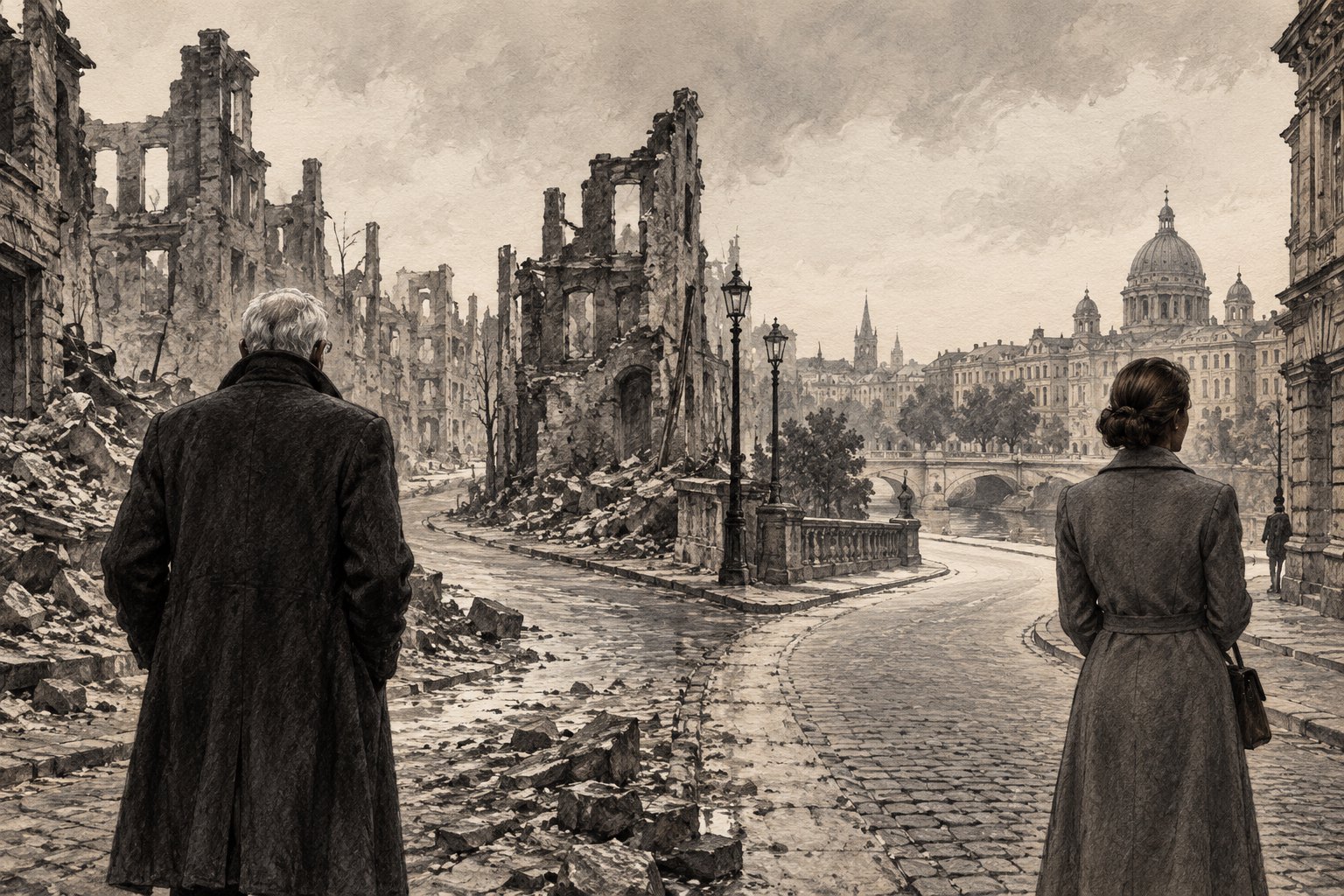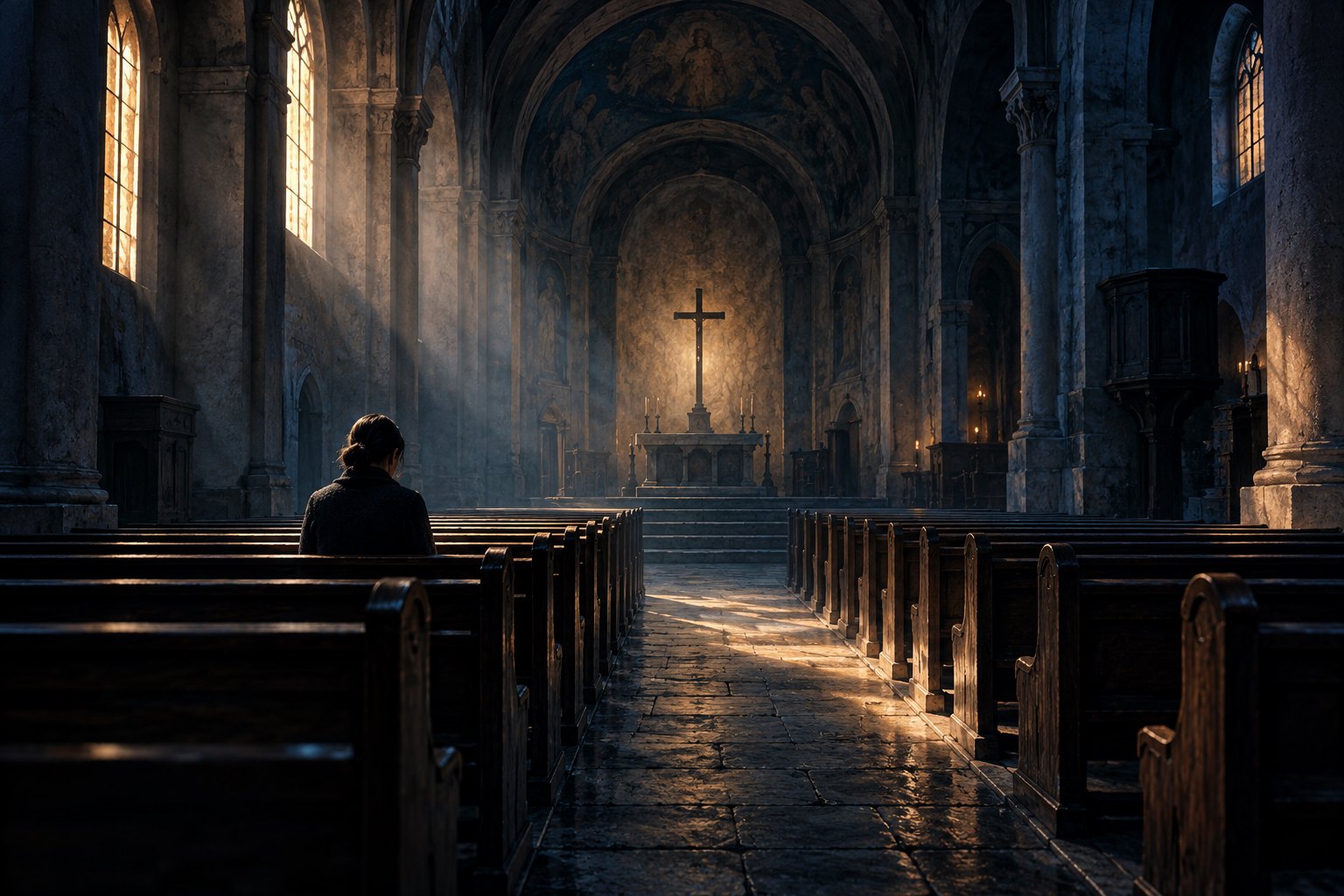
Horror films can ask questions about God with unusual force because they refuse to make suffering abstract. An innocent person is frightened, injured, or abandoned, and someone must decide whether to help. The theological question becomes immediate: if evil can announce itself so clearly, where should we look for goodness?
The Exorcist offers a particularly troubling answer. Goodness appears through people who are exhausted, uncertain, and vulnerable themselves. William Friedkin’s 1973 film, scripted by William Peter Blatty from his novel, makes demonic possession spectacular. Its more demanding achievement is making compassion seem possible inside that spectacle.
Spoiler warning: This review discusses the film’s ending, disturbing violence involving a child, and a conversation restored in the extended version.
Chris MacNeil Needs Help Before She Needs an Explanation
For Chris MacNeil, played by Ellen Burstyn, the story begins with a familiar parental obligation: understand what is happening to your child and find someone who can help. As Regan’s condition worsens, Chris moves through medical examinations and increasingly frightening uncertainty. Her eventual appeal to a priest grows from that experience.
Burstyn makes desperation feel physically exhausting. Chris must repeatedly describe something she cannot explain, then listen while another professional tries to fit it into a recognizable category. Her fear acquires an additional burden: she has to persuade other people to take it seriously.
“Can't you help her, just help her?” compresses her position into a plea. She needs care to produce an outcome. Arguments about what is possible mean little while her daughter remains upstairs.
This is where the film’s religious inquiry becomes accessible even to viewers who reject its supernatural premise. Chris cannot wait for everyone to settle their worldview. Someone has to enter the room. Her urgency gives the theological drama a human measure: an explanation matters partly because of what it enables someone to do for Regan.
Karras’s Doubt Is Part of His Capacity to Care
Father Damien Karras, played by Jason Miller, is both a priest and a psychiatrist. His hesitation about exorcism therefore has practical weight. He understands that a mistaken intervention could harm the person it is intended to save.
The film gives that caution a memorable test. Regan reacts to water presented as holy, but Karras later explains that it was ordinary tap water. The reaction cannot establish what Chris hopes it establishes. Within the investigation, appearance and evidence remain different things.
I find these passages essential to the film’s credibility. Karras’s reluctance keeps faith from becoming an automatic answer whenever something frightening happens. He must exercise judgment, and judgment requires the possibility that he could be wrong.
His grief over his mother makes that responsibility more painful. He carries guilt about his inability to care for her as he wishes he had. The demon exploits that wound, making his most intimate failure seem present in Regan’s room.
Miller’s inward performance gives the attacks their force. Karras often looks like a man already conducting a merciless interrogation of himself. The possession supplies that interrogation with a voice.
Seen through him, the question of God’s love becomes inseparable from a person’s capacity to believe that failure has not made them worthless. Karras can recognize another person’s need while remaining uncertain about his own worthiness to answer it.
Regan Must Remain More Than a Frightening Image
Linda Blair’s Regan presents the film with its hardest ethical challenge. The possessed body becomes a source of extraordinary shocks, while the child’s recognizable personality is increasingly obscured. The audience is asked to feel both horror at what it sees and concern for the person being used to produce that horror.
The distinction matters. Regan is a victim, and the film’s moral structure depends on remembering her beneath the spectacle. Disgust becomes dangerous when it encourages us to mistake what is happening to someone for who that person is.
There is also a legitimate criticism here: the adults receive much of the film’s psychological development, while Regan bears its physical ordeal. A religious reading should acknowledge that imbalance. Her suffering cannot become merely useful material for a priest’s spiritual recovery.
Our discussion of Texas horror and the communities surrounding its monsters approaches a related question: what does a frightening image reveal about the people looking at it? Here, the answer depends on whether the observer can continue to recognize someone who deserves protection.
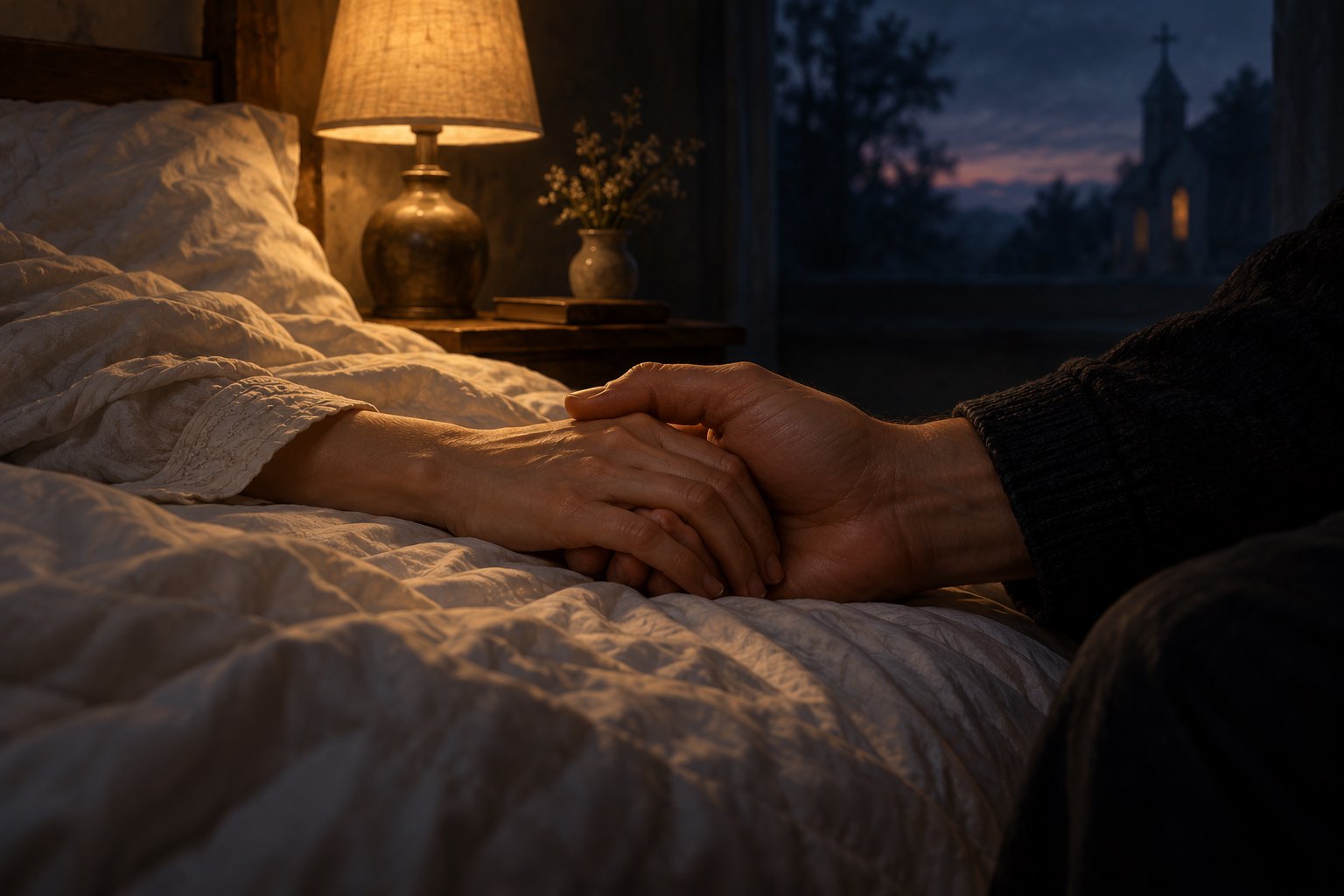
Merrin Recognizes the Danger of Despair
Father Merrin, played by Max von Sydow, brings experience to the confrontation. His authority is restrained, and his physical frailty prevents him from becoming an invulnerable rescuer. He understands the danger without standing outside it.
In a staircase conversation restored for the extended version, Merrin identifies the demon’s purpose: “I think the point is to make us despair.” The placement matters. Away from the bedroom’s spectacle, two tired men consider what the spectacle is doing to them.
My reading is that despair here means more than fear of losing a battle. It means accepting the idea that human beings are so degraded that love cannot reach them. The demon’s work would then continue even after an observer left the room, through a changed understanding of other people.
That interpretation also makes demands on the audience. A viewer who remembers only the obscenity and bodily distortion may carry away precisely the vision of humanity Merrin resists. The film’s religious stakes involve how we look as well as what we believe.
The Ending Makes Goodness Costly and Difficult
After Merrin dies during the exorcism, Karras attacks the possessed Regan and demands that the demon enter him. It does. He then throws himself through the window, falling down the exterior steps and leaving Regan freed.
The sequence is violent and morally unsettling. Karras’s rage initially puts the child’s body under further attack. His decisive movement changes who bears the danger, but it does not turn everything preceding it into a serene demonstration of holiness.
I read his final act as a rescue shaped by sacrifice. The film makes that interpretation available through the immediate consequence: Regan survives. It also leaves viewers with the cost, denying the comfortable rhythm of an effortless supernatural victory.
For a believing viewer, Karras’s action can suggest grace working through someone who feels abandoned by certainty. For a nonbelieving viewer, its emotional meaning can remain intelligible as an extreme refusal to leave a vulnerable person alone. Those readings need not produce identical conclusions about God to recognize the same act of care.
What Religious Horror Can Make Us Notice
The Exorcist is most persuasive, in my judgment, when its supernatural conflict exposes ordinary fears: failing a parent, losing a child, being unable to help, or becoming convinced that suffering has erased someone’s dignity. Its performances keep those fears alive beneath the effects.
That intensity also distinguishes it from the gentler encounters with outsiders explored in our Halloween viewing guide, including Edward Scissorhands and The Nightmare Before Christmas. Different kinds of horror and fantasy can test how readily appearances govern sympathy.
What does this film have to say about God? Its most compelling answer is a question directed back at the viewer: when suffering makes a person difficult to look at, will you still recognize someone worthy of love? The demon commands attention. The people who remain beside its victim give that attention a moral purpose.
Plot, dialogue, and version references: [Filmsite’s detailed synopsis](https://www.filmsite.org/exor4.html) and [the film’s production and version history](https://en.wikipedia.org/wiki/The_Exorcist).
Original content by this site's editorial team. Published: October 31, 2026 at 09:02:26 PDT (Los Angeles time)