The West Virginia International Film Festival brings an intriguing relationship into its very name: a particular American place meeting cinema from beyond its borders. WSAZ’s coverage draws attention to the festival, but a mention alone cannot tell viewers which films deserve their time. The more interesting critical question is what happens when we watch unfamiliar lives through assumptions formed close to home.
This is spoiler-free festival commentary, not a review of individual selections or a confirmed screening guide. No current lineup, ticket price, venue, or filmmaker appearance is established here. What follows is a way to approach the festival’s regional and international identity with curiosity—and to leave a screening with something more precise than a vague impression of another place.
A region is a perspective, not a personality
There is a tempting shortcut in talking about regional cinema: identify a landscape, recognize an accent, and assume the people have become understandable. Mountains can become shorthand for isolation; a crowded city can stand in for opportunity. Once that happens, characters risk turning into evidence for an idea the viewer brought into the theater.
My view is that the strongest place-based storytelling complicates recognition. A location matters because it affects what someone can do, whom they depend on, and what leaving might cost. Pretty scenery establishes an environment. Drama begins when that environment puts pressure on a decision.
For anyone approaching the West Virginia International Film Festival, that distinction offers a useful starting point. Familiarity with one region can make us alert to lazy portrayals of it. The same alertness should travel with us when the setting becomes unfamiliar. A distant community deserves the internal differences, contradictions, and ordinary pleasures we expect filmmakers to recognize at home.
Follow the person who has something to lose
A productive way into an unfamiliar film is to identify the character’s immediate objective before assigning a large theme. Perhaps someone wants permission, privacy, reconciliation, or enough time to finish a task. Those are hypothetical examples, but the principle is concrete: begin with what the person is trying to accomplish in the scene.
Then ask what makes that objective difficult. Is the obstacle another person’s authority? A material constraint? A promise the character cannot comfortably break? This approach keeps analysis attached to behavior. It also prevents a story about a particular person from becoming an overconfident explanation of an entire society.
Character perspective does not require agreement. A film can make a selfish choice understandable without making it admirable. Watch whether the filmmaking permits that distinction. Does the camera remain with someone after their persuasive speech, allowing us to see the damage? Does another character receive enough time to challenge the account we initially accepted?
The revealing question is whose experience the film makes available—and whose it leaves outside the frame. An absent viewpoint may be an intentional limitation or a serious weakness. The difference depends on how the film handles the consequences.
Look at what the beautiful image leaves out
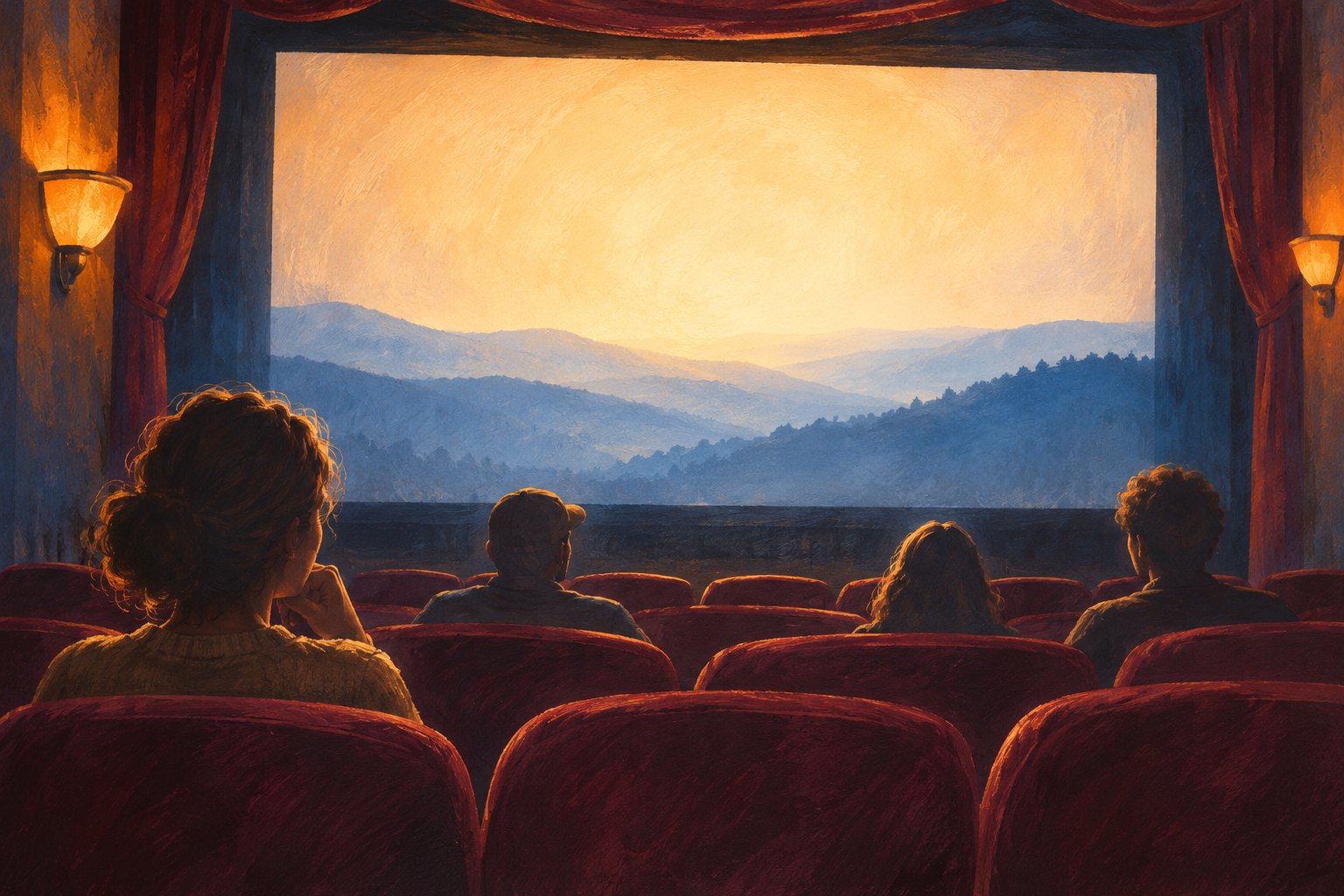
Festival viewing can encourage admiration for striking images. That admiration is reasonable, but beauty should begin an analysis rather than finish it. A wide landscape might express freedom, exposure, distance, or an obstacle that someone must physically cross. The image’s meaning depends on its relationship to the people living within it.
Consider what happens before and after a scenic shot. Does the film connect the location to work, travel, ownership, or memory? Does it return to the same place after a consequential choice? A repeated view can change meaning even when the geography stays exactly the same.
This is particularly useful when thinking about the relationship between regional identity and international cinema. We can enjoy a place as an image while overlooking the practical realities that shape a character’s day. Better criticism notices both. It asks whether the setting participates in the drama or merely supplies an attractive background.
Listen beyond the memorable line
A quotable sentence can become the souvenir we carry out of a theater. Yet dialogue means more when we remember who hears it and what the speaker hopes it will achieve. A declaration may be sincere, defensive, rehearsed, or designed to close a conversation.
For a character-focused reading, follow the response. Someone who avoids eye contact, changes the subject, or answers too quickly may reveal the scene’s central conflict. Silence is not automatically profound; it becomes meaningful when the film establishes what speaking would risk.
When watching subtitled work, allow for the fact that reading and observing compete for attention. Missing a gesture does not mean the film has failed to communicate. If a moment stays with you, distinguish the wording you remember from the performance surrounding it. No dialogue is quoted here because no individual film’s lines have been verified for this discussion.
Make the conversation after the screening specific

Discussion becomes more rewarding when people can locate their disagreement. Instead of stopping at whether a film felt authentic, identify the choice that persuaded or alienated you. Was it a performance, an unexplained reversal, an editing decision, or an ending that seemed to excuse earlier behavior?
Our commentary on the communal appeal of festival viewing considers how an audience can enrich the experience. Here, the next step is to preserve differences within that audience. Someone’s recognition of a detail can deepen the conversation without settling every question about the film.
- Describe the evidence: Name the scene or formal choice behind your response.
- Separate recognition from judgment: A believable detail does not automatically make the whole story convincing.
- Leave room for uncertainty: An unfamiliar custom may require context; a broken dramatic connection still deserves scrutiny.
For the practical side of attending screenings, our guide to evaluating a screening before committing your evening offers related questions. For this festival, confirm the current program and admission arrangements directly with the organizers before making plans.
The deeper opportunity: reconsidering where you stand
The most compelling possibility suggested by the West Virginia International Film Festival is a two-way exchange. Watching a story from elsewhere can expose assumptions about unfamiliar people. It can also reveal how selectively we understand the places we already know.
That does not require every film to deliver a lesson or every viewer to emerge transformed. Sometimes the worthwhile discovery is smaller: a character you initially dismissed becomes difficult to dismiss, or an ending makes you reconsider whose interests shaped your expectations.
For me, that is the standard worth bringing to a festival bearing both a regional and an international identity. Look for films that give people room to exceed the labels attached to them. Then judge how carefully the storytelling earns that room, one choice, response, and consequence at a time.
Original content by this site's editorial team. Published: November 5, 2026 at 11:17:30 PST (Los Angeles time)