Way of the Warrior Kid has a compelling conflict beneath its familiar training exercises: a boy needs help believing in himself, while the adult helping him needs to feel useful again. The difficulty is keeping those needs in proportion. Chris Pratt’s wounded Navy SEAL gives the story an immediately recognizable authority figure, but Jude Hill’s Marc supplies its more revealing question: what does becoming stronger actually change about a child’s life?
Variety’s criticism that Pratt draws attention away from the family drama identifies the central concern. My reading is that the problem extends beyond star power. The story repeatedly measures growth through the mentor’s expertise, even though its most persuasive idea is that Marc must eventually develop judgment of his own.
Spoiler warning: This analysis discusses the training, bullying storyline, and final emergency. It draws on the officially described premise, published accounts of the film, and available dialogue.
Marc needs more than a better fitness score
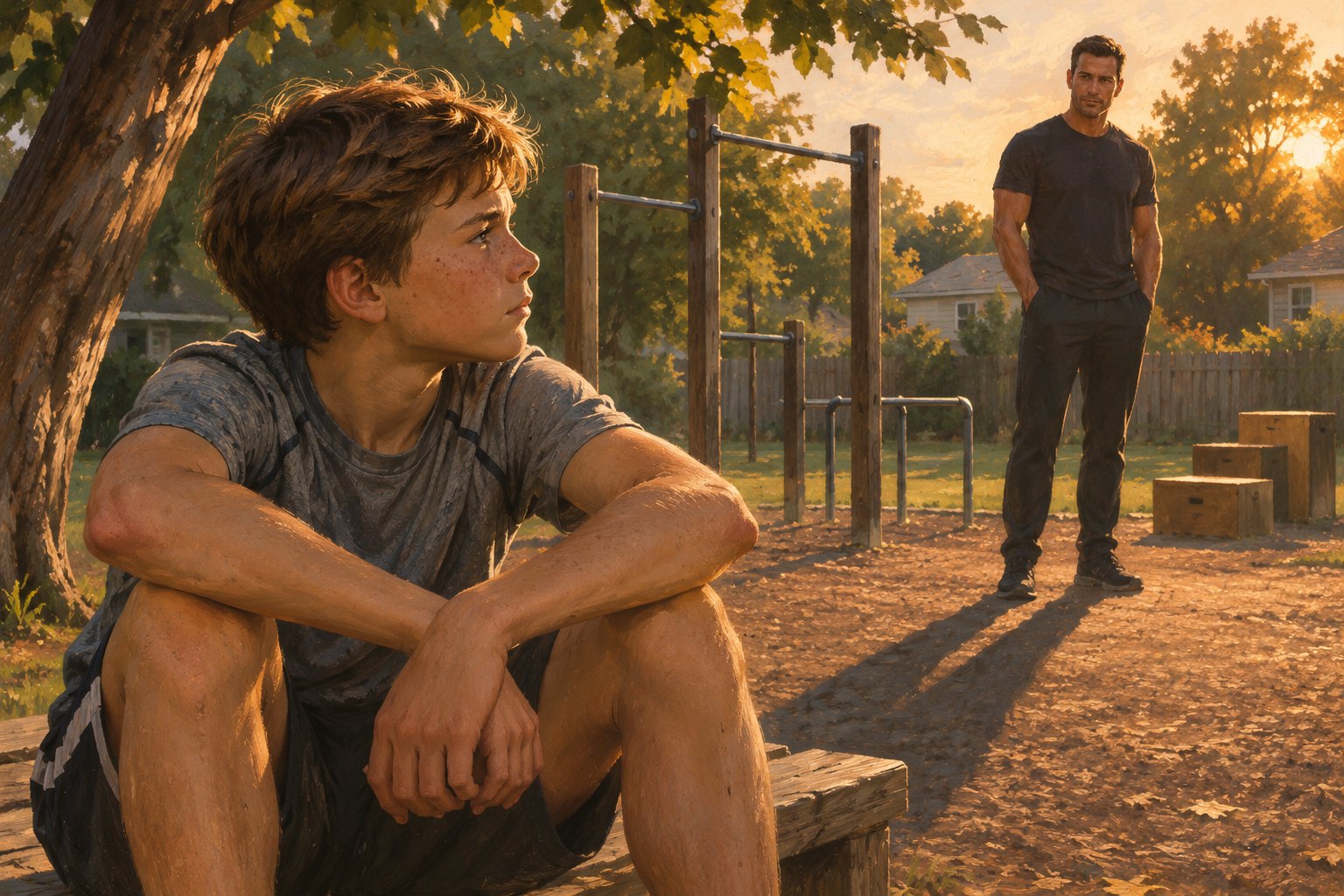
Directed by McG, with a screenplay by Will Staples adapting Jocko Willink’s novel, the film places Marc at the intersection of several ordinary childhood anxieties. Schoolwork is difficult, physical education brings embarrassment, and friendship feels elusive. His injured uncle Jake spends the summer recuperating with Marc and his mother, Sarah, played by Linda Cardellini. Jake’s response is a program called “Operation Warrior Kid.”
That setup matters because Marc’s difficulties are broader than losing to a bully. Academic frustration and social isolation can make a child treat every setback as evidence of the same supposed defect. A failed exercise stops being one thing he cannot yet do; it becomes confirmation that he cannot do anything.
Training offers a useful interruption. Repetition makes improvement visible, giving Marc evidence that his present limitations are temporary. Yet there is an ethical distinction the movie’s uplifting framework needs to preserve: gaining skills can help him feel safer, but lacking those skills never made him deserving of humiliation.
This is where a viewer should resist the simplest transformation narrative. Marc does not become worthy of attention when he becomes athletic. The adult’s attention is what helps make change possible. Read that way, the relationship carries more emotional weight than any count of completed exercises.
Jake’s injury should make him a partner in uncertainty
Jake returns from a failed mission with injuries that interfere with his ability to resume service. Published plot accounts describe nerve damage and difficulty performing physical tasks. His body, previously a reliable instrument of professional competence, has become unpredictable.
That creates a meaningful connection with Marc. Both characters face a gap between what they want their bodies to do and what those bodies currently permit. Neither can simply command himself into confidence. Progress requires repetition, frustration, and dependence on someone else.
My interpretation is that Jake’s strongest dramatic function is to make adulthood look unfinished. A mentor who also struggles can show a child that uncertainty does not disappear when someone becomes impressive. It becomes something to manage.
Pratt’s established screen presence complicates that possibility. Jake arrives carrying the visual and narrative authority of an action hero. His military purpose can make Marc’s school troubles seem like a smaller assignment within the adult’s recovery story. The film’s balance depends on whether Jake’s vulnerability changes their relationship or merely makes him an even more admirable figure.
A useful test is whose understanding advances during a scene. If Marc only receives wisdom, Jake remains the center. If the boy’s experience forces Jake to reconsider how he teaches, the relationship becomes reciprocal.
The dialogue works best when Marc answers back
One compact exchange captures the competing perspectives. Jake invokes the SEAL maxim, “The only easy day was yesterday.” Marc replies, “Yesterday was terrible too.”
The joke is valuable because Marc refuses the emotional timetable built into the slogan. Jake means that difficulty is normal and endurance necessary. Marc hears an adult making an already miserable situation sound appealing. Both responses make sense from where the characters stand.
That tension gives the child a voice beyond gratitude. Encouragement can sound like dismissal when the person receiving it is frightened. A mentor’s confidence becomes useful only when it leaves room for the learner’s account of what hurts.
Another revealing element is Marc’s interest in a music video game. Jake initially struggles to take that enthusiasm seriously, then uses practice at the game as a way to explain improvement elsewhere. The connection works because it recognizes an existing capability. Marc is not an empty vessel awaiting discipline; he already knows something about persistence.
Kenny makes kindness a harder achievement
The bullying storyline offers the clearest opportunity to distinguish confidence from domination. Kenny, played by Levi McConaughey, subjects Marc to cruelty that includes a dangerous attack on his bicycle. The story nevertheless moves toward empathy rather than treating a retaliatory beating as the necessary reward for training.
That choice deserves credit. If the payoff were simply that Marc could now frighten Kenny, the film would preserve the bully’s definition of power. Only the person controlling it would change.
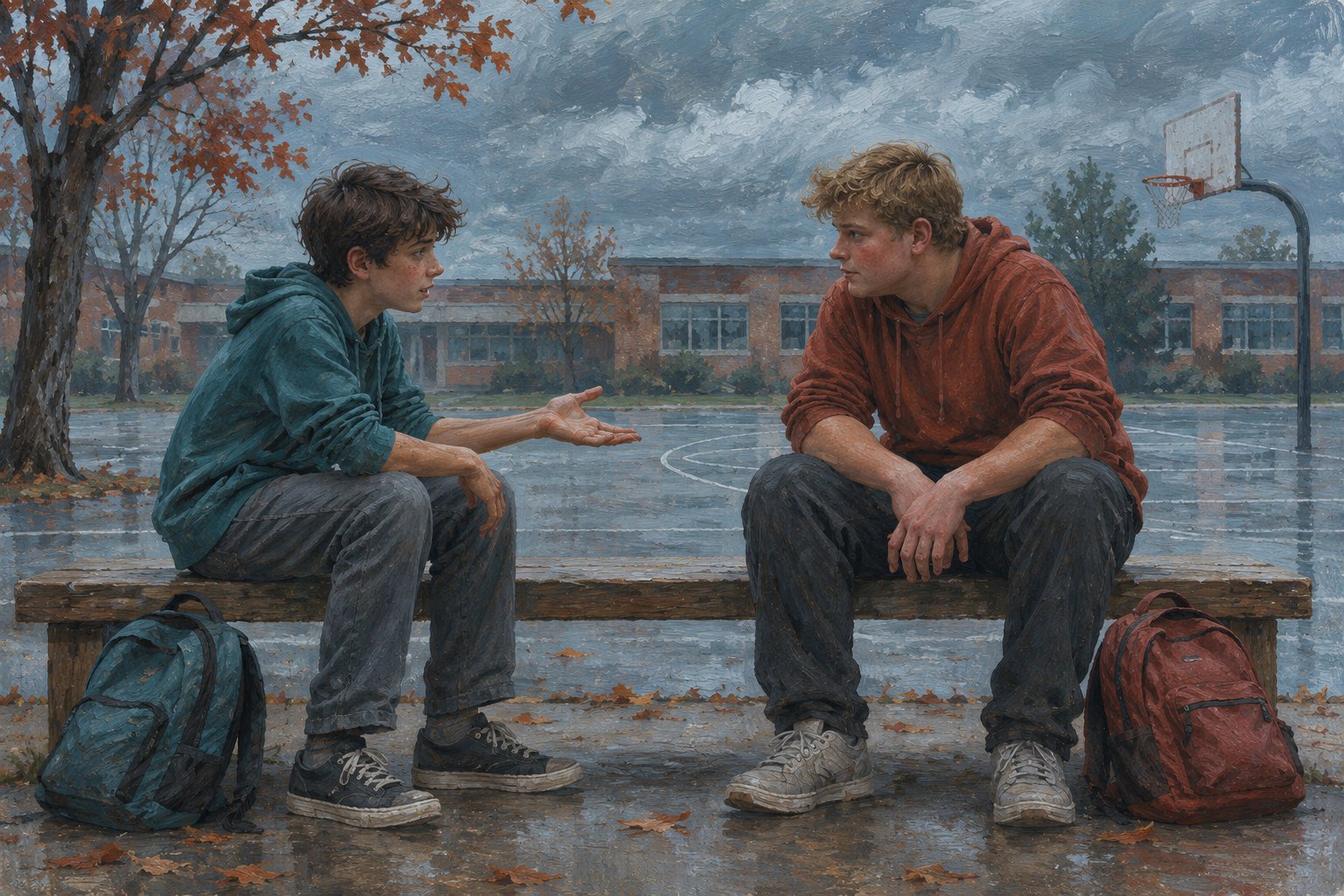
Understanding another child’s suffering does not excuse his actions. It can, however, prevent those actions from determining the victim’s entire moral outlook. Marc’s growth becomes more interesting when he can decide how to respond instead of merely reproducing the aggression directed at him.
That emphasis on relationships connects with our analysis of friendship and emotional courage in Aquamarine. In both discussions, maturity is most meaningful when it changes what a young person can offer someone else.
The final emergency changes the scale of the lesson
The climax brings a school outing, a forest fire, and a bus accident together, placing Marc’s new abilities under immediate pressure. His fear of water becomes part of a survival situation rather than a controlled summer exercise.
Structurally, the escalation has an understandable purpose. Training must eventually lead to independent action, and an emergency removes the comfort of waiting for a teacher’s instructions. Marc has to apply what he has learned.
My reservation concerns the size of the proof demanded. A child’s growing ability to face school, maintain friendships, or respond calmly to intimidation already represents substantial change. Disaster can make those achievements feel preliminary, as though everyday courage requires a spectacular rescue to become convincing.
The distinction resembles the question in our discussion of action and character development in Sunrise on the Reaping: physical danger matters most when it reveals a choice, rather than simply demonstrating a newly acquired skill.
What being a warrior should mean
The most productive interpretation of Way of the Warrior Kid is that strength creates room for generosity. Marc’s progress matters when fear becomes less controlling, leaving him more able to notice other people and make deliberate decisions.
Jake’s corresponding lesson should be that helping someone grow is not the same as making that person resemble you. Military discipline provides his vocabulary, but Marc needs a life larger than his uncle’s training program. Sarah’s care also belongs within that picture: encouragement is most convincing when it adds to a child’s support rather than implying that one impressive adult has supplied everything previously missing.
The film’s compassionate direction gives its familiar premise substance. Its divided attention makes that substance harder to hold onto. The boy’s most meaningful victory is not becoming a smaller version of Chris Pratt’s hero. It is developing enough confidence to decide what kind of person he wants to be.
Original content by this site's editorial team. Published: November 26, 2026 at 22:06:32 PST (Los Angeles time)