A Georgetown University film screening and discussion about wartime sexual violence in Ethiopia brings a demanding subject into a shared viewing space. The pairing matters: watching a film and discussing its subject are related activities, but they require different kinds of attention. A film directs our eyes and organizes our emotional experience. A conversation can examine that organization, clarify what remains uncertain, and ask whose perspective has shaped what we understand.
This is an editorial preview of those critical questions, rather than a review assigning artistic merit to an unseen film. The event’s subject deserves close engagement without invented scenes, reconstructed testimony, or assumptions about the people who appear onscreen. The most useful starting point is a question audiences can carry into the room: does the filmmaking help us understand people as fully as it helps us understand what happened to them?
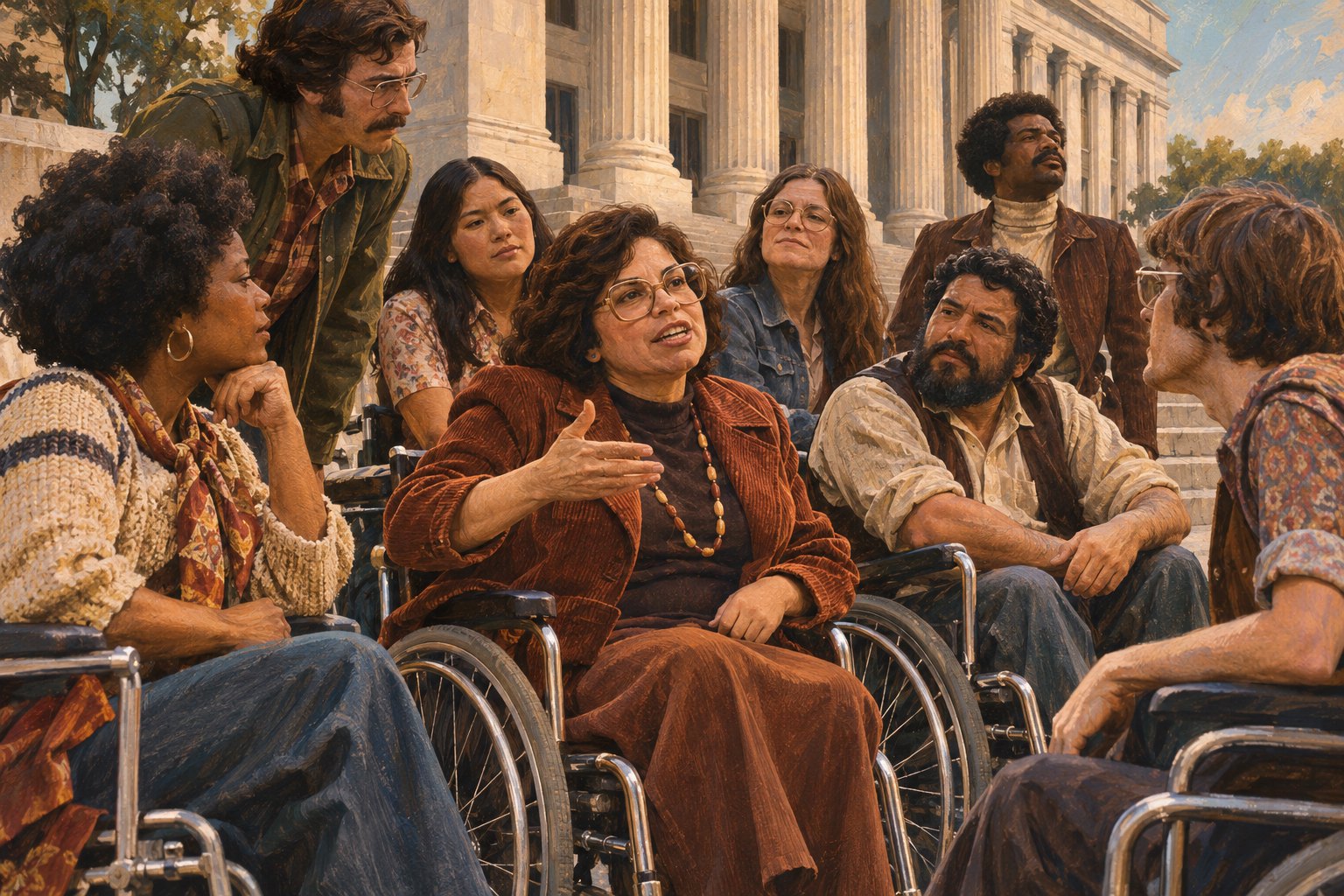
Content note: This article discusses sexual violence without graphic descriptions. The accompanying images are conceptual illustrations, not film stills or photographs of the event.
Begin With People, Not a Predetermined Story
A character-centered approach to criticism usually asks what a protagonist wants, what stands in the way, and how choices change the story. When a film concerns real people and wartime sexual violence, those questions need care. Someone’s experience does not become a satisfying dramatic arc simply because a camera records it. A person may have conflicting priorities, withhold information, or reject the resolution a viewer expects.
My critical preference is for filmmaking that leaves room for that complexity. During the screening, notice whether people can articulate their own concerns or primarily answer questions established by someone else. If the film includes testimony, consider how much space surrounds it. Do we learn about the speaker’s judgments, relationships, or aspirations? Does the film allow an individual to exist beyond the experience of violence?
These are standards to bring to the screening, not claims about what this particular film contains. They help distinguish emotional proximity from meaningful understanding. A close-up can make a face feel familiar while leaving a person’s priorities almost entirely unexplored.
Listen to How the Film Organizes Speech
In a film about sexual violence, words deserve attention beyond their immediate emotional impact. Listen for who introduces a speaker, who interprets an account, and who receives the final word. A narrator, interviewer, expert, or participant can each occupy a different position of authority. Editing determines how those positions relate.
If a personal account is followed by expert commentary, ask what the transition contributes. It might supply necessary context. It might also encourage the audience to treat one person’s experience as an illustration of an argument already settled elsewhere. The distinction depends on the actual sequence, so a useful discussion should refer to specific moments rather than make general accusations about intention.
Memorable dialogue is often central to film criticism, but testimony should not be mined for a line that neatly summarizes suffering. If you quote someone afterward, preserve the wording and context. When you cannot remember the exact words, identify your account as a paraphrase. Accuracy is part of listening.
Look Closely at Restraint, Sound, and Editing
Film form remains relevant when the subject is serious. Music can invite reflection or steer an audience toward an emotion before a speaker finishes. A cut can establish a connection or imply one the images do not independently demonstrate. A long take can provide space, but duration alone does not prove respect.
Watch for the relationship between the intensity of a moment and the information it offers. Does an image clarify something essential? Does a repeated detail deepen understanding, or mainly increase distress? Viewers should be able to discuss those choices without treating their own emotional endurance as a measure of the film’s value.
Restraint also requires interpretation. An absent image might reflect privacy, limited access, an artistic decision, or something the film does not explain. We cannot reliably identify the reason from absence alone. The discussion offers a place to ask about the decision, while recognizing that some production details may appropriately remain private.
Keep Ethiopia Specific in the Conversation
The event concerns wartime sexual violence in Ethiopia. Discussion should preserve that specificity instead of allowing the country to become an interchangeable backdrop for a universal statement about suffering. A film’s geographic and historical explanations matter because they shape how viewers understand responsibility, circumstances, and the limits of an individual account.
As you watch, separate what the film establishes from what you bring to it. Note whether a claim comes from a participant, narration, an onscreen document, or your own inference. These distinctions need not diminish the force of testimony. They make it possible to discuss personal experience and broader explanations without confusing their different scopes.
A useful question afterward is whether the film supplied enough context to understand its central accounts. Another is what requires further investigation. Neither question asks a single film to contain an entire history. Both resist the temptation to leave with more certainty than the viewing supports.
Make the Discussion an Extension of Careful Viewing

The screening-and-discussion format creates an opportunity to move from reaction to inquiry. Our consideration of community-centered film screenings explores the value of watching together. Here, that shared setting also calls for restraint: nobody in the audience should feel invited to disclose personal experiences simply because the subject has entered the room.
Questions about filmmaking can be direct without becoming intrusive. Depending on what the screening presents and who participates in the discussion, useful questions include:
- How were decisions made about which perspectives would guide the film?
- What context was difficult to communicate within its running time?
- How were participants involved in decisions about representing their experiences?
- Which questions does the film deliberately leave unresolved?
Our discussion of how conversations with filmmakers deepen close viewing makes a related point: a specific question about a creative decision often reveals more than a broad request to explain a film’s message. Here, specificity also helps keep the conversation grounded in the work rather than speculative judgments about someone’s inner life.
What Should Remain After the Screening?
The deeper critical issue is the relationship between visibility and authority. Bringing an experience before an audience can create attention, but attention alone does not tell us who controls its meaning. A responsible viewer keeps asking whether the people represented have room to define their own concerns, including concerns that do not produce a reassuring ending.
That is the standard I would bring to this screening about Ethiopia: whether the film and conversation enlarge understanding while preserving individual complexity. The strongest outcome would be more precise listening, clearer questions, and a willingness to recognize what remains unknown. A powerful evening at the movies can begin that work; its emotional conclusion should not be mistaken for the conclusion of anyone else’s story.
Original content by this site's editorial team. Published: November 2, 2026 at 21:19:07 PST (Los Angeles time)