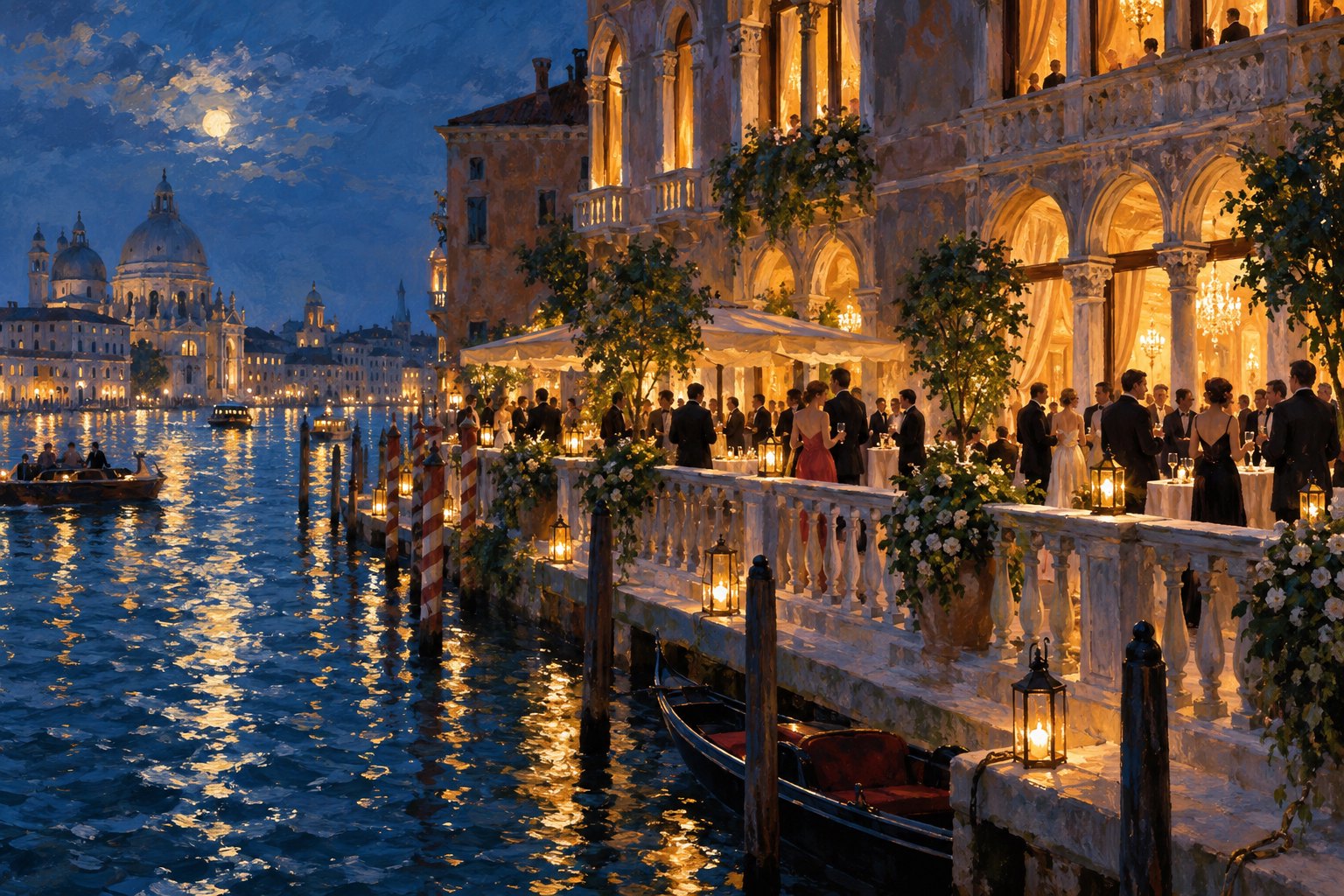
Venice Film Festival 2026 parties are receiving their own spotlight, with Vogue turning its attention to the celebrations surrounding the films. For movie lovers, the attraction is easy to understand: the social world around a festival offers another way to enjoy the people, style, and spectacle associated with cinema. It also raises a useful question. When we look at a glittering party, what are we learning about the movies—and what are we learning about how they are presented?
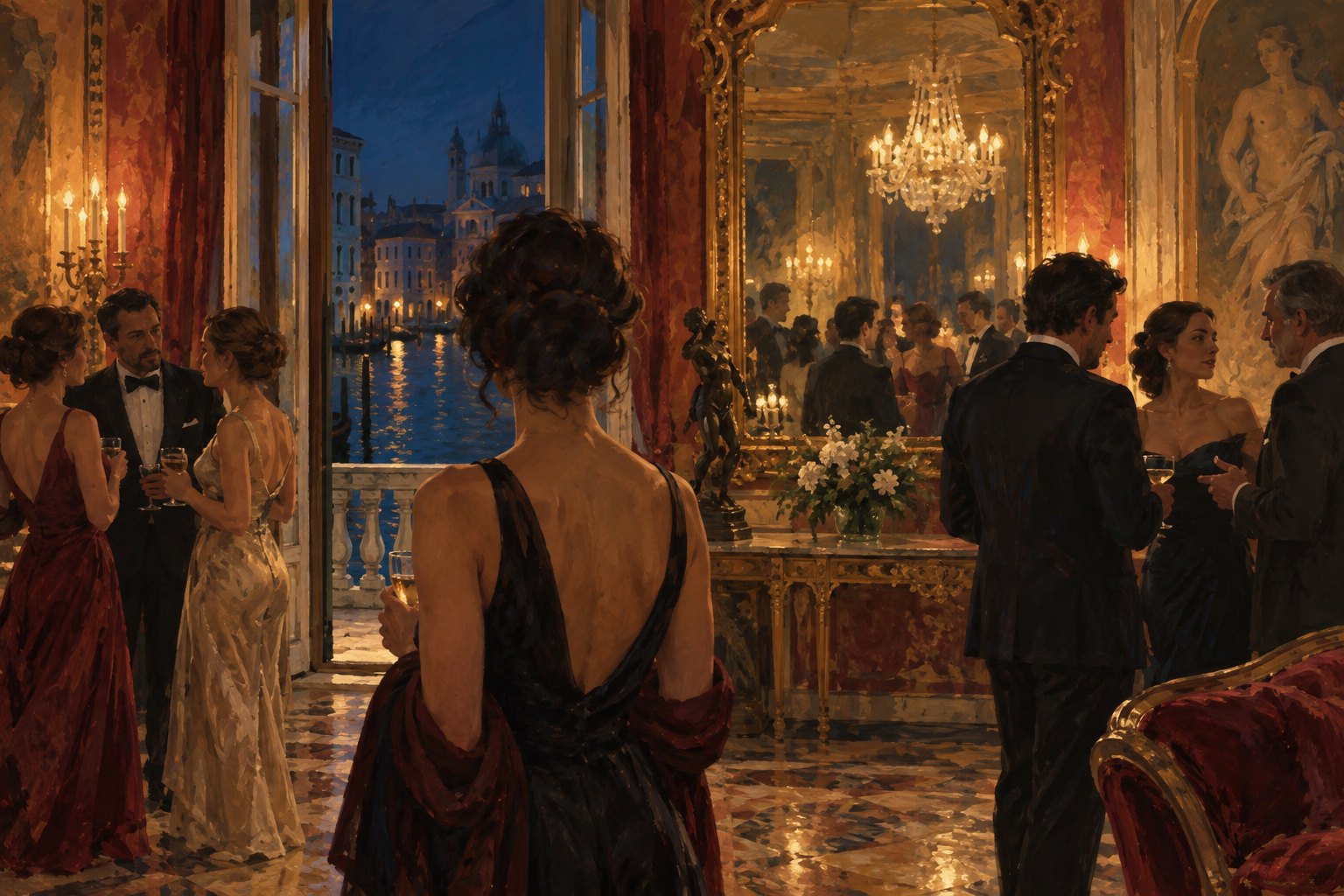
This is a critical look at that relationship, rather than an eyewitness party diary. Specific guest lists, hosts, venues, and encounters are not independently established here. The illustrations depict imagined settings. The interesting territory is the space between a celebration and the story an audience builds around it: how glamour creates expectations, how a star’s public image meets a character, and where a film deserves to speak for itself.
A party has a frame, just as a movie does
A useful way to read festival party imagery is to begin with composition. Who occupies the center? Is the setting given as much attention as the people? Does the image suggest an intimate conversation or a grand entrance? These choices shape a viewer’s impression before any accompanying description explains the occasion.
Consider a hypothetical photograph of an actor standing alone against an ornate wall. It might suggest poise, distance, or self-possession. A wider frame revealing a photographer and a waiting group could make the same moment feel brisk and practical. Neither impression requires the actor to have changed expression. The meaning comes partly from what the frame includes.
That is where film commentary can contribute something beyond identifying clothes. Looking closely at framing, light, and the arrangement of people helps explain why an image feels cinematic. It also keeps interpretation honest: a photograph can convey an atmosphere without establishing what anyone in it was thinking.
Glamour offers a story before the screening begins
My view is that the most interesting aspect of festival glamour is its ability to create anticipation. Formal clothes, carefully composed portraits, and an evocative setting can make a film feel like an occasion before a prospective viewer knows much about its subject. The pleasure is real. Cinema can be a social experience, and the rituals around it can deepen the desire to participate.
But anticipation has its own vocabulary. Elegance can suggest prestige; an exuberant group portrait can suggest warmth; a severe solo image can suggest seriousness. None of those associations establishes the tone of the film being celebrated. A cheerful gathering may surround a devastating drama. An imposing portrait may accompany a playful performance.
For readers following Venice’s party coverage, the useful distinction is between the mood of an event and the experience promised by a movie. Enjoy the former on its own terms. When deciding what to watch, look for a description of the film’s characters, conflicts, and style that can stand independently of the celebration.
The actor at the party is not the character on screen
A party appearance presents a person in a public situation. A performance presents a character through the combined work of acting, writing, direction, editing, costume, and sound. The two images may interact in a viewer’s imagination, but they call for different kinds of attention.
Suppose an actor projects assurance in an event portrait and plays someone indecisive in a film. That contrast can be intriguing. It does not, by itself, prove a remarkable transformation. The evidence would lie in the performance: how the character hesitates, changes tactics during a conversation, occupies a room, or responds when another person takes control.
The reverse deserves equal care. A relaxed public appearance does not make an apparently effortless performance easy work. On screen, an unforced reaction can depend on exact timing. To assess it, we need to see the scene, understand what the character wants, and notice what happens when that desire meets resistance.
This is why a character-centered approach remains valuable even when the subject is festival spectacle. Our guide to six Telluride films connected by identity and reinvention approaches discovery through the people inside the stories. The same curiosity can guide a viewer from a Venice party portrait toward the work that brought an actor to their attention.
What an invitation can—and cannot—tell us
A gathering can be meaningful to the people attending it without revealing its meaning to everyone looking at a photograph. Colleagues may be celebrating shared work. An encounter may be social, professional, or both. Without attributable reporting, the image cannot settle which explanation applies.
That matters when party coverage tempts readers to infer a new collaboration, an acquisition, or a private alliance from proximity. Two people appearing together establishes very little about a future project. Even a confirmed conversation would require additional detail before it became evidence of an agreement.
There is a more rewarding question to ask: does the coverage make the connection to the film legible? Identifying a guest’s role in a production can turn a glamorous image into an introduction to someone’s work. Giving context to a celebration can help readers understand what is being recognized. Specificity makes party journalism more useful than vague claims that everybody important was there.
How to enjoy the spectacle with a critic’s eye
Readers do not need to turn every party photograph into homework. Still, three small habits can make the experience richer:
- Separate observation from interpretation. Clothing, setting, and visible gestures can be described. Motives, relationships, and private reactions require reporting.
- Follow a face toward a role. If an appearance catches your attention, find out what the performer actually does in the film. A character’s central dilemma is a better starting point than an assumption based on the actor’s public manner.
- Keep aesthetic pleasure and critical judgment distinct. A beautiful image can succeed completely as an image. A movie still needs to earn your attention through its own choices.
That last habit also helps when festival excitement becomes a broader verdict. Our commentary on reading festival reactions beyond awards buzz considers how to turn enthusiasm into useful viewing information. With party coverage, the equivalent move is to let an appealing moment spark curiosity without making it carry an argument about quality.
The deeper appeal: cinema as a world we can enter
The fascination with Venice’s celebrations suggests something more generous than a simple appetite for luxury. In my reading, these images offer a fantasy of proximity: the possibility that cinema is a world of rooms, conversations, friendships, and shared occasions rather than only a finished object on a screen.
That fantasy has an emotional pull. Viewers spend time with performances and may feel attached to the people who create them. Seeing those people gathered elsewhere extends the experience, even though the apparent access remains selective and the individuals retain private lives beyond the frame.
The most satisfying way to approach Venice Film Festival 2026 party coverage is to appreciate this additional visual theater while remaining curious about the films. Let the setting delight you. Notice how a portrait constructs a star. Then carry that attention into a screening, where a glance has consequences within a scene and a character’s choices can change the story. The celebration supplies an invitation; the movie determines what happens after we accept it.
Original content by this site's editorial team. Published: September 9, 2026 at 04:34:09 PDT (Los Angeles time)