The Transformers: The Movie is extending its theatrical run as its “Apology Tour” rerelease gains box-office momentum, according to [The Hollywood Reporter’s report](https://www.hollywoodreporter.com/movies/movie-news/transformers-the-movie-40th-rerelease-extends-box-office-1236709056/). For viewers deciding whether to revisit the animated film, the strongest reason lies beyond nostalgia: this is an unusually forceful adventure about losing the person who made the world feel manageable.
The extension offers another opportunity to encounter that story theatrically. It does not, by itself, explain why audiences are buying tickets, and a longer run should not be mistaken for identical availability at every theater. Check local listings before making plans.
Full spoilers follow for the 1986 film, including Optimus Prime’s death and the ending. My assessment: the movie remains visually exhilarating and emotionally potent, although its hurried succession story sometimes asks music and mythology to supply development the characters have not received.
Optimus Prime wins the battle and leaves a larger problem
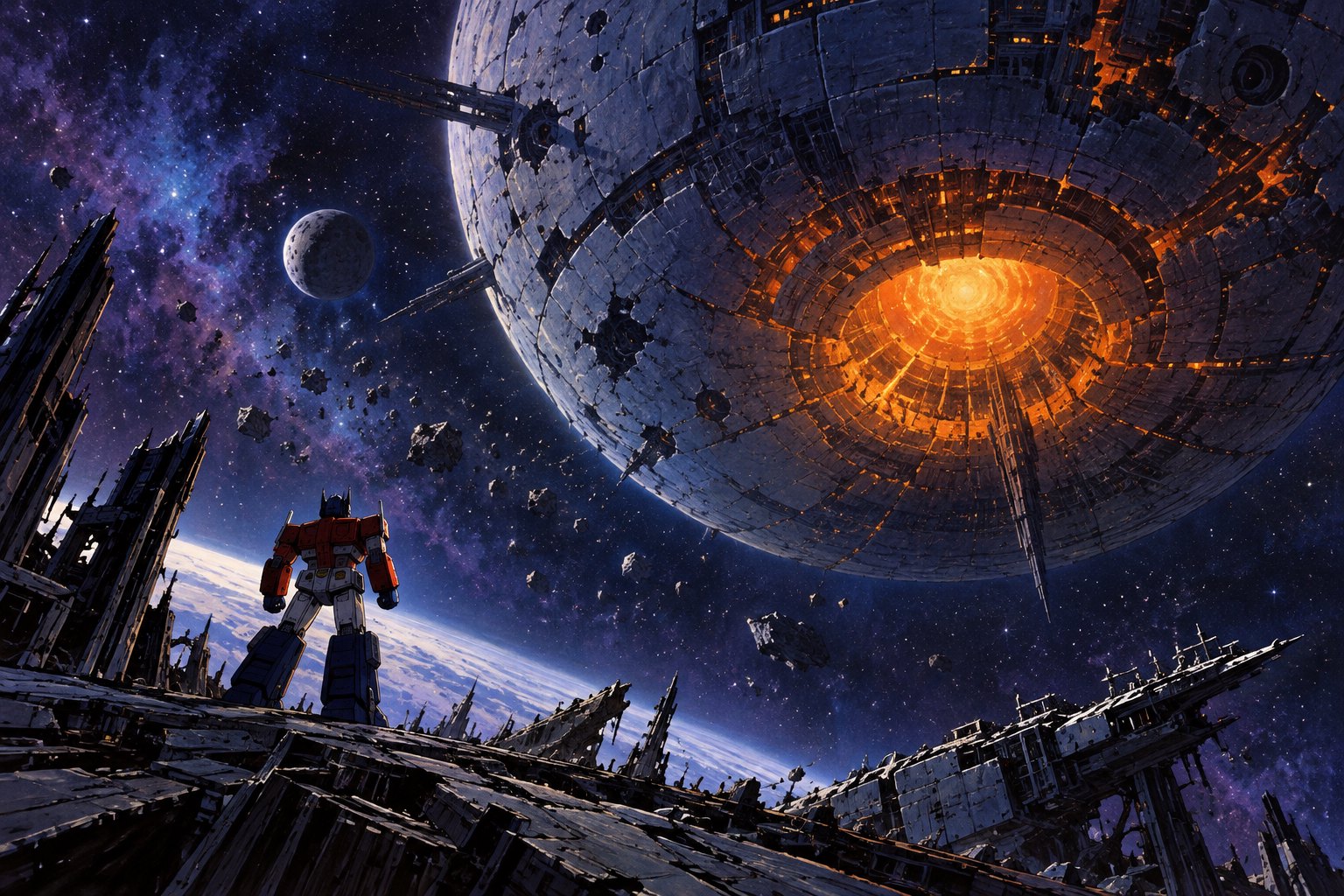
The opening movement makes safety feel temporary. Unicron consumes a world; the Decepticons attack an Autobot shuttle; the fighting reaches Autobot City. These escalating threats establish a universe in which familiar faces offer little protection against sudden destruction.
Then Optimus arrives. His confidence briefly restores the expectation that a sufficiently capable hero can put everything right. “One shall stand, one shall fall” sounds like a promise that the conflict can finally resolve into something clear.
Instead, his confrontation with Megatron leaves both leaders gravely wounded. Optimus dies after passing responsibility for the Matrix of Leadership to Ultra Magnus. The scene’s power comes from its change of pace: after so much movement, the film requires its surviving characters to stand still and witness something they cannot fix.
From Optimus’s perspective, leadership means preparing others to continue without him. He spends his remaining strength on succession. That makes his death more substantial than a shocking removal of the most recognizable character. His final task is to accept that the community must outlive its protector.
Hot Rod deserves a closer reading than the blame allows
Hot Rod intervenes when Megatron reaches for a weapon, only to become a hostage and obstruct Optimus’s response. The intervention goes terribly wrong. But reducing the scene to Hot Rod killing Optimus confuses a failed rescue with the deliberate violence of the attacker.
The film creates a painful contradiction: Hot Rod’s desire to help is valuable, while his judgment is not yet reliable. That is a much better foundation for a successor than effortless competence. He needs to learn how to turn concern into useful action.
There is an important limitation, however. The movie does not spend much time exploring his remorse. Reading his journey as an answer to failure is persuasive; describing it as an extended, explicitly dramatized struggle with guilt would overstate what appears onscreen. The adventure keeps moving, often before an emotional consequence has fully registered.
His relationship with Kup supplies some of the missing texture. Their exchanges put youthful impatience beside experience, allowing Hot Rod to learn without becoming a miniature Optimus. This distinction matters: inheriting responsibility should not require inheriting someone else’s entire personality. It is the kind of character question that also shapes our discussion of what changes when a familiar figure becomes a story’s center.
Ultra Magnus carries the office without receiving certainty
Ultra Magnus is the film’s most revealing alternative to Hot Rod. He receives the Matrix through a legitimate handoff, accepts an enormous burden, and discovers that possession does not guarantee access to its power.
His inability to open it can look like a simple failure of worthiness. I find the more compelling reading in the separation between duty and destiny. Magnus does the necessary work of command without knowing whether the story will reward him for it. He is responsible for others before he has any assurance that he can save them.
The film is less convincing about the physical consequences. Magnus is blasted apart and later repaired by the Junkions, while Optimus remains dead. That inconsistency weakens the rules of danger. The emotional distinction is understandable, but the movie offers little help to viewers trying to understand why one loss is reversible and another is final.
Galvatron’s transformation is a trap
Megatron’s transformation into Galvatron provides a darker parallel to the Autobots’ succession. Unicron gives him a renewed body and greater destructive capacity, but survival comes with compulsory service. The former commander becomes someone else’s instrument.
His attempt to use the captured Matrix against Unicron exposes the limits of his imagination. He wants to reverse the relationship and become the master. Freedom, as he understands it, still requires somebody else’s submission.
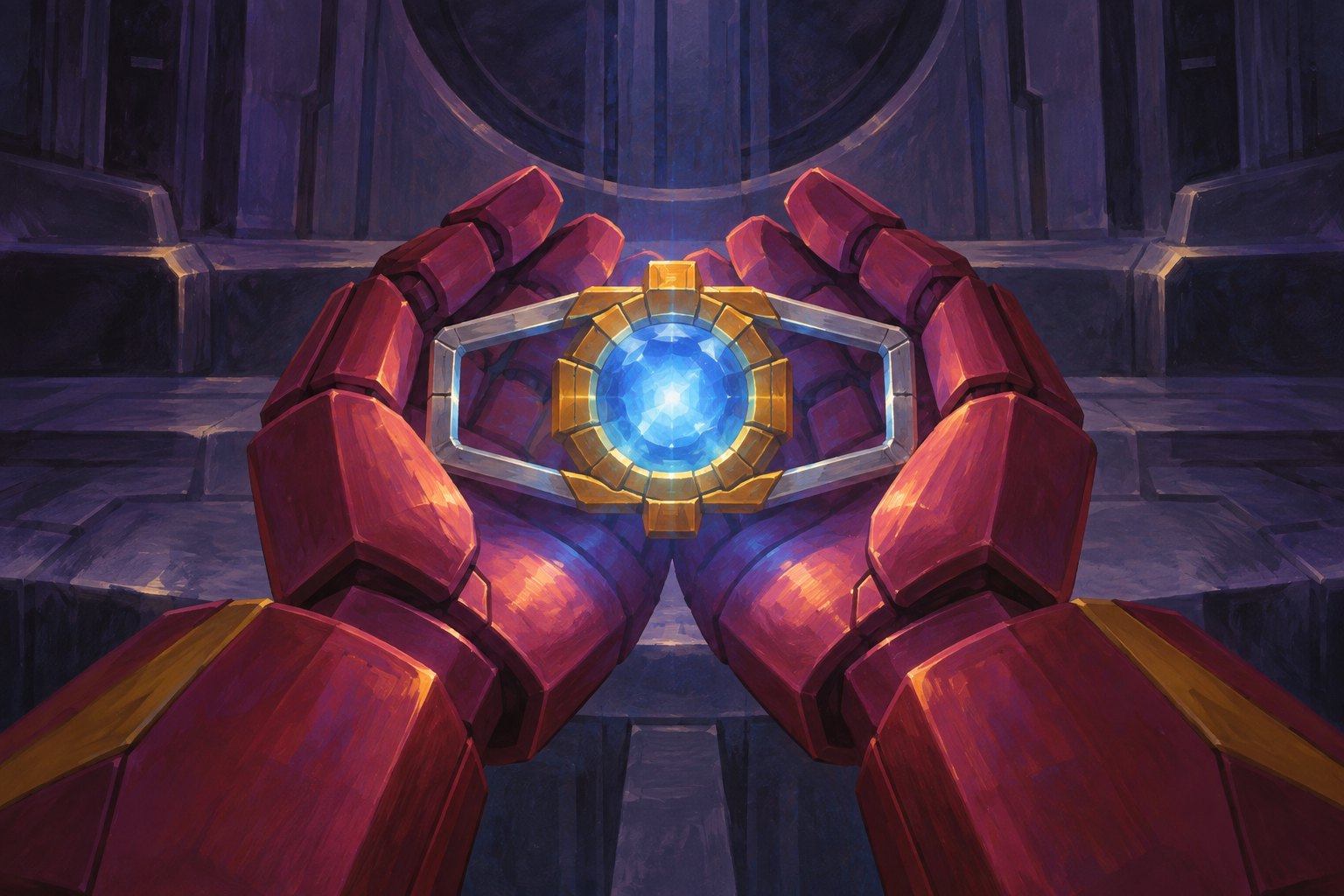
Hot Rod eventually uses the Matrix to defeat a threat to others. Galvatron treats it as a means of control. The contrast makes the artifact more interesting than a weapon waiting for the correct owner: its place in the story distinguishes stewardship from possession.
Unicron enlarges that conflict until domination becomes an appetite capable of swallowing entire societies. His scale makes the factional war look small, yet Galvatron cannot simply abandon the habits that have defined him. The villain’s predicament is tragic in outline, even when the film prefers menace to introspection.
The spectacle earns the big screen, even when the pacing falters
The movie’s strongest visual idea is the collision between hard mechanical surfaces and enormous, almost mythic spaces. Bodies, cities, and planets can all become vulnerable machinery. A theatrical presentation gives that change of scale room to register.
The music pushes the action toward emotional certainty. Heroic moments arrive with such force that hesitation can feel almost impossible. That energy is exhilarating, but it also reveals a weakness: the soundtrack sometimes announces a breakthrough more fully than the preceding drama has earned it.
The middle section moves through encounters and locations with relentless enthusiasm. That keeps the adventure lively while limiting the time available for relationships, especially within the larger Autobot group. Arcee, for example, contributes to the group’s survival without receiving an interior journey comparable to Hot Rod’s.
For returning viewers, familiarity can turn that compression into pleasurable momentum. Newcomers may find it harder to separate the many characters or understand the weight of their losses. The value of seeing an older film with an audience—also explored in our piece on Milwaukee’s Oriental Theatre and the life of a working cinema—does not erase those storytelling limitations.
The ending asks whether inheritance can become action
When Hot Rod claims the Matrix, Optimus’s voice declares, “Arise, Rodimus Prime.” The transformation resolves the succession plot through recognition: the inexperienced survivor becomes the leader the crisis requires. These lines and their dramatic contexts are preserved in the [film’s dialogue transcript](https://transcripts.simpleremix.com/script.php/the-transformers-the-movie-1986-Nxa).
The ending depends on destiny, which is also its shortcut. Hot Rod receives confirmation that the film has only partly earned through gradual development. Nevertheless, the emotional result works because succession does not undo bereavement. Becoming Rodimus cannot restore the relationship he has lost.
Watch the earlier Matrix handoff closely: Hot Rod catches it before it reaches Magnus. This is visual foreshadowing rather than a hidden Easter egg, and it makes a second viewing rewarding. The eventual successor briefly holds the future before anyone recognizes what that contact means.
That is why the “Apology Tour” framing feels both apt and incomplete. The film’s wound is central to its achievement. Beneath the frantic battles lies a difficult idea: loving a protector cannot keep that protector present forever. What can survive is an example—and the uncertain, necessary work of acting on it.
Original content by this site's editorial team. Published: September 24, 2026 at 04:15:47 PDT (Los Angeles time)