The Cowboys’ exploitation of the Titans’ Cover 3 defense is the central issue identified in Paul Kuharssky’s football film-review headline. The useful question is what that diagnosis means: how can a defense designed to protect the deep field still leave an offense room to operate?
Here, film review means studying game footage. This is a tactical companion to that discussion, rather than a review of a feature film. The headline establishes the subject; it does not, by itself, establish individual assignments, particular route combinations, or responsibility for specific completions. The examples below explain possibilities within the coverage, not verified reconstructions of Cowboys plays.
What Cover 3 Asks the Titans to Protect
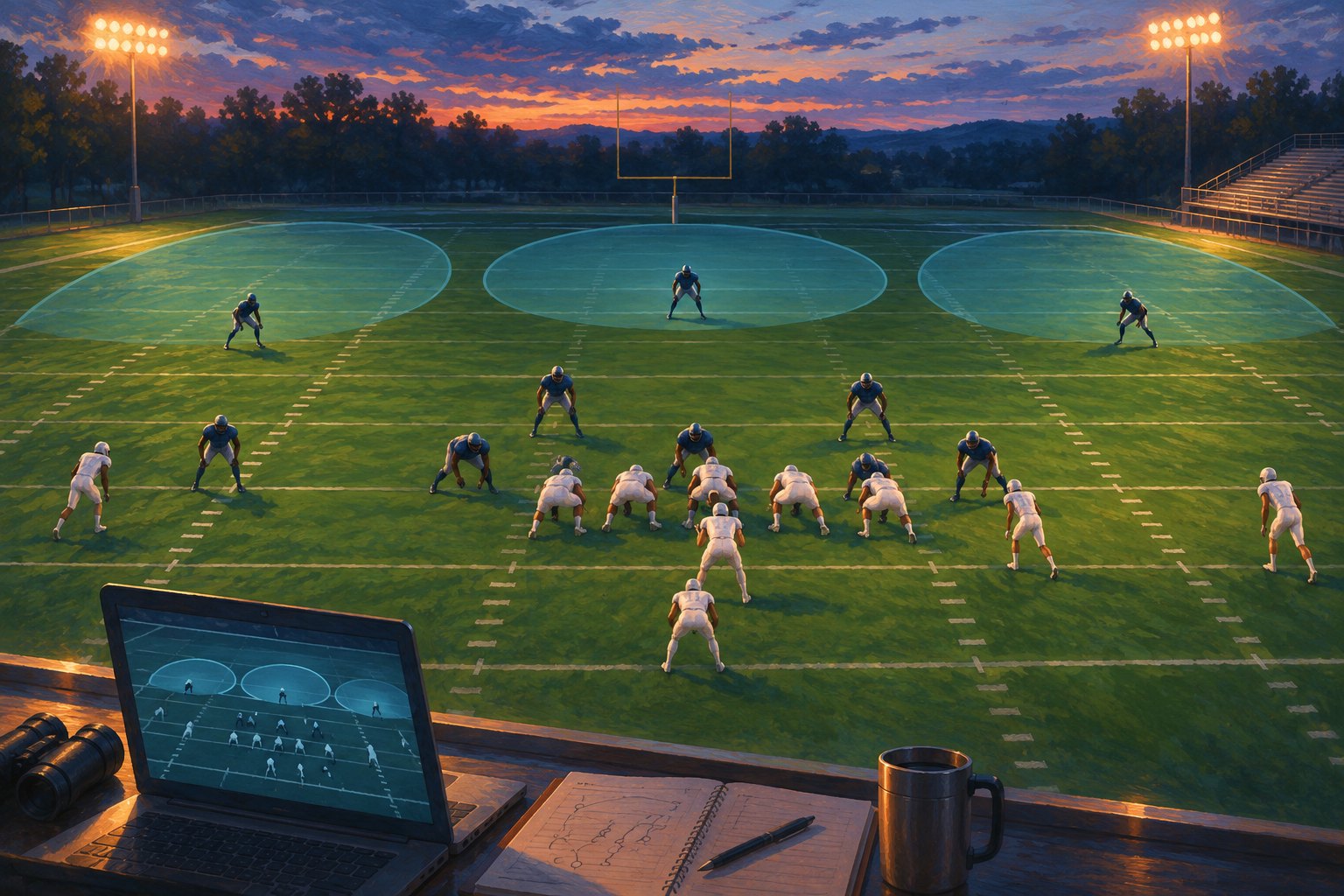
At its simplest, Cover 3 divides the deep field into three areas. A common arrangement has a cornerback responsible for each outside third and a safety responsible for the middle third. In a conventional four-man rush, four other defenders handle underneath coverage.
That structure gives the defense depth across the field while keeping players available closer to the line of scrimmage. Its challenge is the space between those layers. A defender protecting against a deep pass cannot simultaneously stand in every throwing lane beneath him.
Those areas are not automatically mistakes. Every coverage makes tradeoffs. The important questions are whether a defense can limit the available throw, close on the receiver, and prevent a manageable completion from becoming a damaging gain.
Cover 3 also describes a family of coverages. Some versions emphasize dropping into areas and reading the quarterback. Others use matching rules that tell defenders to carry particular receivers as routes develop. Recognizing three deep defenders is therefore a starting point, not a complete explanation of the call.
How an Offense Can Create an Advantage
Put Short and Intermediate Routes Near the Same Defender
Imagine an outside receiver running deep, another receiver breaking toward the sideline at an intermediate depth, and a third entering the short outside area known as the flat. This hypothetical arrangement stretches one side of the coverage at multiple levels.
The deep route can occupy the cornerback. An underneath defender then faces a difficult choice: move toward the short receiver or gain depth beneath the intermediate route. The offense wants that decision to open a throwing window.
Timing matters as much as spacing. A window that exists for an instant may disappear before a late pass arrives. Conversely, a well-timed throw can exploit a small separation without any defender being completely out of position. For a Titans-Cowboys review, this is one mechanism to investigate—not a route combination to assume Dallas used.
Make the Middle Safety Account for Multiple Threats
Vertical routes through the interior can stress the boundaries between deep coverage areas. If threats develop on both sides of the middle safety, the offense may try to influence his movement before throwing elsewhere.
But counting receivers and deep defenders does not settle the play. Underneath defenders may carry routes, disrupt releases, or narrow the available lane. A safety’s apparent hesitation might reflect competing responsibilities rather than indecision.
The revealing moment is often earlier than the catch: which route demanded attention, who supplied help, and when did that help become unavailable?
Take the Space the Defense Concedes
Exploiting a coverage does not always require a spectacular deep pass. Short completions can be useful when defenders protect depth and the offense delivers the ball before pursuit arrives.
The distinction is situational. A short catch followed by an immediate tackle may satisfy the defense. The same completion can favor the offense if it moves the chains, creates an easy next down, or gives the receiver room to run. Calling either outcome a coverage failure without considering the situation misses the point.
Read the Play Through Each Participant’s Responsibilities
The quarterback’s perspective is about identifying a usable window while the protection holds. A successful throw may depend on anticipation, but it also depends on receivers reaching the right space at the right time.
For an outside cornerback, protecting depth may mean allowing a receiver room underneath. A replay that ends at the catch can make that positioning look passive. Watching the entire route distribution may reveal why stepping forward would have exposed a more dangerous throw.
For an underneath defender, the problem is often conflicting movement. One receiver pulls him outward while another threatens the space behind him. His feet and shoulders can reveal which threat he is trying to address, although footage alone may not disclose his precise assignment.
The receiver who never touches the ball also deserves attention. His route may remove a defender from the eventual passing lane. That question of overlooked contribution connects with our discussion of why supporting players matter in Jonathan Macri’s Giving Thanks: the most visible participant does not necessarily explain the whole result.
How to Watch a Titans-Cowboys Replay More Carefully
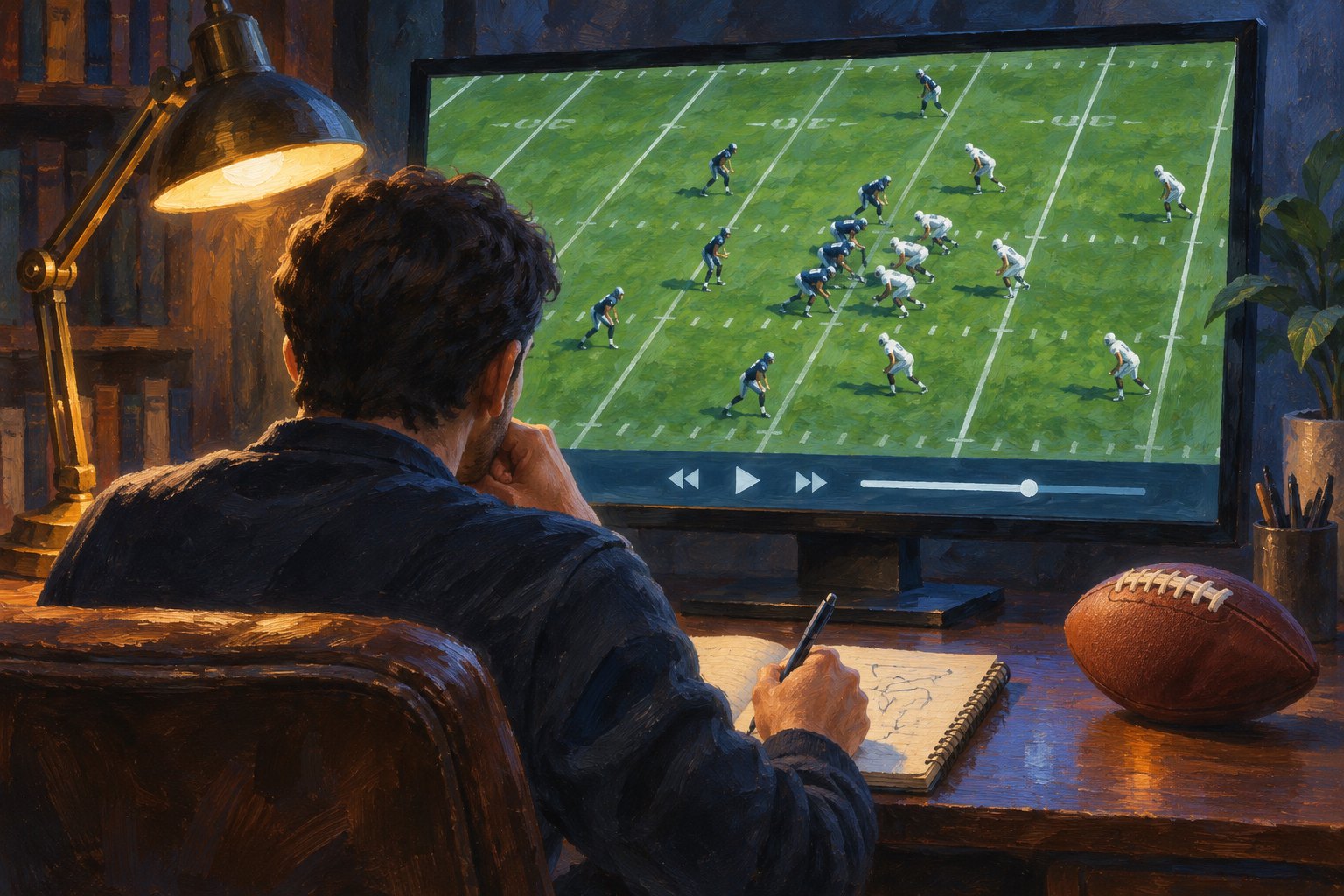
- Begin before the snap. Note receiver spacing, defensive depth, and any movement. Treat the initial alignment as a clue rather than proof of the coverage.
- Follow the defenders after the snap. Watch whether the secondary rotates and which players take the deep areas. An initial look can change once the play begins.
- Watch away from the ball. Identify routes that occupy defenders or pull them away from the eventual target.
- Pause at the release. Examine the throwing lane when the quarterback commits. A defender arriving late at the catch point may have started from an assignment elsewhere.
- Include the protection and finish. Time in the pocket affects how long routes can develop. Tackling determines whether an allowed completion remains contained.
Camera framing matters throughout. A tight broadcast shot can hide the safety or remove a crucial route from view. A wider angle can explain relationships that the original shot leaves invisible. Our analysis of Matt Damon’s Ford Racing ad and its cinematic associations considers another sports-related screen experience in which presentation shapes interpretation. In game study, that awareness should encourage careful conclusions about what a frame actually shows.
The Stronger Interpretation Goes Beyond Blame
My view is that the most useful reading of the Cowboys’ Cover 3 advantage begins with decisions rather than labels. Saying the Titans played Cover 3 identifies a structure. Explaining how an offense stretched that structure, influenced a defender, and delivered the ball on time identifies a mechanism.
That distinction also changes the discussion of adjustments. Depending on the actual problem, a defense might need different route-matching rules, better disguise, tighter spacing, improved pressure, or more reliable tackling. Those remedies address different failures; they are not interchangeable.
Kuharsky’s headline raises a specific tactical issue, but it should not become a shortcut to declaring an entire coverage unusable. The deeper lesson is about coordinated responsibility. An offense succeeds when its movements make defensive choices harder. A worthwhile film review shows how those choices developed—and respects the difference between what the footage reveals and what the viewer can only infer.
Original content by this site's editorial team. Published: November 26, 2026 at 10:41:17 PST (Los Angeles time)