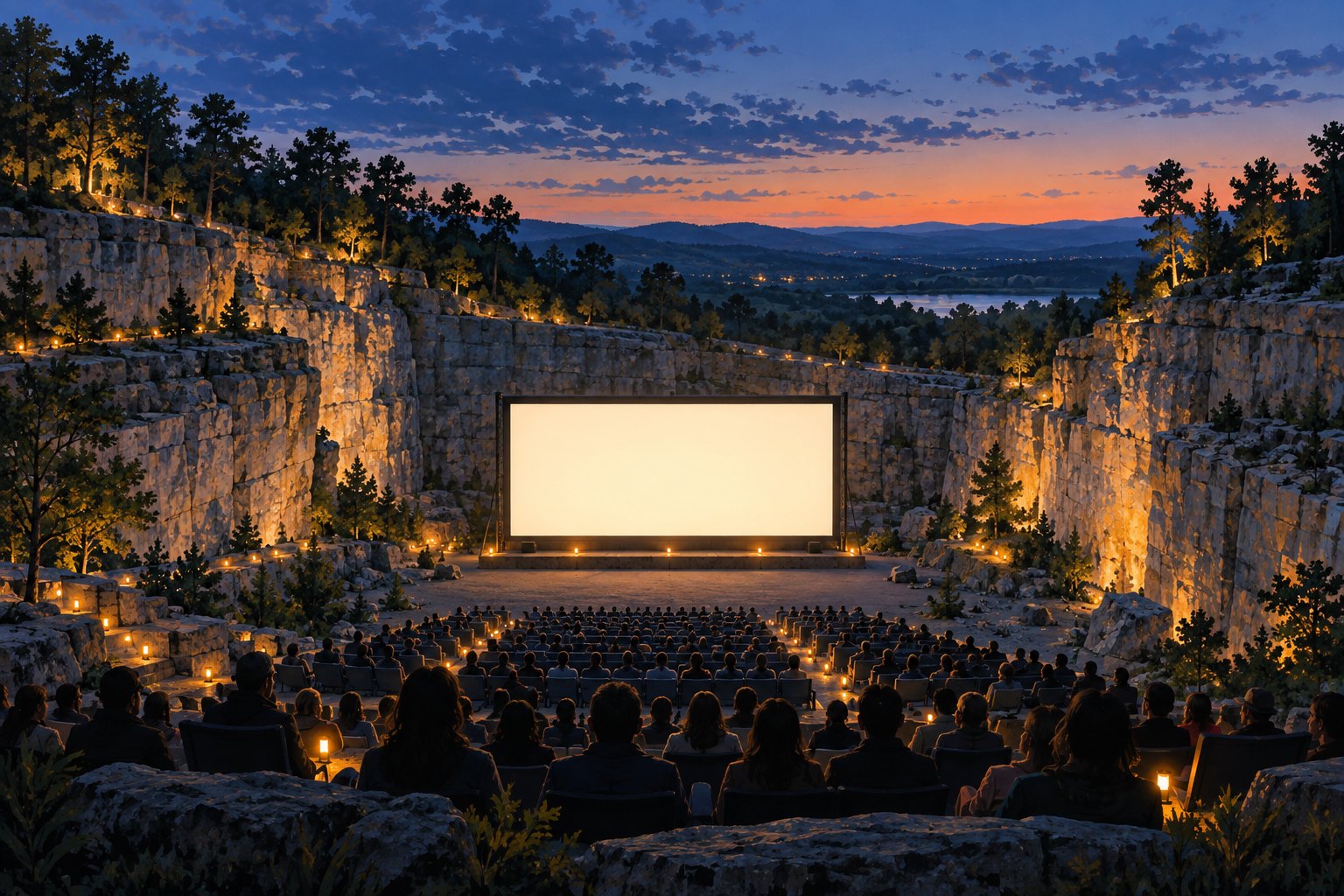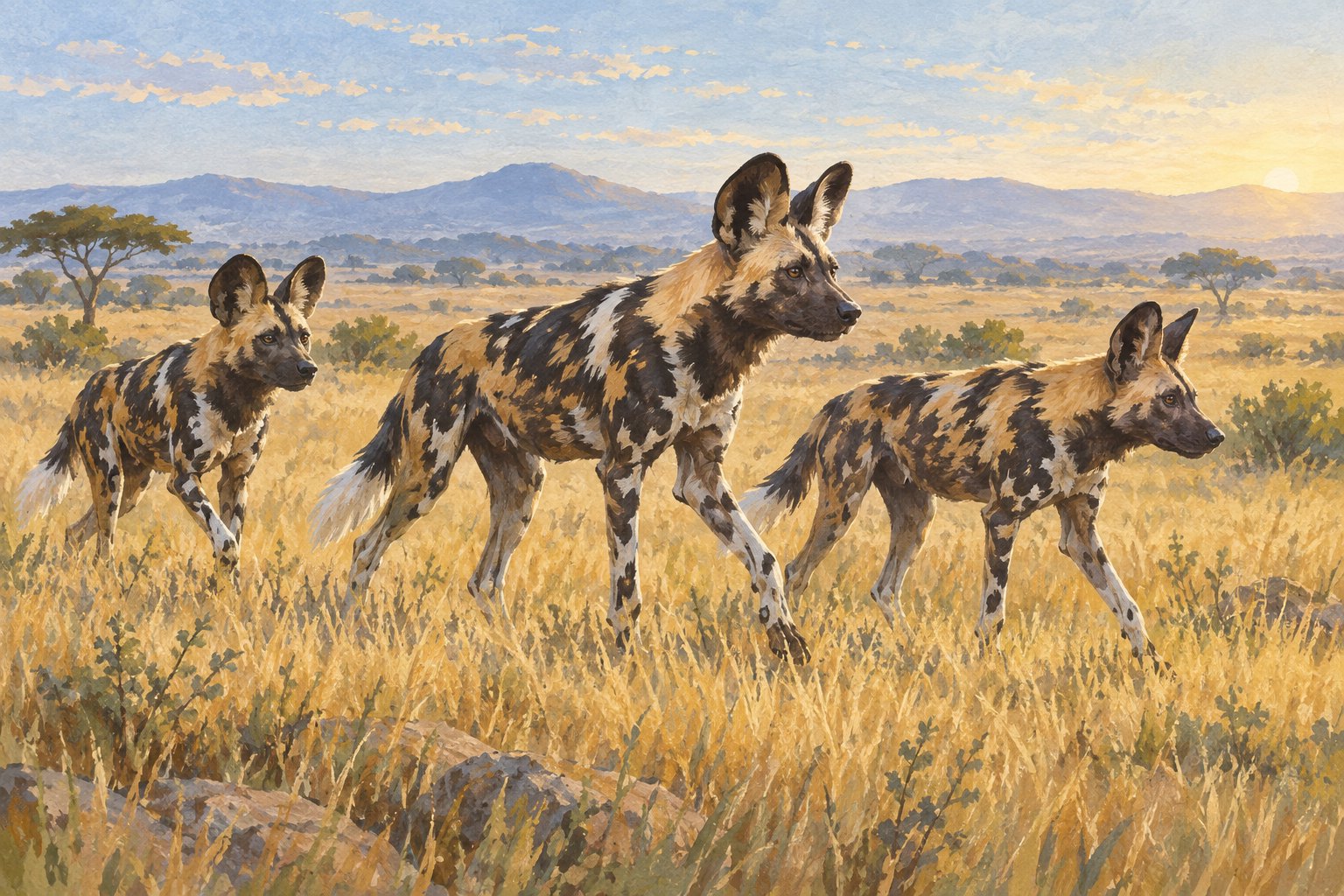
Three wild dog brothers made what The Guardian describes as Africa’s longest journey. Its phrase “Like a Disney movie” gives that wildlife story an immediate cinematic frame. Before we know individual personalities or particular episodes, we already have the outline of an adventure: siblings, distance, and the anticipation of what comes next.
The comparison is compelling because it makes an enormous journey feel intimate. A record asks us to comprehend scale; three brothers give us someone to follow. For movie lovers, that shift is the story’s most interesting feature. It reveals how quickly we turn movement into a quest and animals into protagonists.
This is commentary on the story’s cinematic appeal, rather than a review of a released film. The Disney reference is a comparison, not an adaptation announcement. There are no screen performances, scripted exchanges, or movie scenes to evaluate. What deserves examination is the storytelling instinct the brothers awaken—and what that instinct helps us see.
Why three brothers already feel like an ensemble
A lone traveler invites one kind of attention. We watch an individual navigate the world and measure every obstacle against that individual’s resources. Three related travelers introduce another possibility: our attention can move between the journey and the relationships within it.
In a fictional screenplay, a writer might distinguish siblings through contrasting temperaments. One could be impulsive, another cautious, another the mediator. That arrangement creates disagreement without requiring the group to stop caring about one another. It is an efficient dramatic structure, but assigning those roles to these dogs would be invention.
The more interesting response is to notice how readily we expect such roles. The word “brothers” encourages us to imagine a family dynamic before we have evidence of one beyond kinship. We begin looking for leadership, loyalty, friction, or reassurance. Our familiarity with ensemble storytelling starts doing work that observation has not yet done.
My reading is that the emotional attraction does not require those invented personalities. Three lives sharing a journey are enough to sustain attention. Their relationship can matter without being translated into a human sibling comedy, and their individuality can remain an open question.
A long journey becomes a story through perspective
Distance alone does not produce compelling cinema. A line crossing a map can establish an impressive achievement while leaving a viewer emotionally untouched. The dramatic question is how that distance becomes experience: what the audience can notice, anticipate, and understand from moment to moment.
Consider two hypothetical ways of presenting the brothers. An immense landscape could make them appear vulnerable through scale. A closer view could direct attention toward posture, proximity, and movement. Neither approach needs dialogue, yet each would encourage a different relationship between audience and subject.
The wide view asks us to consider the world around the animals. The close view encourages us to read the animals themselves. A thoughtful wildlife film could move between those perspectives, allowing the terrain to retain its importance without reducing the travelers to tiny marks in a beautiful composition.
A related issue shapes our discussion of the survival-story possibilities in Heart of the Beast: an outdoor setting acquires dramatic force through the vulnerable lives moving through it. Here, the brothers make the abstract idea of a vast journey emotionally legible.
How images can suggest feelings they cannot prove
Looking closely at an animal can create a powerful impression of understanding it. A pause appears thoughtful. A turned head seems concerned. An animal remaining near another may look protective. Those impressions can be moving while still exceeding what an image establishes.
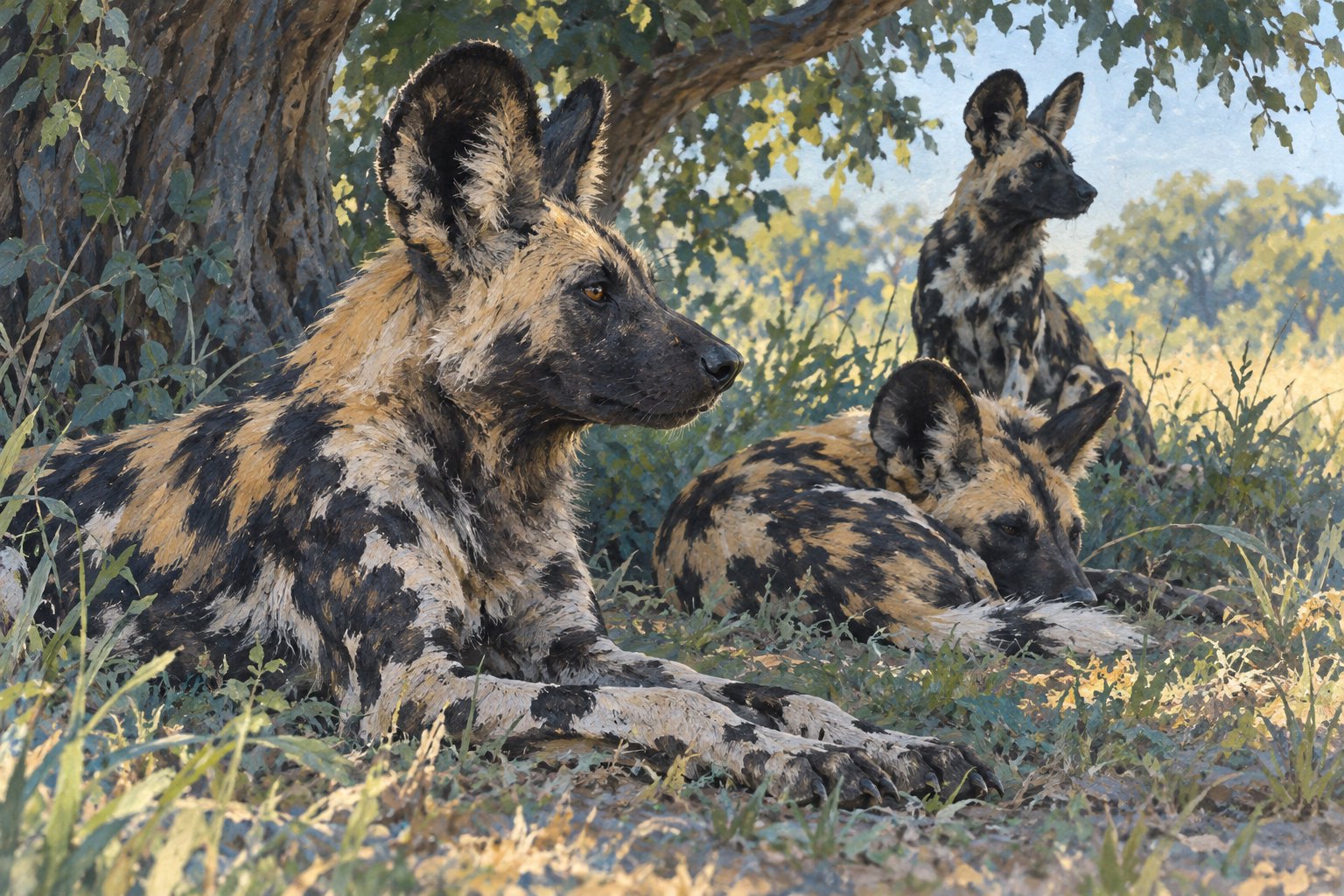
The illustration above offers a useful example. Different postures invite different readings: watchfulness, ease, perhaps companionship. But the image is an interpretive composition, not a documented episode from the brothers’ journey. Its emotional effect comes partly from arrangement and from the associations a viewer brings to it.
Moving images add further persuasive tools. Hold a shot longer and a glance can acquire apparent significance. Follow it with an image of another animal and the viewer may infer a response. Add a musical cue and uncertainty can suddenly feel like anxiety, tenderness, or triumph.
For me, the strongest character-centered approach would preserve a distinction between observable behavior and attributed motive. It could bring us close to the brothers without pretending to give us direct access to their thoughts. That restraint would make the encounter more absorbing: we would have something to discover instead of receiving a personality already packaged for us.
What the Disney comparison gives—and what it leaves unresolved
“Like a Disney movie” is effective shorthand because it offers an emotional invitation. The brothers become approachable. Their journey sounds like something an audience might follow with affection, suspense, and hope.
Yet the comparison also encourages expectations about structure. We may start anticipating a clearly defined goal, escalating challenges, and an ending that explains what the adventure meant. Those are useful tools in fiction. Applied too confidently to real events, they can make uncertainty look like a gap that needs filling.
The distinction matters particularly when considering an endangered-species story. A satisfying account of three individuals cannot, by itself, answer every larger question their experience raises. Emotional resolution and an adequate understanding of the issue are separate achievements.
That does not make wonder a shallow response. Wonder can be the beginning of sustained attention. The weakness would be allowing the pleasure of an extraordinary tale to stand in for curiosity about the conditions surrounding it.
Our analysis of sustained tension in a wilderness story considers a related dramatic problem: an evocative premise still needs meaningful perspective. With the brothers, the essential discipline is recognizing where our interpretation begins.
The deeper meaning is in how we watch
What makes this story valuable to film commentary is the speed with which it exposes our narrative habits. We recognize kinship and expect character development. We encounter distance and anticipate an adventure. We hear about an exceptional achievement and want a conclusion that feels proportionately uplifting.
Those habits are not inherently misleading. They help us care. But caring becomes more thoughtful when we recognize that the animals need not fulfill the roles we imagine for them.
My judgment is that the brothers’ greatest cinematic appeal lies in that tension. Their journey invites the emotional investment of a family adventure while remaining a real event that exceeds our preferred dramatic patterns. The most rewarding response is to follow with attention, feel the pull of the movie comparison, and leave the brothers enough room to remain animals whose lives are not arranged around our expectations.
Original content by this site's editorial team. Published: September 17, 2026 at 19:05:41 PDT (Los Angeles time)