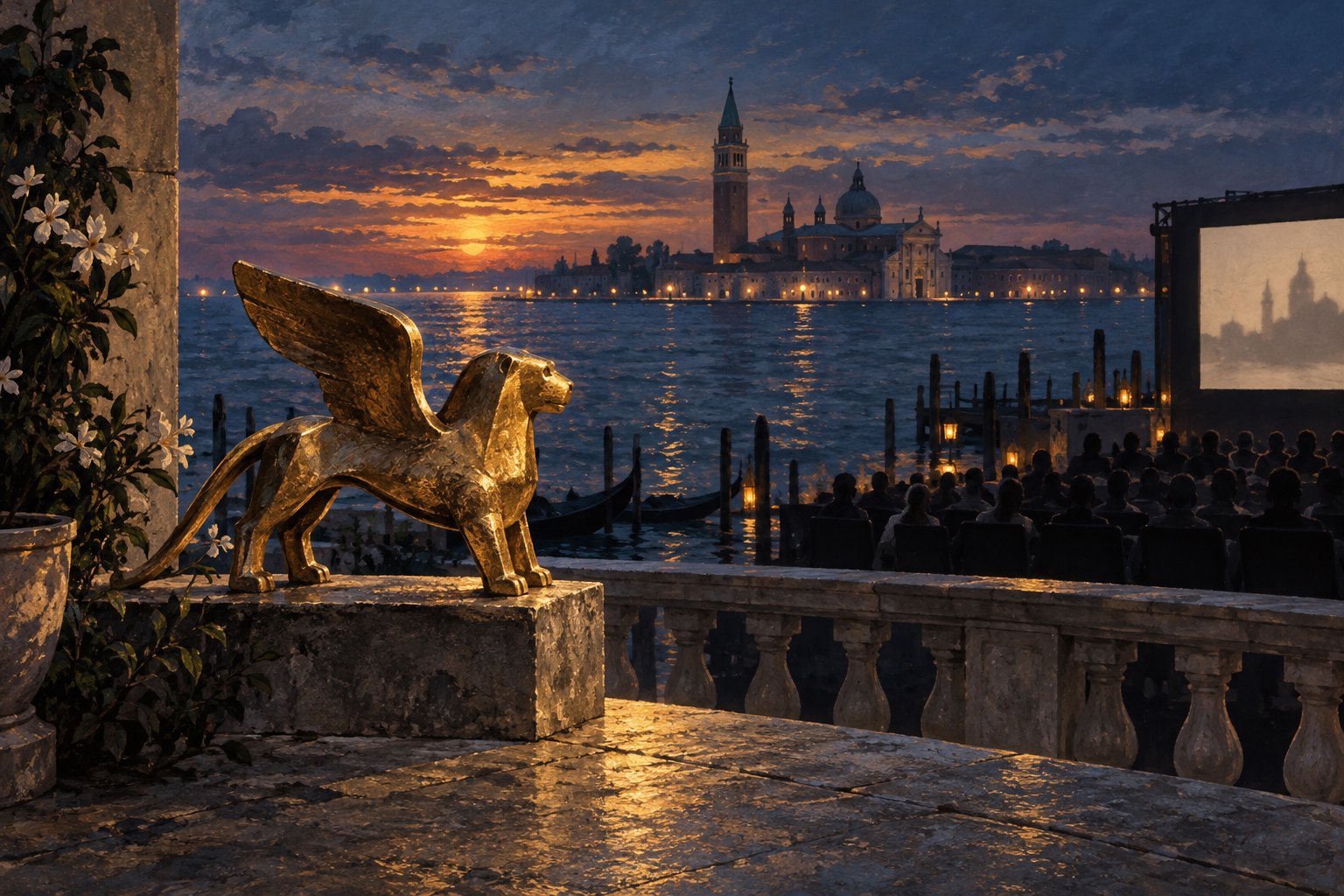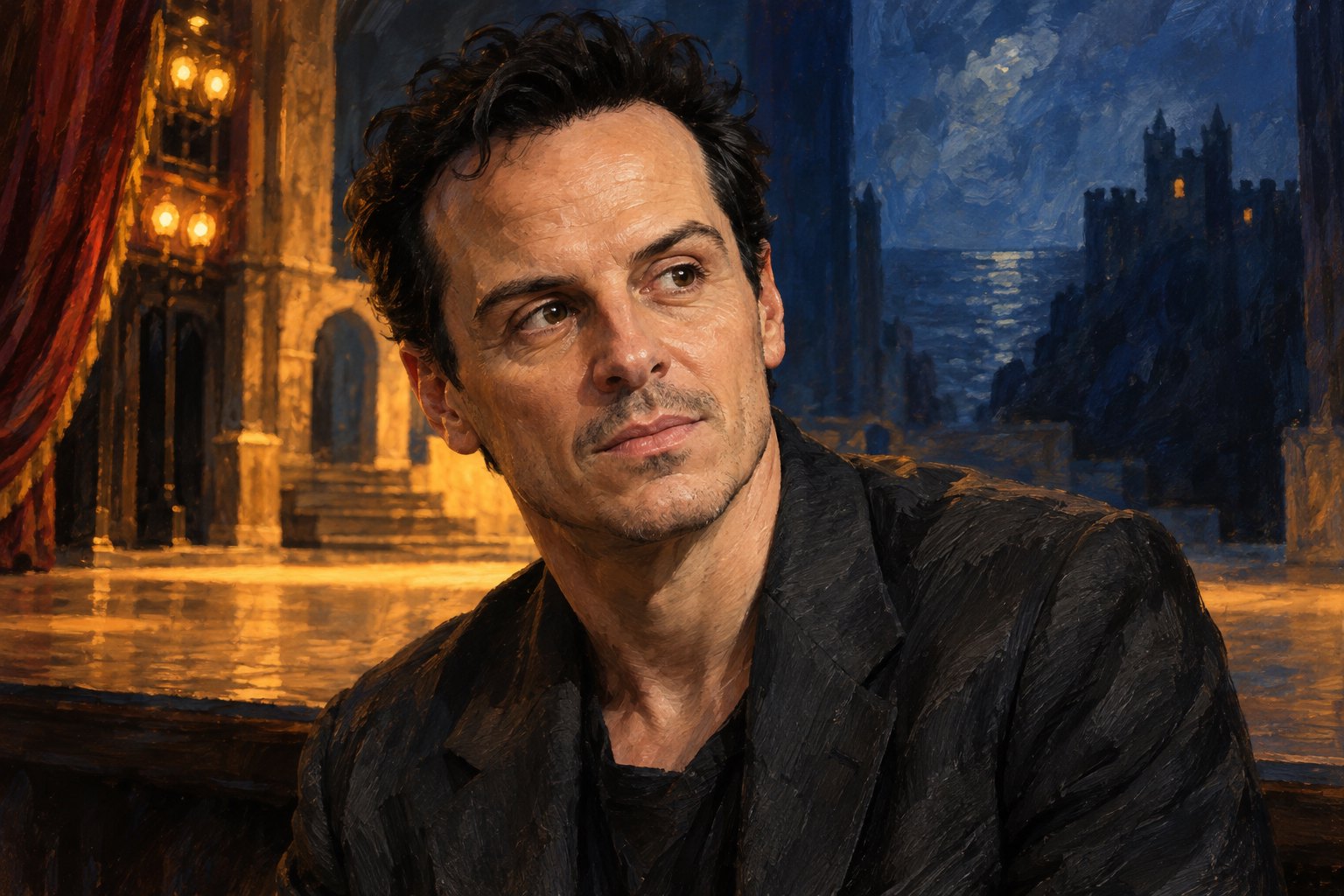
The Odyssey connects an ancient homecoming story to a working factory in Rochester, New York. Christopher Nolan’s epic was photographed on physical film, and Kodak’s Eastman Business Park is the manufacturing location at the center of that achievement. The New York Times identifies the Rochester operation as the remaining source of the high-quality color film used for movie photography and projection. That distinction concerns a particular motion-picture supply chain; it should not become a sweeping claim that nobody else manufactures any kind of photographic film. [The New York Times’ Rochester report](https://www.nytimes.com/2026/09/12/arts/kodak-film-the-odyssey.html)
The factory story deserves attention because a director’s preferred medium requires people who can keep producing it. But the most interesting critical question comes afterward: what does this elaborate physical process contribute to our understanding of the people on screen?
This is a critical companion to the film’s production and character premise, rather than a scene-by-scene screening review. It discusses the homecoming setup and promotional dialogue without revealing the ending.
What Rochester contributes to the image
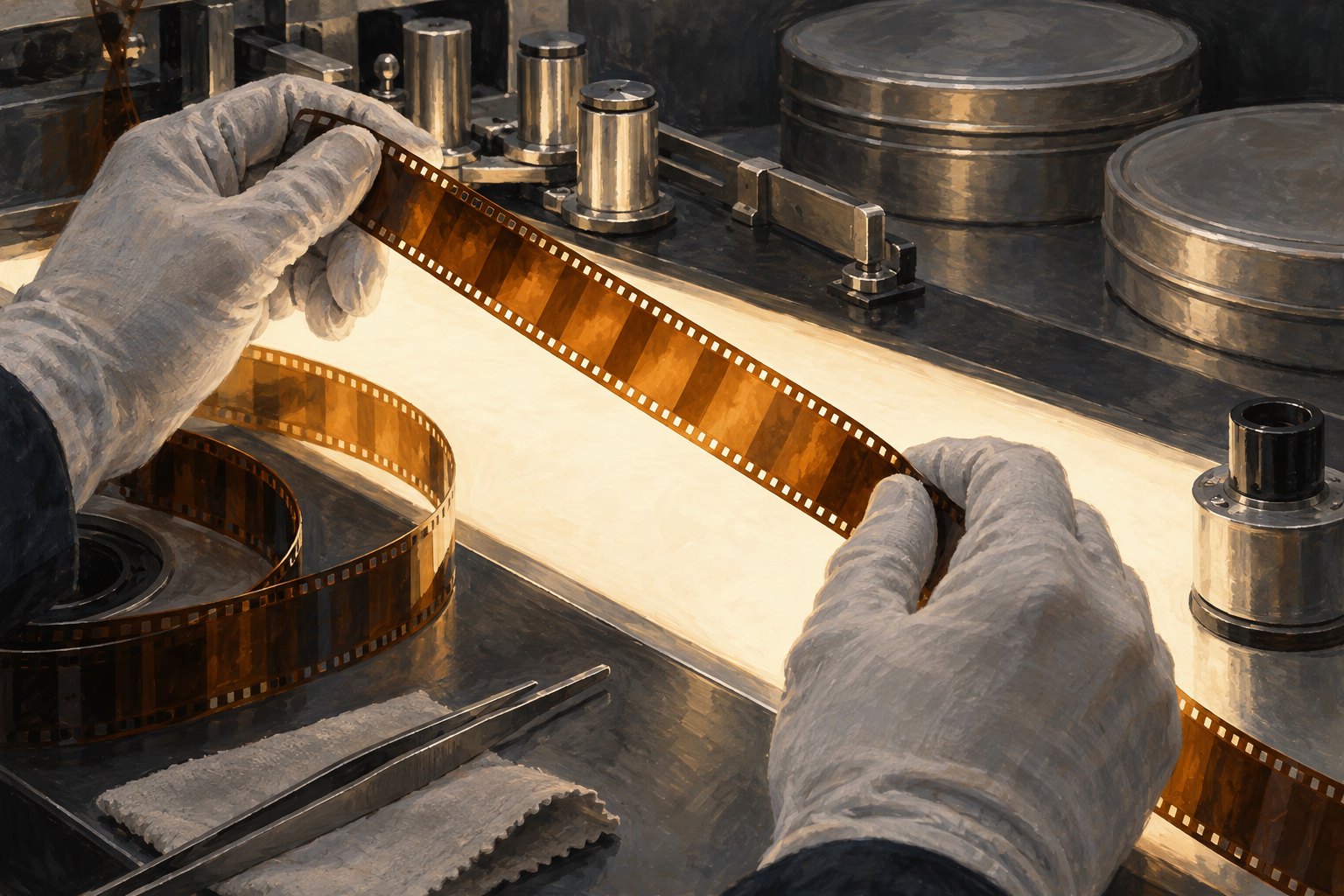
The Times describes manufacturing that turns a plastic base into a light-sensitive product through chemical coating, then cuts, perforates, spools, and packages it. Much of that work requires protection from light. Long before an actor steps in front of a camera, the image depends on consistency, precision, and an industrial process that audiences rarely see.
That changes how we might think about the phrase shot on film. It describes more than a visual preference. It describes a continuing relationship between artistic ambition and material availability. A filmmaker can want a particular texture, but wanting it cannot replace the ability to manufacture the material that produces it.
My view is that this makes Rochester’s contribution culturally significant without making every film photographed on its products artistically significant. Keeping a medium available expands what filmmakers can choose. Whether that choice becomes expressive still depends on composition, performance, editing, and the relationships among them.
Odysseus gives the spectacle a human measure
Kodak’s production account identifies Hoyte van Hoytema as cinematographer and confirms that the picture was captured entirely on Kodak 65mm film using IMAX cameras. Its story description follows Odysseus through the dangerous journey home after the Trojan War, with Penelope and the threatened household giving that journey its destination. [Kodak’s cinematography account](https://www.kodak.com/en/motion/blog-post/the-odyssey/)
For a character in that position, a landscape has two meanings. It can offer the audience something magnificent to look at while presenting the traveler with another obstacle. The same stretch of water can be beautiful from our seat and exhausting from his. A useful reading of the film’s visual ambition begins with that difference in perspective.
The critical test is whether grandeur brings us closer to the cost of traveling. A huge image can make a human figure look vulnerable. It can also turn that figure into an accessory to the scenery. Size becomes expressive when we understand what crossing the space demands of someone.
Homecoming supplies the emotional proportion. Odysseus’ destination gives the journey a purpose beyond surviving the next encounter. Seen through that lens, the value of physical detail lies in its ability to make distance feel lived: a world that must be endured before it can be left behind.
Telemachus asks for a father, not a monument
Two short lines reported from the teaser establish a productive tension: “I have to find out what happened to my father” and “Who has a story about Odysseus?” One asks for knowledge about a missing parent; the other invites a tale about a famous man. [NME’s account of the teaser dialogue](https://www.nme.com/news/film/christopher-nolans-the-odyssey-trailer-is-showing-in-cinemas-now-heres-whats-in-it-3875530)
That difference is the foundation of a character-focused interpretation. For Telemachus, the existence of stories cannot resolve the absence of a father. Public reputation and private need operate on different scales. Someone can occupy an enormous place in collective imagination while leaving an equally enormous vacancy in a household.
This is where the production’s monumental format becomes especially interesting. An epic camera can appear suited to creating legends. The son’s question asks it to serve something more intimate: uncertainty about another person. His emotional claim on the story does not require a larger monster or a more imposing horizon. It requires attention.
The same principle informs our discussion of how movie theme songs gain meaning through character. A craft element earns its force through the person whose experience it expresses. Visual scale has the same obligation.
The crucial engineering problem was intimacy
One revealing detail in Kodak’s account concerns dialogue. An insulated housing reduced camera noise, but its bulk obstructed performers’ sightlines. The crew used angled mirrors so actors could see their scene partners near the lens. The solution helped preserve the interpersonal connection needed for close-ups.
To my mind, this is a stronger argument for the production’s ambition than an equipment superlative. The filmmakers encountered a problem that threatened performance and developed a way to address it. An immense camera system had to accommodate the simple act of one person looking at another.
That matters because intimacy is not merely the quiet interval between action sequences. It is where audiences discover what the action is for. A pause, a look, or an uncertain response can establish stakes that spectacle subsequently tests. If a format makes those exchanges harder to capture, solving that difficulty is part of its artistic responsibility.
Physical film is a choice, not a verdict
Film manufacture, photography, and theatrical presentation are separate stages. Knowing how a movie was photographed does not, by itself, identify how a particular screening will present it. NBCUniversal’s official material discusses several exhibition options, including film presentations and digital cinema experiences. [NBCUniversal’s production and presentation guide](https://www.nbcuniversal.com/article/go-behind-scenes-christopher-nolans-odyssey)
For viewers, the practical approach is to read the individual screening description. Then bring the same critical questions to whichever presentation is available: does the framing clarify relationships, does the visual detail hold attention, and do the images make a character’s predicament more immediate?
Our examination of cinema film’s appeal in everyday photography raises a related distinction between enjoying a medium and assuming it guarantees a result. Here, the stakes involve a whole dramatic world. Admiration for the process should sharpen attention to that world.
A homecoming depends on what people keep alive
The deeper connection between The Odyssey and Rochester is an interpretive one: both invite thought about continuity. A homecoming story asks what remains available to someone after separation. The manufacturing story asks what remains available to artists when a once-dominant practice becomes a specialized choice.
Neither kind of continuity happens through affection alone. Relationships need attention; a medium needs materials, skills, and working equipment. That parallel should not be mistaken for a hidden message planted in the movie. It is a way of understanding why the factory belongs in the conversation surrounding it.
Rochester makes the film possible. The characters give us a reason to care about what appears on it. The most persuasive defense of physical filmmaking holds those contributions together: preserve the means of making distinctive images, then ask those images to reveal something about human beings.
Original content by this site's editorial team. Published: September 13, 2026 at 06:16:13 PDT (Los Angeles time)