The new Resident Evil is attracting praise for capturing the games’ survival-horror appeal. That is a more interesting compliment than simply calling it faithful. It suggests an adaptation can preserve the experience of being frightened, uncertain, and vulnerable even when the audience no longer holds the controller.
Engadget’s assessment makes that connection explicitly. The useful critical question is what such a connection means: how does a movie make watching someone survive feel as absorbing as trying to survive yourself?
This is spoiler-free critical commentary on that survival-horror premise, rather than a firsthand, scene-by-scene review. Its focus is the relationship between character perspective and suspense—the standard by which the film’s reported achievement becomes meaningful.
Survival begins with an incomplete picture
From a character’s perspective, survival horror starts with a practical problem: there is not enough reliable information to make a safe decision. A passage might offer an escape. A sound might indicate help. Staying still might be sensible, or it might give danger time to approach.
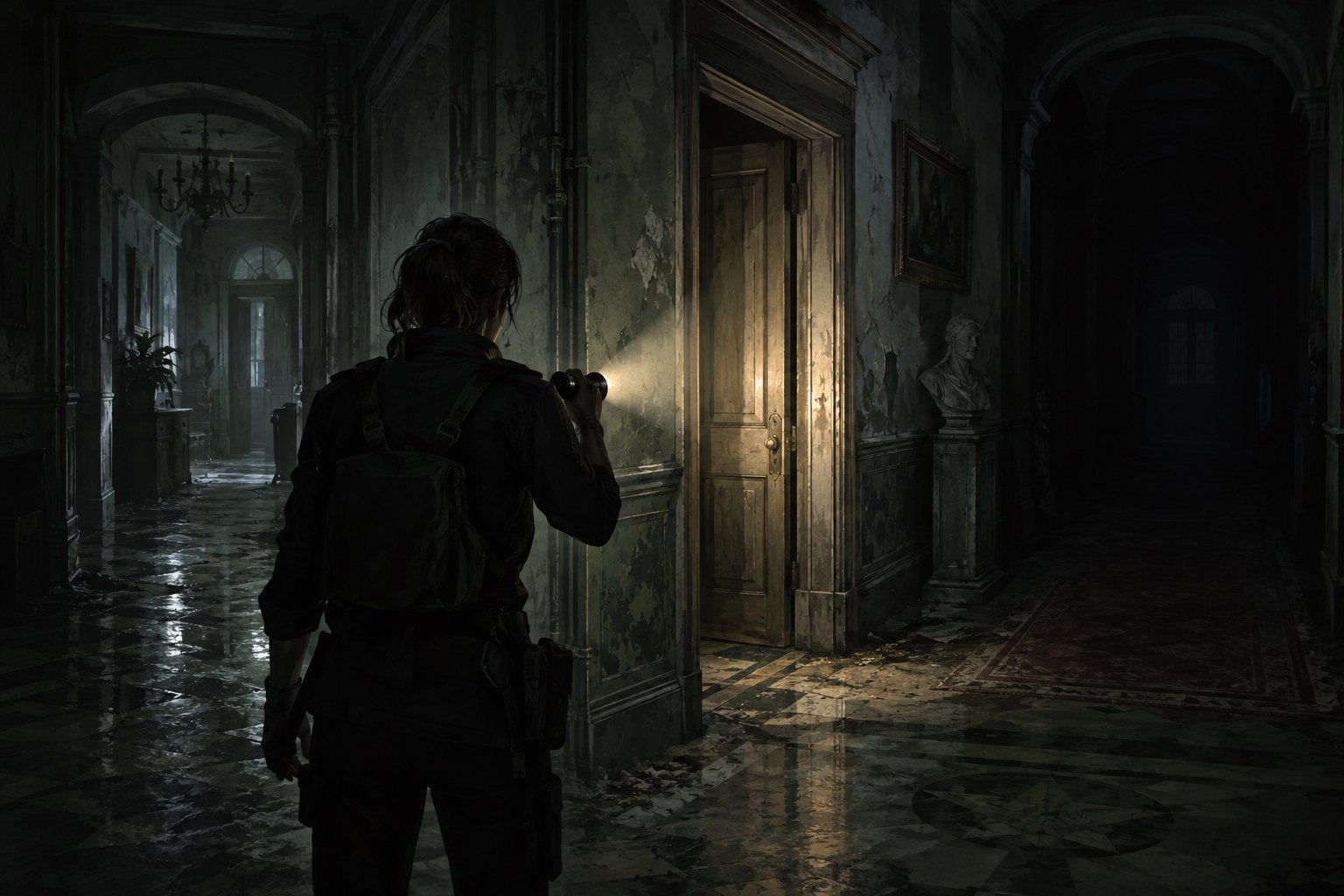
For a movie, that uncertainty depends on the relationship between the camera and the person in danger. Give viewers a complete view of the surroundings, and they can study the threat from a comfortable distance. Restrict that view, and looking becomes an anxious activity. We search the frame because the character needs an answer.
My preferred test is whether an image makes the audience think about the next decision. Darkness alone is decoration. Darkness that prevents someone from choosing between two plausible routes becomes a dramatic obstacle. The difference is small visually but substantial emotionally.
That distinction gives the praise surrounding the new Resident Evil its weight. Capturing a game’s atmosphere should involve more than reproducing its color palette. It should reproduce the uncomfortable work of interpreting an environment before the environment hurts you.
A frightened character still needs agency
Vulnerability becomes compelling when it changes behavior. A person under pressure may hesitate, rush, misjudge a distance, or settle for an option that would seem unacceptable under ordinary circumstances. These responses can make fear legible without requiring a speech about it.
But a character who merely receives one disaster after another can become emotionally remote. We need some access to the reasoning behind the movement. What does this person believe will happen? What risk are they accepting? What alternative have they rejected?
This is where survival horror can produce unusually intimate characterization. A tiny decision can reveal a governing instinct: protect yourself, help someone else, preserve a resource, or move before doubt becomes paralysis. The action does not need to stop for character development. The decision itself can supply it.
For Resident Evil, that offers a useful measure of adaptation beyond familiar faces. Does the protagonist experience danger as a sequence of meaningful choices? If so, the audience has something to participate in mentally, even without participating physically.
Limited supplies should change the next decision
Scarcity is most effective when the viewer understands its consequences. An almost empty bag has little dramatic value unless its contents affect what the character can attempt. A depleted resource should narrow the future, making an earlier choice continue to matter.
Consider a hypothetical example, rather than a scene from the film: a character uses the last available battery to inspect a suspicious room. The immediate benefit is information. The later cost is having to cross another space without light. One choice connects two moments, allowing suspense to accumulate.
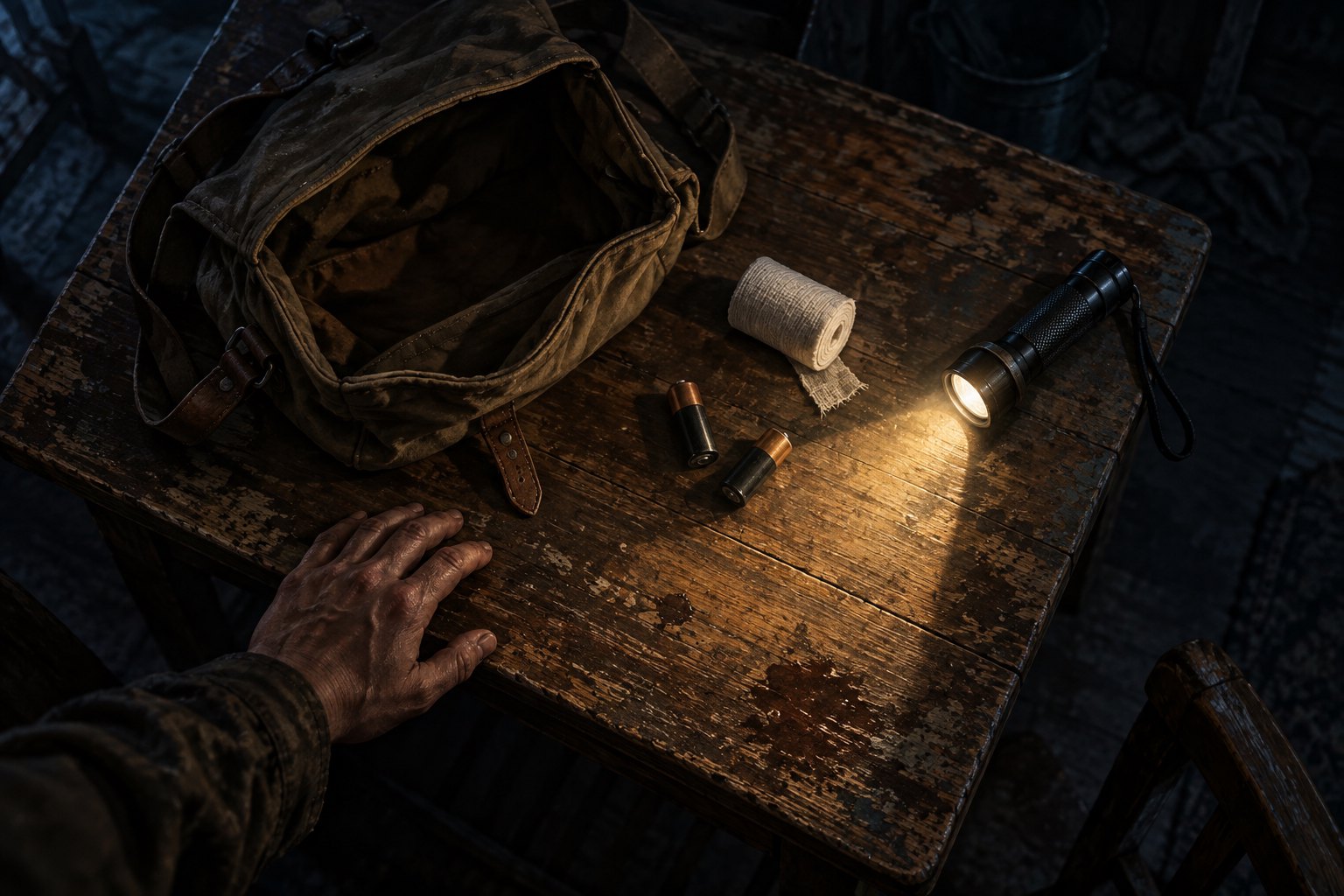
That continuity matters more than an exact inventory. A film does not need to display every object or explain every limitation. It needs viewers to remember enough to anticipate trouble. Once we understand that solving the present problem may worsen the next one, even a successful escape can leave us uneasy.
The strongest version of survival horror therefore complicates victory. Getting through a door is progress, but the question of what it cost remains open.
Clear geography makes uncertainty sharper
There is a difference between being frightened by a space and being unable to understand the editing. Suspense benefits from a basic grasp of where safety might be, how far away it is, and what stands between the character and that destination.
A filmmaker can establish those relationships without giving everything away. Show a potential exit, let us register its distance, then introduce uncertainty along the route. The audience now has a concrete reason to worry.
Sound can complicate that understanding. A noise outside the frame may suggest that the route has changed or that a room is no longer empty. Its value comes from making the character reassess an existing plan, rather than merely announcing a loud surprise.
Applied to the new Resident Evil, this is a particularly useful viewing question: can you understand the immediate objective while remaining uncertain about the threat? That balance allows confusion to belong to the character’s predicament without overwhelming the storytelling.
Relief is part of the horror
Relentless danger can flatten a film’s emotional range. If every space is equally threatening, viewers have little reason to invest in reaching the next one. Temporary relief gives survival a tangible value.
A quieter passage can also return attention to the body. Exhaustion, a delayed reaction, or the effort required to complete an ordinary task can reveal what the preceding danger has done to someone. Survival becomes an experience with residue.
My critical preference is for relief that lasts long enough to register. Immediately puncturing every calm moment teaches the audience to distrust the rhythm mechanically. Allowing occasional rest makes the next departure more difficult because the character has something worth leaving reluctantly.
This also helps distinguish an effective sequence from an effective whole. Sustained tension and a satisfying resolution require related but separate judgments, a distinction explored in our discussion of Resident Evil’s critical reception and its debated payoff.
What fidelity should finally mean
The most persuasive interpretation of the new film’s survival-horror promise is that fidelity can be a matter of attention. An adaptation feels connected to a game when it makes us notice comparable things: an uncertain route, an overlooked possibility, the consequences of acting too soon.
Recognizable imagery can enrich that experience, but recognition alone cannot sustain it. This broader adaptation question also informs our look at the challenge of bringing Lollipop Chainsaw’s appeal into live action: a property’s identity includes what it asks its audience to feel.
For Resident Evil, the deeper possibility is a story about judgment under conditions that make good judgment difficult. Courage becomes the act of choosing without certainty. Resourcefulness means accepting an imperfect solution. Survival remains provisional because each answer exposes another question.
That is the standard behind the enthusiasm worth taking seriously. The defining achievement would be making us understand why a frightened person keeps moving—and making the next step feel consequential.
Original content by this site's editorial team. Published: September 19, 2026 at 04:20:07 PDT (Los Angeles time)