The new Friday the 13th movie cast is the subject of a Deadline introduction, bringing attention to the performers entering this horror franchise. Readers looking for individual names and character assignments should know that this article does not offer a verified cast roster. Its focus is the acting challenge behind that introduction: making an audience believe in danger it arrives expecting.
This is spoiler-free performance commentary, not a review of the new film. No assessment of its acting, dialogue, plot, or ending would be justified without access to the finished work. But there is a specific, useful way to think about this ensemble before judging it: watch what the actors do before anyone screams.
The first challenge is looking comfortable
A horror performer’s most demanding work can begin in an apparently uneventful scene. Before fear has any force, ordinary behavior needs texture. Someone might be trying to impress a friend, finish an irritating task, or conceal embarrassment. Those small objectives give an actor something to play beyond waiting for the story to become dangerous.
For the new Friday the 13th cast, my strongest hope is that the performances have room for such everyday specificity. This is an expectation, not a description of the screenplay. A person who seems occupied with a recognizable concern gives the audience a point of contact. When that concern suddenly becomes irrelevant, the change can register without an explanatory speech.
There is also a question of tone. If every actor signals dread from the beginning, the audience loses the pleasure of noticing a threat before the characters do. Playing a relaxed moment sincerely takes discipline when everyone watching already knows what kind of movie they have chosen.
Listening can carry more suspense than shouting
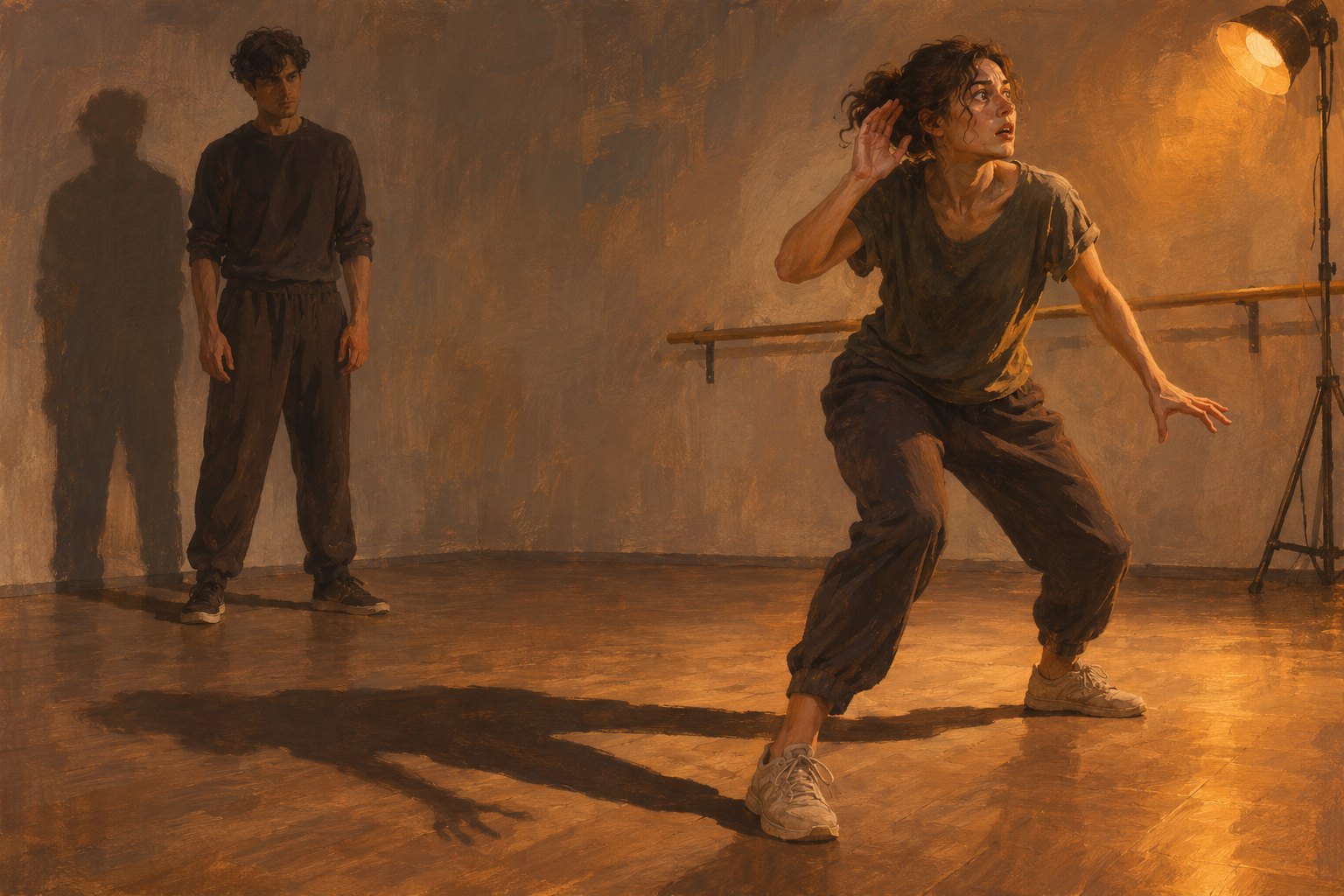
Consider a hypothetical acting exercise: a character hears something beyond a doorway. The simplest version is an immediate frightened expression. A more interesting version allows several possibilities to pass across the face. Was that a friend? An animal? Something falling? Is investigating worth the embarrassment of having overreacted?
These are not proposed scenes from the new movie. They illustrate how an actor can make uncertainty visible. Suspense benefits when a response develops in stages, because the audience can follow the character’s attempt to understand what is happening.
The details are small but readable: a sentence left unfinished, eyes moving before the head turns, a hand remaining on an object after its purpose has been forgotten. None automatically produces a good performance. Used precisely, however, they reveal attention shifting away from ordinary life.
This offers a narrower lens than our earlier discussion of why the new Friday the 13th announcement puts its actors in focus. The question here concerns the actual moment-to-moment work that could make those performers compelling.
Fear needs more than one physical register
An ensemble becomes easier to read when its members do not all express fear identically. One person may grow unusually still. Another may speak too quickly. A third may concentrate on a practical task because doing something feels more manageable than acknowledging the situation.
These responses need not turn into fixed personality labels. The compelling possibility is change. Someone initially talkative might become silent when the threat feels real; someone who seemed composed might lose the ability to complete a simple action. An actor can make that reversal meaningful by establishing the earlier behavior clearly.
For viewers, a useful distinction is between intensity and specificity. A performance can be loud, breathless, and physically strenuous without telling us much about the person. A quieter choice can communicate more if it connects to behavior we already recognize.
Physical continuity matters, too. Exhaustion should affect movement. A frightening encounter should leave some trace in the next exchange. Whether the new film allows those traces to accumulate remains an open question, but they would give its cast a stronger dramatic foundation than repeatedly returning to the same level of alarm.
The threatening presence is also a performance
Discussion of a slasher ensemble naturally includes the figure creating the danger. Without assigning any unverified performer to a role, it is worth considering how much screen menace depends on physical choices: pace, balance, the direction of attention, and the length of a pause.
My preference is for movement that feels deliberate enough to make the other characters’ urgency legible. Stillness can create an uncomfortable imbalance when everyone else is scrambling. Sudden movement can then alter the scene’s rhythm. Neither approach is inherently superior; consistency and timing determine whether the effect holds.
The camera and editing share responsibility. A performer cannot independently decide how long a shot lasts or how clearly two bodies occupy the same space. Any eventual review should therefore examine the collaboration rather than treating the most imposing image as proof of acting quality by itself.
Comic timing should reveal the person making the joke
Humor presents another opportunity for the new cast. A joke can establish warmth, insecurity, competitiveness, or an attempt to keep a frightening situation socially manageable. The important detail is what the speaker wants from the people listening.
A performer who needs a laugh plays differently from one who uses humor to end a conversation. Those distinctions help an ensemble develop individual rhythms. They can also make a later failed joke unexpectedly painful: the familiar method of maintaining control no longer works.
The risk, in my view, is humor that makes every character sound equally detached from the danger. If no one seems emotionally exposed, the audience has less reason to feel exposed on their behalf. The most useful comic beat may be the one that briefly reveals how badly someone wants reassurance.
How to judge the cast when the performances are available
A cast announcement cannot answer these questions. Publicity footage may offer glimpses, but selected moments cannot establish a complete character arc. As our discussion of what a divided movie verdict can actually tell viewers argues, a useful judgment needs reasons that readers can assess.
For this ensemble, three questions would make a productive starting point:
- Can you distinguish the characters through behavior before danger takes over?
- Do their reactions change as they learn more, become exhausted, or lose confidence?
- Does a tense scene make you follow a particular person’s experience, rather than merely anticipate its outcome?
The deeper stakes are attention and empathy
The new Friday the 13th cast will ultimately deserve assessment through its work, not through the familiarity of its names. My central critical expectation is simple: the performances should make individual experience matter within the machinery of suspense.
That is where a slasher can become emotionally unsettling. Viewers may understand the genre’s pattern while a character remains occupied with a smaller, more immediate problem. Good acting preserves that difference in perspective. For a moment, someone on screen is still trying to understand their world—and the audience has a reason to stay with them.
Original content by this site's editorial team. Published: November 18, 2026 at 08:37:43 PST (Los Angeles time)