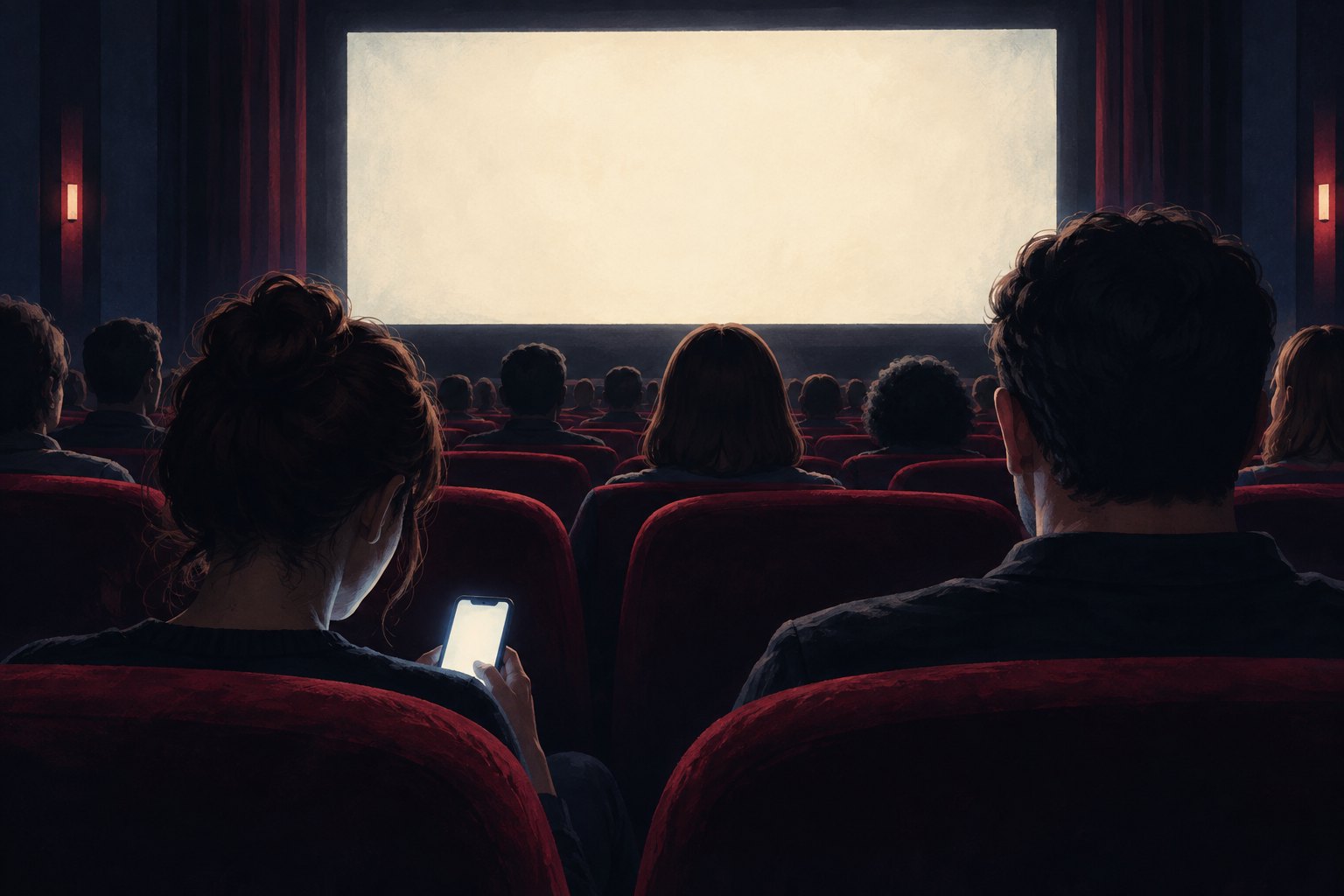
A phone lighting up during a movie can spoil the exact moment someone paid to experience. Pepper-spraying the person holding it cannot restore that moment. The argument stirred by a Los Angeles Times column about a patron being pepper-sprayed over phone use deserves that distinction at the outset: frustration with disruptive behavior is understandable; violence over screen etiquette is indefensible.
The column’s headline frames the incident through a familiar flash of recognition. Anyone irritated by a neighboring screen may recognize the feeling. But a headline does not establish the complete sequence of an encounter, what each person said, or anyone’s intentions. Those gaps should remain gaps. The useful discussion is about the underlying problem: how to protect the experience of watching a film together without making audience members responsible for policing one another.
Why a Small Phone Screen Can Disrupt a Big Movie
The usual defense of a quick phone check measures the interruption from the phone owner’s perspective. The brightness is low. The message takes seconds. The device sits below shoulder level. From another seat, however, that rectangle may occupy the edge of the movie itself. Its appearance becomes an additional visual event, competing with the one the filmmaker arranged.
That matters because films organize attention. A composition directs us toward a face, a doorway, or an apparently unimportant object. An edit determines when we discover something. A pause lets us wonder whether a character will speak. Looking away briefly may leave the broad plot intact while changing the emotional experience of a scene.
Consider a hypothetical close-up in which a character listens to an apology. The dialogue supplies information, but the performance supplies judgment: a tightened mouth, a delayed breath, the moment hope gives way to disbelief. Miss that progression and the next response can seem harsher or more abrupt than the film intended. You have heard the words without fully witnessing the decision.
This is why attentive viewing belongs in a conversation about film criticism, not merely manners. Our commentary on Mike Leigh and the importance of attending to characters approaches a related concern: the people inside a movie deserve our attention beyond the conversation surrounding it.
The Cost Is More Than Missing a Plot Point
A distraction can also alter a movie’s rhythm. Suspense often depends on sustained uncertainty. Comedy depends on the relationship between anticipation and release. An emotionally difficult scene may need an uncomfortable stretch of silence before a small gesture becomes meaningful. These effects unfold in time; understanding what happened afterward does not completely replace experiencing it as it happens.
Character perspective is especially vulnerable. A film may ask us to remain with someone who feels trapped, ashamed, or uncertain. The sustained shot makes us share that discomfort. A nearby phone offers an involuntary exit from the scene. When our eyes return, we may know where the character is but have lost some of the pressure building around them.
Our character-focused analysis of Spider-Man: Homecoming considers how suspense can grow from divided loyalties and uncomfortable relationships. That kind of tension rewards watching reactions as closely as actions. The theatrical setting should help viewers notice those details.
My view is that protecting this continuity is one of a theater’s central responsibilities. Projection and sound matter, but so does giving the audience a reasonable chance to follow the performance without repeatedly negotiating distractions.
Frustration Does Not Make Someone the Hero
Stories about audience confrontations invite an easy casting decision. One person becomes the selfish interrupter; another becomes the exasperated defender of cinema. That framing gives an ugly encounter the satisfying shape of a scene in which someone finally stands up to a bully.
Real people in adjacent seats have not agreed to participate in that scene. They may be frightened by an argument, unable to leave easily, or uncertain about what is happening. Escalation imposes another disruption on everyone nearby. The person claiming to defend the screening can become the reason nobody is watching it.
There is also a crucial limit to what spectators know. A visible device does not disclose its purpose. Casual scrolling, an urgent message, and an accessibility-related need are different circumstances. Recognizing that uncertainty does not make recreational phone use considerate. It means a stranger’s glance is an inadequate basis for assigning motives or administering punishment.
Film lovers should resist treating aggression as proof of devotion. Caring deeply about a movie does not grant authority over the people watching it. A convincing defense of the communal experience must include concern for those people.
What to Do When Someone Keeps Using a Phone
The practical goal is to end the distraction with as little additional disturbance as possible. A response that consumes the next ten minutes in argument has already failed that test.
- Before the feature, prepare your own device. Silence notifications and put it away. If you expect a message that needs an immediate response, plan to check it outside the auditorium.
- If you feel comfortable, make one brief, courteous request. Ask for the screen to be put away without insulting the person or speculating about their motives. You do not owe anyone a confrontation.
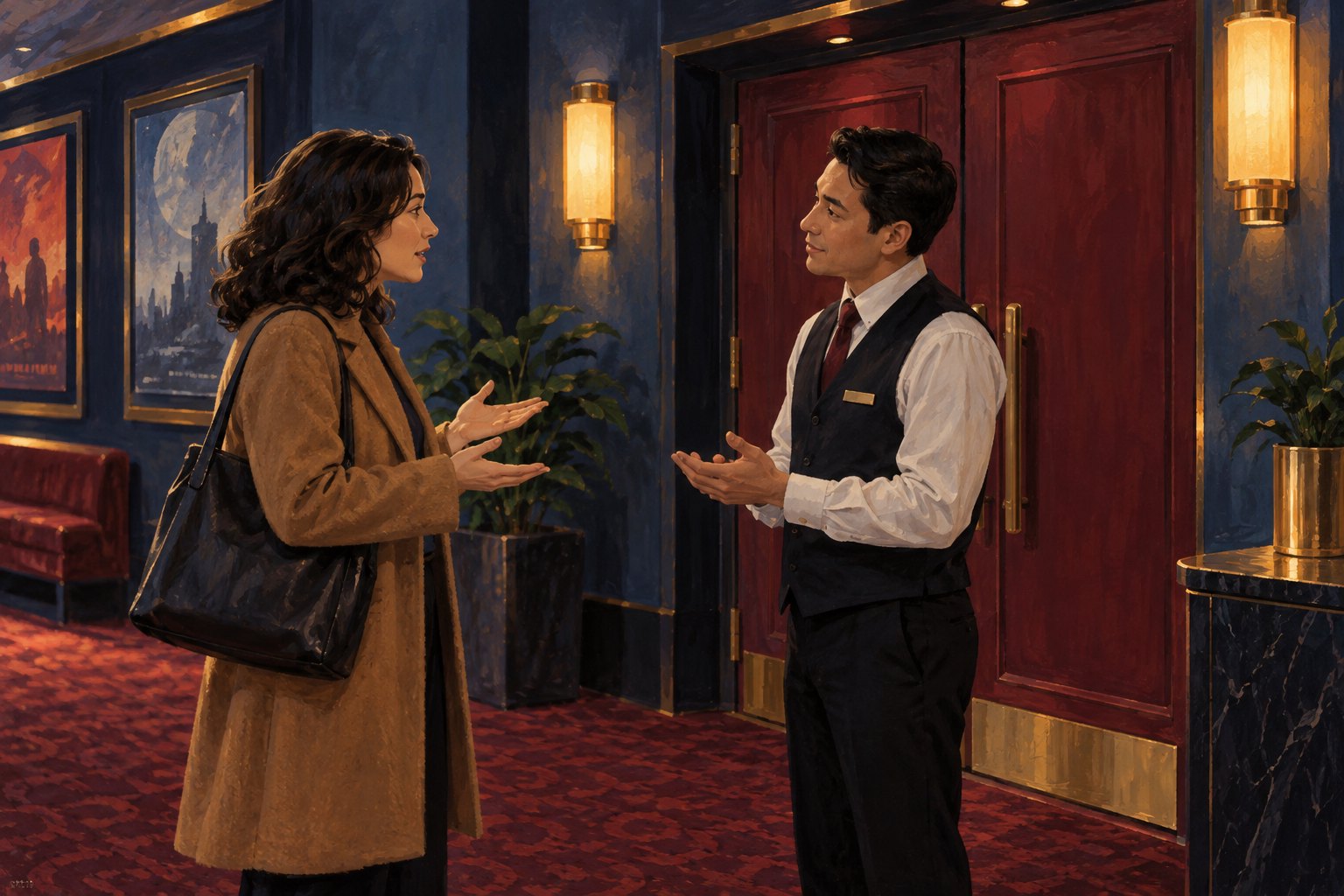
- If the behavior continues, contact staff. Identify the auditorium and approximate seat location, and describe the behavior specifically. Repeated screen use is more useful information than a verdict on someone’s character.
- Do not turn the complaint into a contest. Avoid touching the person, grabbing the device, blocking their movement, or trading threats. If the interaction becomes hostile, disengage.
- Ask the theater for a practical remedy. Staff may be able to address the disruption, arrange another seat, or discuss a replacement screening. Availability will depend on the venue and circumstances.
Theaters Should Make Help Easier to Find
Telling customers to find an employee is incomplete if doing so means missing a substantial part of the film. From the customer’s perspective, that creates an unpleasant choice between tolerating the interruption and paying for it with more lost viewing time.
A better approach would make the process clear before the feature begins: explain the phone policy, identify where assistance is available, and give staff a consistent procedure for responding. Employees need management support and appropriate training; they should not be left to improvise during an escalating dispute.
Policies should also distinguish ordinary recreational use from legitimate accommodation needs. Accessibility arrangements deserve a clear process that does not depend on customers disclosing private circumstances to irritated strangers. Consistent expectations and informed staff can reduce uncertainty for everyone.
These are editorial recommendations, not claims about what any particular theater did in the reported encounter. Their purpose is straightforward: make intervention a venue responsibility, with a proportionate response and an identifiable person in charge.
Shared Attention Is the Experience Worth Protecting
The pleasure of a theater is partly the presence of other people. A laugh can become contagious. A tense silence can make a room feel unusually connected. Audiences contribute to a screening through their responses, even when nobody speaks directly to anyone else.
The strongest case against phone use begins there. Keeping a screen dark gives the people around us room to experience the film on its own terms. Keeping frustration under control extends the same courtesy to their physical comfort and peace of mind.
We go to the movies to spend time inside someone else’s perspective. The small discipline that makes this possible starts before the story begins: put the phone away, respect the neighboring seat, and let the theater handle disruptions. The film should be the reason everyone remembers the evening.
Original content by this site's editorial team. Published: September 27, 2026 at 05:08:14 PDT (Los Angeles time)