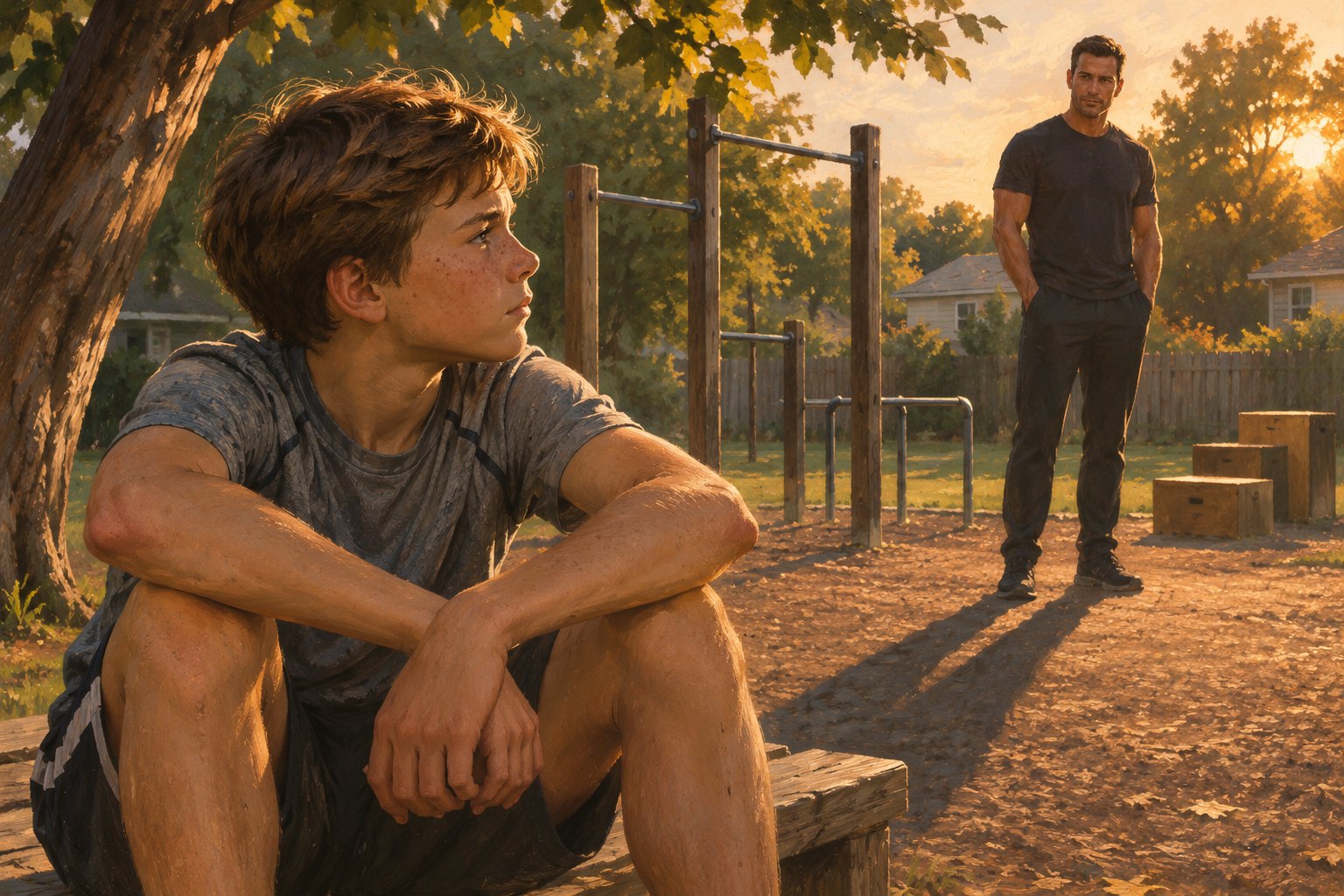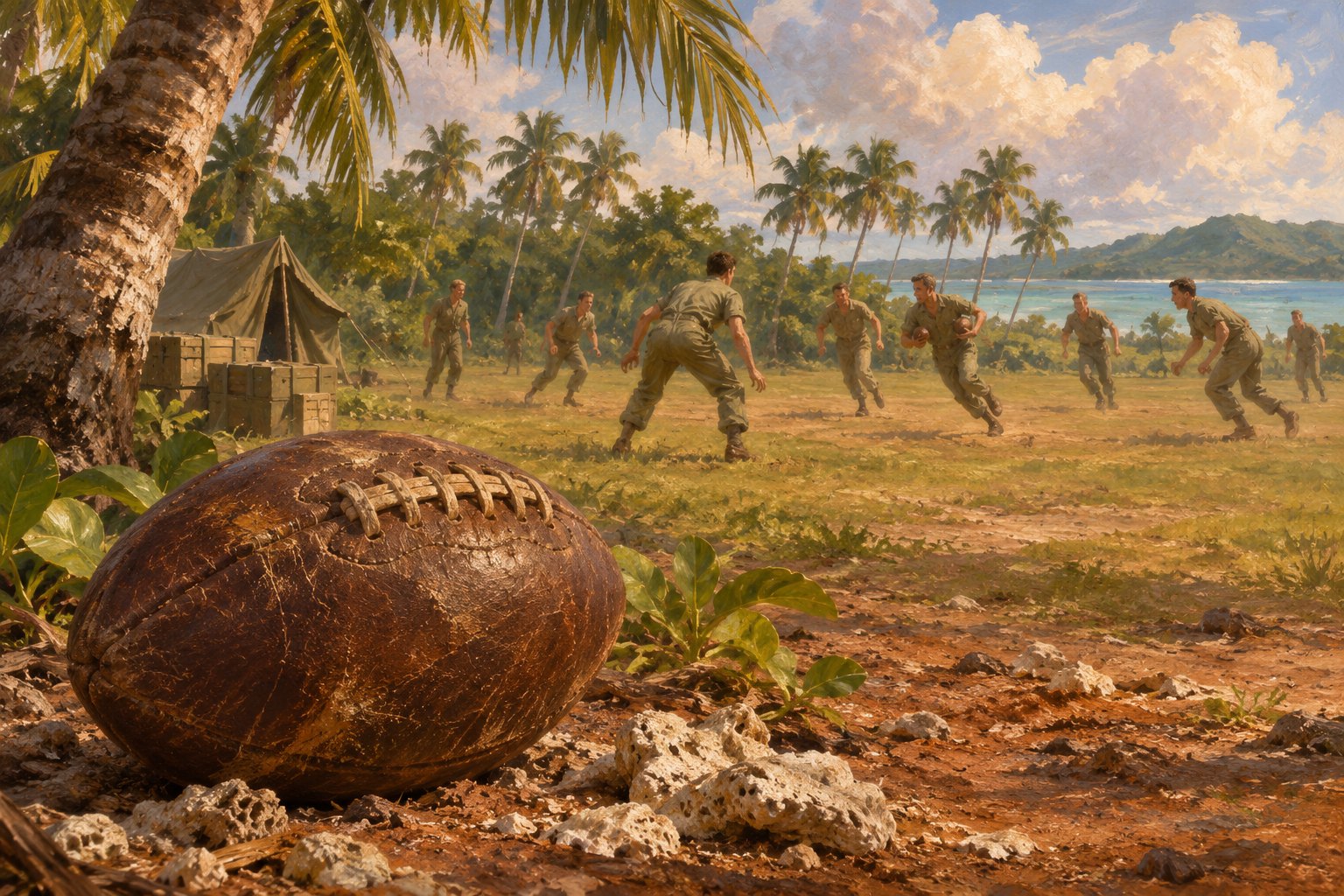
The Mosquito Bowl is based on a real football game played by American Marines on Guadalcanal on Christmas Eve, 1944. Its central men existed, and the terrible losses that followed were real. But those facts do not make every college rivalry, battlefield encounter, or private moment in Peter Berg’s Netflix movie a verified historical event. The most defensible assessment is that its historical foundation is substantial, while its shared character journey takes dramatic liberties.
The distinction matters because this story carries two kinds of emotional weight: the pleasure of watching athletes recover something familiar, and the knowledge that athletic excellence cannot protect them from war. Its strongest interpretive possibility lies in the collision between those ideas.
Spoilers follow for the football game, the central characters’ fates, and the ending.
The real game had no winning touchdown
The historical Mosquito Bowl brought together the 4th and 29th Marine Regiments of the 6th Marine Division. It ended 0–0. According to the National WWII Museum, a contest intended as two-hand touch became a much rougher encounter, with blocking and tackling. No official individual statistics were kept. Those details establish both the event’s reality and the limits of reconstructing every play. [The National WWII Museum’s historical account](https://www.nationalww2museum.org/war/articles/mosquito-bowl-football-western-pacific).
That scoreless result is especially revealing. A conventional sports drama would make the final possession resolve a personal struggle: the misunderstood player proves himself, the rival earns respect, the team becomes whole. Here, history supplies no such convenient payoff.
My reading is that the absence of a winner gives the game its meaning. The men do not need a championship to justify the afternoon. Playing itself restores a recognizable relationship between effort, rules, and consequences. A tackle belongs to a contest that can end. Combat offers no equivalent assurance.
Where the movie reshapes the record
Berg’s film adapts Buzz Bissinger’s nonfiction book, The Mosquito Bowl: A Game of Life and Death in World War II. Nicholas Galitzine plays John McLaughry, Tom Francis plays Dave Schreiner, Bill Skarsgård plays Bob Bauman, and Ray Nicholson plays Tony Butkovich. Netflix’s account confirms these historical identities and describes the letters, family archives, and military records behind Bissinger’s research. [Netflix’s account of the real Marines](https://www.netflix.com/tudum/articles/the-mosquito-bowl-movie-true-story).
One concrete alteration concerns military organization. TIME’s historical reporting explains that the film places the four in the same regiment, whereas McLaughry, Schreiner, and Bauman served in the 4th Marines and Butkovich in the 29th. Bringing them together creates a more continuous ensemble, but viewers should not treat that arrangement as a literal service record. [TIME’s historical comparison](https://time.com/article/2026/10/30/the-true-story-behind-the-mosquito-bowl/).
The college-football setup also warrants caution. Robert Daniels’s review identifies chronological problems in the film’s staged matchups and rivalry, including the different years in which its protagonists played college football. His criticism provides a useful warning against reading the opening games as documentary reconstruction. [Robert Daniels’s review](https://www.rogerebert.com/reviews/the-mosquito-bowl-world-war-ii-netflix-film-review-2026).
These changes are consequential because they shape motivation. A rivalry established on screen gives two men an immediate reason to resent one another; putting them together repeatedly gives the screenplay opportunities to transform that resentment. It is efficient storytelling. Historical accuracy requires a separate question: whether those encounters actually occurred in that form.
Schreiner and Butkovich: rivalry becomes recognition
The film develops tension between Schreiner and Butkovich through football, then changes their relationship through military experience. Parade’s account of the movie identifies their later embrace as a turning point. The gesture belongs to the film’s character construction; it should not automatically be treated as a documented encounter. [Parade’s plot and ending account](https://parade.com/entertainment/the-mosquito-bowl-ending-explained-netflix).
As drama, the relationship raises a sharper question than who was the better player. What happens when the person against whom you measure yourself becomes someone whose survival matters to you? Competition offers an easy way to organize identity. Shared danger makes that arrangement inadequate.
For Schreiner, the useful interpretive focus is the loosening of that competitive definition. For Butkovich, it is the possibility of being seen as something beyond an opponent’s grievance. Their reconciliation matters because each must recognize a person where he previously saw a challenge.
That is also a useful standard for judging physical storytelling: action should change a relationship, not merely interrupt it. Our discussion of how screen danger shapes Haymitch’s character considers the same distinction in a very different setting.
Bauman and McLaughry: the people beyond the uniform
Bissinger’s research offers an important corrective to any tendency to remember these men only as athletes or casualties. Netflix’s historical account describes Schreiner’s surviving correspondence and McLaughry’s interest in painting. Such details establish lives with private attachments and interests beyond the public identities the movie must introduce quickly.
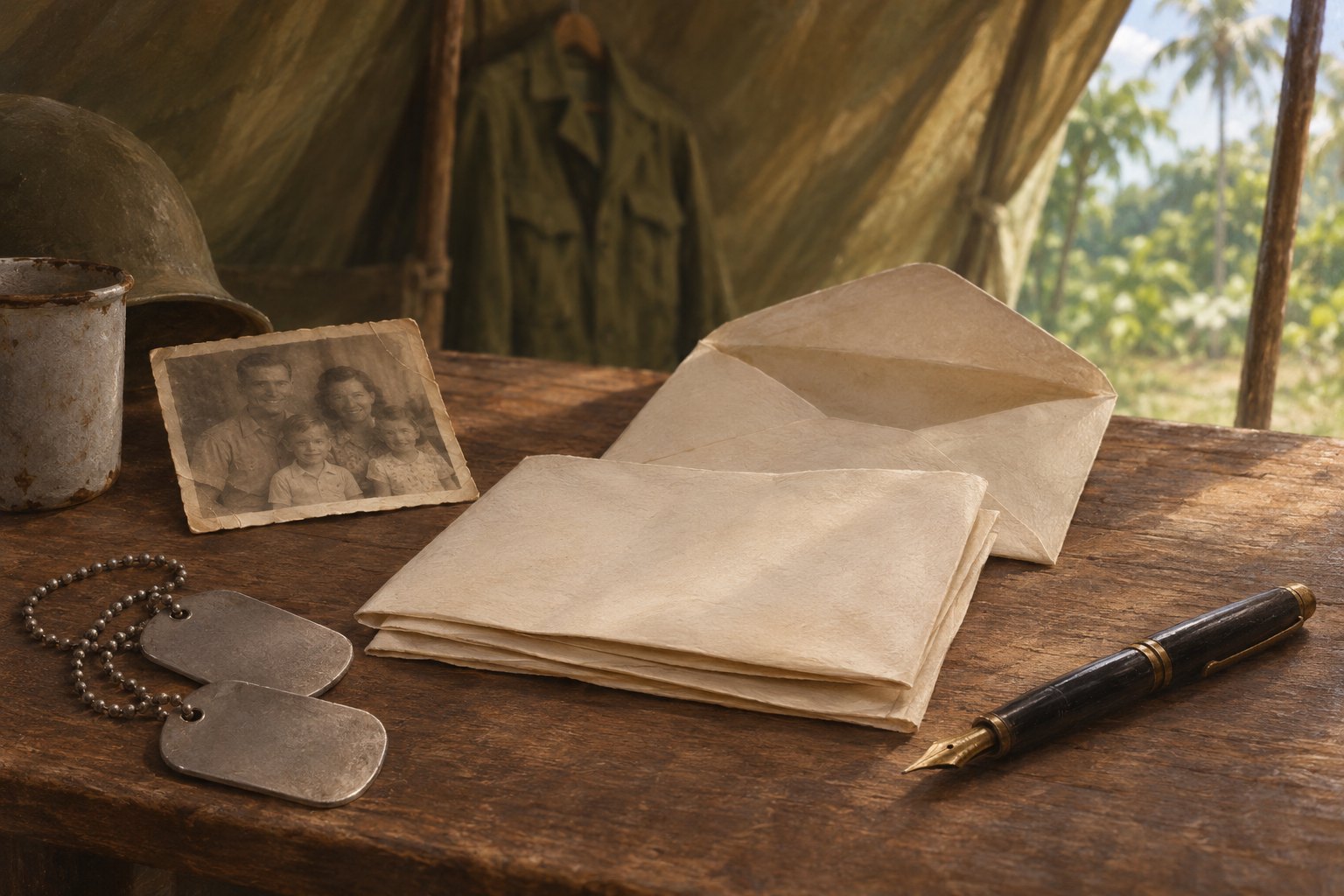
Bauman’s place in the quartet makes that distinction particularly important. His death should register as the loss of an individual, rather than simply another subtraction from a group. A character-centered reading therefore asks what the film allows us to understand about his relationships before danger overtakes them.
McLaughry carries a different burden: he survives. That changes his dramatic function from participant to witness. The question becomes what he can bring home from an experience his friends cannot leave.
Our analysis of Okwe’s compassion and survival in Dirty Pretty Things explores a related critical principle: a character becomes specific through the responsibilities he accepts toward other people.
Words about war are not historical transcripts
The movie opens with a quotation attributed to Herbert Hoover: “Older men declare war.” That brief statement establishes a generational imbalance before the central story develops. Common Sense Media documents the opening quotation in its discussion of the film. [Common Sense Media’s review](https://www.commonsensemedia.org/movie-reviews/the-mosquito-bowl).
Its force comes from directing attention toward who decides and who pays. The young men’s sporting futures make that imbalance tangible: they have already worked toward one kind of adulthood when another is imposed upon them.
Elsewhere, a conversation turns on “nuance” and “nuisance,” as described in Carla Meyer’s review. Even that small verbal confusion suggests something valuable about character: men experiencing extraordinary circumstances can still misunderstand words and make ordinary jokes. Neither exchange, however, establishes what the historical Marines actually said. [Carla Meyer’s review](https://www.sfchronicle.com/entertainment/movies-tv/article/mosquito-bowl-netflix-review-22490010.php).
The ending makes survival a responsibility
Butkovich, Bauman, and Schreiner die; McLaughry survives. The movie’s closing personal gesture has him bury their identification tags on a Wisconsin football field, according to Parade’s ending account. That scene can be analyzed as cinematic memorialization, but the reporting cited here does not establish the burial as a historical act.
My interpretation is that returning the tags to a football field connects the men to identities that preceded their deaths. The field becomes a place where the survivor can remember them as people who expected more life.
This is where the true story gives the film its deepest challenge. Knowing that men died is not the same as understanding what disappeared with them. Historical names and correct outcomes supply a foundation; characterization must make the interrupted futures imaginable.
The Mosquito Bowl is best approached as a dramatization with a real event and real losses at its center, rather than a scene-by-scene historical record. Its most meaningful question survives every adjustment to chronology: how do we remember people whose futures were cut short without allowing the manner of their deaths to become the whole story of their lives?
Original content by this site's editorial team. Published: November 26, 2026 at 21:25:09 PST (Los Angeles time)