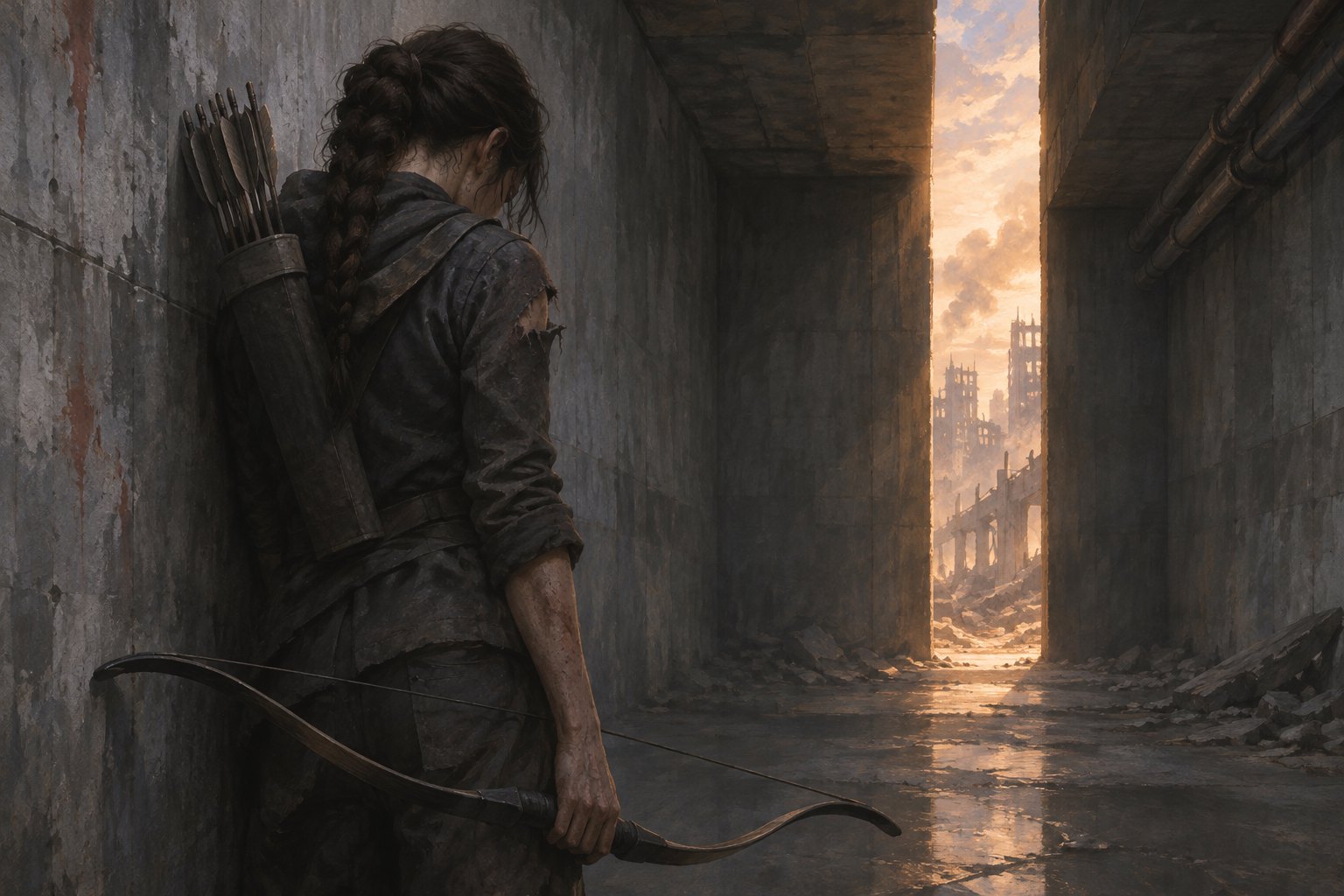
The Mosquito Bowl is the Netflix war drama behind the 90% Rotten Tomatoes audience score. Peter Berg’s film follows college football players into the Marines, where the confidence that once made them exceptional athletes meets circumstances they cannot control. Its audience enthusiasm comes with a substantial qualification: Rotten Tomatoes also lists a 38% critics’ score. Those competing responses make the film worth examining, but neither percentage explains what its characters stand to lose. [Rotten Tomatoes film details](https://www.rottentomatoes.com/m/the_mosquito_bowl).
The most productive way into this story is through its interrupted futures. Football gives these men a language for effort, loyalty, and achievement. War exposes the limits of that language. My reading is that the film’s central attraction lies in watching familiar forms of confidence become inadequate—and seeing friendship survive after confidence fails.
Spoilers follow for the film’s character trajectories and wartime outcomes. The movie contains graphic combat violence.
Four Players Whose Futures Suddenly Change
Adapted from Buzz Bissinger’s nonfiction book, the film stars Nicholas Galitzine as John McLaughry, Bill Skarsgård as Bob Bauman, Ray Nicholson as Tony Butkovich, and Tom Francis as Dave Schreiner. After Pearl Harbor, their lives move from college football into military service. The title refers to a game played by Marines on Guadalcanal before the fighting at Okinawa. Netflix’s account of the underlying history identifies McLaughry as the only survivor among these four central men. [Netflix’s historical background](https://www.netflix.com/tudum/articles/the-mosquito-bowl-movie-true-story).
That trajectory changes the meaning of an ensemble sports story. Ordinarily, introducing several talented players prepares us to watch their abilities combine into victory. Here, learning their names means acquiring specific people to worry about. A recognizable face in a crowd becomes someone whose absence will matter.
The story also puts pressure on a seductive assumption: that excellence in one arena must translate into mastery elsewhere. Training, endurance, and cooperation remain useful. They cannot create a fair contest or guarantee survival. The emotional stakes emerge from that distinction, especially when the men try to understand combat through habits formed on a football field.
Bob and Dave: Friendship Beyond Toughness
Bauman’s relationship with Schreiner offers a particularly useful way to read the film. Bob provides steadiness for his more anxious former teammate, while his description of a “white buzz” introduces a disturbing complication: heightened concentration and violence can become bound together in his experience. This dialogue and the friendship are discussed in RedCarpetCrash’s review. [Character and dialogue details](https://redcarpetcrash.com/movie-review-the-mosquito-bowl/).
The phrase matters because it makes athletic intensity morally unsettled. A feeling associated with being fully engaged can also narrow perception. From Bob’s perspective, that sensation may seem like access to his most capable self. From outside it, we can ask what happens when capability becomes separated from reflection.
Dave supplies a different rhythm. His self-description as an “over-thinker,” noted in Assignment X’s review, establishes someone whose mind does not simply fall into line with the expectation of fearlessness. [Assignment X’s character analysis](https://www.assignmentx.com/2026/movie-review-the-mosquito-bowl/).
I find that contrast more revealing than a simple opposition between strength and weakness. Thinking too much can make action harder; thinking too little can make violence easier. Neither disposition gives its owner immunity from terror. Their friendship matters because it permits different responses to the same pressure without requiring the men to become interchangeable.
There is also an important limit to this reading. An evocative phrase cannot supply an entire inner life. The film’s character writing invites scrutiny precisely where an interesting psychological detail seems capable of supporting more exploration than the surrounding story provides.
Tony and John: What Confidence Can—and Cannot—Do
Tony’s identity as an accomplished player gives the story another version of certainty. Athletic achievement produces visible evidence of ability: a successful play, an opponent beaten, a record established. Combat makes that relationship between action and result far less dependable. Read through Tony, the transition becomes a confrontation with the possibility that determination can be real and still be insufficient.
John’s survival gives his place in the ensemble a different weight. Survival should not be mistaken for proof that one man understood the situation better or deserved a future more. It leaves him carrying the distance between the group that entered the story and the people who remain.
That distinction also matters when assessing the film’s treatment of heroism. Courage deserves recognition without becoming an explanation for who lives. Our analysis of Katniss’s moral awakening in Mockingjay considers a related problem: what happens when a person’s experience of war exceeds the heroic story others want to tell about it.
Why the Football Game Carries Such Weight
The Guadalcanal game offers something combat cannot: an encounter governed by shared rules, recognizable skills, and an ending after which opponents can remain alive. Its significance does not depend on treating sport as a cure. The reprieve matters because it is temporary.
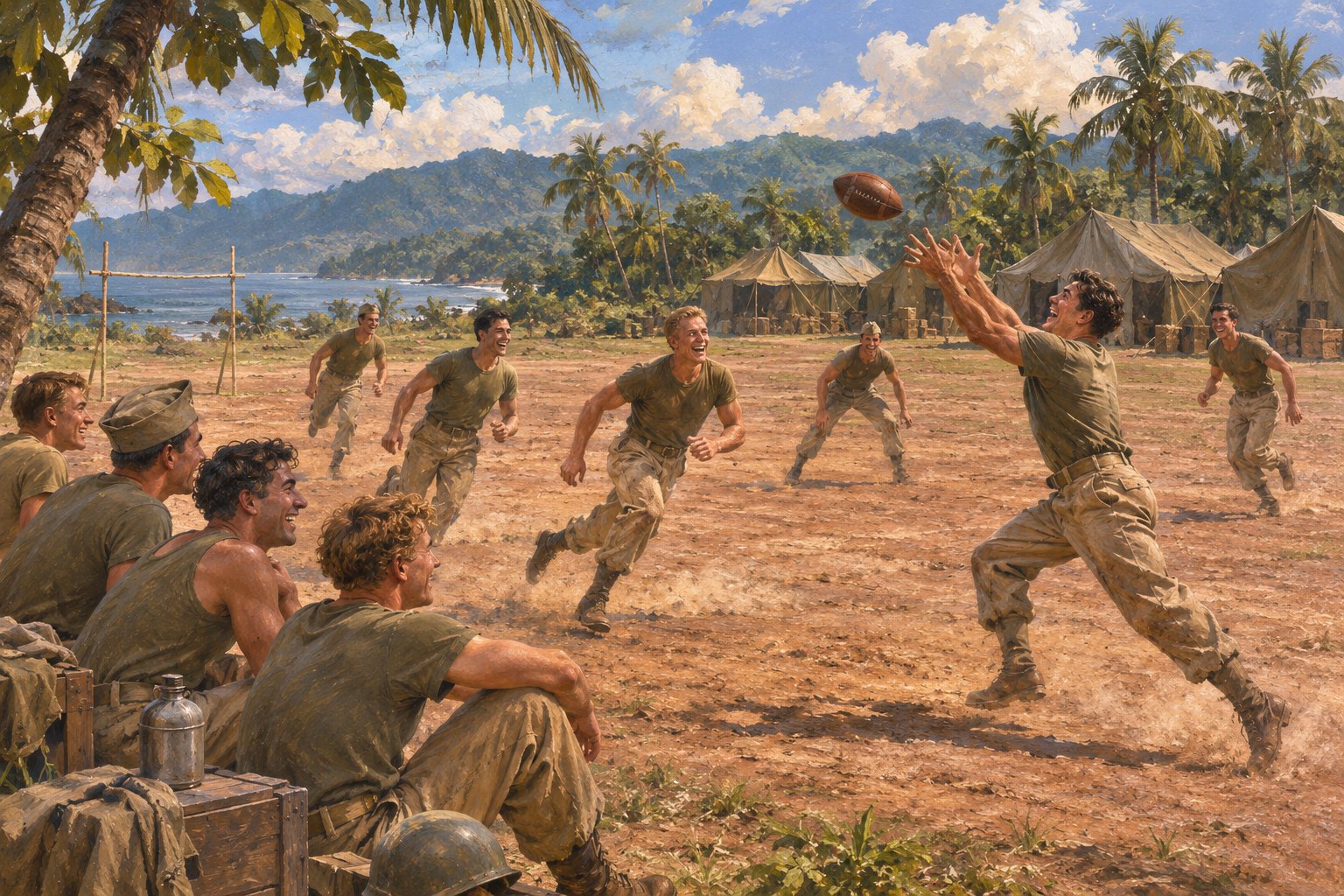
For these characters, playing reconnects bodily strength with pleasure. Running and reacting can briefly serve enjoyment rather than immediate survival. Competition also restores a familiar relationship with other people: a rival can be someone you want to defeat without wanting to destroy.
The scene therefore invites a more intimate interpretation than an inspirational lesson about teamwork. The men recover an activity they recognize as their own. They are allowed to want something small, immediate, and ordinary. That is a meaningful form of freedom within a story increasingly defined by obligations.
It also explains why viewers expecting a conventional sports movie should adjust their expectations. The game’s emotional value comes from the surrounding war. Its brevity can sharpen the sense of respite, even as it leaves open a fair criticism that the film spends too little time with its most distinctive material.
How to Read the Divide Between Critics and Audiences
A strong audience score is useful evidence of approval among participating viewers. It cannot establish that this is Netflix’s best new movie, and it does not tell an individual viewer how the violence, pacing, or characterization will land.
One plausible explanation for the divided reception is that different viewers place different weight on remembrance and dramatic development. Recognition of sacrifice can create a powerful response. A viewer can also respect that sacrifice while wanting fuller characterization. These responses can coexist without either becoming an accusation against the other.
Our discussion of the divided response to Way of the Warrior Kid likewise treats disagreement as a starting point for examining storytelling choices. Here, the useful question is whether the film makes its men sufficiently particular before asking their suffering to carry its meaning.
The Deeper Meaning: A Future Is More Than a Victory
My central interpretation of The Mosquito Bowl is that its football premise makes lost possibility tangible. These men have already experienced being good at something. They have reasons to imagine another season, another achievement, another ordinary day. Their deaths interrupt lives whose value extends far beyond athletic promise.
The game brings that understanding into focus. Its importance survives regardless of the result because the opportunity to play is itself precious. The men briefly inhabit a world in which effort has boundaries and an afternoon can belong to them.
That is the strongest reason to engage with the film beyond its audience score. Its characters invite us to consider the futures that declarations of victory cannot restore. The most searching question it raises is how fully a war story can remember people as people—with room for rivalry, uncertainty, pleasure, and unfinished lives.
Original content by this site's editorial team. Published: November 28, 2026 at 14:50:04 PST (Los Angeles time)