The Flying Ace offers a new orchestral score something richer than an airplane chase to accompany: competing ideas about what power permits a person to do. Its hero uses expertise to investigate and rescue. Its villain treats access to an airplane as leverage over a woman. Between them stands Ruth Sawtelle, whose enthusiasm for flight deserves as much attention as the danger she eventually faces.
Richard E. Norman’s 1926 silent film, featuring an all-Black cast, returns to attention as the Jacksonville Symphony prepares to premiere a commissioned score on November 14, 2026. The orchestra identifies Carlos Simon as lead composer, joined by Jongnic Bontemps, Kathryn Bostic, Nathalie Joachim, Allison Loggins-Hull, and Levi Taylor, with Courtney Lewis conducting. The approaching performance invites a fresh interpretation of the film; its musical execution remains to be assessed after the premiere.
Major spoilers follow for the mystery, abduction, and ending.
A railroad mystery before an aviation adventure
The Library of Congress describes the central predicament plainly: railroad paymaster Blair Kimball disappears along with a satchel containing $25,000. Captain Billy Stokes, a returning World War I aviator and former railroad detective, takes the case. Suspicion threatens stationmaster Thomas Sawtelle, whose daughter Ruth becomes entangled in both the investigation and its romantic tensions.
That premise matters because the title can encourage expectations of continuous airborne spectacle. The film’s dramatic machinery begins with work: a payroll, a station, professional responsibilities, and the consequences of being accused. Aviation expands this world rather than replacing it. Before Billy can become a rescuer in the sky, he must establish himself as someone capable of understanding events on the ground.
My reading is that this combination gives the adventure its strongest organizing idea. Heroism requires both movement and attention. Getting somewhere quickly means little if the person arriving cannot distinguish evidence from a persuasive story.
Billy Stokes: authority that must earn our confidence
Played by Lawrence Criner, Billy enters the story with a celebrated military identity. Yet his return to detective work gives that reputation a practical test. The railway needs more than an impressive uniform; it needs an explanation for what happened.
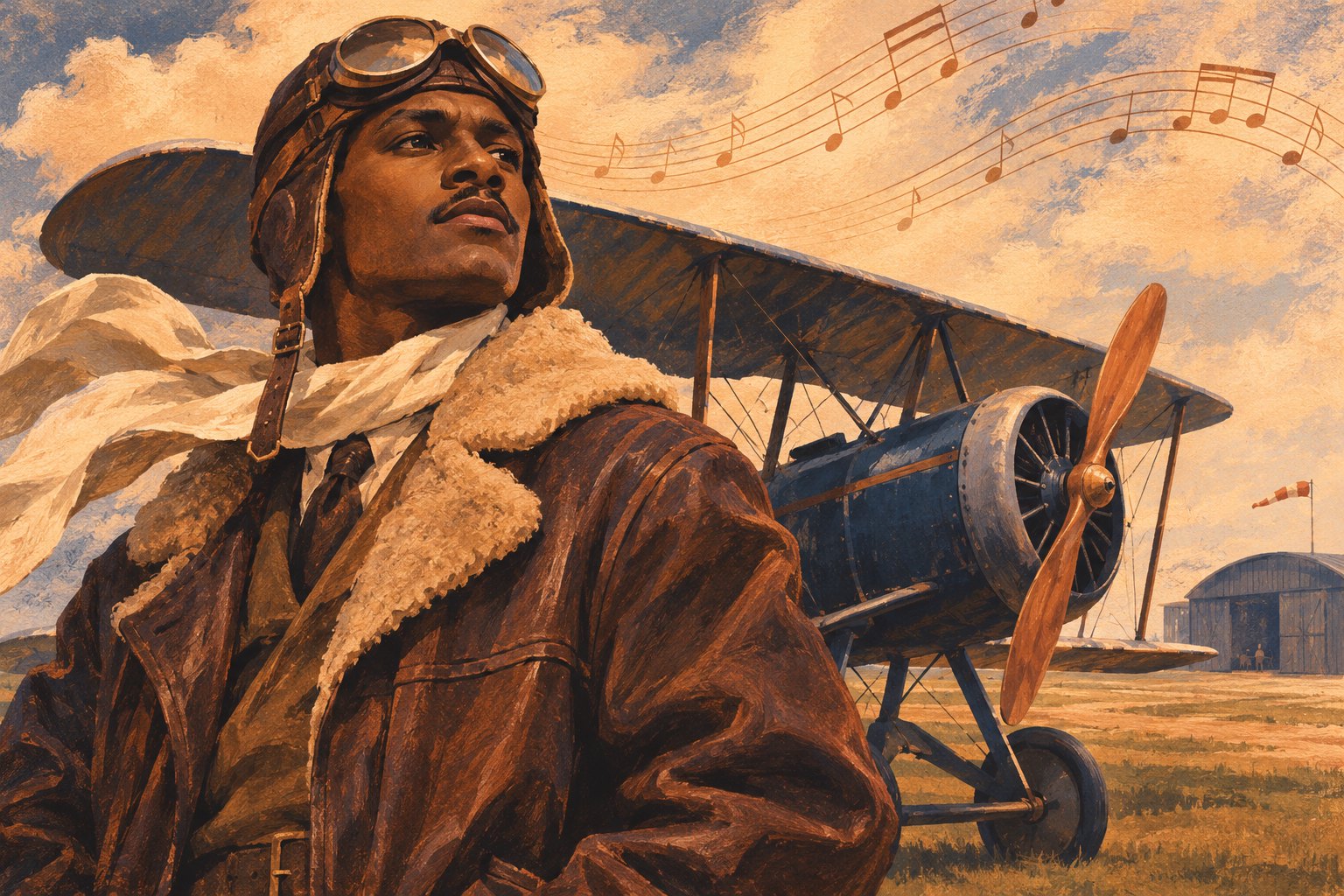
One of his brisk intertitle declarations, “I will use my plane,” neatly compresses his confidence. Flight is a tool he can put to work. The line makes modern technology feel available to him, an ordinary extension of professional competence rather than an unreachable fantasy.
The interesting tension is between that assurance and the uncertainty necessary to investigation. A detective who already knows everything has little to discover. Billy’s appeal rests on converting confidence into inquiry, allowing the case to become something more substantial than a demonstration of his status.
This is also where the railroad setting earns its place. Like the attention to everyday systems in our analysis of Railway Sleepers and its passenger-centered world, looking closely at transportation reveals relationships beneath the machinery. Here, the railway connects wages, trust, authority, and vulnerability. The missing money threatens an institution built on people doing their jobs.
Ruth’s interest in flight is not consent to courtship
Kathryn Boyd’s Ruth is especially important to a character-centered interpretation. Early in the film, she wants to ride in Finley Tucker’s airplane and learn about operating it. Her excitement belongs to her. It should not be mistaken for a promise of romantic affection.
When Tucker presses marriage, her intertitle response includes the decisive words “I am not certain I love you.” The uncertainty is the point. She reserves the right to decide what she feels, even when someone else believes his persistence should have settled the matter.
Tucker’s threat to make her “get out and walk on a cloud” turns the freedom associated with flying into a means of intimidation. The grotesque impossibility of the phrase exposes his thinking: once she is dependent on his aircraft, he imagines that refusal can be made impossible.
For me, this is the film’s sharpest character contrast. Billy’s competence becomes valuable when it protects another person; Tucker’s becomes dangerous when he treats it as ownership. The same technology can enable freedom or enforce dependence.
The eventual rescue still places Ruth inside a familiar endangered-heroine structure. That limits the independence promised by her early curiosity. Nevertheless, remembering her interest in learning to fly changes the stakes. She is a person whose desire for experience has been exploited, not simply a romantic reward waiting at the end of a chase.
Peg makes heroism a shared enterprise
Billy’s mechanic, Peg, played by Steve Reynolds, complicates the idea of a lone, self-sufficient hero. The American Film Institute’s synopsis records his active role in the pursuit, including a bicycle chase and his use of a rifle concealed in a crutch to stop a getaway car.
These are broad adventure devices, but their underlying allocation of competence is significant. Peg contributes skills that the plot needs. Billy’s success depends on assistance, and the supporting character gets consequential action of his own.
There is room for a critical reservation here: physical difference can become a novelty in screen comedy. Yet reducing Peg entirely to that function would miss the practical authority the story gives him. A useful reading holds both possibilities in view, asking when the gag draws attention to his body and when the action recognizes his ingenuity.
What the new music can help us hear
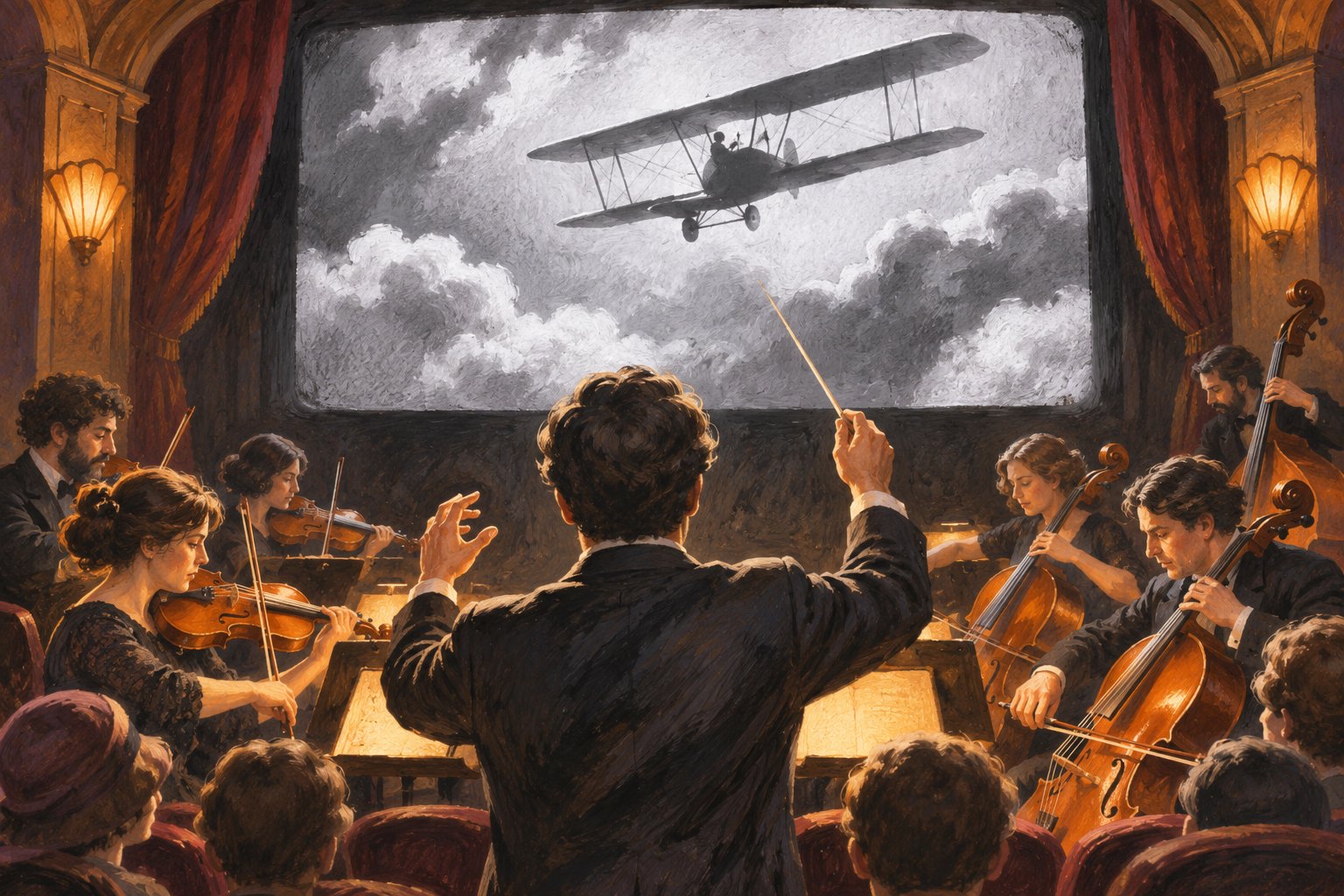
The commission’s announcement describes a collaborative structure: Simon supplies thematic material and the opening reel’s music, while the other composers each score a remaining reel. That creates an intriguing artistic challenge. Shared themes can hold the film together while different musical voices respond to its changing situations.
The essential question is whose experience the accompaniment emphasizes. During Tucker’s courtship, music could foreground apparent charm or make room for Ruth’s discomfort. During the investigation, it could celebrate Billy’s certainty or preserve the suspense of incomplete knowledge. These are interpretive possibilities, not claims about what the new score actually does.
The climactic rescue, in which Billy lowers a rope ladder toward Ruth as Tucker’s aircraft burns, plainly invites excitement. But volume alone cannot distinguish exhilaration from terror. The most revealing accompaniment would make the danger intelligible from Ruth’s position while sustaining the momentum of Billy’s intervention.
That is also an accessibility issue. As our discussion of accessible genre storytelling argues, audiences need understandable desires and consequences. Music can help contemporary viewers follow those emotional relationships without requiring prior familiarity with silent-film conventions.
The deeper meaning of an ordinary screen hero
My strongest judgment about The Flying Ace concerns its distribution of possibility. Black characters occupy the adventure’s professional, romantic, comic, and criminal roles. They investigate, desire, deceive, improvise, and survive. The film’s imaginative world grants them the range of behavior on which popular storytelling depends.
Its melodramatic structure also leaves something worth questioning. Rescue resolves immediate danger more readily than it answers what Ruth’s future independence might look like. Billy can save her without the story fully exploring whether she will gain the freedom to fly for herself.
That unresolved possibility gives the centennial return emotional substance. A new score can draw attention to the hero’s triumph, but it can also help us notice the ambitions around him. The film becomes richer when we follow not only who commands the airplane, but who gets to imagine a life beyond the ground.
Original content by this site's editorial team. Published: November 11, 2026 at 09:38:12 PST (Los Angeles time)