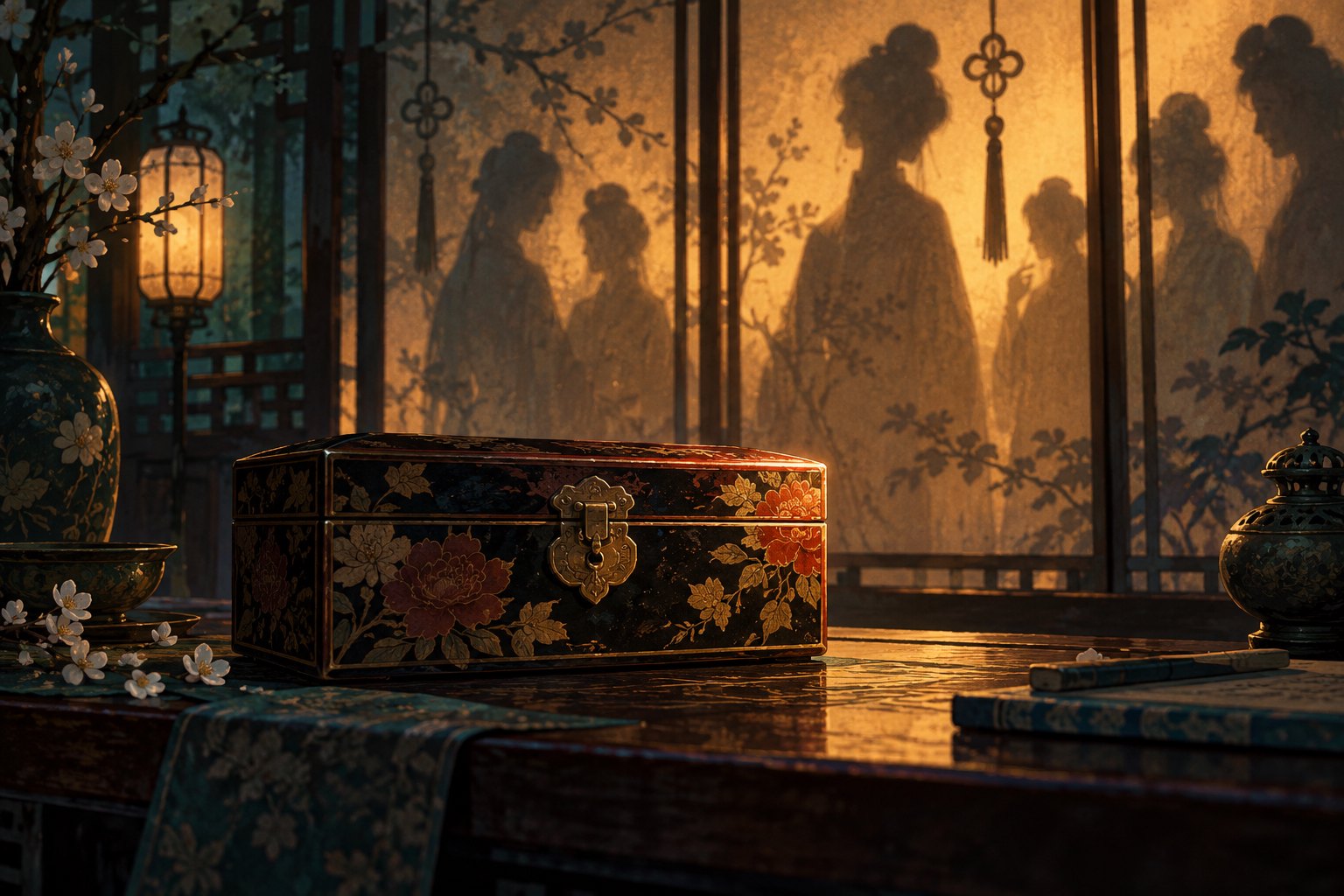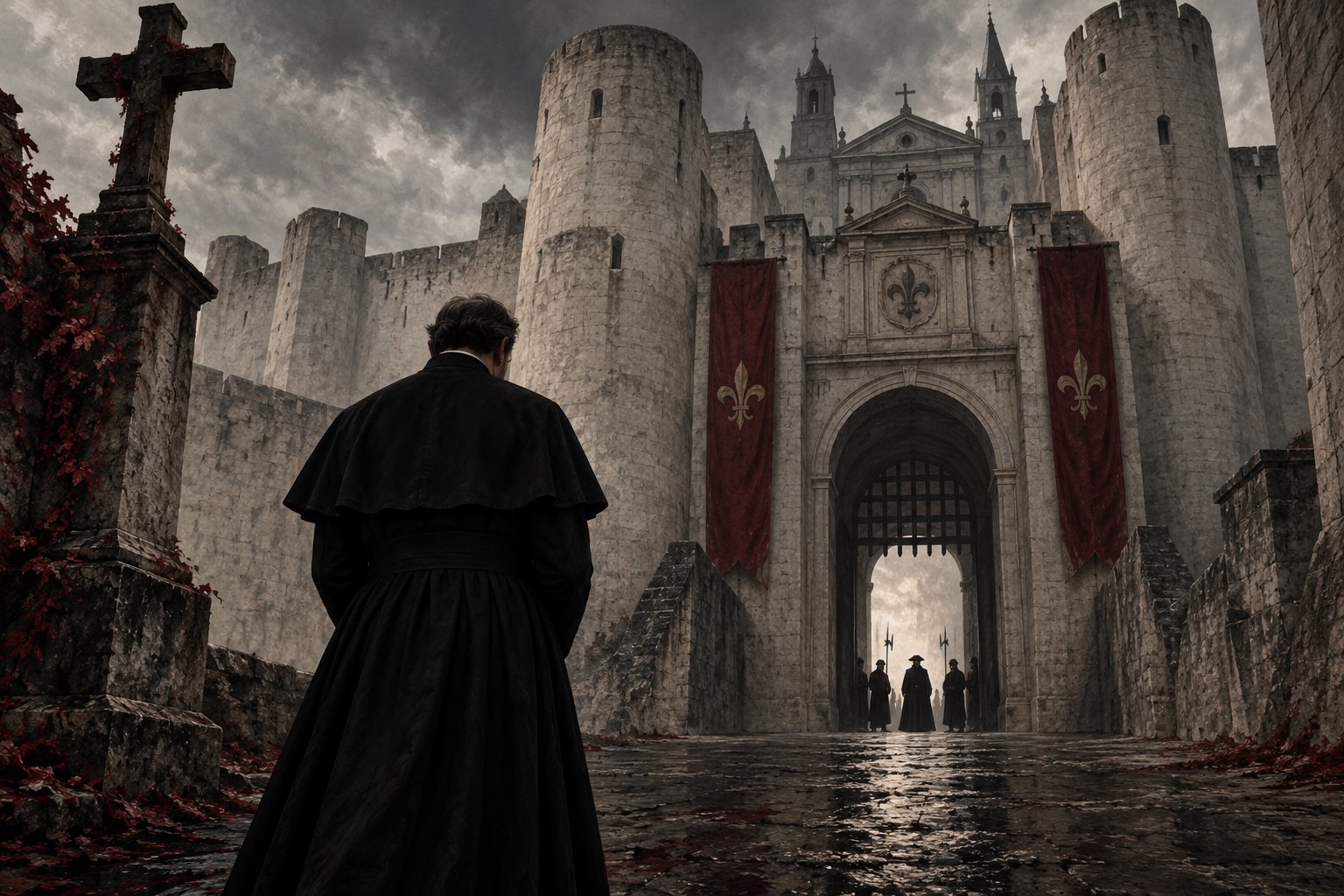
Ken Russell’s The Devils draws its horror from a historical persecution: the alleged possession of Ursuline nuns in Loudun, France, and the prosecution of priest Urbain Grandier. The scandalous imagery has dominated its reputation, but the film’s lasting force comes from a colder question. What happens when religious authorities and political officials discover that the same accusation serves them both?
Released in 1971, Russell’s film is a ferocious, sometimes exhausting achievement. Its excess can threaten to overwhelm its characters, yet Oliver Reed and Vanessa Redgrave give that spectacle a painful human center. Grandier wants authority without surrendering pleasure; Sister Jeanne wants recognition within a world that gives her few acceptable ways to express desire.
Major spoilers follow, including the ending. The film contains sexual imagery, religious desecration, coercive treatment, torture, and execution.
The Loudun history—and the limits of the dramatization
The historical possessions began in the 1630s, and Grandier was executed for sorcery in 1634. Those events establish a persecution, not proof of supernatural activity. Historians Brendan C. Walsh and Philip C. Almond describe a community shaped by plague, religious tensions, and institutional conflict, where public exorcisms helped turn accusations into a spectacle. Their account also notes that the reported possessions continued after Grandier’s death. [Walsh and Almond’s historical account](https://eveningreport.nz/2026/10/13/possessed-nuns-and-sexual-deviance-the-history-behind-ken-russells-highly-censored-film-the-devils/)
Russell approaches this history through Aldous Huxley’s The Devils of Loudun and John Whiting’s play The Devils. His screenplay is therefore a dramatic interpretation with literary intermediaries. Its private conversations, psychological explanations, and compressed confrontations should not be treated as a transcript of seventeenth-century events. [AFI’s film record](https://catalog.afi.com/Film/54241-THE-DEVILS)
That distinction matters especially for Jeanne. Redgrave’s character embodies Russell’s argument about confinement and frustrated longing. She cannot, by herself, explain what every historical nun experienced or believed. The film’s certainty about manipulation is artistically powerful; historical understanding requires more caution about individual motives.
Grandier: a victim who remains responsible for his choices
Grandier’s treatment of Philippe, whom he abandons after learning she is pregnant, prevents an easy reading of him as an innocent saint. His relationship with Madeleine develops differently, culminating in a secret marriage. Meanwhile, his resistance to dismantling Loudun’s fortifications makes him an obstacle to Cardinal Richelieu’s consolidation of power. [AFI’s plot synopsis](https://catalog.afi.com/Film/54241-THE-DEVILS)
Reed makes these contradictions persuasive. Grandier’s confidence initially suggests a man accustomed to having his intelligence mistaken for moral authority. He can explain himself beautifully. The harder task is accepting that an explanation does not erase another person’s hurt.
Madeleine unsettles that confidence because she takes love and belief seriously. His brief admission, “You shame me,” marks a crack in his habitual self-defense. In my reading, their relationship matters because it offers him a responsibility he cannot fulfill through charm alone. [Film dialogue transcript](https://www.subtitlecat.com/subs/197/The%20Devils%20%281971%29%20%5BUNCUT%5D%20DvDrip%20XviD.html)
Russell’s strongest moral distinction is between being guilty of selfishness and being guilty of the crime the authorities need. Grandier’s sexual conduct makes him vulnerable to scandal; it does not establish witchcraft. Defending him requires holding both judgments at once.
His public warning, “Don’t look at me! Look at your city!”, redirects attention from personal fascination toward collective consequences. The question of who controls the story also runs through our analysis of power and selective responsibility in Digger. Here, however, the cost of distraction is the destruction of civic independence. [Grandier’s quoted dialogue](https://www.imdb.com/title/tt0066993/quotes/)
Jeanne: longing becomes usable evidence
Jeanne’s fantasies merge Grandier with religious imagery, while her accusations give his enemies an opportunity. Redgrave makes her intensely watchful: a person trying to experience life through someone she has already burdened with impossible significance. Her imagined Grandier belongs to her emotional world long before the real man can answer it.
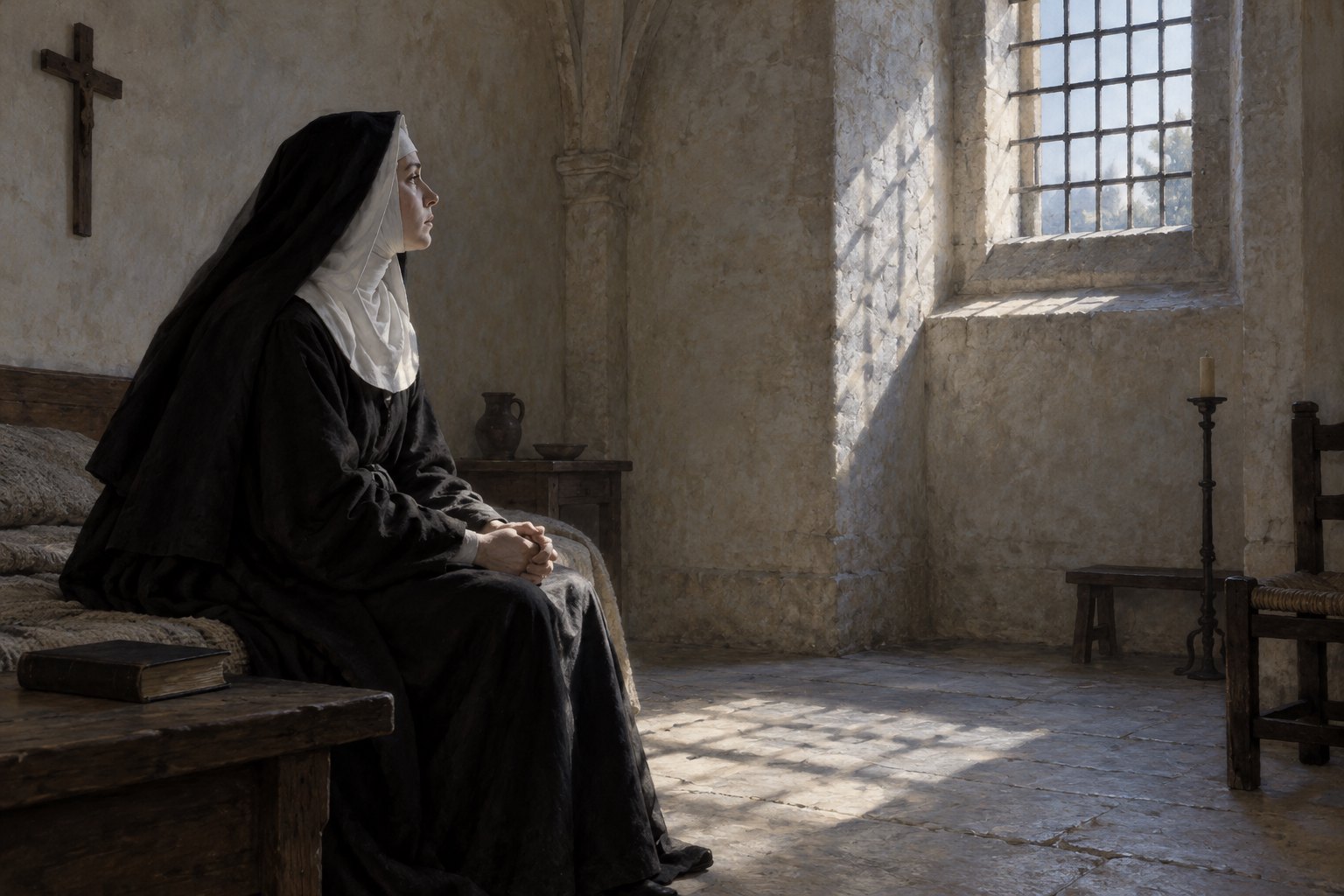
The tragedy is that being heard does not mean gaining control. Once officials find her story useful, they acquire an interest in preserving it. Her suffering becomes public property. The very attention that appears to elevate her makes it harder for her to determine what her words mean.
Russell’s treatment is also open to criticism. Connecting Jeanne’s physical disability, sexual frustration, and destructive behavior risks making her body a shorthand for psychological disturbance. Redgrave’s performance gives her more specificity than that equation allows, but the film does not entirely escape it.
Calling the women’s desire “deviance” can repeat the judgment the drama asks us to examine. Desire itself does not supply the machinery of persecution. Officials supply the threats, procedures, and rewards that turn private distress into evidence against someone else.
Father Barre and the system that cannot admit error
Father Barre’s exorcisms operate as public performances of authority. A particularly revealing episode involves a supposed holy relic: the women respond before the container is revealed to be empty. The demonstration exposes the performance without stopping the persecution. Later, Jeanne’s retraction is dismissed as another intervention by the Devil. [AFI’s synopsis of the exorcisms and trial](https://catalog.afi.com/Film/54241-THE-DEVILS)
This is the film’s most frightening logic. Supporting testimony proves the accusation; contradictory testimony proves the supernatural enemy’s cunning. Grandier identifies the absurdity when he observes that “the Devil has spoken.” The institution has made disbelief itself suspicious. [Grandier’s courtroom dialogue](https://www.imdb.com/title/tt0066993/quotes/)
Barre’s conviction and Laubardemont’s calculation need not be identical to produce the same result. One man can believe he is saving souls while another recognizes an efficient political weapon. Russell makes their cooperation more disturbing than a conspiracy in which everyone privately admits the fraud.
Why the censorship history changes the viewing experience
The British Board of Film Classification records that both its examiners and Warner Bros. demanded changes before the British release. Cuts affected sexual material, violence, and the combination of sexuality with sacred imagery. The British theatrical version received an X certificate; additional American cuts subsequently produced an R-rated version. These were materially different edits. [BBFC’s censorship case study](https://www.bbfc.co.uk/case-studies/the-devils-1971)
The removed sequence commonly called the “Rape of Christ” involves nuns desecrating a sculpted representation of Christ. Its significance extends beyond provocation: sacred imagery becomes caught in the frenzy that religious authority has helped produce. That interpretation does not require every viewer to find the sequence successful or bearable.
Older claims that the film has never received an authorized restoration now need qualification. The BFI advertises a 114-minute restoration cut to Russell’s direction, with British cinema screenings from October 30 and 35mm previews from October 23. Those dates describe the BFI’s release, not universal availability. [BFI’s release information](https://www.bfi.org.uk/bfi-film-releases/ken-russells-devils)
For a first viewing, check which version is being shown. The film suits viewers interested in confrontational political cinema and religious imagery; its grotesque comedy and cruelty make it a demanding choice for someone expecting conventional supernatural suspense.
The ending: whose freedom survives?
Derek Jarman’s stark architectural designs give the film an environment that feels both monumental and enclosing. The spaces seem built to organize bodies and display power. Readers interested in that relationship can also explore our feature on how horror locations create unease. [BFI on Jarman’s contribution](https://www.bfi.org.uk/lists/10-great-british-films-1971)
The destruction of Loudun’s walls brings the political purpose back into focus after Grandier’s execution. My reading of the ending is that the authorities have secured something more durable than a conviction: they have demonstrated their power to decide which account of reality will prevail.
Grandier’s final dignity does not undo his earlier failures, and Jeanne’s suffering does not cancel the harm of her accusations. Russell leaves both truths standing. That refusal to make moral worth a prerequisite for protection is the film’s deepest achievement. A society’s commitment to justice is tested most severely when the person it must defend is someone it has good reasons to dislike.
Original content by this site's editorial team. Published: October 13, 2026 at 01:16:24 PDT (Los Angeles time)