Ken Russell’s The Devils returns with a question more disturbing than anything its scandalous reputation promises: what happens when powerful people discover that someone else’s pain can serve their purposes? The 1971 film turns religious persecution into a furious character tragedy. Its strongest claim to greatness lies in the connection between its intimate humiliations and its public atrocities.
The restored release, titled Ken Russell’s The Devils, gives that argument renewed visibility. The BFI identifies it as a 4K restoration cut to Russell’s direction, with a limited American engagement beginning October 16, 2026, and a UK and Ireland release scheduled for October 30. These dates concern the restoration, not a remake. [BFI restoration announcement](https://www.bfi.org.uk/news/ken-russells-devils-definitive-4k-restoration-launch-ahead-major-bfi-retrospective)
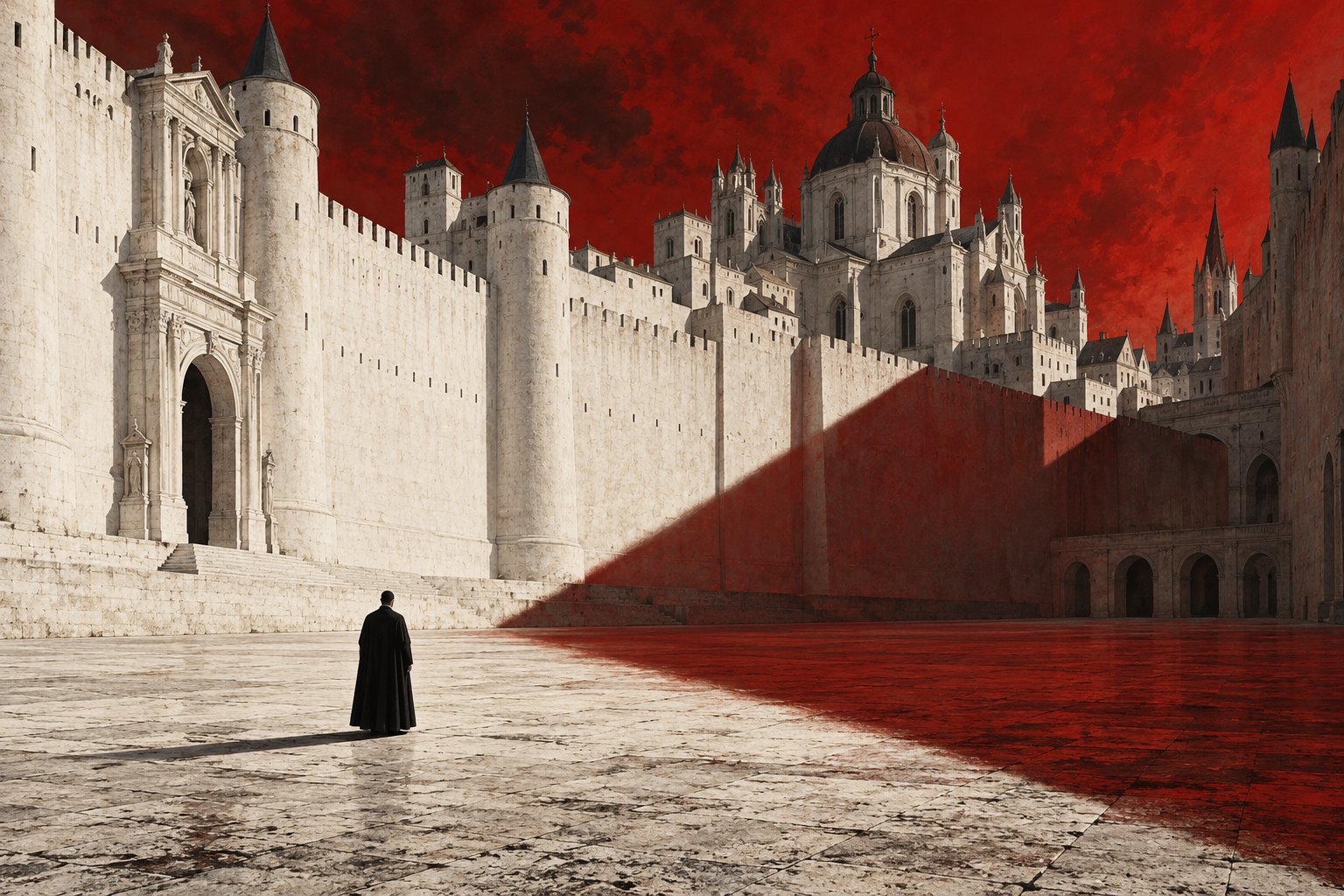
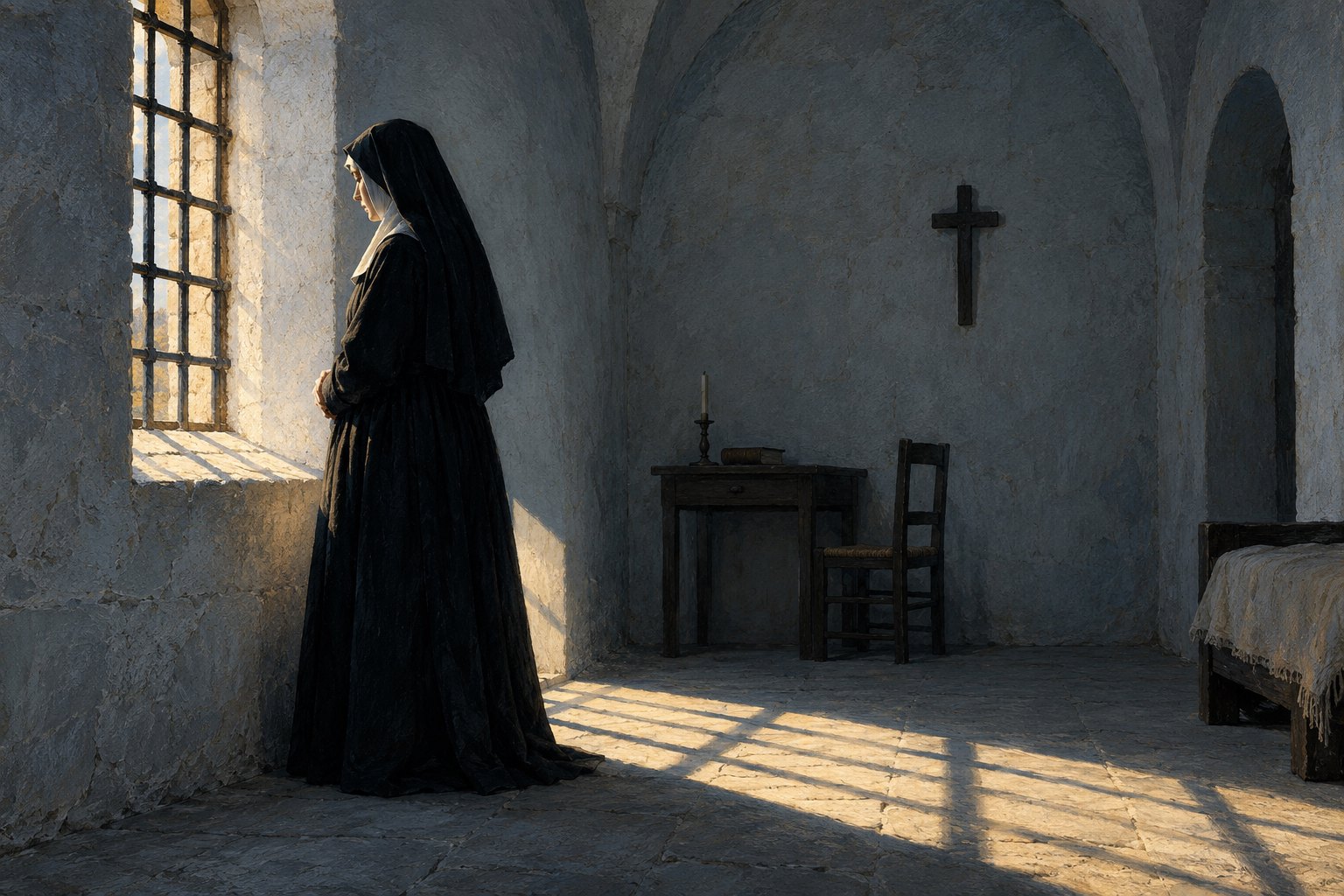
Spoilers follow, including the ending. The film contains graphic sexual imagery, religious desecration, torture, and execution. The illustrations accompanying this review are symbolic artwork, not production stills.
Grandier: An Imperfect Man Facing an Invented Crime
In seventeenth-century Loudun, Father Urbain Grandier stands between his city and authorities seeking to dismantle its defenses. Oliver Reed gives him the bearing of someone accustomed to occupying the center of a room. His confidence is useful in political resistance and dangerous in personal relationships. Russell allows both qualities to coexist.
Grandier’s sexual behavior makes him vulnerable, but vulnerability is not proof of the witchcraft alleged against him. That distinction is the foundation of the tragedy. Viewers need not admire every choice he makes to recognize the machinery being assembled to destroy him. A defense of justice that works only for spotless victims would offer him little protection.
Reed’s physical authority also gives the eventual destruction of Grandier’s body dramatic force. A man who initially appears able to master his surroundings becomes someone whose remaining freedom is the ability to refuse a lie. His suffering does not retrospectively excuse his selfishness. It exposes the enormous distance between human failings and the punishment officials manufacture around them.
His command, “Don’t look at me! Look at your city!”, provides a useful instruction for watching the film. The spectacle of an accused individual draws attention away from the community’s dispossession. Grandier understands that the audience within the story is looking in the wrong direction. [Recorded film dialogue](https://www.imdb.com/title/tt0066993/quotes/)
Sister Jeanne: When Longing Becomes Evidence
Vanessa Redgrave’s Sister Jeanne des Anges is the film’s most difficult emotional presence. Her fixation on Grandier feeds the accusations against him, yet reducing her to a malicious rejected woman would miss the structures surrounding her. She inhabits a world that offers religious language for feelings it gives her little freedom to acknowledge.
The BFI’s account of the film emphasizes the connection between her sexual obsession, the convent, and the authorities’ response. Redgrave makes that connection uncomfortable: longing can become resentment, and resentment can become something that other people organize and exploit. [BFI guide to Russell’s films](https://www.bfi.org.uk/features/where-begin-with-ken-russell)
My reading is that Jeanne’s tragedy concerns the difference between receiving attention and possessing agency. Once her distress becomes useful to men pursuing Grandier, she occupies the center of events without controlling their direction. Her words acquire public importance precisely as their meaning becomes someone else’s property.
There is also a troubling aspect to Russell’s presentation. The film places Jeanne’s disability within an aggressively grotesque visual world, risking an association between bodily difference and psychological corruption. Redgrave’s emotional intensity complicates that framing. She gives us someone who wants recognition, even while the film makes her behavior frightening.
Madeleine Offers a Different Kind of Faith
Madeleine, played by Gemma Jones, supplies a quieter measure of the film’s moral world. Her secret marriage to Grandier and her survival after his execution make her central to its emotional structure. The closing movement follows her out through the ruined city. [Plot and cast reference](https://en.wikipedia.org/wiki/The_Devils_(film))
Where public religious authority demands performance, Madeleine offers companionship. Her relationship with Grandier asks whether spiritual seriousness can include an honest acknowledgment of desire and weakness. That question matters because the surrounding institutions insist on making bodily experience either a scandal or a weapon.
Grandier’s brief response to her, “You shame me,” reveals a different kind of judgment from the one he encounters in court. Here, shame can prompt self-recognition rather than provide permission for cruelty. Madeleine’s generosity exposes what his confident speeches cannot conceal from himself. [Recorded film dialogue](https://www.imdb.com/title/tt0066993/quotes/)
Jones’s restraint is essential. A film pitched entirely at the volume of accusation would eventually flatten its own effects. Madeleine gives the noise something fragile to threaten. Through her, the cost of persecution becomes the loss of a possible shared life.
Why Restoring the Offensive Material Matters
The history of the cuts can obscure the artistic question: what do the disputed images contribute? David Fear’s restoration report describes the return of previously removed material, including the notorious sequence involving nuns and a crucifix. Its recovery belongs to a long effort associated with critic Mark Kermode. [Restoration reporting](https://au.rollingstone.com/movies/movie-features/ken-russells-the-devils-restoration-mark-kermode-interview-102333/)
Restoration does not obligate anyone to approve of every image. It makes the director’s arrangement available for judgment. Sexual frenzy, punishment, religious imagery, and political calculation occupy the same dramatic world; removing their most abrasive intersections can change the relationships the film asks us to examine.
Russell described the work as political and connected Loudun’s threatened walls to its ability to resist centralized power. He also explained that he wanted the city to feel modern to its inhabitants, rather than resemble picturesque ruins. [Russell’s account of the film](https://www.bfi.org.uk/sight-and-sound/interviews/my-one-political-film-ken-russell-devils)
That intention helps explain the force of Derek Jarman’s production design. The built environment feels severe and imposing. It gives political conflict a physical scale: people can be confined, exposed, gathered, or driven out. Architecture becomes part of how authority operates.
The Ending Makes the City the Victim, Too
Grandier’s execution and the destruction of Loudun’s defenses bring the personal and political stories together. The authorities achieve a material objective through a spectacle presented as spiritual necessity. Madeleine’s departure leaves us with survival rather than reassurance.
The deeper horror, in my view, is the ease with which different motives cooperate. Sexual jealousy, sincere fanaticism, careerism, and calculated domination do not need to become identical beliefs. They only need to produce the same victim. The film’s excess makes that convergence visible and exhausting.
Its concern with who gets to define a threatening image also has a useful contemporary companion in our discussion of political labels and the circulation of film advertising. The circumstances differ sharply, but both invite scrutiny of the categories that govern what audiences encounter.
The verdict: The Devils merits its reputation as a major work because its provocation remains attached to recognizable human stakes. It is demanding viewing, especially for anyone choosing films for a casual gathering; our thoughts on planning a scary movie night around atmosphere and audience offer a gentler starting point.
Russell’s film leaves a harsher task. Look beyond the condemned man. Notice who benefits from his condemnation, what happens to those who loved him, and what disappears while everyone watches the fire.
Original content by this site's editorial team. Published: October 19, 2026 at 09:22:00 PDT (Los Angeles time)