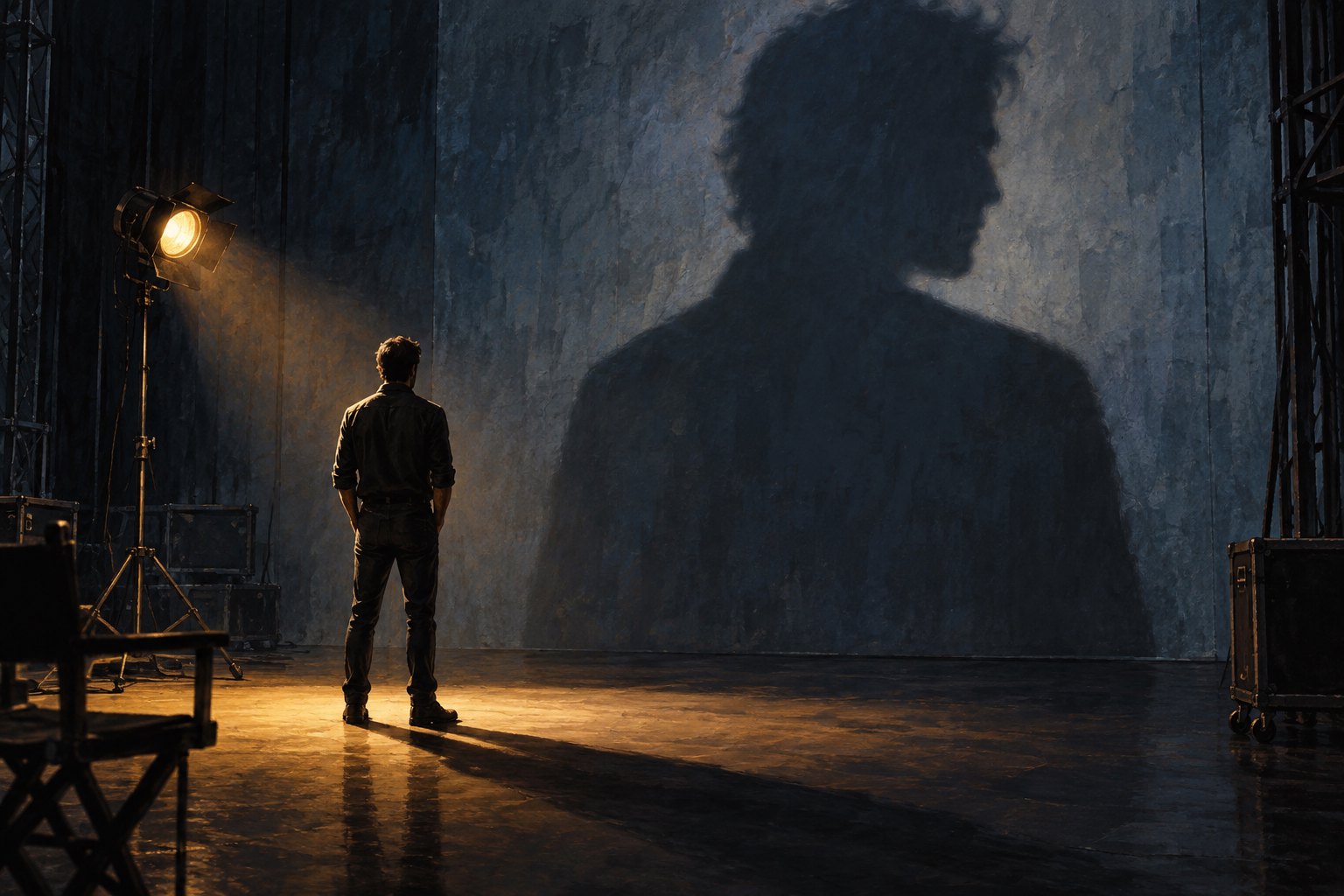
The best movie theme songs make a character’s feelings audible. The weakest can sound as though they belong to a different movie, even when they are memorable recordings. That is why “Gonna Fly Now” from Rocky makes such a persuasive case for greatness, while Madonna’s “Die Another Day” presents a more complicated question: can a song capture a hero’s determination and still make his suffering feel remote?
For this critic, the decisive test is dramatic fit. A tune should earn its place through what it reveals, intensifies, or deliberately unsettles. Catchiness matters, but remembering a chorus is different from understanding the person underneath it.
Spoiler warning: This essay discusses the ending of Rocky and the opening captivity sequence of Die Another Day. The evaluations are subjective criticism.
What Are We Judging When We Judge a Theme Song?
A theme song can introduce a film’s world, accompany a decisive transformation, or send us out of the theater with an emotional afterimage. Those are different assignments. An opening song has to establish expectations; a closing song has the benefit, and responsibility, of everything we have already watched.
It also helps to distinguish a vocal theme from an instrumental score. “Gonna Fly Now” occupies interesting territory between them: Bill Conti’s composition, with lyrics by Carol Connors and Ayn Robbins, depends heavily on its instrumental lift. Its voices contribute to a larger musical surge instead of delivering a detailed account of Rocky’s circumstances.
That economy is part of its strength. Film characters already have dialogue, faces, gestures, and choices. A song does not always need to explain them again. Sometimes it needs to supply the confidence they cannot yet summon.
Why “Gonna Fly Now” Earns Its Optimism
Rocky Wants Proof That He Matters
In Rocky, Sylvester Stallone’s Philadelphia boxer gets an improbable opportunity to face champion Apollo Creed. But the emotional stakes become clearest when Rocky admits the limits of that opportunity. His private ambition is to “go the distance.” He needs evidence that his life amounts to something.
That distinction changes the sound of the theme. Heard casually, its brass and driving rhythm suggest uncomplicated victory. Within the film, I hear something more tentative becoming possible: a man beginning to take his own effort seriously.
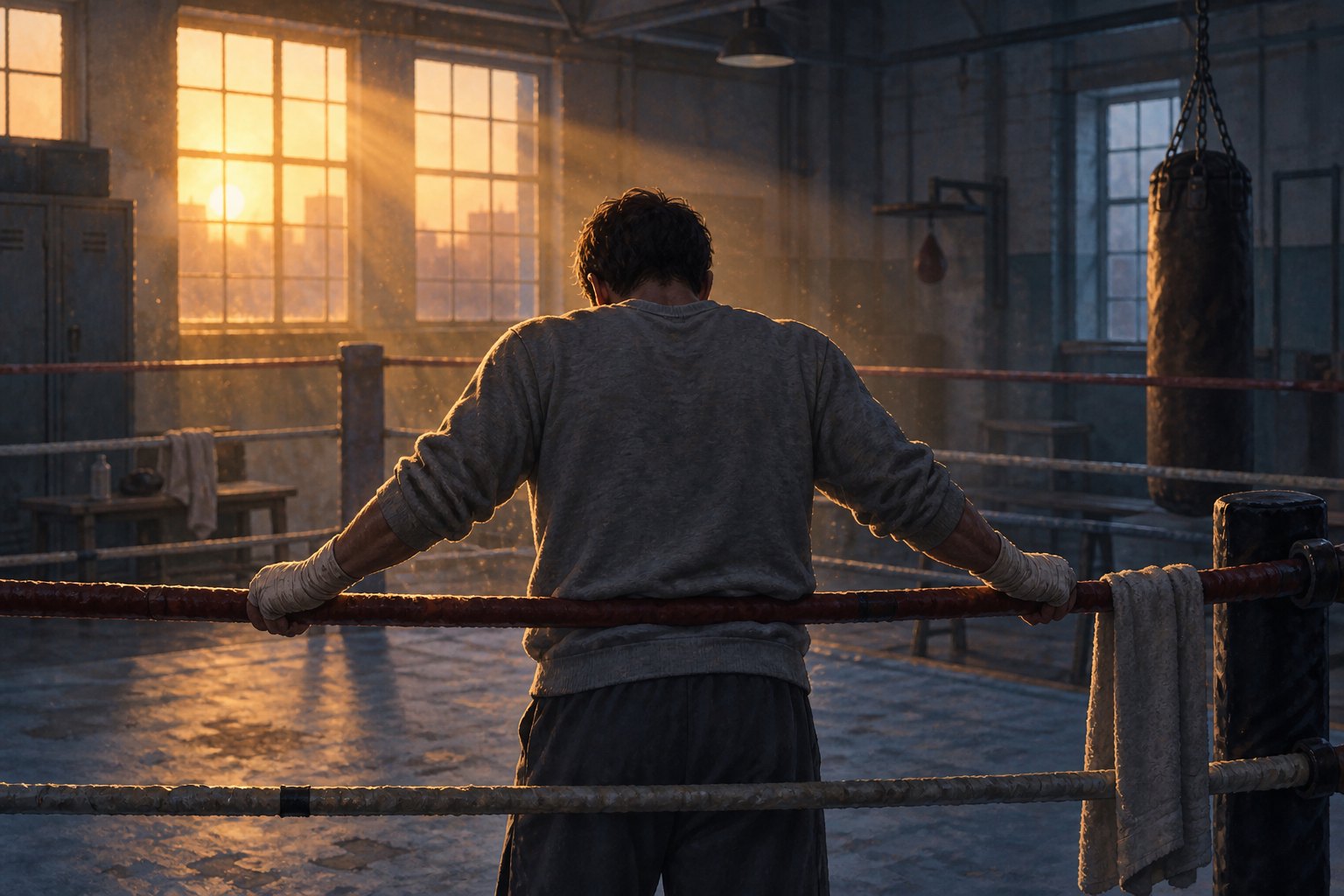
The training sequence gives that feeling a physical vocabulary. Running becomes progress. Repetition becomes commitment. The museum steps become a visible measure of change. The music allows those actions to accumulate instead of making us experience them as separate tasks.
Crucially, the song does not have to promise that Rocky will become the better boxer. It makes the work feel worthwhile before the outcome is known. That is a much more durable form of encouragement than a musical guarantee that the hero will win.
Adrian Gives the Triumph Its Meaning
Adrian is essential to this reading. Rocky’s confidence has an audience of one before it has an arena full of witnesses. With her, his uncertainty can become speech. Her presence makes the distance between public performance and private need visible.
The romantic relationship also keeps the film’s ambition human in scale. Rocky may be entering a spectacle, but the person he wants to reach is someone who knows him outside it. The music can expand his world without erasing that intimacy.
There is a related question in our discussion of when a life feels complete in Babies: how much should an external milestone determine a person’s sense of worth? In Rocky, the theme’s exhilarating certainty sits beside a story that gives success a deeply personal definition.
Rocky loses the fight by split decision. He has nevertheless lasted the full fifteen rounds. As the official result arrives, his attention turns toward Adrian. His small question, “Hey, where’s your hat?”, is wonderfully revealing: after all that bodily punishment and public noise, an ordinary detail still connects him to her.
That ending improves the theme retrospectively. Its uplift remains truthful because the film has established what the achievement means. A defeat on the scorecards cannot cancel the transformation we have heard taking shape.
“Die Another Day”: An Intriguing Idea With an Emotional Cost
Madonna’s title song approaches endurance through a very different sound. Its clipped electronic rhythm and processed vocals feel controlled, fractured, and resistant to warmth. As a recording, those qualities give it a distinct identity. As accompaniment to Bond’s captivity and torture, they create friction.
The opening of Die Another Day places James Bond in an unusually powerless position. Captured in North Korea, he endures imprisonment before an exchange returns him to a service that doubts him. The title sequence incorporates his ordeal rather than simply interrupting the action with decorative imagery.
There is a defensible connection between music and character here. My reading is that the song’s mechanical insistence can suggest survival reduced to a repeated internal command. Keep functioning. Refuse collapse. Its damaged vocal texture can also sound appropriate to a man whose control over his body has been taken away.
Yet I find the pairing less emotionally effective than its concept suggests. The beat gives the sequence momentum, but that momentum makes the ordeal easier to consume as stylish spectacle. Bond’s vulnerability registers visually while the music repeatedly redirects attention toward its own construction.
That is my objection to its dramatic fit. Electronic production is perfectly capable of expressing pain, dread, or dissociation. Here, the polished surface creates more distance than I want from this particular moment in Bond’s story.
Calling it simply a terrible song misses the interesting failure. Its strengths as a distinctive pop record help explain why it can compete with the scene. A theme may be bold, purposeful, and still leave the character less emotionally accessible.
Three Tests for the Best and Worst Movie Theme Songs
- Identify whose feelings the song expresses. Is it aligned with the protagonist, another character, or the audience? A mismatch can be productive, but it should add meaning.
- Listen for what changes during the scene. Does the music make effort, fear, attraction, or recognition develop? Constant intensity can flatten an important transition.
- Reconsider it after the ending. A strong theme often gains meaning once the character’s choices are complete. Ask whether the film deepens the song or merely reminds you of it.
Recognition alone cannot answer these questions. As our analysis of the storytelling challenge facing Figment explores, a familiar identity still needs dramatic substance. Theme songs face the same demand: an instantly recognizable sound must have something to express.
The Deeper Difference: Being Celebrated and Being Understood
Both songs accompany men enduring physical punishment, but the films give endurance different meanings. Rocky needs to discover value in himself; Bond needs to survive the destruction of the control his identity usually promises. Their music therefore has different emotional work to do.
“Gonna Fly Now” succeeds because its grandeur remains attached to a modest, vulnerable wish. “Die Another Day” interests me because its refusal of warmth might describe Bond’s survival mechanism, even as it limits my connection to his suffering.
The finest movie theme songs let us carry a character’s emotional experience beyond the scene. When Rocky calls for Adrian, the film brings all that musical expansion back to two people. The triumph is enormous because, at last, someone is there to understand it.
Original content by this site's editorial team. Published: September 13, 2026 at 01:17:59 PDT (Los Angeles time)