The 2026 LACMA Art+Film Gala party is the subject of WWD’s photo coverage, bringing the social side of an event devoted to art and cinema into focus. For movie lovers, that pairing raises a question that lasts longer than the evening’s photographs: what does it mean to celebrate film as an art form?
There is pleasure in the party itself. Movies give us faces we recognize, performances we remember, and reasons to feel connected to people we have never met. A cultural celebration can gather those associations into one occasion. But my measure of a successful celebration of cinema is whether that interest eventually returns us to the work—with more curiosity about how it was made and more willingness to look closely.
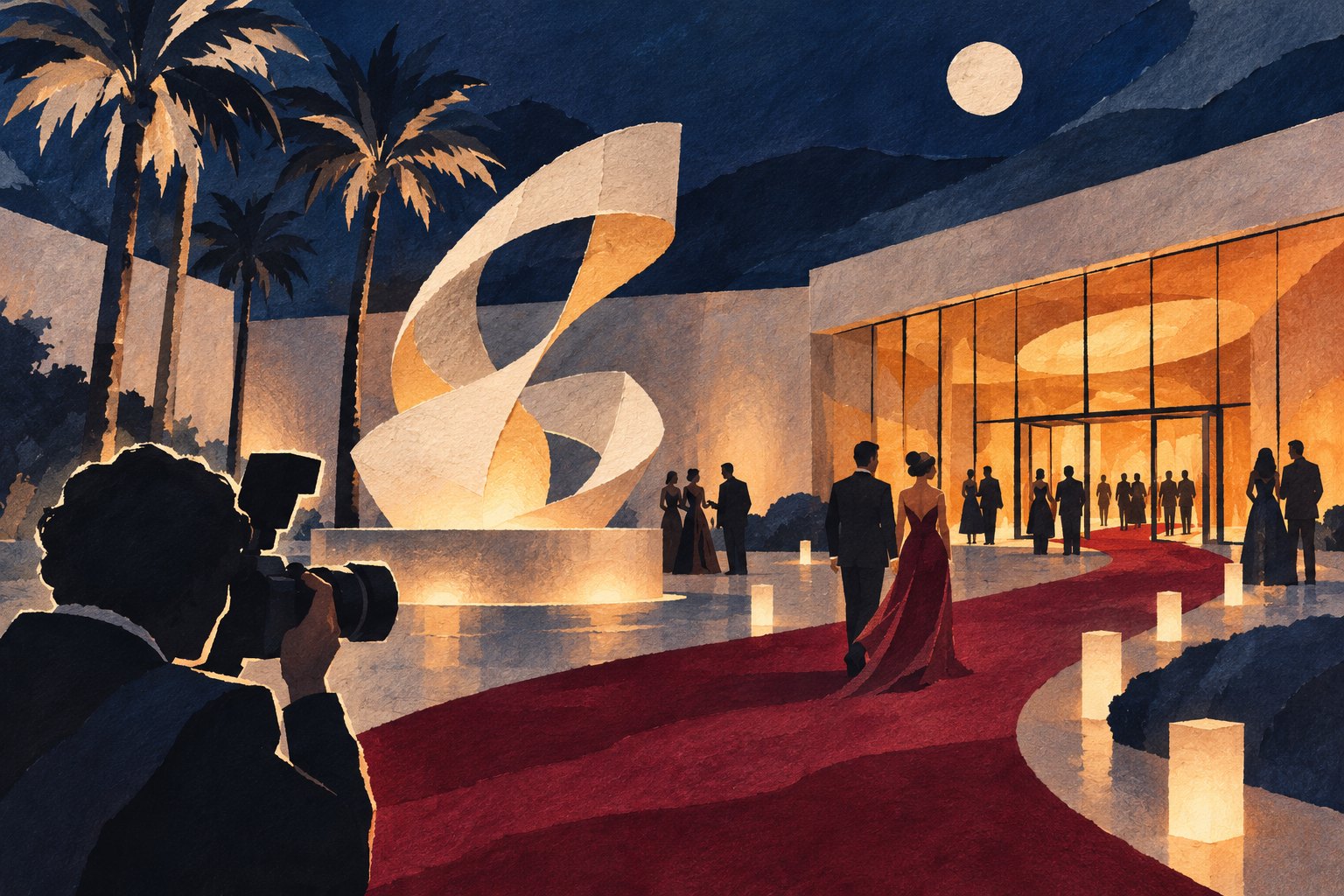
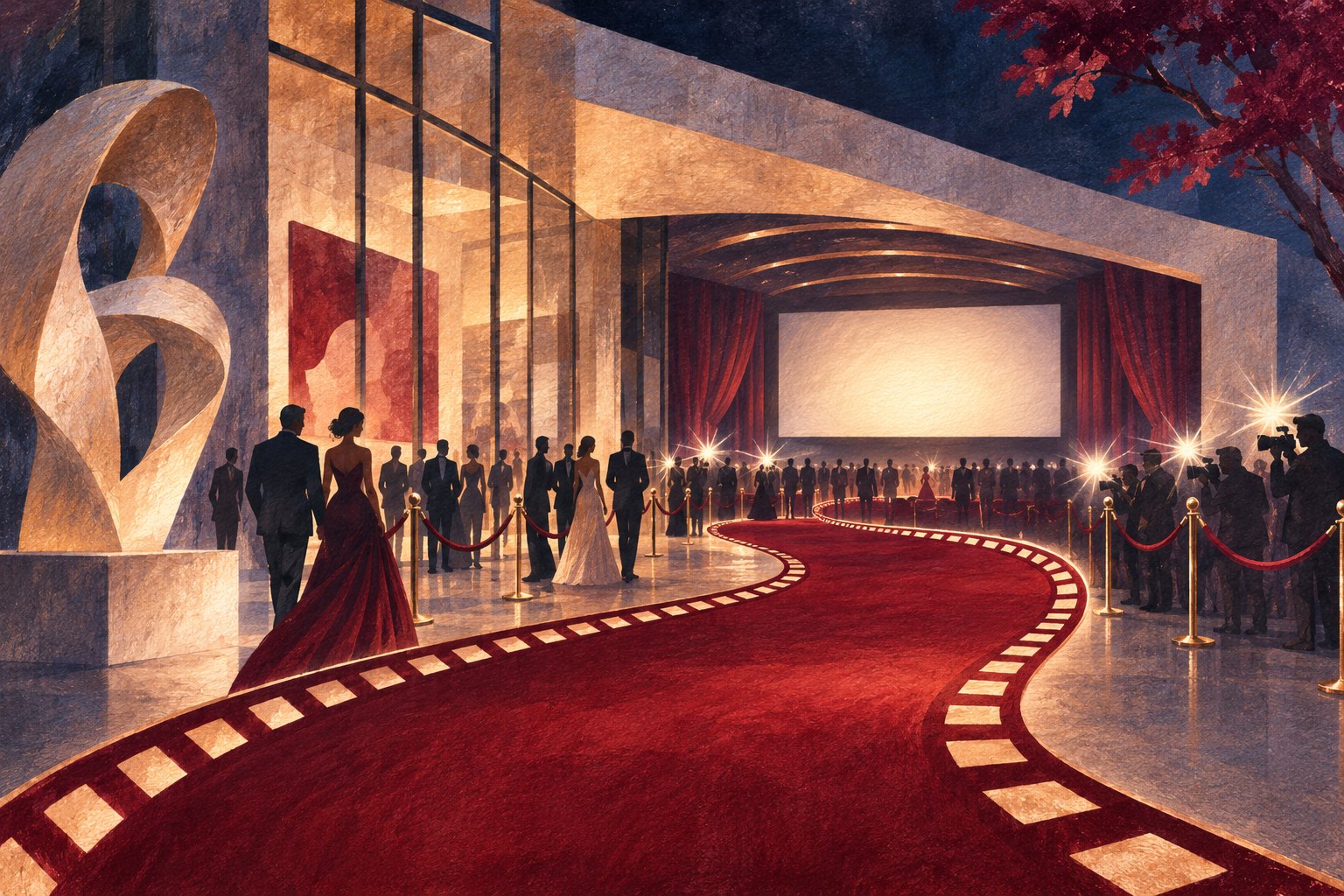
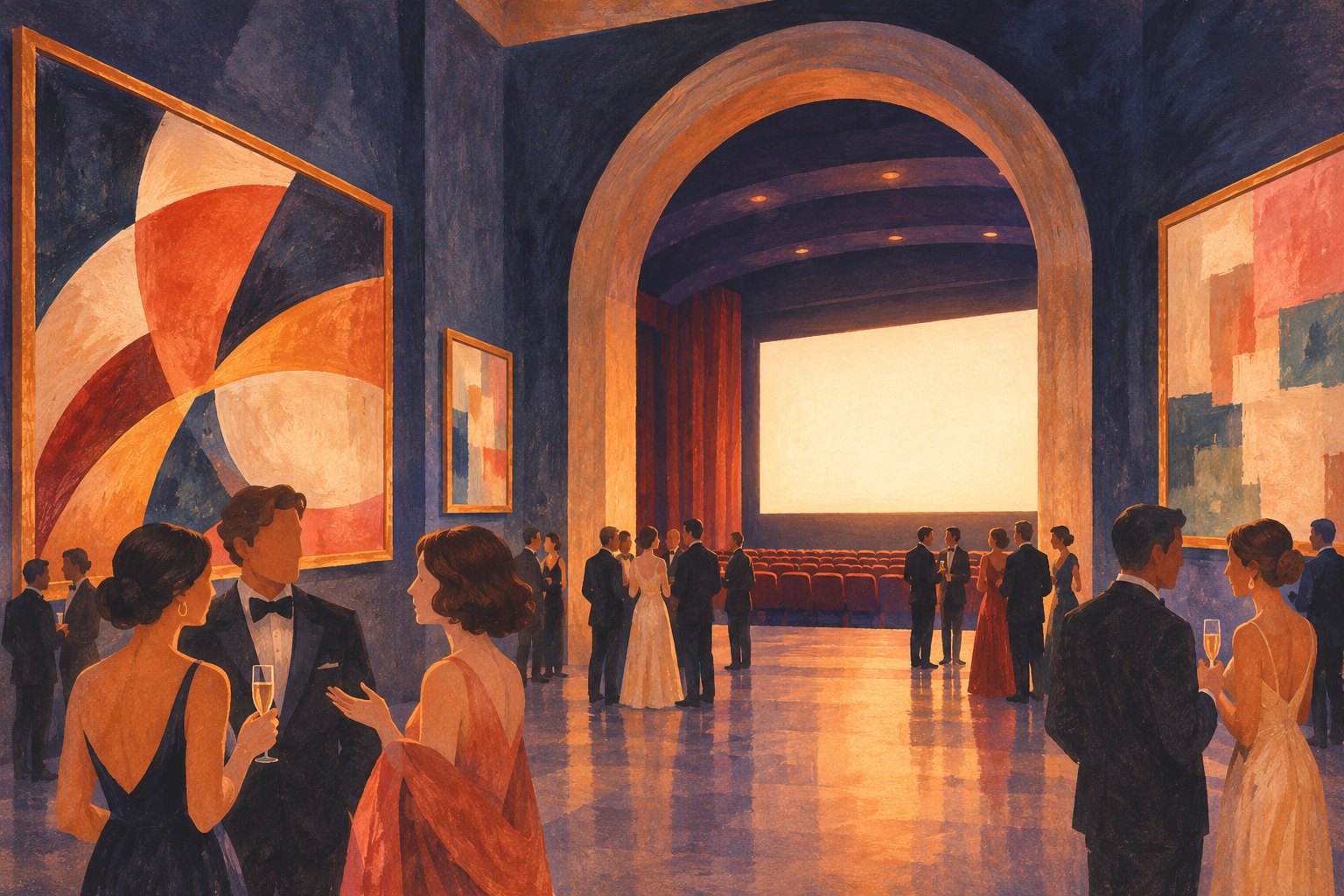
This is cultural commentary on that idea, rather than an eyewitness account of the party or a review of a particular movie. The accompanying illustrations are conceptual scenes, not photographs of the event.
What the Art+Film Pairing Asks Us to Notice
The most interesting part of the gala’s name is the connection between its two creative worlds. Placing art and film together invites us to consider a movie’s images with the attention we might give a painting: where the eye travels, how color establishes tension, and what the arrangement of bodies communicates before anyone speaks.
That approach can enrich an ordinary night at the movies. A doorway might divide a family within a single composition. A room’s emptiness might make a character’s isolation visible. A shift from crowded interiors to open space might change our sense of what freedom means to someone. These are possibilities in the language of cinema, not descriptions of any footage presented at this gala.
Yet film also asks for something a still image cannot: time. The significance of a face changes when we see what it is responding to. A beautiful composition can become unsettling when a shot continues past the moment we expect it to end. Celebrating cinema alongside visual art should make us more alert to those differences, too.
A Party Celebrates People; a Film Depends on Collaboration
Celebrity offers an accessible entrance into film culture. Remembering an actor’s performance can be enough to make someone curious about another movie. There is no reason to dismiss that attachment as shallow. The emotional relationship between viewers and performers is part of cinema’s power.
Still, a performance reaches us through many people’s decisions. Lighting determines how clearly we can read a face. Sound determines whether a quiet breath registers. Editing determines whether we stay with the speaker or watch the listener. Costume and production design establish details of a character’s life that dialogue may never explain.
My preference is for film celebrations that help audiences connect those contributions. Admiring a performer becomes more rewarding when we can describe what the surrounding filmmaking allows that performer to do. The point is to expand appreciation, giving the familiar face a richer creative context.
Our discussion of LACMA appearances and the relationship between celebrity and performance explores that distinction further. Here, the larger question concerns recognition: how can enthusiasm for recognizable people encourage interest in the less visible work behind a film?
The Most Valuable Invitation Is to Pay Attention
A gala and a screening ask us to participate differently. A social occasion encourages movement, conversation, and quick recognition. Watching a movie asks us to remain with something, including passages whose purpose may not immediately reveal itself. Both experiences can be enjoyable, but the second is essential to understanding the art being celebrated.
That matters particularly when discussing characters. A memorable entrance may establish charisma; later scenes reveal whether that charisma conceals fear, enables cruelty, or helps someone survive. Character analysis requires following those developments. Pulling a gesture out of its dramatic context can erase the contradiction that makes a performance interesting.
The same principle applies to memorable dialogue. A line earns its force through the choices, relationships, and consequences around it. Recognizing the words is one pleasure; understanding why a character says them at that precise moment is another. A celebration of cinema has lasting value when it encourages that deeper encounter.
What Would Make the Celebration Matter Beyond the Room?
The party-photo premise alone cannot establish the gala’s broader cultural outcomes. Those require separate evidence. But it is reasonable to articulate what meaningful outcomes would look like, without presenting them as accomplishments of this particular evening.
For audiences, the most useful questions are practical:
- Access: Does the interest surrounding a celebration lead people toward opportunities to see films and engage with their makers?
- Context: Do audiences gain a clearer understanding of creative choices, artistic influences, or the conditions in which work was produced?
- Discovery: Is there room for curiosity about unfamiliar artists alongside affection for established names?
- Continuity: Does the conversation continue after attention moves away from the party?
These are criteria for assessing cultural value, not a checklist of verified gala activities. They also keep the discussion from collapsing into a judgment about whether glamour is inherently good or bad. Glamour can attract attention. The more consequential question is what that attention makes possible.
Let the Party Be an Entrance to the Work
Readers interested in the visual storytelling of event coverage can turn to our analysis of how a LACMA gala photo gallery constructs its narrative. The question here is what happens after that encounter: whether the pleasure of recognition develops into a desire to watch, reconsider, and discover.
A useful response is wonderfully modest. Revisit a performance that stayed with you. Follow a creative credit you previously overlooked. Watch a scene again with attention to the person listening rather than speaking. Ask how the image and soundtrack change your understanding of the character. Those acts turn general admiration into specific appreciation.
The 2026 LACMA Art+Film Gala party provides an occasion to think about cinema’s place in cultural life. My view is that celebrating film means making space for the full experience of watching it: its duration, its collaborative intelligence, and its ability to complicate our first impressions. The party draws our attention to the people associated with the art. The enduring reward comes when their work holds that attention on its own.
Original content by this site's editorial team. Published: November 8, 2026 at 10:52:42 PST (Los Angeles time)