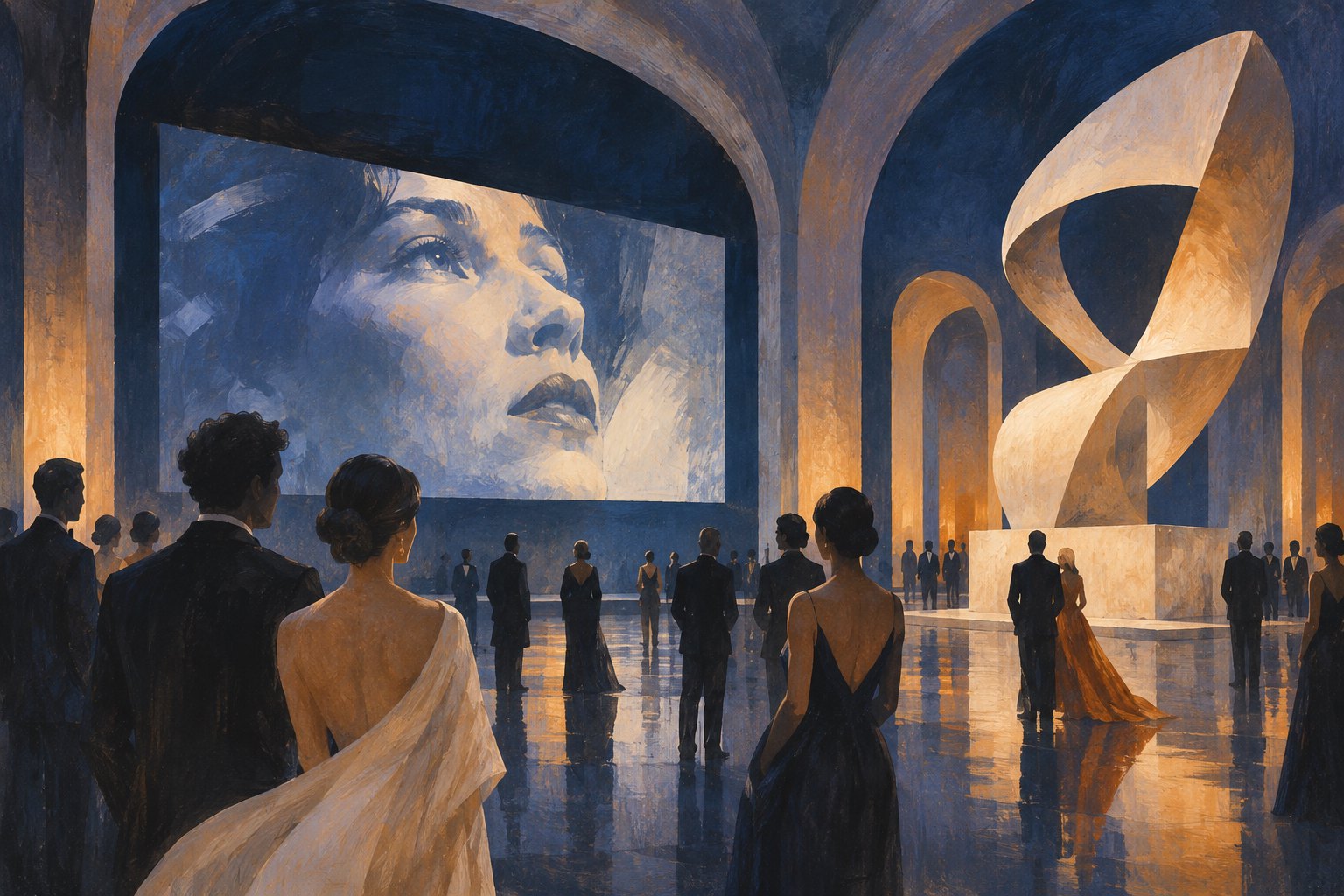
The 2026 LACMA Art+Film Gala puts Hollywood and the art world in the same frame. Beyond the appeal of that encounter lies a question worth taking into the next movie you watch: what changes when you look at an actor’s face with the attention you would give a portrait?
A portrait invites us to study posture, expression, light, and the space around a person. A movie gives us those same elements, then makes them unstable. Someone turns away. An answer arrives late. A smile disappears before another character can see it. The image becomes a record of decisions unfolding.
That relationship offers a useful way to think about the gala’s art-and-film pairing. This is a critical interpretation of that pairing, rather than an account of individual encounters inside the event. Its most interesting implication for movie lovers is practical: learning to look carefully can help us understand characters more precisely.
A recognizable face is only the beginning
Celebrity recognition happens quickly. We identify a familiar face and bring memories of previous performances, publicity, and personal preferences with us. Understanding the character that face is playing takes longer. The actor may be using that familiarity, resisting it, or allowing it to mislead us.
A portrait offers a useful exercise in slowing that response. Before deciding that its subject looks powerful, lonely, or suspicious, look for the evidence. Is the impression coming from the eyes? The angle of the body? A large expanse of empty space? Does the lighting reveal the expression or conceal part of it?
The same questions improve film criticism. Calling a performance magnetic communicates enthusiasm, but little about its construction. Noticing that a character maintains eye contact while asking questions and breaks it while answering tells us something specific. We can then test an interpretation against the rest of the scene.
Public images work differently. Our discussion of how a gala photo gallery constructs its story considers what selection and arrangement can suggest. In a dramatic performance, however, the changing relationship between images becomes central to the character.
The difference between a portrait and a performance is time
A still image lets viewers choose how long to stay. A movie also controls duration within the work itself. It can hold a face after a conversation appears finished, cut away before an answer, or return to someone whose reaction we initially missed.
Consider an imagined scene in which one character asks another to stay. An immediate refusal and a refusal after a long silence contain the same basic information. They do not necessarily express the same struggle. The pause might suggest temptation, calculation, fatigue, or an effort to avoid causing pain. Context determines which reading holds.
That distinction matters because a performance is not a collection of expressive poses. It includes the transitions between them. A convincing character can seem to discover an answer while speaking, then regret the answer before the sentence ends. Freezing either expression would lose the conflict connecting them.
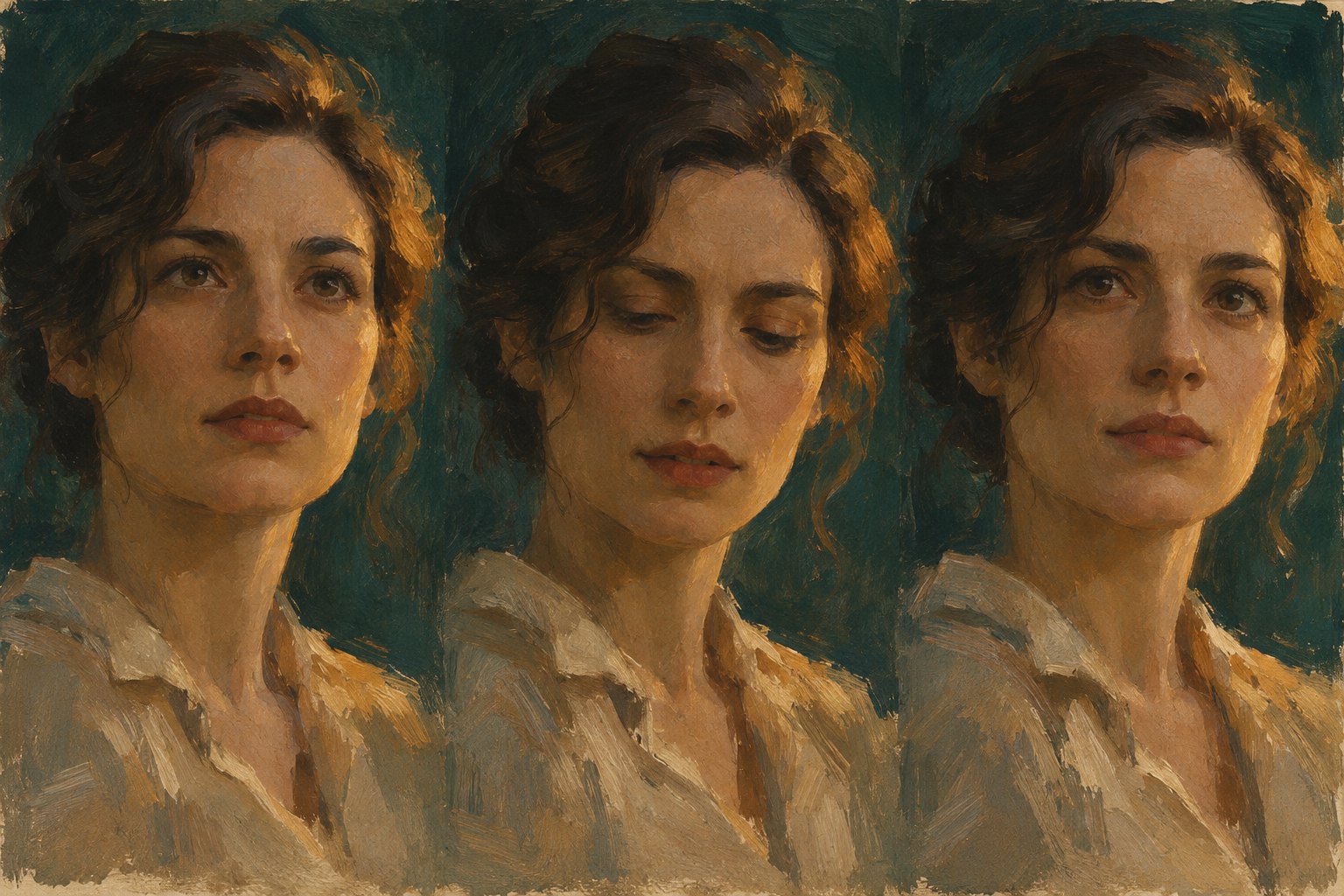
This is where the art-and-film encounter becomes especially productive. Close looking helps us notice the image. Attention to duration helps us notice what the image becomes. Neither approach requires treating a movie as a painting that happens to move.
Read the character’s objective before naming the emotion
Facial expressions are ambiguous. A lowered gaze does not automatically establish shame, and stillness does not automatically mean repression. Assigning a feeling too quickly can flatten a complicated performance into a familiar label.
A stronger starting point is the character’s immediate objective. What do they want from the person opposite them? Permission, forgiveness, information, distance? What would happen if they asked directly? Once those questions are clear, a gesture becomes part of an attempt to achieve something.
In another hypothetical exchange, a character might smile while delivering unwelcome news. The smile could soften the blow, protect the speaker’s self-image, or conceal satisfaction. Its meaning depends on the relationship and on what follows. Does the character remain available for the other person’s response, or leave before hearing it?
My preference is for criticism that describes these choices before praising their subtlety. Small acting is not inherently better than expansive acting. A broad gesture may be exactly right for someone performing confidence before a hostile room. The useful question is whether the behavior makes sense for this person under this pressure.
The frame and soundtrack share the performance
The actor’s face never reaches us independently of the film around it. Shot distance affects what we can inspect. Lighting directs attention. Sound can make a breath conspicuous or leave it nearly unnoticed. Editing determines which reaction receives emphasis.
Imagine a character listening to an apology. If the camera stays on the speaker, we may concentrate on sincerity. If it stays on the listener, we may experience the apology as something to assess, endure, or resist. The words remain identical; the scene’s emotional center shifts.
For that reason, describing a moving moment as entirely the actor’s achievement can miss how the scene works. Conversely, crediting everything to the director can erase the precise timing or physical adjustment that gives the shot its force. Good analysis leaves room for their interaction.
The setting in which we watch adds another layer. As our exploration of the shared experience behind specialty cinema considers, watching together can shape attention. A room’s laughter may temporarily turn hesitation into comedy; the silence afterward can reveal discomfort that was present all along.
Take the gala’s pairing back to the screen
The next time a performance catches your attention, choose one exchange and follow it through. Identify what the character wants. Notice when their behavior changes. Listen to what accompanies that change, and observe whether the camera allows you to see its consequences. Finally, check your interpretation against a later scene.
That last step prevents close looking from becoming free invention. An interesting reading still needs support. If a supposed sign of guilt never connects to the character’s actions, it may be an attractive theory rather than a persuasive account of the film.
For me, the deeper promise of the 2026 LACMA Art+Film Gala’s cultural pairing is this exchange of viewing habits. Portraiture encourages patience with a face; cinema asks us to revise our understanding as that face moves through time. The richest performances reward both. They give us someone worth studying, then make our first impression insufficient.
Original content by this site's editorial team. Published: November 8, 2026 at 16:50:14 PST (Los Angeles time)