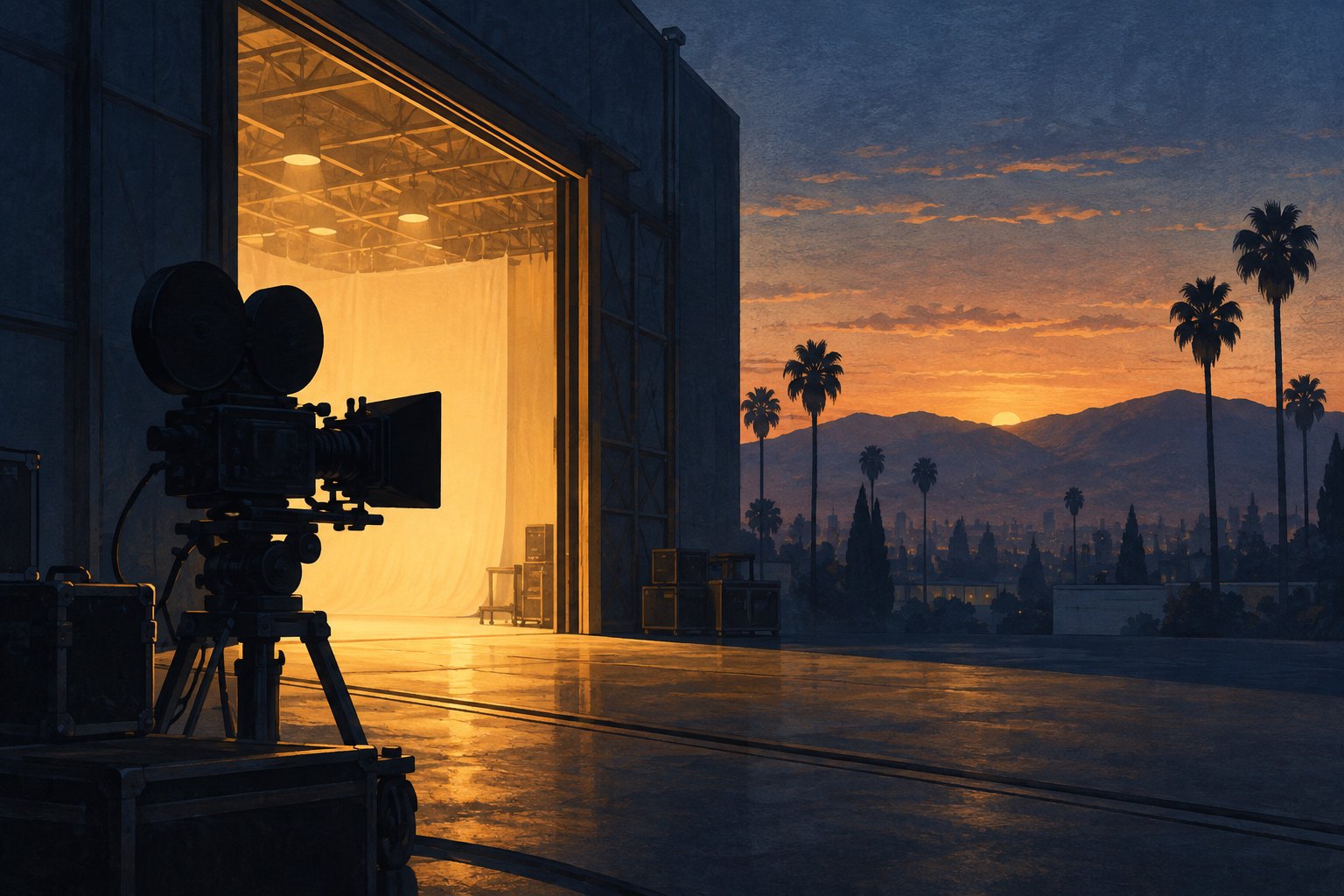
SuperCinema has launched as a new independent film studio in Burbank, according to Variety. For moviegoers, the immediate interest is the possibility of another company making room for films worth discovering. The more substantial question is what will eventually distinguish a SuperCinema movie once the opening credits are over.
A studio launch establishes a name and a presence. Its creative significance takes longer to assess. Our view is that SuperCinema will become interesting to audiences through the specificity of its choices: which stories it supports, whose perspective those stories privilege, and how successfully the finished films reach viewers. Those are standards for judging its future work, rather than achievements to assign at the announcement stage.
This is industry commentary about the studio’s launch, not a review of a completed film.
What the launch tells moviegoers
The central news is straightforward: SuperCinema is a new independent film studio launching in Burbank. That description identifies the company and the event. By itself, it does not establish the quality of its movies, the character of its future catalog, or what audiences should expect from an individual release.
That distinction matters because the word independent carries powerful associations. A viewer might hear it and imagine intimate dramas, abrasive comedies, formally adventurous cinema, or scrappy genre filmmaking. Those expectations describe different kinds of movies. None should automatically become a description of SuperCinema’s work simply because the company has entered the independent sector.
For now, the useful response is curiosity with specific criteria. A new studio offers another potential point of entry for stories. Whether that opportunity becomes meaningful depends on the decisions that follow. Enthusiasm is reasonable; an artistic verdict would be premature.
Independence becomes meaningful through creative decisions
In criticism, independence is most interesting when it becomes visible in the work. That might mean a film allows a difficult protagonist to remain difficult, gives an unfamiliar performer room to command a scene, or preserves an ending that leaves a consequential question unresolved. These are possible expressions of creative freedom, not a proposed checklist of SuperCinema’s intentions.
Nor does a distinctive film need to advertise its seriousness. A fast, funny crowd-pleaser can have an unmistakable sensibility. A horror movie can reveal character through the timing of a retreat or the decision to open a door. Conversely, a restrained drama can feel impersonal if its people exist only to deliver the screenplay’s argument.
For SuperCinema, the critical opportunity is to develop a recognizable standard of attention without requiring every film to look alike. We would be more interested in a varied catalog whose movies understand their characters than a visually consistent catalog built around interchangeable personalities.
That starts before the camera rolls. As our discussion of screenplay recognition and the distance between promise and a finished film explores, an encouraging early signal cannot substitute for the experience of the work itself. A studio’s arrival deserves the same distinction between potential and accomplishment.
The strongest test is the person at the center of the story
A useful way to evaluate SuperCinema’s eventual films will be to ask whose experience organizes each one. A premise tells us what happens. Character perspective determines why an event feels frightening, humiliating, liberating, or funny.
Consider a hypothetical scene in which two people sit across a kitchen table. The action could barely change while its meaning shifts completely. One person might be trying to confess; the other might be trying to leave without hearing the confession. The scene becomes dramatic when framing, performance, editing, and dialogue make those competing intentions legible. Expensive production design cannot supply that conflict on its own.

That is the kind of specificity worth looking for when a new studio begins presenting its work. Does a character’s decision change what happens next? Can the film distinguish what someone says they want from what their behavior reveals? Are supporting characters allowed desires that complicate the protagonist’s understanding?
Memorable dialogue belongs to that same system. A line earns its staying power through the pressure surrounding it: who says it, what they cannot admit, and what speaking costs them. Until there is a particular film to examine, quoting imaginary dialogue would tell readers nothing about SuperCinema. The meaningful test will be whether its films give their words dramatic consequences.
A studio identity should help audiences discover differences
There is a tension in building any recognizable film label. Consistency can help viewers decide to try something unfamiliar. Too much uniformity can make unfamiliarity disappear. If every release offers the same rhythms, character types, and emotional resolutions, the studio name risks becoming a prediction of the entire experience.
Our preference would be for SuperCinema to earn trust through selection rather than repetition. Audiences should be able to expect care while remaining uncertain about the shape that care will take. One film might demand patience; another might move with exhilarating speed. Their relationship could lie in the precision of their storytelling rather than a shared surface style.
This also gives criticism something substantial to discuss. The interesting question becomes why a particular film needs its particular form. A long pause, an abrupt cut, or an unresolved relationship should be assessed through what it contributes to that movie, rather than treated as proof of independent credibility.
Reaching viewers is part of the artistic opportunity
For an audience-facing site, availability belongs in the conversation alongside creative ambition. A film’s existence and a viewer’s ability to see it are separate matters. Any assessment of SuperCinema’s future impact should consider both.
As release information becomes available, practical details will matter: where a film can be watched, when it reaches different audiences, and whether its presentation accurately communicates the experience on offer. These are questions to follow, not assumptions about the company’s distribution arrangements.
Our commentary on NAZA and the importance of documentary access approaches a related issue from a different angle. Artistic discussion becomes more useful when readers can connect it to an actual opportunity to encounter the work. For a new studio, helping that encounter happen is part of building a lasting relationship with moviegoers.
What would earn SuperCinema a place on a watchlist?
We would judge the studio through a few concrete developments: completed films with discernible points of view, performances that hold up beyond a trailer, storytelling choices that reward close attention, and clear opportunities for audiences to watch. No single announcement can answer those questions. Neither should one film be forced to define everything a young company might become.
SuperCinema’s Burbank launch is a beginning worth following. Its deeper promise lies in the possibility of making a studio name useful to viewers: a reason to take a chance on a story they do not already know. That trust will be earned scene by scene, through characters whose choices feel particular and films that leave something to think about after the lights come up.
Original content by this site's editorial team. Published: September 19, 2026 at 08:33:15 PDT (Los Angeles time)