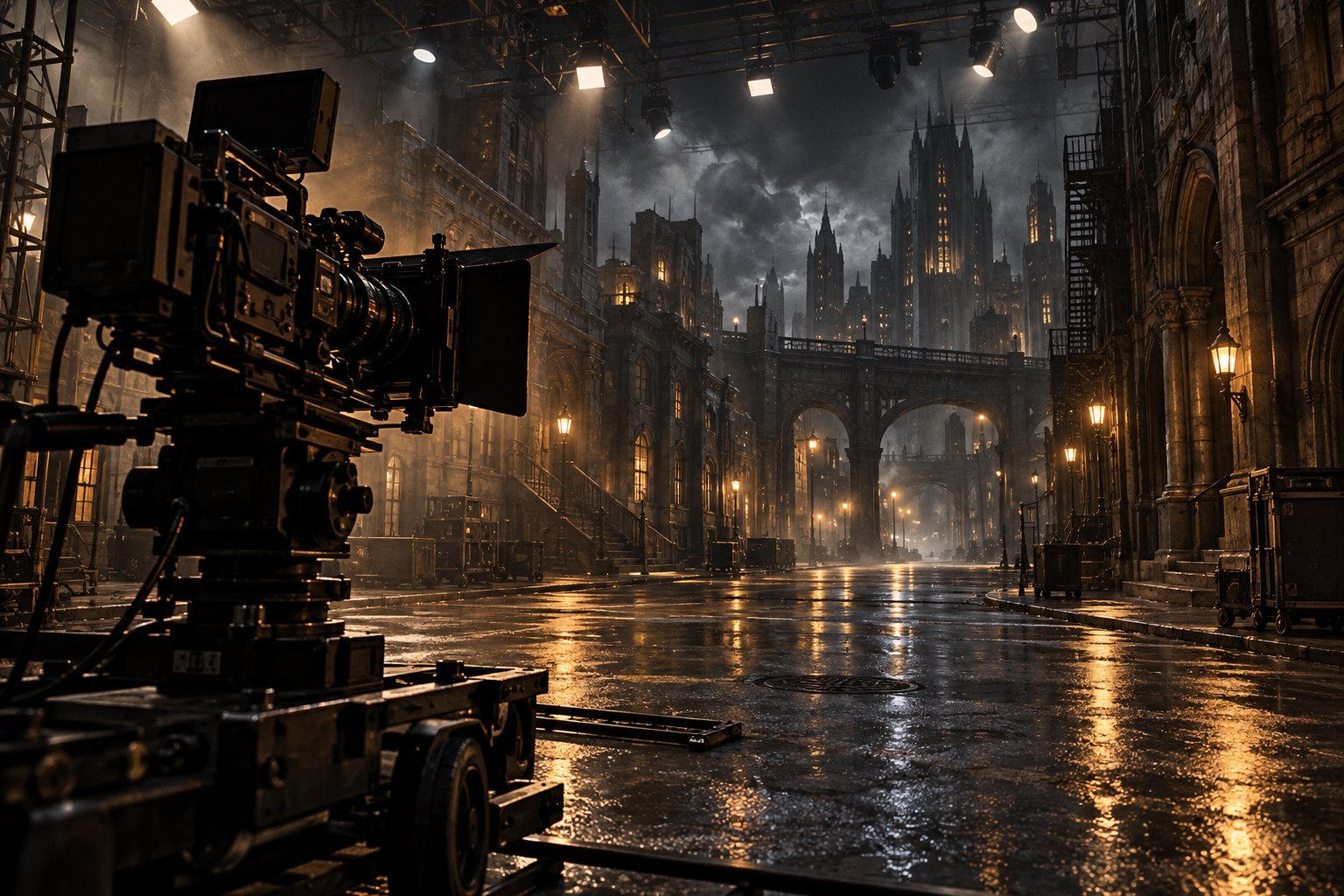
Steven Soderbergh will help finish production on The Batman Part II, according to [Deadline’s report](https://deadline.com/2026/10/steven-soderbergh-the-batman-part-ii-1237158482/). That is a production development, not a verdict on the film’s direction or quality. The involvement itself does not establish which scenes will bear his contribution or how the completed movie will feel.
For viewers invested in this Gotham, the more interesting question is what the sequel carries forward. Matt Reeves’s The Batman leaves Bruce Wayne at an unusually productive turning point: he has begun to question the identity that made him feel useful. Any continuation inherits that unfinished argument.
Major spoilers follow for The Batman (2022). This is a critical reassessment of the first film and the dramatic challenge facing its sequel, not a review of The Batman Part II.
Bruce Wayne mistakes intensity for effectiveness
Robert Pattinson’s Batman initially measures commitment through endurance. He keeps going out, keeps taking punishment, keeps searching. The performance makes that persistence compelling while allowing it to look unhealthy. Bruce seems more comfortable absorbing a blow than answering an ordinary emotional question.
“I’m vengeance” sounds like a declaration of purpose. It also sounds like someone avoiding his own name. Bruce has compressed grief, anger, and civic responsibility into an identity that gives him permission to act without fully examining the results.
My strongest response to Pattinson’s performance comes from that contradiction. His stillness can suggest concentration, but it can also suggest a person who has run out of ways to participate in life. The costume supplies certainty that the man underneath does not possess.
The detective structure is essential to this reading. Investigation requires Bruce to encounter evidence that resists his assumptions. His physical confidence cannot guarantee that he understands the people in front of him. That makes the character more interesting than an infallible investigator moving efficiently between fights.
Selina challenges the distance behind the mask
Selina Kyle gives the investigation a personal urgency that Bruce cannot supply alone. Annika’s disappearance matters to her as the loss of someone she knows. Their connection and Selina’s search are part of the film’s established [story and character relationships](https://en.wikipedia.org/wiki/The_Batman_(film)).
Zoë Kravitz’s performance brings a different kind of watchfulness. Selina reads encounters for immediate danger and opportunity. Where Bruce can retreat into an overarching mission, she has to negotiate particular people and particular risks.
“You assume the worst in people,” she tells him, a line also discussed in [DC’s examination of the film](https://www.dc.com/blog/2022/04/27/how-the-batman-turns-fear-into-hope). It lands because suspicion has become both his professional method and his emotional shelter.
For me, their chemistry works best when attraction does not resolve that disagreement. Selina can recognize his pain without accepting his judgment. Bruce can want her trust without having earned the right to define her choices. Their scenes make intimacy feel difficult for reasons beyond the practical inconvenience of masks.
A sequel would benefit from preserving that capacity for disagreement, whatever relationships its story ultimately explores. Supporting characters become dramatically valuable when they can expose something the hero would prefer to leave unexamined. Our discussion of how character perspective gives an ambitious film its center considers a related standard.
The Riddler turns Batman’s self-image against him
The Riddler’s belief that Batman has inspired him is the first film’s most disturbing challenge to Bruce. As [Matt Reeves discussed in his interview about the ending](https://time.com/6149563/the-batman-ending-matt-reeves-jan-6-parallels/), Batman must confront the consequences of becoming an emblem of vengeance.
That confrontation works because inspiration does not require permission. Bruce cannot control what another person takes from his behavior. His intentions may distinguish him from the Riddler, but intentions alone cannot explain the difference to everyone watching.
Paul Dano makes the villain’s desire for recognition especially uncomfortable. My reading is that the emotional threat comes from the expectation of fellowship: he wants Batman to understand him as a collaborator. Refusing that relationship forces Bruce to consider what his own public identity has communicated.
This is also where the detective story becomes more than an exercise in solving clues. Finding the perpetrator cannot answer the question of what Batman should become. The mystery has an external solution; Bruce’s moral problem requires a change in conduct.
The rescue sequence earns its place in an uneven climax
I find the first film’s escalation into a large disaster less elegant than its earlier investigative passages. The broader action reduces some of the unsettling intimacy that makes the encounters between Bruce, Selina, and the Riddler so effective. The film briefly feels pulled toward the scale expected of a major superhero release.
Yet the rescue imagery gives that escalation a meaningful destination. Batman holds a flare and guides people through the floodwater, an action described in [DC’s account of the ending’s visual transformation](https://www.dc.com/blog/2022/04/27/how-the-batman-turns-fear-into-hope). His visibility now serves the people who need him.
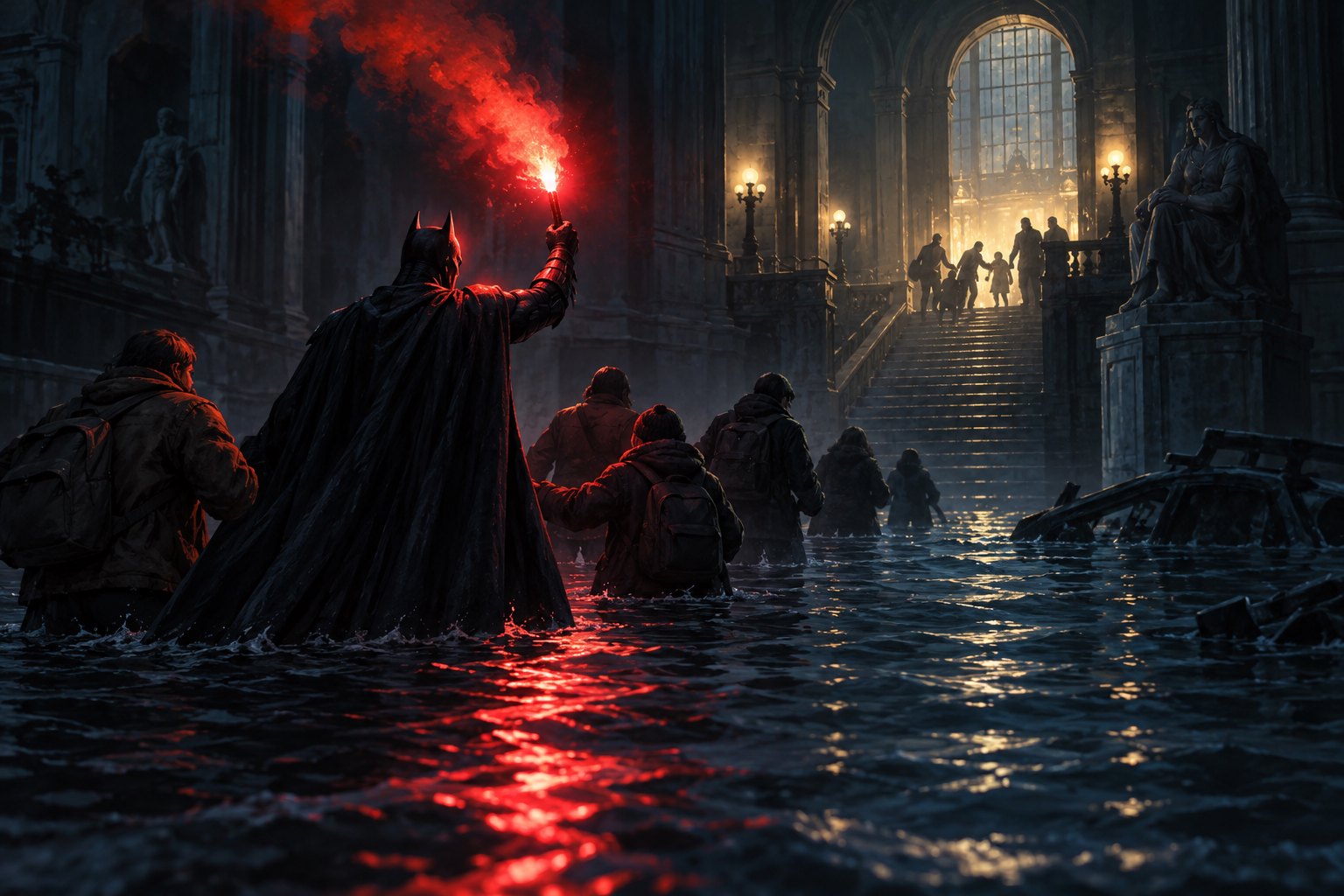
The gesture changes the meaning of his physical presence. A frightening silhouette becomes someone a vulnerable person can approach. What matters is no longer whether he dominates the space, but whether others can move safely through it.
That is the moment I would use to judge the sequel’s emotional continuity. Bruce can remain awkward, angry, and fallible. Growth does not require a personality transplant. It does require the film to remember that he has discovered a different measure of success.
The distinction between winning and understanding a victory’s consequences also shapes our analysis of what Paul’s victory means for Dune: Part Three. A continuation becomes interesting when the previous ending changes the questions its protagonist must answer.
What Soderbergh’s involvement can—and cannot—tell viewers
The prospect of Soderbergh helping finish The Batman Part II naturally invites attention to authorship. But a filmmaker’s name cannot tell viewers whether a particular exchange will feel convincing, whether a pause will survive the edit, or whether an action scene will deepen a character.
For this sequel, I would watch three things: whether Bruce listens differently, whether the people around him retain independent motives, and whether helping Gotham involves choices that physical force cannot settle. Those are critical expectations, not claims about the sequel’s plot.
Visual continuity matters, too, but reproducing darkness and rain would only preserve the first film’s surface. Its stronger achievement is making Bruce’s perspective available for criticism. The camera can find him impressive while the story reveals the limits of his understanding.
The deeper inheritance, beyond the final cameo
The first film’s closing prison encounter includes Barry Keoghan’s Joker, as identified in [TIME’s account of the cameo](https://time.com/6151791/the-batman-joker-barry-keoghan/). It is an obvious detail for viewers scanning for future possibilities. Its presence does not, by itself, establish the antagonist or storyline of The Batman Part II.
The more consequential inheritance is quieter. Bruce begins by making his suffering visible through punishment. By the end, he has glimpsed a purpose that asks him to attend to someone else’s suffering.
That is why Soderbergh’s production assistance is worth discussing without turning it into a prediction. Finishing the film is the immediate task. The artistic opportunity is to continue a Batman story in which maturity means becoming accountable to the people who must live with his decisions.
Original content by this site's editorial team. Published: October 16, 2026 at 03:47:29 PDT (Los Angeles time)