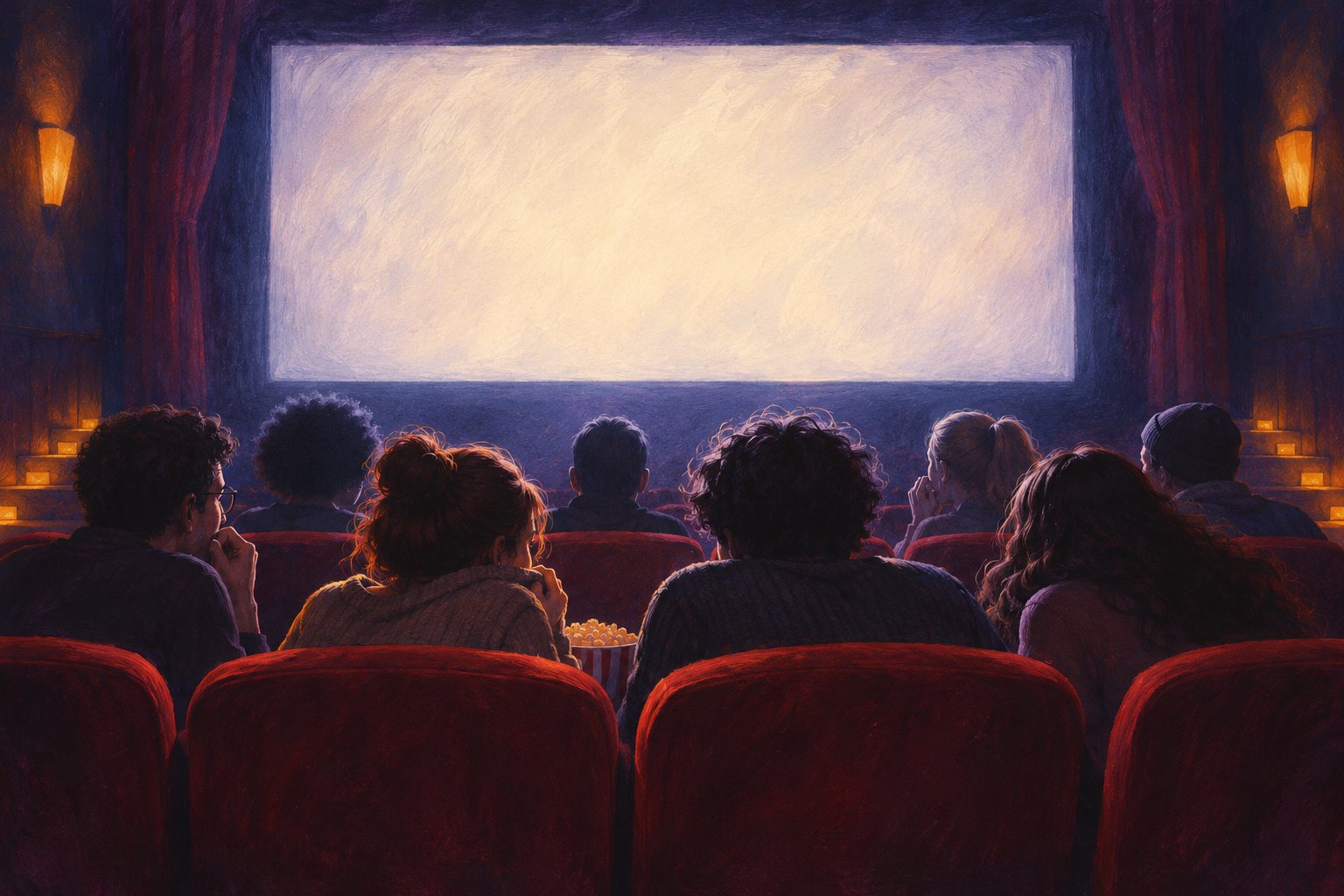
Spooktacular 2 invites a more interesting question than how many movies an audience can watch in one sitting: what does watching them together add? The Arkansas Democrat-Gazette’s Film Scene opinion headline presents the event as something beyond a movie marathon. That framing offers a useful starting point for considering the experience itself, from the tension inside an auditorium to the arguments that continue after the lights come up.
This is spoiler-free commentary, not a review of an independently verified screening lineup or a firsthand account of the event. Specific films, guests, audience reactions, and program details remain unconfirmed here. The critical question is what would make the larger claim meaningful. My view is that a marathon earns its value when sustained viewing changes how we understand the films and the people watching beside us.
A marathon needs more than duration
The word marathon encourages an endurance-based assessment: hours completed, films counted, sleep resisted. Those measures describe the commitment without telling us much about the reward. Staying awake through several features can be an achievement, but it cannot establish whether the programming created an interesting experience.
A more useful standard is whether one film sharpens our attention to another. A crowded, noisy story might make the restraint of a quieter film newly noticeable. A tale built around an isolated protagonist might expose the uneasy loyalties in a subsequent ensemble. These are hypothetical programming relationships, not claims about the Spooktacular 2 selection. They illustrate why sequence can matter as much as quantity.
Contrast also gives viewers room to recover their curiosity. When every film asks for the same emotional response, even effective filmmaking can become difficult to appreciate. A thoughtful marathon would allow different kinds of attention: anticipation, surprise, amusement, discomfort, and reflection. The program becomes meaningful through those changes.
Shared suspense brings private reactions into public
Horror is particularly suited to this discussion because watching someone else become frightened is part of its peculiar pleasure. A sudden movement in the next seat can make our own reaction feel less solitary. Laughter after a scare can function as a small acknowledgment that everyone temporarily surrendered control.
Yet a crowd can complicate a film as easily as enhance it. An audience ready to laugh may turn an earnest scene into comedy. Enthusiastic commentary can swallow a quiet performance. Familiarity can make experienced viewers impatient with a suspense sequence that someone else is encountering for the first time.
That is where the idea behind Spooktacular 2 becomes worth testing. The strongest communal experience would leave space for different levels of familiarity. Someone discovering a film should be able to follow its rhythm without having the next surprise announced by the room. Someone revisiting it should have the freedom to notice something beyond the anticipated payoff.
Shared viewing works best when participation includes listening. The audience contributes to the atmosphere, but the film still needs enough room to establish its own.
Character empathy is the strongest test of a scare
For a viewer interested in film analysis, a marathon offers an opportunity to compare how stories make us care about endangered characters. A useful first question is simple: what does this person understand at this precise moment? We may recognize a threatening situation because of framing, music, or genre familiarity. The character may have access to none of those signals.
That difference matters when judging a seemingly foolish decision. Entering an unfamiliar space, trusting an unreliable person, or delaying an escape can look absurd from the safety of a theater seat. Within a story, the same choice might arise from loyalty, shame, incomplete information, or responsibility for someone else. An effective screenplay makes that motivation legible.
The opposite deserves scrutiny too. Sympathy should not become an excuse for arbitrary writing. If a film establishes that a character recognizes a danger and then ignores that knowledge solely to manufacture another set piece, the tension may feel imposed. The relevant distinction is between a flawed person making a believable mistake and a screenplay temporarily discarding that person’s judgment.
This concern also informs our discussion of the promise of character-driven horror in Violet. Premise and atmosphere can attract attention; specific human motives give fear its lasting weight.
The discussion afterward can reveal a different film
The most useful post-screening conversation often begins with a disagreement about a person rather than a rating. One viewer sees self-preservation; another sees betrayal. One finds a character’s silence believable; another thinks the film has withheld information unfairly. Those differences encourage a return to the actual choices, gestures, and scenes.
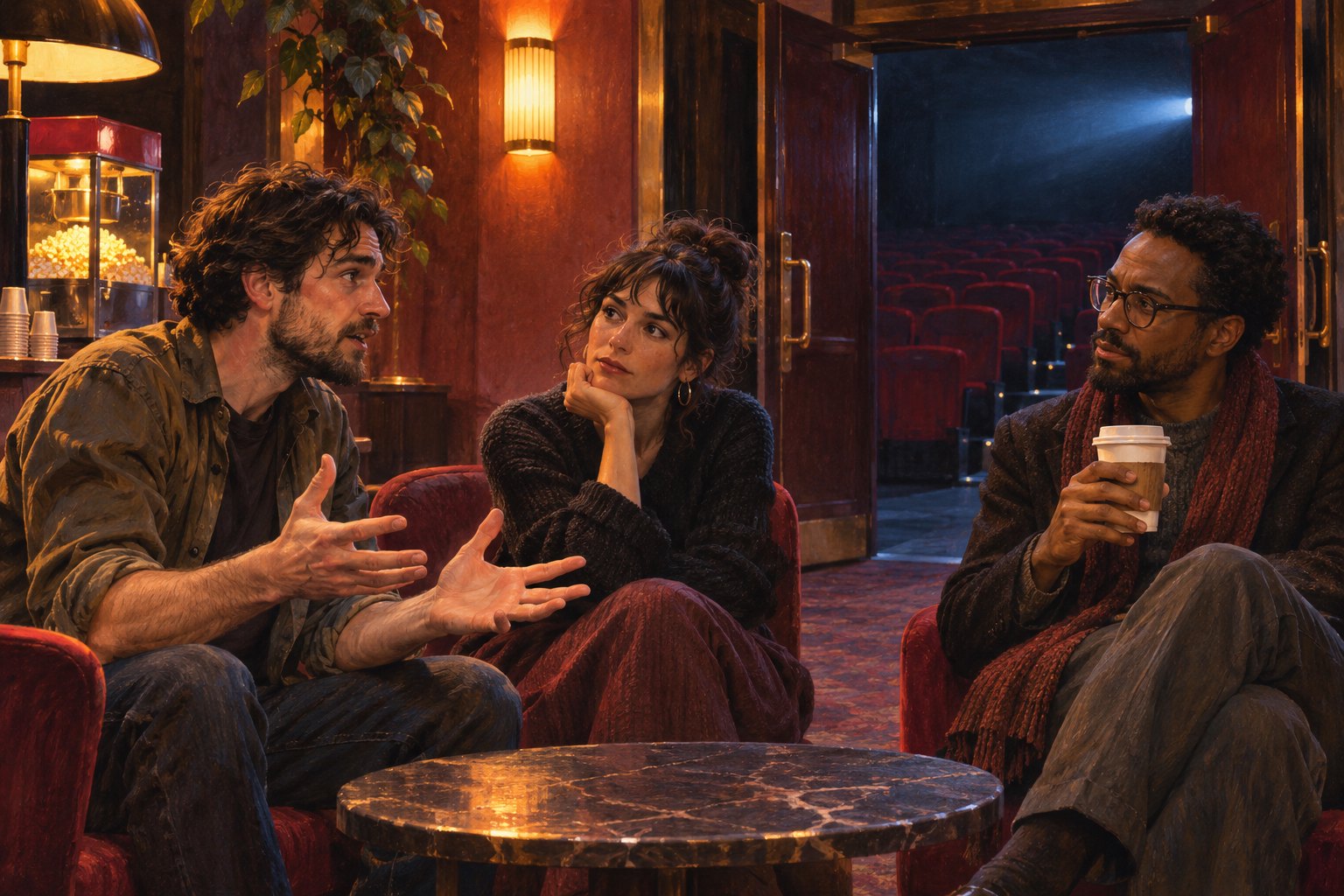
A productive discussion moves from verdict to evidence. Which action changed your opinion of the protagonist? Did the camera let you see what the character saw? Did the ending resolve a conflict or merely stop the immediate threat? Such questions make disagreement more interesting because they identify what each viewer valued.
Memorable dialogue can anchor that conversation, provided the wording is accurate and its context survives. A familiar line may work because of a hesitation, an earlier promise, or the identity of the listener. Without verified titles and dialogue, attaching quotations to Spooktacular 2 would manufacture specificity. The stronger critical habit is to examine how a line functions before turning it into a slogan.
Our character-focused analysis of Good Will Hunting takes that broader approach to emotional stakes: dialogue matters most when it changes a relationship or makes avoidance harder.
Separate a memorable night from a successful movie
A wonderful screening experience and a strong film are related judgments, but they need separate evidence. A lively room can make an uneven feature enjoyable. Fatigue can make a carefully paced one feel longer than it is. Neither reaction is dishonest; both require context.
After a marathon, it helps to distinguish three things: what the film achieved, what the presentation contributed, and what your own condition made easier or harder to notice. That distinction protects the pleasure of the event while keeping criticism precise. It also leaves room for reconsideration on a later viewing.
What would make Spooktacular 2 matter beyond the screen?
The larger promise suggested by the Spooktacular 2 headline is compelling because moviegoing can create a temporary community without requiring everyone to agree. People occupy the same room and encounter the same images, yet leave carrying different versions of the experience. Discussion gives those private responses a public life.
For me, that is the most persuasive measure of a marathon’s value: whether viewers leave more attentive than they arrived. Perhaps they reconsider a character they initially dismissed, recognize why a scene frightened someone else, or become curious about a style they had overlooked. Those outcomes cannot be guaranteed by a long schedule.
Spooktacular 2’s broader significance remains a question to assess through its actual films and participants. The standard worth applying is clear, however. A movie marathon becomes memorable when the experience continues to deepen after the final screening—when sharing the fear leads to seeing more in the story.
Original content by this site's editorial team. Published: November 5, 2026 at 14:49:16 PST (Los Angeles time)