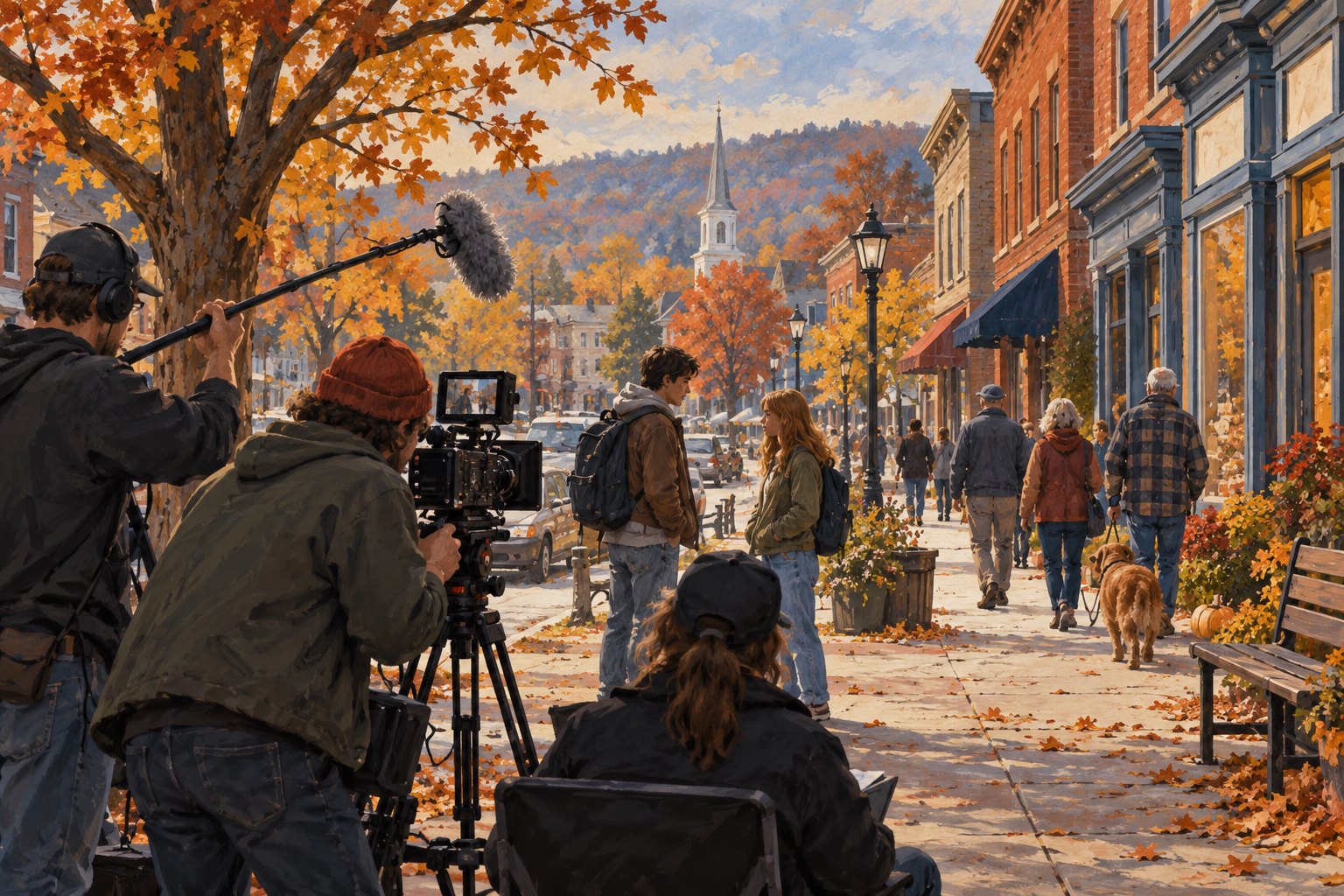
Sony Pictures is shooting a coming-of-age movie in a Central New York village, according to local reporting that also identifies filmmaking as a potential source of community friction. For moviegoers, the immediate attraction is a production taking shape in a real place. For the people living there, the more pressing question may be how that production fits into an ordinary day.
Those two perspectives belong in the same conversation. A village can offer a movie texture, atmosphere, and a convincing sense of everyday life. Its residents also have reasons to care about what happens beyond the camera’s frame. The interesting issue is how a place becomes a film location while continuing to function as someone’s home.
This is spoiler-free production commentary. The available information does not establish enough about the film’s story, characters, or dialogue to support a review of the movie itself.
What the Sony filming report establishes
The central reported facts are limited: Sony Pictures is filming a coming-of-age project, the location is a village in Central New York, and filmmaking there can cause rifts. That last point requires particular care. It does not, by itself, establish that this production caused a specific dispute, identify who objects, or explain the history behind any disagreement.
A reader should therefore keep the production news separate from assumptions about the community. There is no sound basis here for assigning blame to the studio, portraying residents as hostile to filmmaking, or declaring the shoot an economic success. Each conclusion would need evidence about this particular production and its effects.
The same restraint applies to the film. A location cannot establish a plot, and a genre description cannot tell us whether the central character wants to leave home, repair a friendship, or confront a family expectation. Those possibilities belong to the wider coming-of-age tradition; none should be presented as this movie’s confirmed story.
Why a village matters to a coming-of-age story
From a critical perspective, a compact setting can make the pressures of growing up especially visible. Familiar streets can suggest security and limitation at once. A short walk can connect home, school, work, and the people whose opinions matter. When a film makes those relationships legible, its setting helps explain a character’s choices without requiring a speech about them.
The creative opportunity is specificity. A doorway, an awkward meeting place, or the distance between two houses can acquire emotional meaning through repeated use. Viewers begin to understand which spaces allow a character freedom and which make that character feel watched. Attractive scenery becomes dramatically useful when it changes how we read behavior.
That is a standard to bring to Sony’s film when there is material to evaluate. Does the location shape the characters’ experiences? Does the camera notice the daily life around them? Or could the same scenes unfold anywhere without changing their meaning? These are questions about the eventual filmmaking, not judgments that production news can answer.
Our analysis of family perspective in Breaking Away offers a related way to think about the genre: growing up becomes more interesting when the people surrounding the young protagonist have emotional lives of their own.
How enthusiasm and inconvenience can coexist
The practical tensions of location filming are easier to understand if we resist imagining a community with one shared opinion. Someone who enjoys watching a crew work may also need a dependable route to their front door. A business owner might welcome additional customers while worrying about access during production. Support and frustration can exist in the same person.
These are illustrative possibilities, not documented incidents from this Sony shoot. Their value is in explaining why the word “rifts” should lead to questions rather than instant conclusions. Which activities affect residents? How long do those effects last? Who receives advance notice? Who has a reliable way to resolve a problem?
Benefits also need to be described precisely. A payment to one property owner, purchases from a local business, and public excitement are different things. None automatically measures the experience of the entire village. Equally, one complaint cannot establish that the community rejects the production.
The questions that make local filming coverage useful
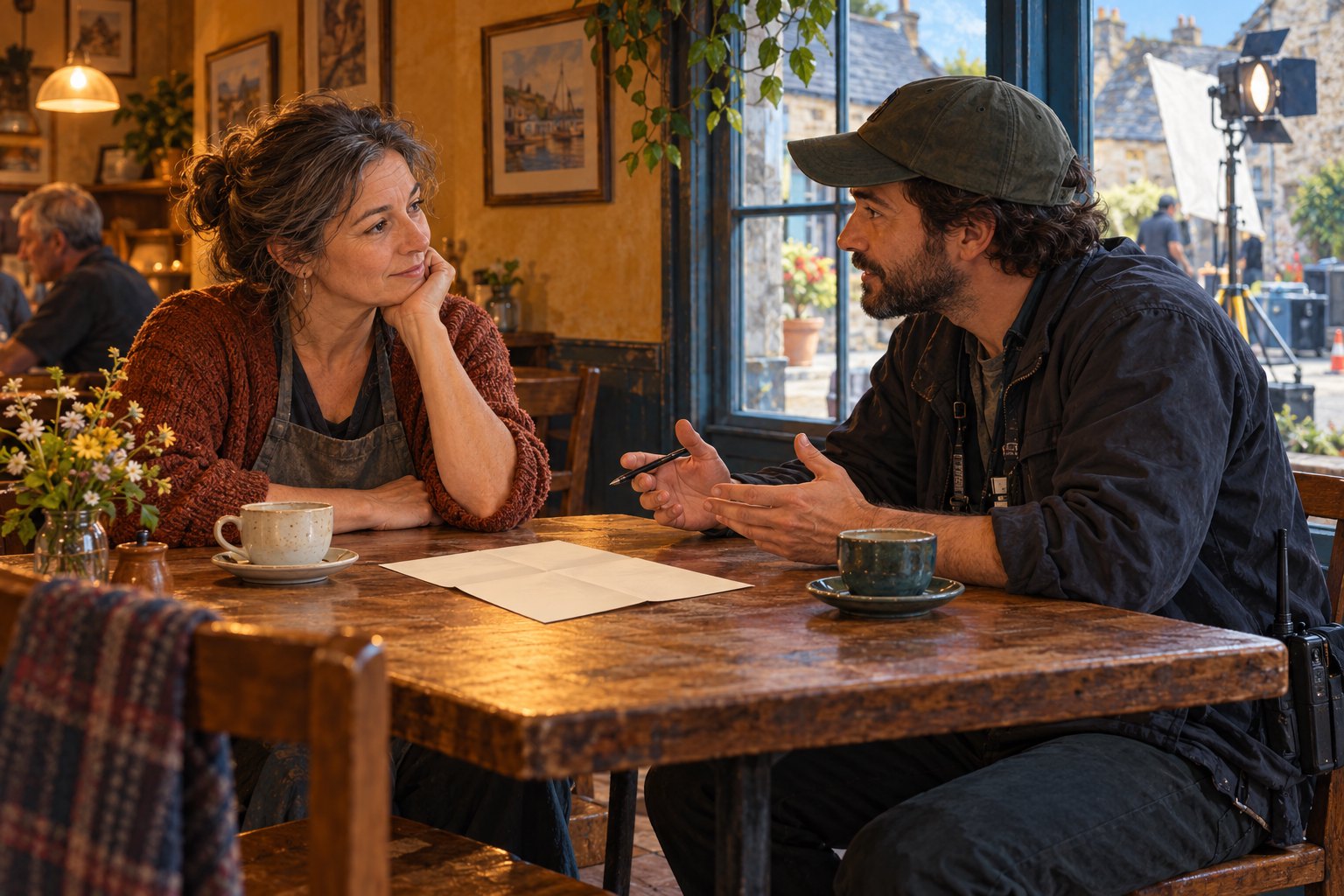
For readers following this production, the most useful next details would connect broad claims to practical consequences. A good account of community relations should make it possible to distinguish a temporary inconvenience from a recurring problem, and a proposed benefit from something that actually happened.
- Access: What arrangements, if any, affect homes, businesses, sidewalks, or deliveries?
- Communication: How are affected people told about the schedule and changes to it?
- Local participation: What work or spending can be attributed to the production?
- Resolution: When a concern arises, who responds, and what changes?
These questions offer a fairer framework than a simple battle between Hollywood and a village. They leave room for a production to handle difficulties well, for residents to have legitimate concerns, and for different experiences to produce different opinions.
They also reveal a less glamorous part of filmmaking craft. Working in a real location involves relationships as well as images. Our discussion of evaluating film education through the work students make approaches that broader issue from another direction: creative judgment has to survive the conditions under which a film is actually made.
What audiences should look for when the movie emerges
When footage or the finished film becomes available, the most revealing question will be whose experience organizes the setting. A young protagonist might see a familiar place as restrictive, while another character finds belonging there. A thoughtful film can allow both perceptions to remain understandable without turning the town into either a prison or a postcard.
Watch, too, for whether supporting characters possess motives beyond helping or obstructing the lead. Coming-of-age stories gain depth when adulthood appears complicated rather than merely joyless, and when departure is treated as a choice with consequences rather than automatic proof of maturity.
The Sony shoot makes that relationship between individual ambition and shared space worth considering before a verdict on the film is possible. The deeper connection is a question of perspective: a character’s personal breakthrough takes place in a world other people inhabit, just as a production’s creative opportunity occupies a place where other lives continue. A compelling film can make us feel both realities. Careful coverage of its making should do the same.
Original content by this site's editorial team. Published: October 29, 2026 at 13:14:13 PDT (Los Angeles time)