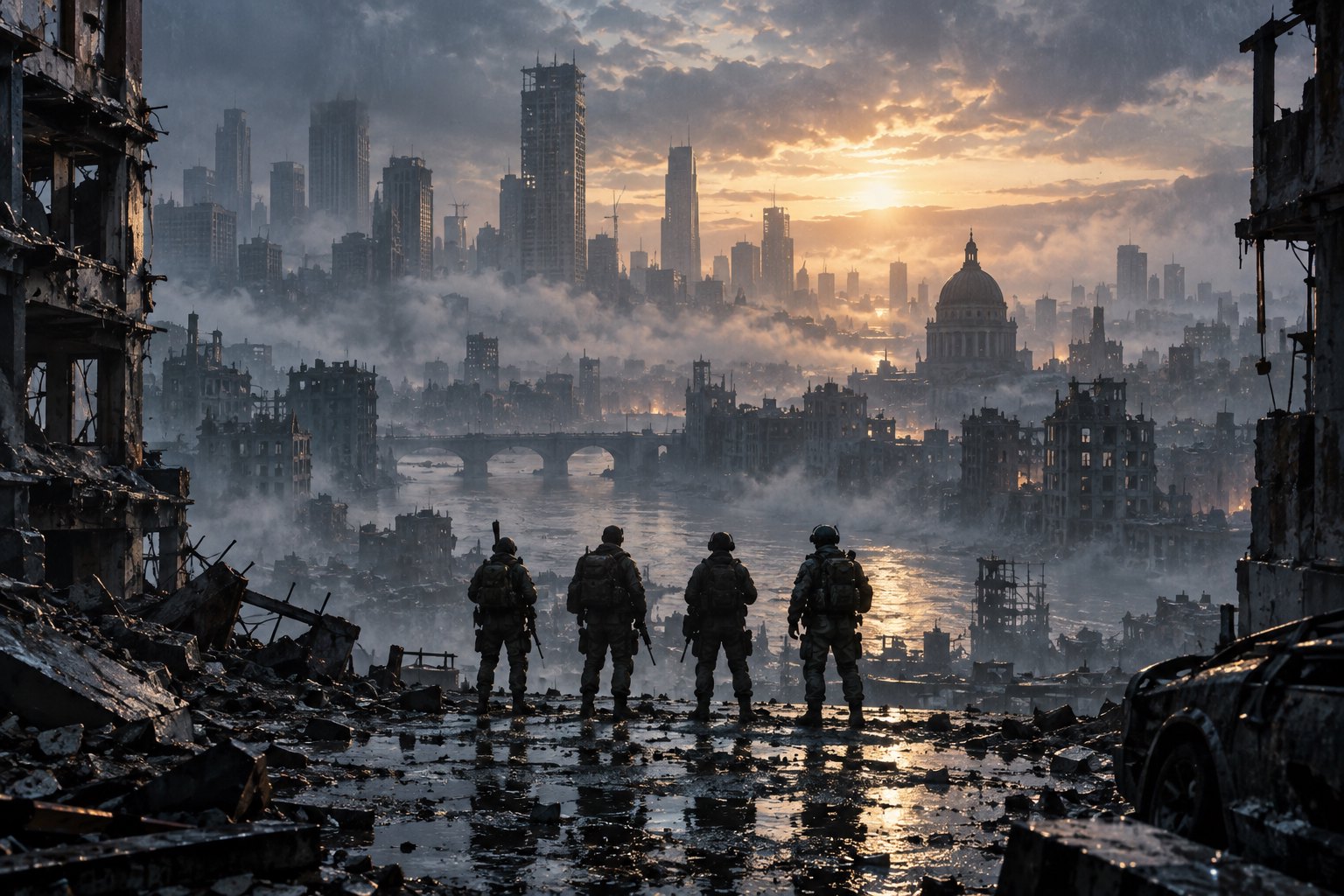
Sony is reportedly in talks for a Battlefield movie associated with Michael B. Jordan. Deadline reported the development, and [TheWrap’s reporting on the negotiations](https://www.thewrap.com/creative-content/movies/battlefield-movie-michael-b-jordan-sony-pictures/) supports that central point. For readers checking the project’s status, the essential distinction is straightforward: negotiations do not establish a completed deal or a release date.
The creative question is more interesting than the transaction alone. What would make Battlefield compelling when the audience watches events unfold instead of participating? My strongest hope for this adaptation is a story in which dependence on other people shapes every major action. Scale can attract attention. Relationships give that scale meaning.
This is spoiler-free development commentary, not a review of a finished film. The storytelling possibilities discussed below are critical proposals, not descriptions of an announced plot. The accompanying illustrations are conceptual artwork.
What Sony’s reported talks actually establish
The reported development connects Sony, Jordan, and a proposed Battlefield movie. It should not be expanded into assumptions about which character Jordan might play, what conflict the story might depict, or how closely it might follow a particular game. Those questions require evidence of their own.
That distinction matters because a recognizable name can make an early project feel unusually concrete. Readers start imagining a performance, a trailer, and an opening weekend before the news establishes any of them. Jordan’s association supplies a reason to pay attention; it does not supply a character biography.
Likewise, studio negotiations are an industrial development, not an artistic verdict. They cannot tell us whether the screenplay balances its ensemble, whether the action is legible, or whether the ending earns its emotional weight. Those are the standards a future film review should apply once there is a film to assess.
The adaptation needs a point of view before it needs a bigger explosion
A military action movie can show an enormous amount while communicating very little. Vehicles move, buildings collapse, and characters shout instructions, yet the viewer may never understand why one decision matters more than another. The solution begins with perspective: whose immediate problem organizes the sequence?
For a hypothetical Battlefield adaptation, that perspective need not belong to one person throughout. An ensemble could pass attention between characters, provided each change reveals something consequential. One person might understand the objective while another understands why reaching it has become impossible. The audience would then experience the gap between an order and the conditions under which someone must obey it.
These are structural possibilities, not plot predictions. Their value lies in making scale readable. A wide shot establishes distance; a closer perspective establishes what crossing that distance demands. Editing can connect those two kinds of information without explaining every movement in dialogue.
The same relationship between size and intimacy informs our discussion of the human scale of an ambitious screen epic. Expansive settings become emotionally accessible when viewers understand a person’s limited ability to navigate them.
A squad should be a network of obligations
The most promising character approach, in my view, would make competence shared. A protagonist can be brave, resourceful, and charismatic while still needing someone else to notice a danger, question an assumption, or finish an essential task. Dependence creates suspense because success cannot be guaranteed by one person’s exceptional ability.
That approach also gives supporting characters dramatic weight. An ensemble feels thin when each person contributes a specialty and a distinguishing joke but never changes the direction of the story. Meaningful characterization requires leverage over events: the ability to refuse, misunderstand, persuade, or make a choice another person must live with.
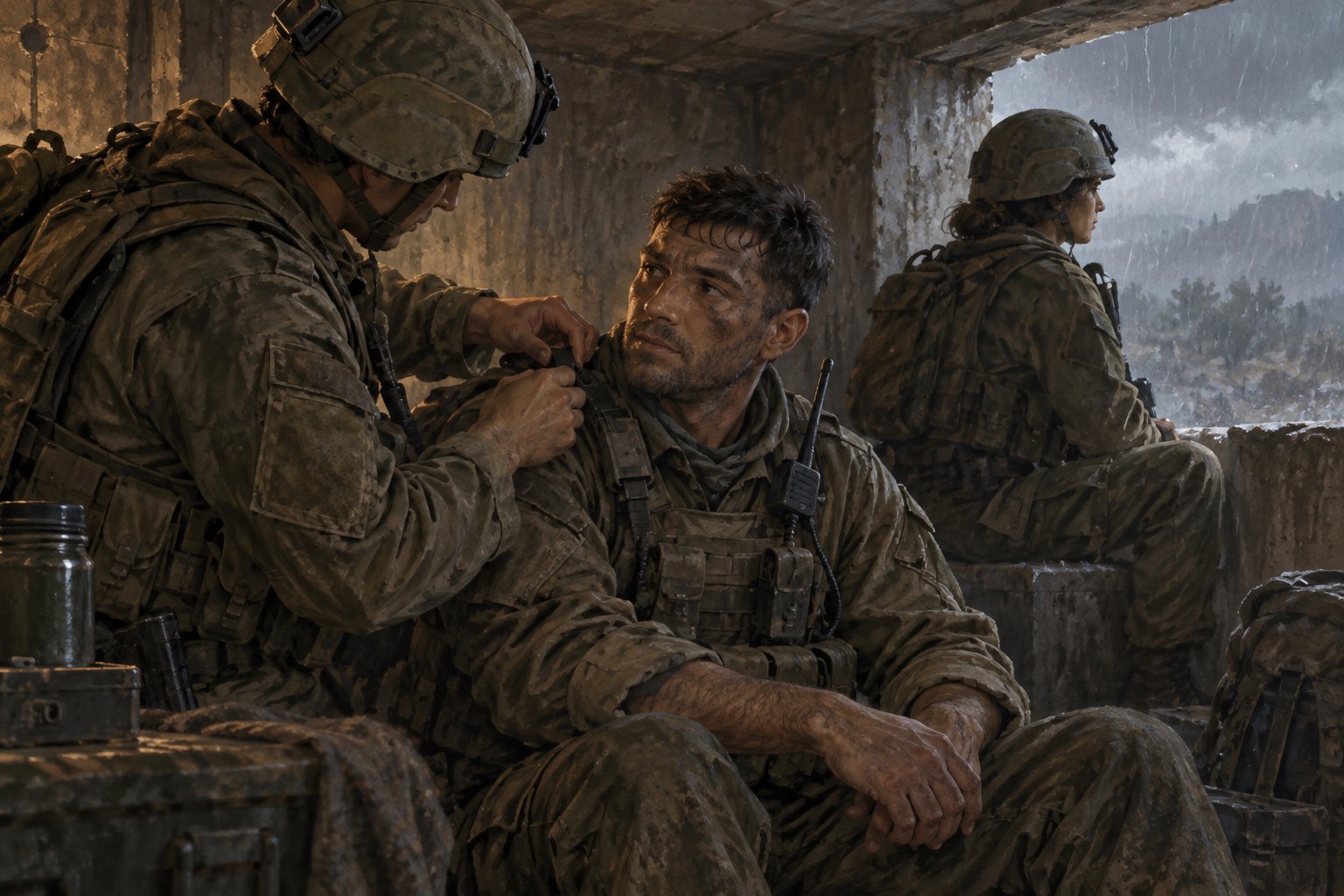
Small interactions could establish those obligations more efficiently than lengthy biographies. Who checks another person’s equipment? Who notices fatigue? Who accepts help reluctantly? Such behavior can make trust visible before the screenplay asks the audience to believe in a major sacrifice.
A star-centered marketing campaign would not prevent an ensemble-centered film. If Jordan eventually occupies a central on-screen role, one useful dramatic choice would be to let that character’s confidence encounter credible resistance. Another character should sometimes understand the situation better. The resulting adjustment could reveal more than an uninterrupted display of command.
Action becomes drama when its consequences survive the scene
A strong action sequence changes the available choices. Destroying a route should alter movement. Losing equipment should alter capability. Breaking someone’s trust should alter how the next instruction is received. When those consequences persist, spectacle contributes to the story’s structure.
For Battlefield, this would offer a practical way to connect large events with individual experience. The screenplay could measure a setback through what characters can no longer do, rather than relying exclusively on speeches about its importance. A changed physical environment and a changed relationship can reinforce each other.
Geography is essential to that process. Before a route disappears, viewers need some understanding of why it matters. Before characters become separated, the film needs to establish what their cooperation makes possible. Clarity allows suspense to accumulate; confusion merely requires the audience to wait for an explanation.
Sound could serve the same purpose. A voice becoming difficult to hear can narrow a character’s understanding of events. A pause after sustained noise can leave room for a reaction that action has postponed. These techniques would be valuable because they locate the viewer inside a character’s experience.
Recognition should support the story
An adaptation naturally invites questions about familiar imagery and references. But recognition alone cannot establish a dramatic identity. An object matters more when using it expresses judgment, exposes vulnerability, or changes someone’s relationship with the group.
That principle also underlies our examination of how recognizable designs can serve character in a proposed Cars prequel. Visual specificity can enrich a fictional world; the story still needs to make those details matter to the people inside it.
There are no verified scenes, memorable lines, or Easter eggs to analyze here. Assigning dialogue or hidden references to this project would manufacture the very evidence criticism should examine. For now, the useful question is what an eventual scene would accomplish beyond eliciting recognition.
What a meaningful Battlefield ending would need to resolve
The deepest opportunity for this project is to examine how individual agency operates inside collective action. A character can make a consequential choice without controlling the entire outcome. That tension allows courage, doubt, loyalty, and responsibility to coexist.
An effective ending would therefore need to resolve more than an objective. It would need to show what the experience has done to the relationships that carried the story: whether authority has earned trust, whether confidence has become humility, or whether survival has created obligations that victory cannot erase.
Sony’s reported talks make the project worth following. The artistic promise remains conditional. My measure of a successful Battlefield movie would be whether, after the largest sequence ends, a small exchange between its characters feels more significant because of everything they have endured together.
Original content by this site's editorial team. Published: October 6, 2026 at 04:12:41 PDT (Los Angeles time)