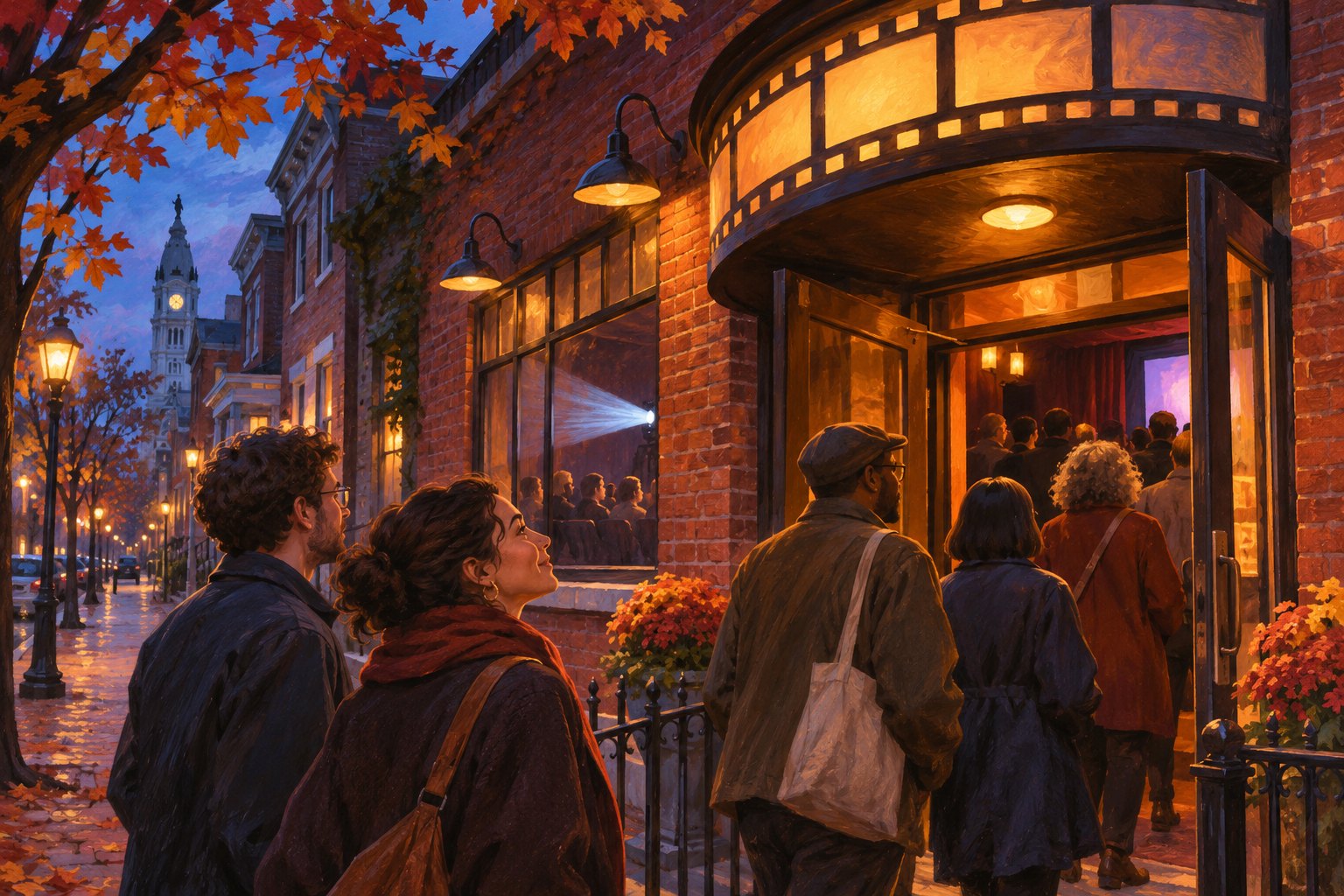
Silver Scream Film Festival brings an appealing contradiction into focus: movies about isolation can give audiences a reason to gather. The Spectator’s coverage, titled “Killer Community at the Silver Scream Film Festival,” foregrounds that connection. For anyone interested in horror, the community angle raises a question as worthwhile as whether a film delivers a good scare: what becomes possible when people experience fear together?
My view is that horror fandom is most rewarding when shared enthusiasm sharpens attention. A roomful of receptive viewers can make a tense sequence more involving, but the conversation afterward can do something equally valuable: bring us back to the frightened person inside the spectacle.
This is spoiler-free festival commentary, not an on-site report or a review of an individual festival selection.
Why community belongs in the conversation about horror
The word “community” can sound like a pleasant extra attached to a film event. For horror, it suggests something more closely connected to the viewing experience. Suspense depends on anticipation, and anticipation can become unusually palpable in a shared space. You notice the stillness around you. A startled reaction makes you conscious of your own. Laughter may release tension before the next stretch of uncertainty begins.
These are possibilities of collective viewing, rather than observations about a particular Silver Scream screening. They help explain why the community emphasis is worth considering. A horror film addresses individual fears, yet an audience can turn those private responses into an experience people recognize in one another.
That recognition need not mean everyone enjoys the same material. One viewer may love elaborate creature effects; another may prefer the suggestion of something outside the frame. Someone else may find an ordinary conversation more unsettling than either. A useful horror community gives those preferences room to meet without reducing them to a contest over who can tolerate the most.
The person in danger matters more than the audience’s hindsight
A character-centered approach offers a productive starting point for the kind of discussion the Silver Scream community theme invites. Instead of asking only whether a scare worked, ask what the threatened character understood at that moment. What information was available? What relationship made leaving difficult? What might have looked safe before the audience learned otherwise?
This distinction matters because viewers often judge decisions with knowledge the character does not possess. A suspicious sound comes to us through music, framing, and an expectation of danger. Within the story, it might still be an unexplained noise in a familiar home. Calling the character foolish can overlook the filmmaker’s work in creating that difference.
Of course, sympathy does not excuse weak writing. A screenplay can force someone into danger by withholding an obvious choice or abruptly changing their behavior. The useful critical question is whether the decision follows from the person the film has established. Fear, loyalty, embarrassment, and denial can motivate mistakes. Convenience alone is less persuasive.
For a festival audience, this approach gives a post-screening conversation substance. Two viewers might disagree about a decision while identifying the same scene as decisive. One sees understandable loyalty; the other sees a motivation the film never earned. Both can point to evidence instead of trading declarations that the movie was brilliant or terrible.
A welcoming crowd should leave room for disagreement
The community idea becomes less interesting if it means compulsory approval. Loving horror should make it possible to discuss its weaknesses with precision. An inventive practical effect may sit inside an emotionally thin scene. A familiar premise may support an unusually perceptive performance. Admiration and disappointment can coexist within the same review.
There is also a difference between enjoying a screening and judging the film afterward. A lively audience can amplify a joke or make an outrageous reveal feel celebratory. That pleasure is real. It does not automatically establish that the pacing, characterization, or ending will remain satisfying in another setting.
Our discussion of what makes a movie worth staying for approaches a related distinction: attention is a starting point for criticism. What a film does with that attention is the harder question. At a horror event, the loudest reaction may be memorable, while a quiet exchange between characters supplies the reason the film stays with someone.

Listen to dialogue before turning it into a catchphrase
Horror dialogue can become part of a fan community’s shared vocabulary. Yet a memorable line deserves attention beyond its repeatability. Consider who speaks, who listens, and whether the words mean the same thing to both people. Reassurance can reveal care, conceal uncertainty, or become an attempt to control another person.
A character’s refusal to believe a warning can be especially revealing. The dramatic value lies in the reason for that refusal. Does belief threaten a relationship, a livelihood, or the speaker’s understanding of the world? If the film establishes that pressure, disbelief can become characterization. Without it, the exchange risks functioning as a delay before the next attack.
The same principle applies to jokes. Humor may show someone managing fear, seeking acceptance, or avoiding an uncomfortable truth. A strong discussion asks what the joke accomplishes for the character as well as for the audience. That is where affectionate fandom can develop into close analysis without losing its sense of fun.
How to turn festival enthusiasm into better film criticism
For readers drawn to Silver Scream by its community focus, a few practical habits can make conversations about horror more rewarding:
- Start with a specific moment. Describe a gesture, cut, sound, or decision that shaped your response before assigning an overall verdict.
- Separate surprise from suspense. Being startled is an immediate reaction. Sustained uncertainty requires a different kind of construction.
- Track whose perspective controls the scene. Notice when you know more than the threatened character and when the film makes you share their confusion.
- Ask what remains after the reveal. An explanation may resolve the mystery while leaving emotional consequences unexplored.
- Protect another viewer’s first encounter. Establish whether spoilers are welcome before discussing identities, reversals, or final images.
Discovery also benefits from a little patience. Our guide to building a thoughtful festival catch-up list offers a useful companion approach: follow a manageable number of films closely enough to form your own response. Enthusiasm becomes more useful when it leads to attentive viewing.
The deeper appeal: fear witnessed by other people
The strongest interpretation of the Silver Scream community theme is that horror offers a setting where vulnerability can become discussable. Being frightened is an admission that an image, a sound, or a fictional predicament has reached you. Sharing that response can make the experience pleasurable without making the feeling trivial.
For me, that is a more compelling basis for horror fandom than endurance or encyclopedic knowledge. A newcomer’s uncertainty may open a better conversation than an expert’s instant recognition. A disagreement about a survivor’s choices may reveal more than agreement about the cleverness of a reference.
A worthwhile horror community makes room for both the delighted spectator and the attentive critic. Silver Scream’s community-centered coverage invites us to consider that possibility: people gathering around frightening stories, then taking the people within those stories seriously enough to keep talking after the fear has passed.
Original content by this site's editorial team. Published: November 5, 2026 at 06:32:37 PST (Los Angeles time)