Silent Friend brings an unusually patient question to the university campus: what becomes visible when people stop assuming they already understand the world around them? UCI School of Humanities has announced a screening of Ildikó Enyedi’s 2025 film, also titled Stille Freundin, for November 10, 2026. Its three human stories make that academic setting especially appropriate. Here, learning involves discovering the limits of your own perspective.
UCI screening: the practical details
The event is scheduled for Tuesday, November 10, from 7:00 to 9:30 p.m. in the McCormick Screening Room, HG 1070. It introduces the Humanities Core lecture unit on Critical Plant Studies with Professor Jon Pitt of East Asian Studies. UCI lists German, English, and Cantonese dialogue, with English subtitles. Admission and reservation arrangements should be confirmed with the organizers before attending. These details come from the [UCI School of Humanities event announcement](https://humanities.uci.edu/events/silent-friend-stille-freundin-film-screening).
Spoiler note: The discussion below examines the film’s central situations and character relationships. It offers an interpretation of its documented narrative rather than a scene-by-scene account or an assessment based on attendance at this screening.
A tree connects three different kinds of loneliness
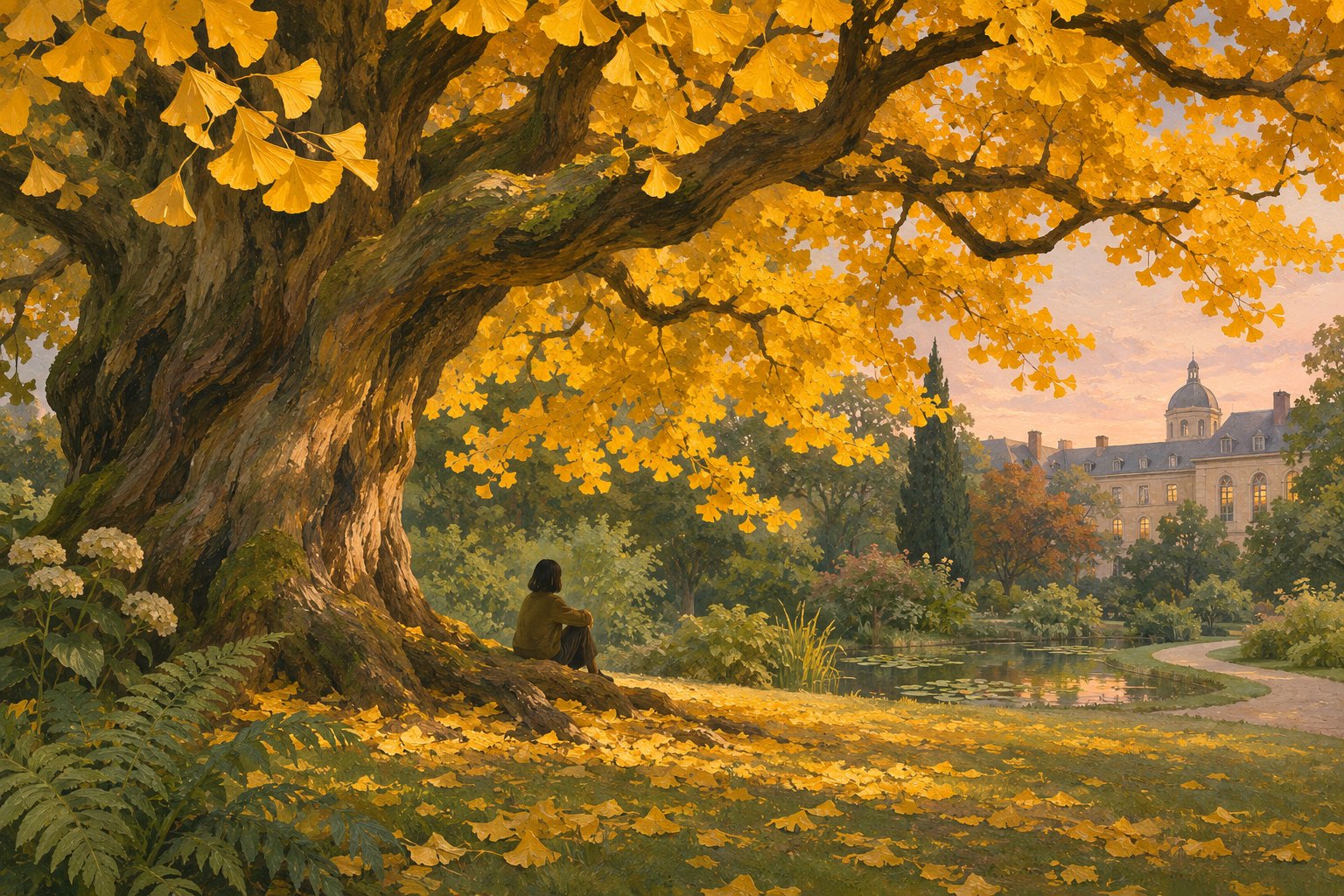
A ginkgo in the botanical garden of Philipps University of Marburg connects stories set in 1908, 1972, and 2020. A female student discovers botanical photography; a young man becomes involved with a geranium through his attraction to another student; and a neuroscientist, isolated during the pandemic, investigates the tree’s sensory capacities. Those narrative foundations are described in [AFI’s festival program](https://fest.afi.com/2025/luminaries-2025/silent-friend/).
The arrangement invites a tempting shortcut: the tree represents permanence, while people represent passing time. But that interpretation leaves the human drama underdeveloped. Each protagonist encounters a different obstacle to connection. Social exclusion, romantic uncertainty, and physical isolation are distinct experiences, even when they lead people toward the same garden.
My reading is that the tree gives these difficulties a shared setting without making them equivalent. A person can seek recognition, affection, or knowledge beneath its branches. The tree does not have to supply the particular answer that person wants.
Grete: learning to look while others judge her
In the 1908 story, Grete faces a male-dominated academic environment and develops a way of approaching plants through photography. Enyedi discusses both the hostility of Grete’s examination and her pursuit of botanical images in the [film’s official press materials](https://medias.unifrance.org/medias/30/180/308254/presse/silent-friend-dossier-de-presse-francais.pdf).
From Grete’s perspective, the problem is more complicated than gaining entry. Being admitted does not automatically mean being regarded as intellectually equal. She must conduct her work inside an institution whose judgments about her precede anything she might discover.
Photography therefore carries an appealing reversal of power. A woman subjected to other people’s scrutiny becomes the person deciding what deserves examination. Her curiosity gives her an activity that cannot be reduced to defending her presence in a classroom.
That distinction matters. Treating Grete exclusively as a symbol of progress would reproduce a version of the confinement she faces: everything about her would become evidence in someone else’s argument. Her interest in plants allows space for a personal life of the mind. She wants access to discovery, including discoveries that have nothing to do with proving her opponents wrong.
Hannes: affection becomes an education in attention
The 1970s story brings the question down to the scale of a windowsill. Hannes’s interest in Gundula draws him toward her geranium experiment. The emotional complication is immediately recognizable: taking an interest in someone’s work can express affection, but it can also become a way of asking for affection without saying so.
Two brief lines in an available English dialogue transcript sharpen the disagreement underlying the experiment: “we’re too different” and “Signals can be converted.” Subtitle wording may vary between editions. The exchange appears in the [English transcript of the film](https://transcripts.foreverdreaming.org/viewtopic.php?p=363331).
The first thought identifies a limit; the second proposes work. Together, they make a useful frame for Hannes’s predicament. Understanding another person requires more than feeling strongly about them. Attraction does not provide automatic access to another mind, any more than proximity to a plant explains its responses.
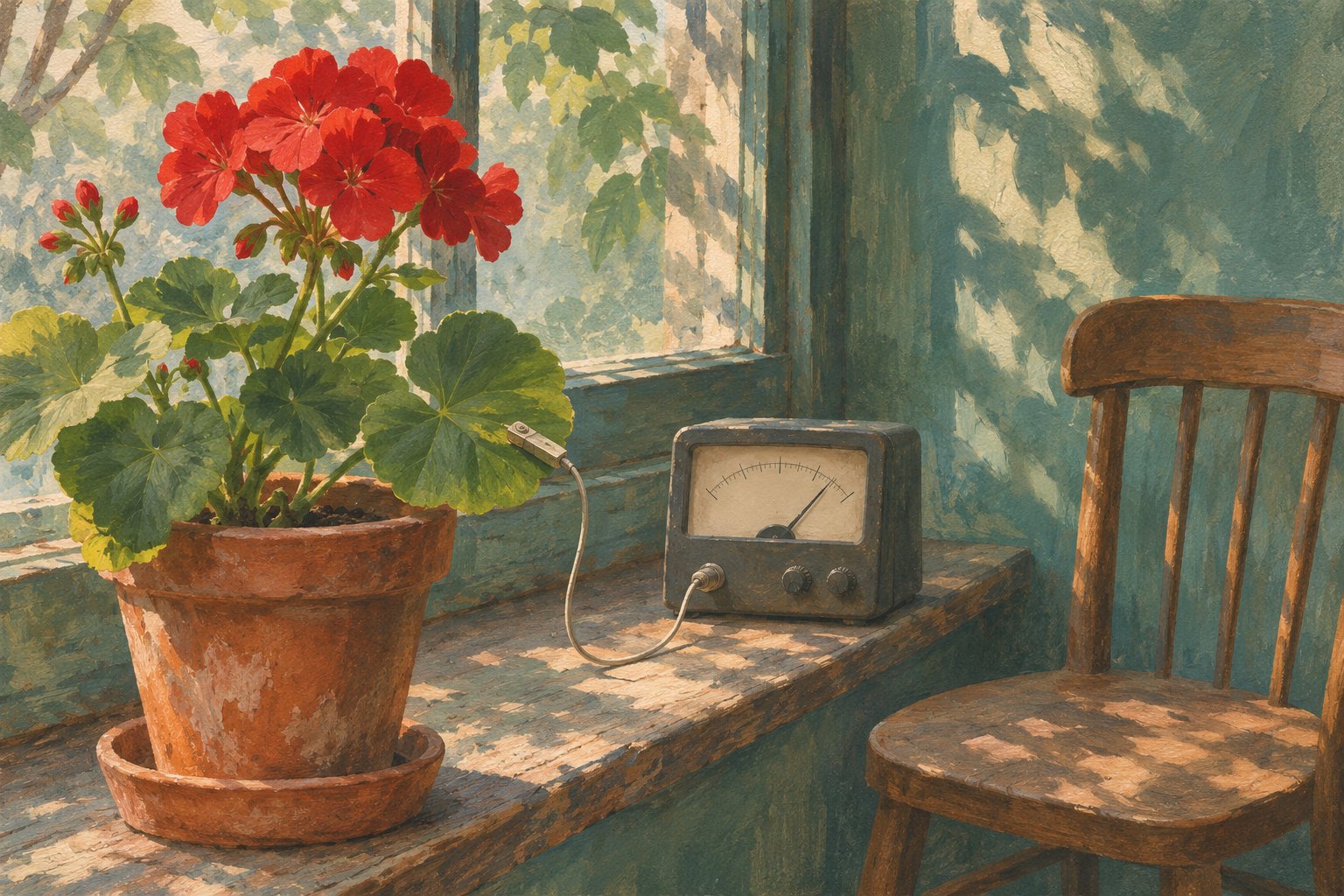
What interests me most is the possibility that attention can outgrow its original motive. Someone might begin caring for a plant because it belongs to the person they desire. The repeated acts of care can nevertheless become meaningful themselves. That does not make romantic disappointment disappear. It gives the disappointed person a relationship with the world beyond the hoped-for response.
The interpretive danger is making Gundula merely an instrument of Hannes’s growth. Her curiosity has its own purpose. A character-centered reading needs to preserve that independence: his feelings do not turn her research, or her choices, into promises.
Tony: expertise meets the experience of being a beginner
Tony Leung Chiu-wai plays the neuroscientist in the contemporary story. Pandemic isolation strips the campus of its usual social activity, creating a situation in which sustained observation becomes a significant form of engagement.
Read alongside Grete and Hannes, Tony complicates any simple equation between knowledge and understanding. Expertise can give someone better instruments and more precise questions. It does not remove the need to encounter something unfamiliar without deciding in advance what it must mean.
There is an important distinction here between interpreting fiction and accepting a scientific proposition. An experiment inside a drama is not proof of plant consciousness. The narrative can explore the desire for communication while leaving viewers responsible for distinguishing emotional conviction from demonstrated knowledge.
That uncertainty is productive. Tony’s inquiry becomes interesting because its object cannot provide the familiar reassurance of a spoken reply. The viewer must consider what counts as a response—and how readily loneliness can shape an interpretation.
Why the changing image textures matter
The three periods use 35mm, 16mm, and digital cinematography. Enyedi explains that these choices concern the characters’ perceptual worlds, rather than simply reproducing the recording technologies of their eras. She also explicitly resists claiming to show a plant’s perspective. Both points emerge in her [Venezia News interview](https://venezianews.it/en/daily-2025/silent-witness-interview-ildiko-enyediildiko-enyedi-silent-friend/).
That provides a valuable way to approach the screening: notice how each period makes the same environment available to a different person. Instead of treating changes in texture as decorative transitions, consider how they influence distance, intimacy, and the feeling of being present.
This is where the importance of small moments on a big screen becomes relevant. A communal screening can make sustained attention feel like a shared activity. It also leaves room for disagreement about when patience produces insight and when it begins to feel imposed.
The deeper question: can care survive incomplete understanding?
The strongest interpretation of Silent Friend does not require the ginkgo to become a wise human character in botanical form. Its difference is the point. Grete, Hannes, and Tony approach other lives through the abilities and limitations they possess. None has an unrestricted view.
For me, the film’s central proposition is that incomplete understanding need not prevent care. It should, however, make care less possessive. Another person—or another living thing—does not have to confirm our preferred explanation to deserve attention.
That makes the UCI screening an opportunity to bring questions rather than a predetermined verdict. As in our discussion of leaving room for surprise in film criticism, the most useful preparation may be a willingness to revise what initially seems obvious. Watch for the moment when observation becomes a relationship, then ask whose needs that relationship actually serves.
Original content by this site's editorial team. Published: November 7, 2026 at 15:11:19 PST (Los Angeles time)