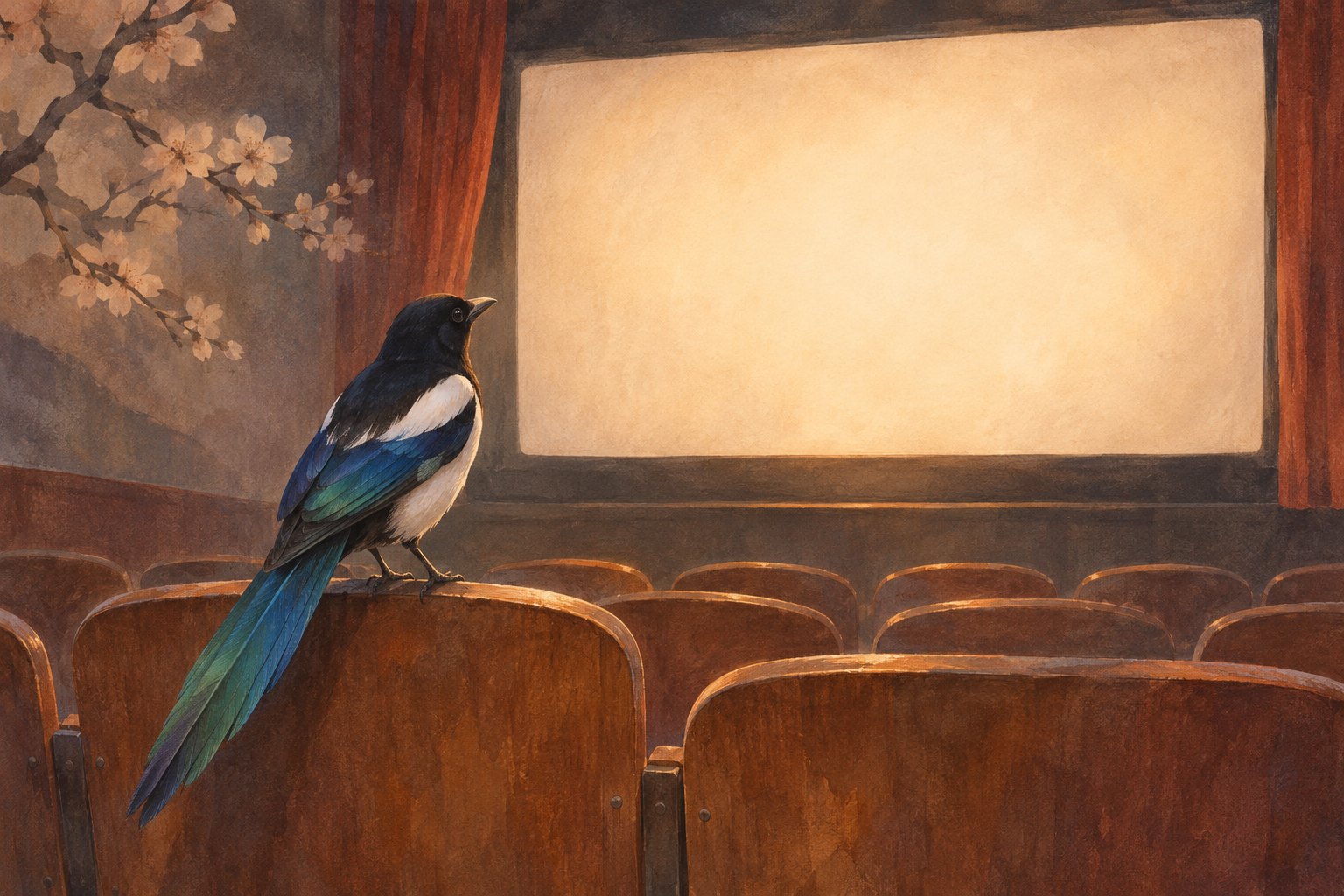
Shigeru “Shig” Yabu has been honored following a screening of Hello Maggie!, the animated adaptation of his childhood story. Rafu Shimpo reports that the Heart Mountain Wyoming Foundation board member received its Douglas W. Nelson Lifetime Achievement Award on October 24, recognizing his years of service and advocacy for teaching Japanese American history. The screening took place at the Japanese American National Museum’s Democracy Center.
The connection between that recognition and the film is particularly meaningful. Hello Maggie! centers on a boy whose life is disrupted by incarceration and whose friendship with a magpie gives him companionship. Honoring Yabu after presenting that story invites audiences to consider both the child whose experience became a film and the adult who helped keep that experience in public memory.
Scope and spoilers: This commentary examines the film’s documented premise and its implications for character and historical storytelling. It discusses the central relationship, without evaluating unverified scenes, reproducing unverified dialogue, or revealing the ending.
What Hello Maggie! Takes From Yabu’s Life
Willie Ito’s account of the project describes Yabu’s forced removal from his family’s San Francisco home and incarceration at Heart Mountain, Wyoming, in 1942. There, Yabu found a baby magpie and kept it as a pet. Maggie brought comfort to him, his family, and friends during their confinement.
Yabu wrote the book, and Ito illustrated it. The animated adaptation was directed by Tony Tarantini, with contributions from students, industry professionals, and Heart Mountain staff. That movement from remembered experience to illustrated book to animation gives the project a distinctive responsibility: the emotional appeal of its animal companion must remain connected to the circumstances of the person remembering her.
My reading of the premise begins with that connection. Maggie makes the history approachable because affection for an animal is recognizable. But familiarity should be the beginning of understanding. The circumstances surrounding this friendship are specific, and the comfort it offers cannot erase them.
Shig’s Perspective: Caring When Choice Has Been Taken Away
The most useful way into this story is through the boy’s limited freedom to act. Forced removal changes where a child lives, what he can keep, and which familiar relationships remain available. Adults make decisions that determine the boundaries of his world. Within those boundaries, caring for another living creature offers a different kind of relationship.
That distinction gives the premise its emotional force. Shig can be someone who notices, protects, and loves. Those possibilities matter because they allow a child to be understood through his attachments and actions, as well as through what has happened to him.
For a viewer, the critical question is how much individuality remains visible within the historical subject. A child does not experience every moment as a lesson intended for future generations. Curiosity, worry, affection, and ordinary pleasure deserve attention in their own right. Reading Shig only as a representative of suffering would narrow the life the story seeks to preserve.
This approach connects with our discussion of watching historically and culturally specific films through individual experience. The histories are distinct; the shared critical principle is to let a person’s relationships guide interpretation before reducing that person to a theme.
Maggie’s Importance Begins With Companionship
A bird in a story about confinement readily invites an interpretation involving freedom. That association is understandable, but it can become too easy. If Maggie is treated only as a symbol, the particular affection between a boy and an animal disappears beneath an abstract message.
The stronger reading starts with companionship. Maggie matters because Shig cares about her. The emotional scale is intimate: an animal’s presence can give someone a focus for attention beyond immediate distress. That does not require us to assign the bird human intentions or invent a dramatic act of rescue.
The documented account also places Maggie’s significance beyond Shig alone, extending to his family and friends. This suggests another useful perspective: affection can be shared. A relationship that begins with one child may become something others recognize and value. The community surrounding him belongs within our understanding of the story.
For me, the danger in describing this simply as an uplifting animal tale is that “uplifting” can sound like a resolution. Comfort and injustice can exist simultaneously. The presence of tenderness makes the people living through confinement more fully visible; it does not make their confinement acceptable.
From Personal Recollection to Animated Story
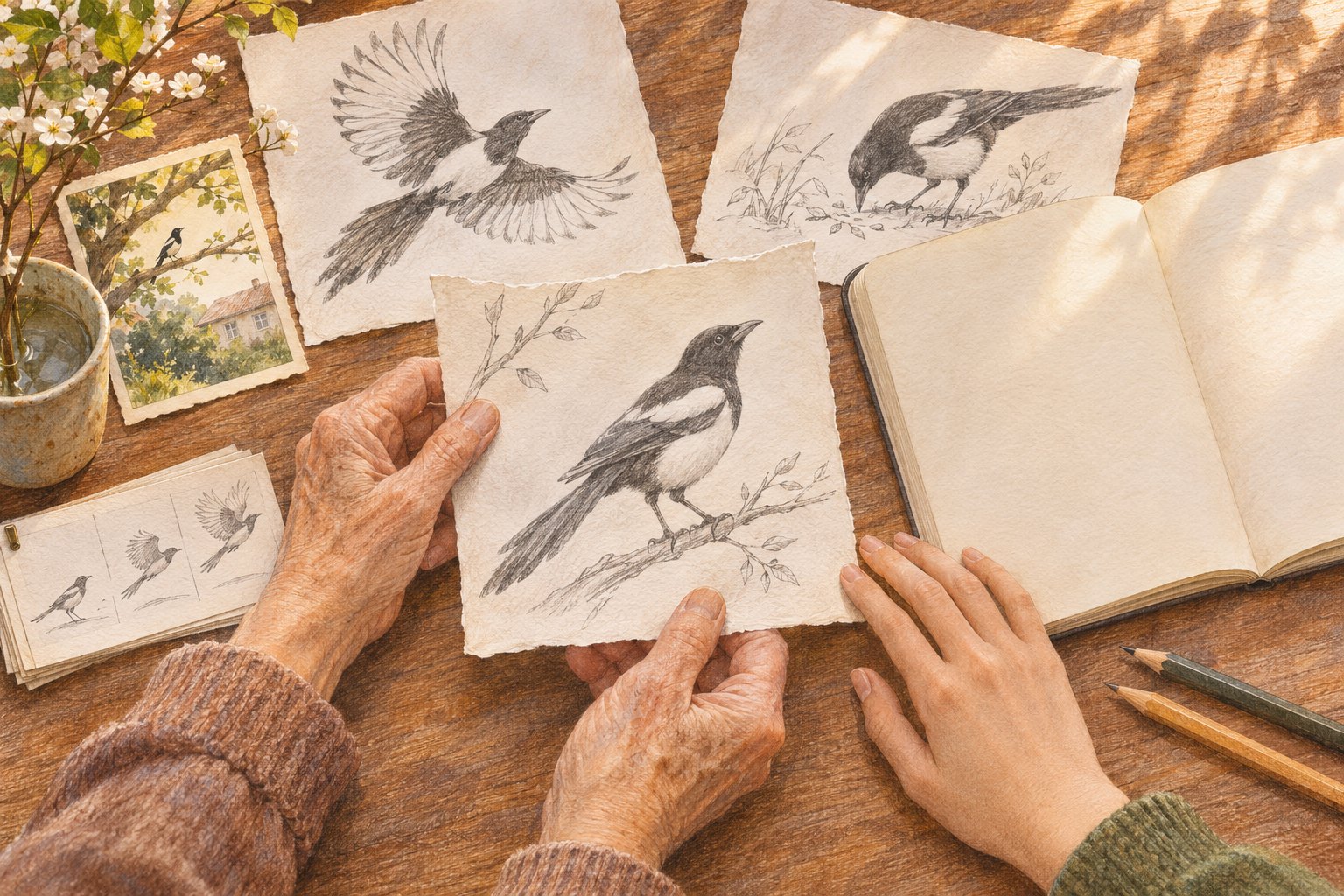
Ito’s involvement adds another dimension to the adaptation. His account identifies him as someone who was also incarcerated as a child, at Topaz in Utah. His experience and Yabu’s are not interchangeable, but their collaboration connects personal recollection with an artist who has his own relationship to the history.
Animation offers a way to give remembered experience a visible form. Its possibilities include expressive movement, simplified shapes, and control over where viewers direct their attention. Those are possibilities of the medium, rather than claims about particular shots in Hello Maggie!. Assessing how successfully this film uses them requires direct attention to the finished work.
The distinction matters when discussing a film with an educational purpose. Historical significance should encourage careful criticism. Viewers can respect the subject while still asking whether characterization is clear, whether emotion develops naturally, and whether the storytelling gives its central relationship enough room.
Our examination of how editing shapes character and emotional clarity offers a related principle: the meaning of a movie depends on what its makers select and emphasize. In an adaptation of personal memory, that selection also shapes which aspects of a life reach the audience.
Why the Honor Belongs in the Conversation
Yabu’s recognition brings the discussion back to the person behind the screen story. A film can circulate far beyond the circumstances in which its subject first told an experience. The award provides an occasion to acknowledge that preserving history involves sustained human work: remembering, explaining, and returning to difficult material for people who were not there.
The deeper implication of Hello Maggie! lies in the coexistence of affection and deprivation. Remembering a beloved animal does not soften the historical wrong. It shows something valuable that a child carried through it. That is the most compelling lens for approaching Yabu’s story: give the friendship its emotional weight while keeping the loss of freedom clearly in view.
Seen through that lens, honoring Yabu after the screening has a resonance beyond ceremony. The boy’s attachment becomes part of a story shared with later audiences, while the adult storyteller receives recognition for helping that memory endure.
Original content by this site's editorial team. Published: November 15, 2026 at 00:57:28 PST (Los Angeles time)