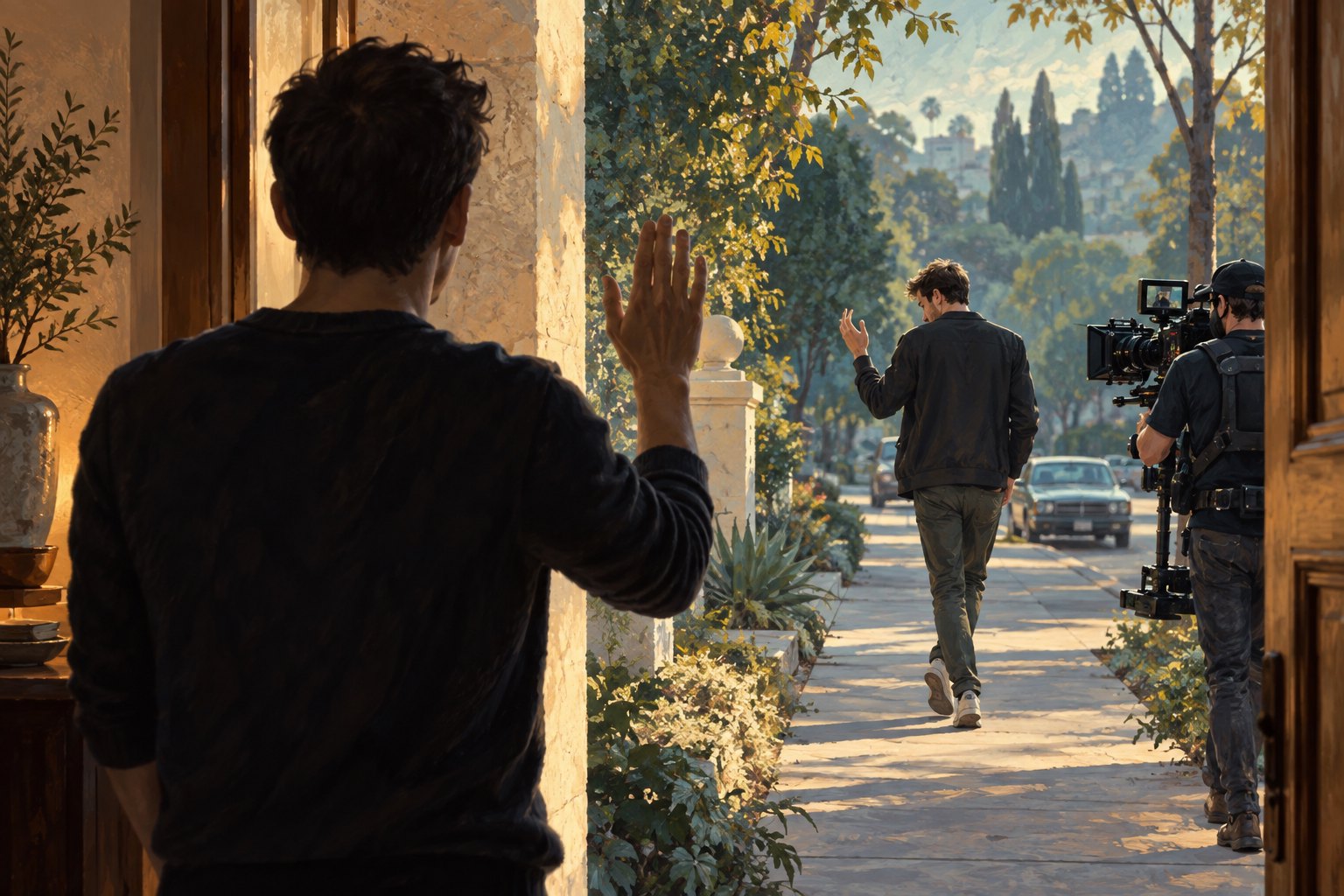
Sam Altman says Artificial filmed outside his house, where he waved at Andrew Garfield and recognized something familiar in the actor’s movement. As reported by Variety, Altman’s observation was strikingly specific: “He did walk like me.” For anyone curious about Garfield’s portrayal, that is an intriguing piece of testimony. The person being represented noticed a resemblance in an ordinary bodily habit.
It is also a narrower observation than a verdict on the performance. Recognizing a walk does not establish whether a film understands someone’s motives, relationships, or decisions. The encounter offers a useful starting point for discussing Artificial: how much can an actor tell us through resemblance, and when must characterization do something more?
Spoiler-free commentary: This article examines Altman’s reported encounter and its implications for screen performance. It does not assess the finished film or present his remarks as dialogue from it.
What Altman’s encounter actually establishes
The essential details are simple. Altman described filming outside his home, said he waved at Garfield, and commented on the actor’s walk. He characterized the experience as feeling caught in “some weird glitch of the simulation.” That phrase gives the anecdote its comic unease: someone else was performing a recognizable version of him in a familiar setting.
Those details support a discussion of recognition. They do not establish that Altman endorsed the portrayal, advised the production, or approved its interpretation of his life. A wave alone cannot tell us whether an encounter was friendly, awkward, amused, or merely polite. Assigning it a larger meaning would require evidence beyond the gesture.
Nor should the incident be treated as a scene from Artificial. An encounter during filming and an event depicted in a finished movie are different things. Nothing in this anecdote establishes whether the footage being shot appears in the final cut, how it is edited, or what dramatic purpose it serves.
Why a walk can matter more than a look
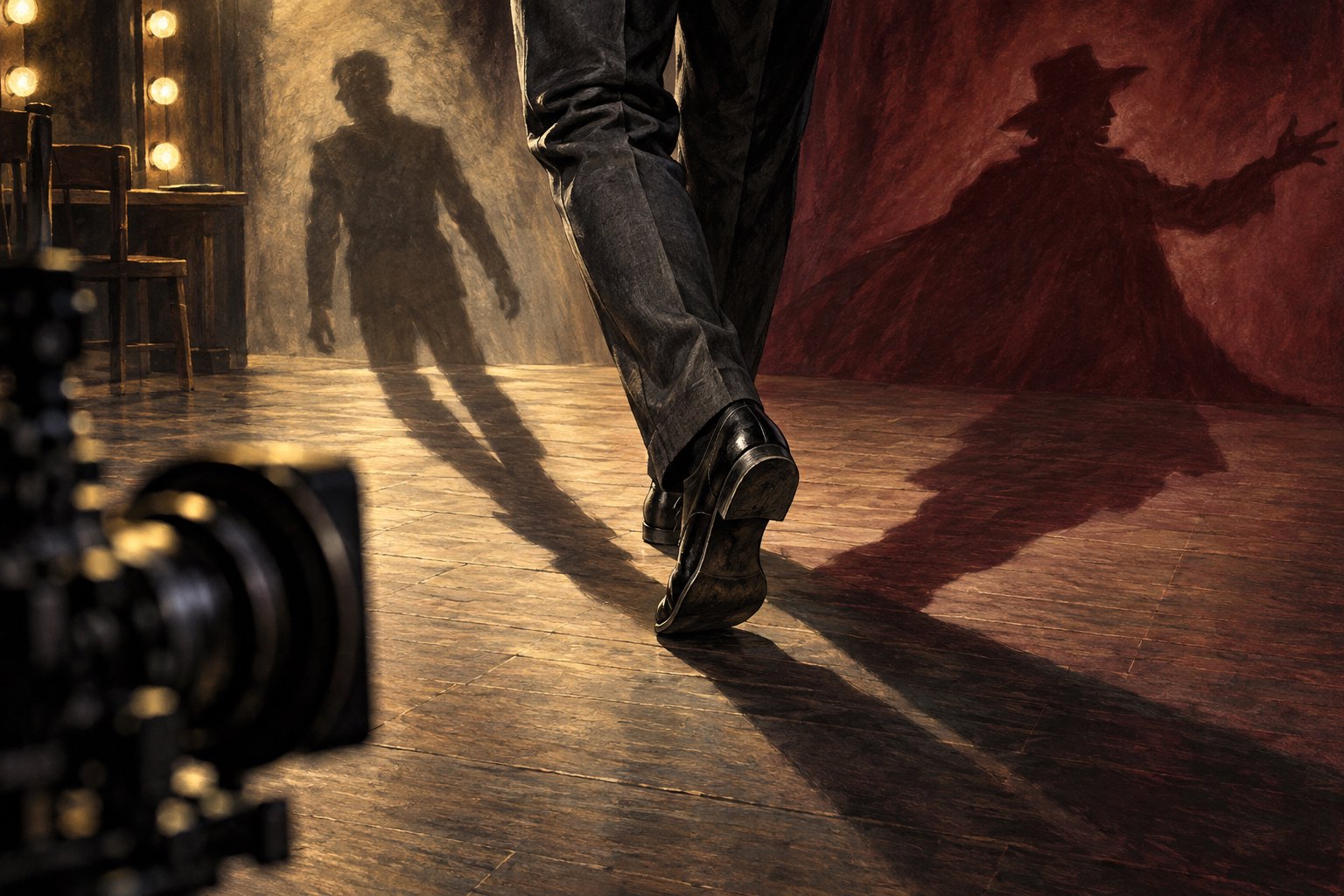
Physical resemblance is often discussed as if acting were a matter of matching photographs. Movement introduces another dimension. A still image offers a face and a silhouette; a walk unfolds through time. Its pace, balance, pauses, and direction can make a body recognizable before a viewer gets a clear look at the face.
That makes Altman’s observation interesting as a response to craft. He singled out an action rather than a static likeness. We should resist reverse-engineering Garfield’s performance from that comment: it tells us nothing precise about his posture or stride. But it does identify movement as the point where the imitation became legible to its subject.
For an actor, a repeated physical habit can provide continuity across scenes. It gives a character a recognizable way of occupying space. The dramatic question is what happens to that habit under pressure. Does a familiar rhythm persist when confidence falters? Does it change when the character is watched, challenged, or ignored? These are useful questions for evaluating a performance, rather than claims about what Garfield does in this film.
Recognition is the beginning of characterization
My critical preference is for physical detail that becomes less conspicuous as a story develops. Initially, an audience may notice the imitation. Eventually, the movement should belong so naturally to the character that viewers pay attention to what he wants and what stands in his way.
A mannerism can attract attention without explaining anything. Repeating it may produce an entertaining impersonation, but dramatic meaning depends on context. The same movement toward a doorway could suggest impatience, hesitation, or relief, depending on what preceded it and whom the character leaves behind. Editing, framing, and the other actors’ responses help determine what we see.
For Garfield’s portrayal, the meaningful standard will therefore extend beyond whether Altman recognizes himself. Does the character’s behavior make sense from within his perspective? Can viewers follow his immediate goals without being asked to accept every justification he offers? A film can make a person understandable while leaving ample room to question him.
That distinction also matters when a production’s surrounding controversy becomes its main talking point. Our commentary on Artificial’s release story and the expectations surrounding it considers that separate problem. Here, the more intimate issue is how a person becomes a performance, one observable detail at a time.
The person portrayed is an important witness, with a particular perspective
A subject’s response deserves attention because it can identify details that other viewers might miss. Altman knows his own daily habits in ways an audience does not. His recognition of Garfield’s movement is consequently relevant to a discussion of external resemblance.
Self-recognition still has limits as a critical standard. People experience themselves from within, through intentions, memories, and explanations. Others encounter their words and actions from outside. A dramatization creates another perspective through selection: it decides which moments to emphasize, whose reactions to show, and where to leave uncertainty.
Agreement between those perspectives can be illuminating. Disagreement can be illuminating too. Neither automatically settles whether a portrayal is fair or dramatically convincing. A subject’s approval cannot substitute for the evidence presented by a film, just as a subject’s displeasure cannot automatically invalidate it.
For viewers, the practical approach is to keep different questions separate. Physical accuracy concerns observable resemblance. Historical accuracy concerns what happened. Dramatic interpretation concerns the meaning a movie gives those events. Success in one category does not guarantee success in the others.
Why the setting makes the anecdote so uncanny
The reported location gives this encounter an unusual intimacy. Watching an actor portray you on a screen already involves a degree of separation. Seeing that portrayal being constructed outside your home brings representation into familiar physical space. The ordinary surroundings make the duplication feel less safely contained.
Altman’s simulation comparison captures that collision neatly. Its interest here is experiential: the surprise of seeing a recognizable version of yourself moving independently. It need not be treated as a statement about the film’s themes or its storytelling devices.
The filmmaking process adds another layer. A camera turns a passing action into something framed, repeatable, and available for interpretation. Our analysis of how filming choices shape perspective in Primetime explores the broader relationship between recording behavior and giving it narrative meaning. The same distinction helps explain why a convincing imitation is only part of a screen portrait.
The deeper question: who controls a recognizable image?
The most compelling implication of Altman’s anecdote is that recognition does not confer ownership of an interpretation. He could notice something of himself in Garfield’s walk, but the meaning of that movement within Artificial belongs to a larger construction: performance, framing, editing, and story.
That is where this small encounter becomes useful film criticism. A recognizable detail can invite viewers into a portrayal, but it cannot carry the argument for them. The stronger test is whether the character remains coherent when easy recognition gives way to difficult choices, competing perspectives, and consequences.
Altman’s account gives Garfield’s physical resemblance an unusually personal witness. It leaves the larger artistic question open. When viewers watch Artificial, the walk may catch their attention; the characterization will have to earn the rest.
Original content by this site's editorial team. Published: October 6, 2026 at 23:03:24 PDT (Los Angeles time)