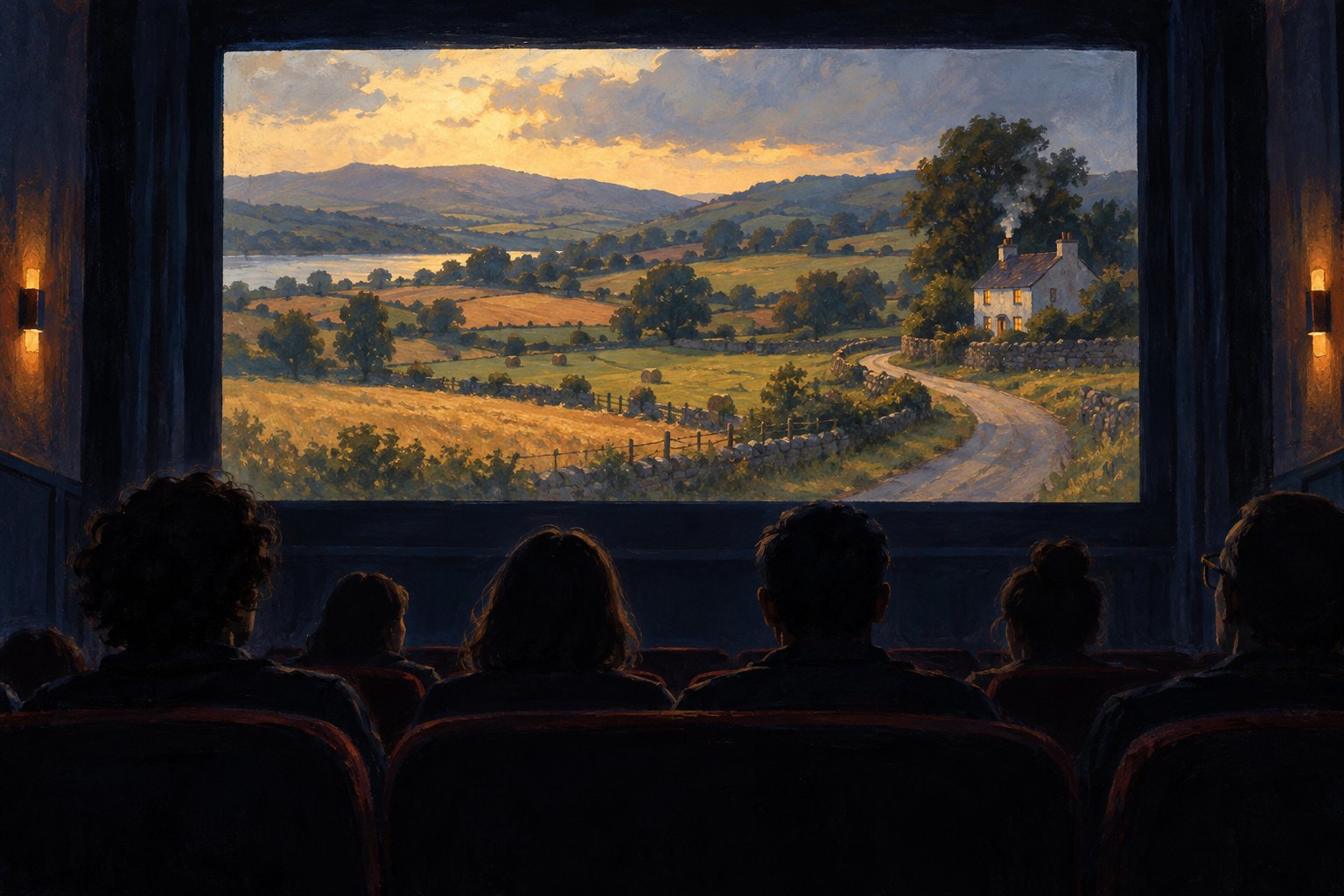
Rural life at the Toronto International Film Festival deserves to be judged through the people on screen: what they want, what their surroundings make possible, and what belonging costs them. A beautiful landscape establishes a location. A character’s relationship to that landscape gives it meaning. That distinction is the most useful starting point for asking how cinema portrays rurality.
The Daily Yonder has raised that question about the festival. A definitive assessment would require identifying the films under discussion and examining their scenes; no single conclusion about the program follows from the question alone. This commentary considers the critical issue itself: what would make a rural portrayal perceptive, reductive, or emotionally convincing?
Critical commentary; no film-specific plot spoilers. Illustrations are conceptual scenes.
Rurality Begins With a Character’s Choices
Rurality can sound like an abstract label, but its dramatic meaning is practical. It concerns how living outside a major population center shapes relationships, work, movement, and identity. For a character, those conditions become decisions: whether to borrow a vehicle, accept a job, keep a family property, or ask a neighbor for help.
My strongest test is whether place changes the available choices. If a story could relocate its characters anywhere without altering their relationships or decisions, the countryside may be functioning mainly as decoration. That need not ruin a movie, but it limits what the film can tell us about rural experience.
Conversely, geographical specificity need not arrive through speeches explaining the community. A missed ride can establish dependence. An uncomfortable favor can reveal a history between households. An ordinary disagreement over who gets the car can make distance tangible. Such details let viewers experience place through competing needs.
Who Gets to Explain the Community?
Point of view matters as much as setting. A rural community encountered by a visitor can look very different from the same community understood by someone who has spent a lifetime there. Neither perspective automatically produces better filmmaking. The question is how much authority the movie gives each person.
Consider an imagined story about someone returning home. From the returning character’s perspective, familiar routines might feel restrictive. From a sibling’s perspective, those routines could represent years of responsibility carried without recognition. A compelling film would allow both interpretations to become visible through behavior, rather than treating one character as the enlightened observer and everyone else as an obstacle.
This is where supporting characters become decisive. Do they pursue anything beyond helping or frustrating the protagonist? Can they recognize something the central character misunderstands? Their independent motives make a community feel inhabited. Without them, even an affectionate portrait can turn residents into a collection of reassuring local types.
Staying and Leaving Need Equal Dramatic Weight
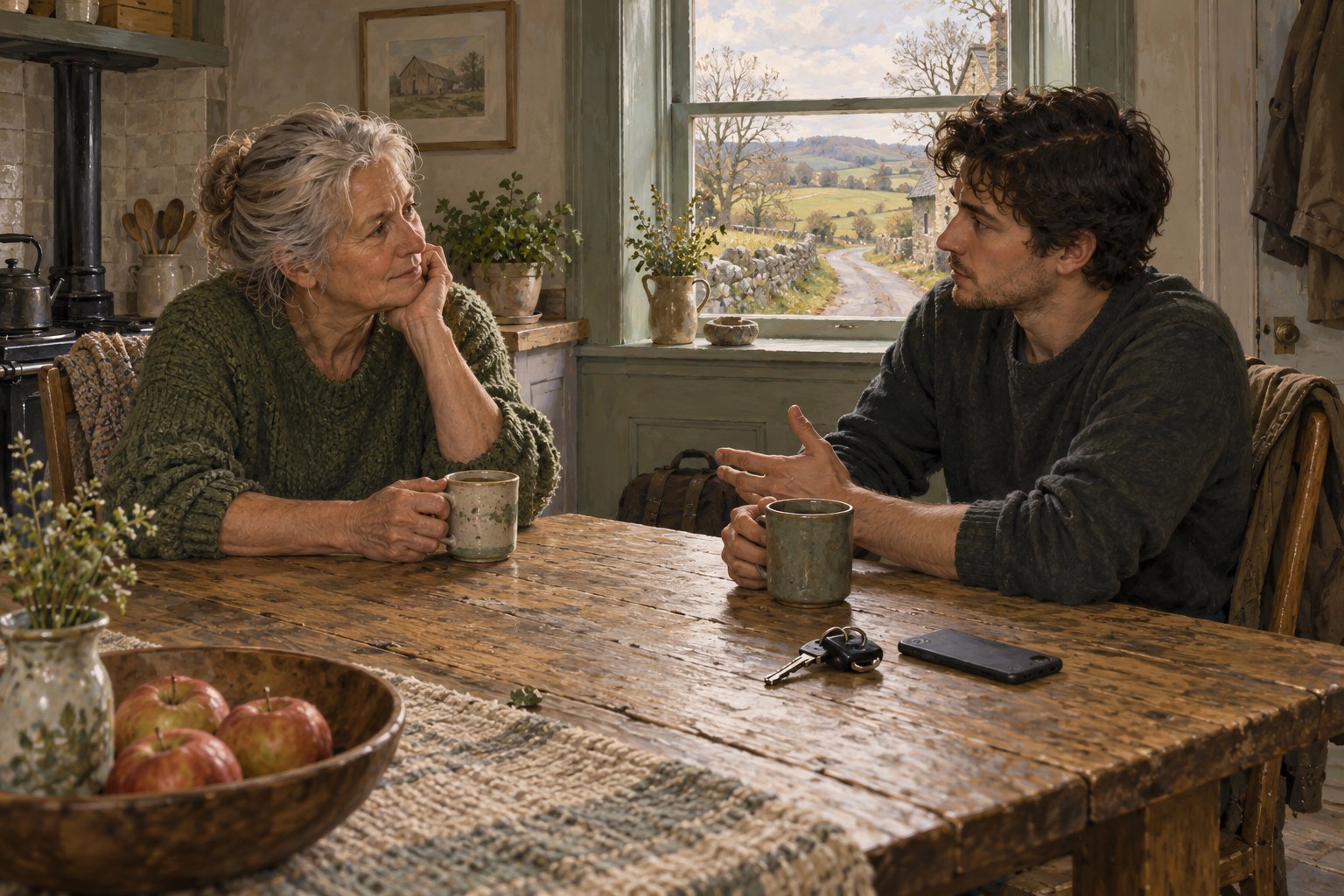
A departure offers filmmakers an immediately legible ending: a vehicle moves, a familiar place recedes, and a future becomes imaginable. Yet movement alone does not explain whether a character has gained freedom. The meaning depends on what departure requires and who absorbs its consequences.
When evaluating a rural story, ask whether leaving is affordable, whether someone depends on the person leaving, and whether remaining is a genuine preference. These questions prevent the audience from confusing opportunity with virtue. A person who leaves is not automatically more courageous; someone who stays is not automatically more loyal.
The same scrutiny should apply to homecoming. Returning can express affection, exhaustion, responsibility, or a lack of alternatives. A satisfying character arc lets those motives coexist. It also gives relatives permission to react with something more complicated than gratitude.
That attention to conflicting obligations connects with our discussion of family responsibility and reconciliation in Yale. The useful critical habit is to distinguish caring about someone from agreeing to the future that person wants for you.
Look for Work Behind the View
A field can be visually peaceful while carrying very different meanings for the people around it. For one character, it might represent income; for another, inherited responsibility; for someone else, land they cannot access. The image becomes dramatically richer when the film establishes those relationships.
I find rural storytelling more persuasive when work has consequences beyond costume and atmosphere. Fatigue should affect attention. A schedule should constrain availability. An interruption should cost something. Viewers need not receive a technical lesson in every occupation, but they should understand how earning a living organizes the characters’ time.
Ownership deserves similar attention. A movie can invite us to admire a house without clarifying who can afford to remain in it. It can celebrate a landscape while leaving the people maintaining it outside the frame. Those omissions matter when the film asks us to interpret a character’s attachment as a simple emotional choice.
Beauty and Hardship Both Require Context
Beautiful cinematography does not inherently romanticize rural life. A character can love a place that also makes life difficult. The critical question is whether the beauty belongs to that character’s experience or simply offers the audience a pleasant view between scenes of suffering.
Hardship is equally insufficient as proof of honesty. A relentlessly bleak portrayal can flatten a community just as thoroughly as an idealized one. If every interaction confirms misery, residents lose the ordinary variety that makes people recognizable: humor, vanity, competence, boredom, tenderness, and disagreement.
Watch how the filmmaking directs your response. Does the camera remain long enough for a person’s task to become intelligible? Does a reaction shot complicate a supposedly simple exchange? Does the score announce menace before anyone has behaved threateningly? These choices help determine whether rural space feels understood or merely assigned a mood.
How to Assess Rural Representation Across a Festival
A festival-wide argument needs comparisons, but comparisons should preserve differences. Two films featuring isolated homes may have little in common in their treatment of property, family, or freedom. Shared scenery does not establish a shared social world.
Our guide to thoughtful festival viewing emphasizes leaving room for reflection. For this particular question, a few notes after each screening can make that reflection more precise:
- Identify the controlling perspective. Whose understanding of the community does the film invite you to trust?
- Name a consequential constraint. What does distance, work, housing, or family obligation actually prevent someone from doing?
- Find an independent supporting character. Who has a desire that exists beyond the protagonist’s story?
- Examine the ending’s distribution of costs. Who gains a future, and who takes on additional responsibility?
Answers grounded in scenes provide a stronger basis for criticism than calling a film authentic because it feels familiar—or dismissing it because it depicts an unfamiliar experience.
The Deeper Question Is Who Gets a Future
For me, the most revealing measure of rural representation is whether the characters are allowed to change without having to erase their relationship to home. A community becomes dramatically convincing when it contains competing futures, rather than a single destiny everyone must accept or escape.
Applied to TIFF, that standard demands patient attention to individual films before a verdict on the festival. It asks critics to explain how a portrayal works, whose perspective it privileges, and what remains outside its frame. Rural characters deserve the full range of dramatic possibility: the right to be mistaken, ambitious, funny, selfish, loving, and unfinished. The countryside becomes meaningful cinema when those lives give the view its stakes.
Original content by this site's editorial team. Published: October 15, 2026 at 03:30:15 PDT (Los Angeles time)