Rondé Barber’s Northern Road Trip installment of Film Session, published by the Tampa Bay Buccaneers, centers on his breakdown of selected standout plays. For viewers searching for the segment, that is the essential distinction: this is football footage interpreted through commentary. Its appeal lies in revisiting action and asking what made a particular moment work.
The premise also raises an interesting question for anyone who enjoys close screen analysis: how much of an event do we miss when we follow only its most obvious subject? In football, that subject is usually the ball. A useful breakdown can redirect attention toward the movement, spacing, and decisions surrounding it.
Scope: This article examines the segment’s announced premise and offers a viewing framework. It does not provide a play-by-play recap or attribute unverified quotations, tactical explanations, or specific observations to Barber.
What Barber’s Film Session Promises the Viewer
The title establishes a straightforward arrangement: Barber interprets top plays grouped around a northern road trip. It identifies both a guide and a selection principle. The footage is being presented as material worth revisiting, rather than as a complete account of every possession.
That matters because explanation and celebration serve different purposes. Celebration lets viewers enjoy the finish again. Explanation should make the sequence more legible: where an opening developed, which movement changed the available space, or why an apparently small action mattered. The most useful question to bring to Barber’s commentary is whether you can recognize something afterward that you could not identify before.
My critical preference is for sports analysis that leaves viewers more independent. An authoritative voice can make a replay feel convincing, but a clear explanation gives the audience something it can inspect. Ideally, the commentary and the visible action support each other without requiring the viewer to accept every inference on trust.
Follow a Player Who Never Touches the Ball
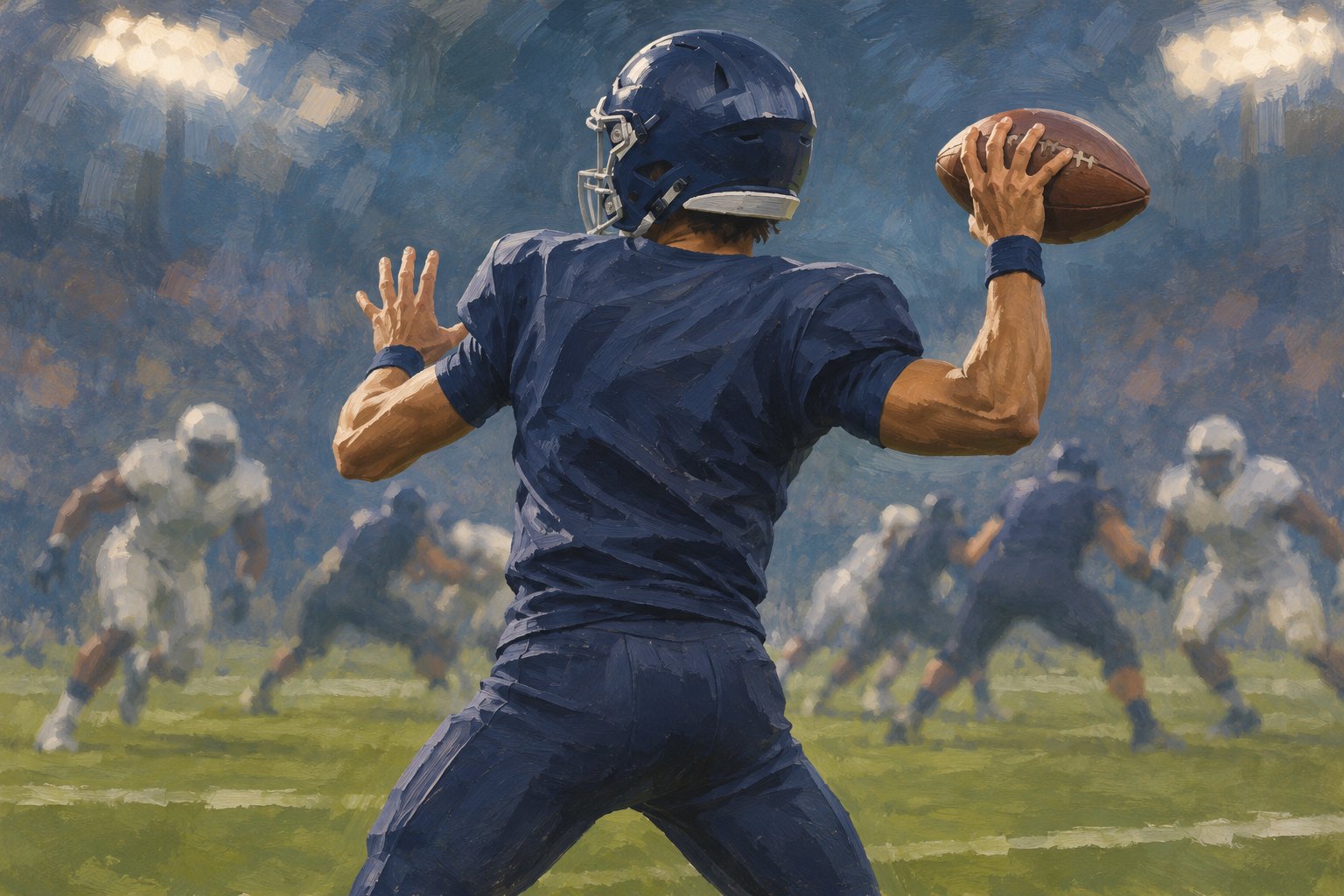
A football highlight naturally directs attention toward the player carrying, throwing, or catching the ball. That is an efficient way to follow the immediate action. It is also a limited way to understand the work around it.
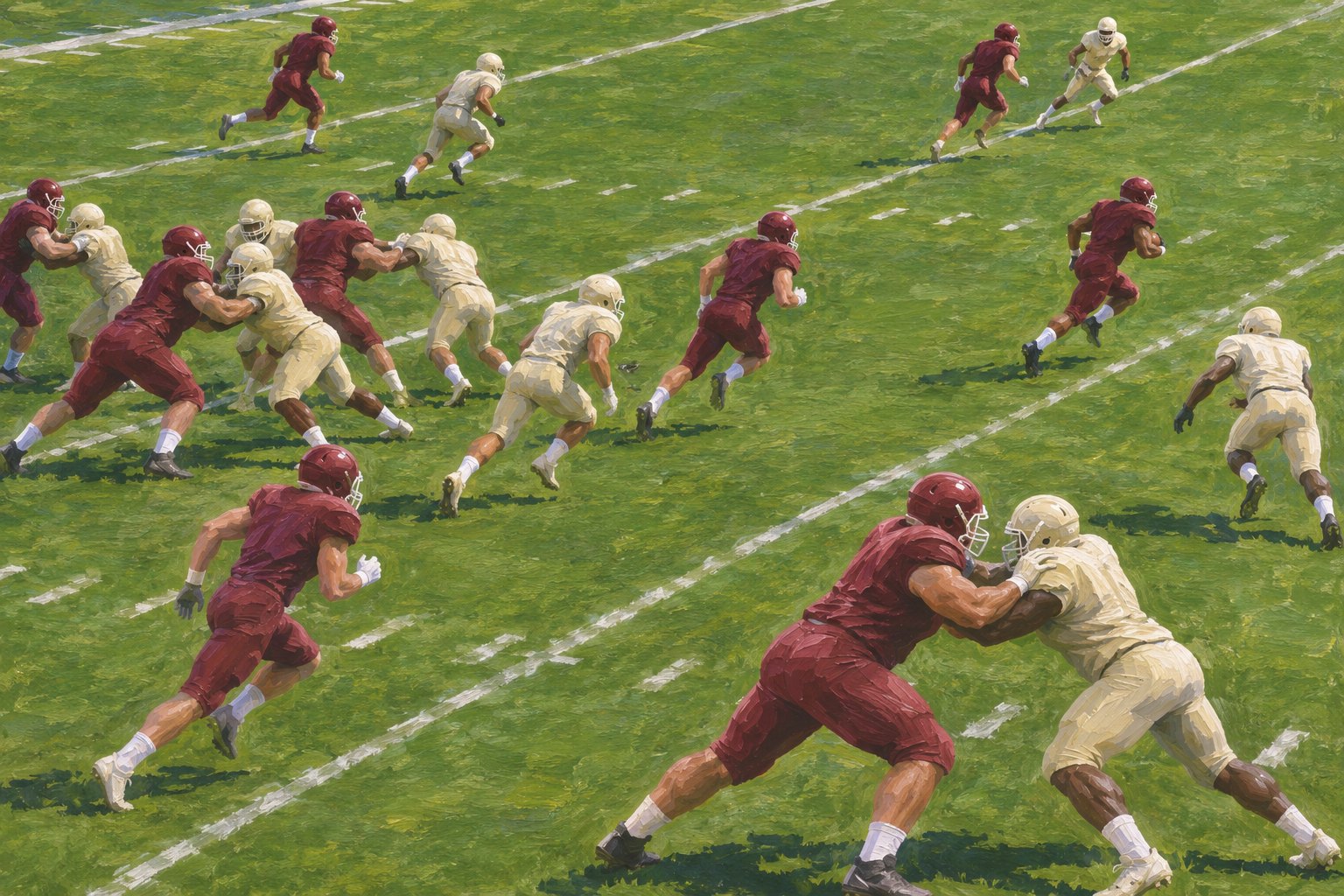
On a second viewing, choose someone away from the ball and stay with that player for the entire visible sequence. Depending on the play, a blocker may preserve a path, a receiver may occupy a defender, or a defender’s positioning may narrow an opponent’s options. These are general possibilities to examine, not claims about which examples appear in Barber’s installment.
This change of focus resembles revisiting an ensemble scene in a movie. The first viewing follows the central action; the next reveals how surrounding performances shape it. The comparison has limits—athletes are responding to a live contest—but it helps explain why a familiar image can yield new information without changing a single frame.
Our discussion of what a Ventrell Miller film-room breakdown should reveal provides a related perspective on evaluating individual contributions. With Barber’s road-trip selection, the useful extension is to consider how several contributions connect inside one short sequence.
Replay Changes What a Decision Looks Like
Once you know the outcome, earlier movements can seem inevitable. A gap appears obvious because you already know someone will run through it. A defender’s change of direction looks late because you have seen where the play finishes. Replay gives the audience an informational advantage that the participants did not possess in the moment.
A fair reading therefore starts before the decisive action. Look at where a player begins, which opponents are visible, and how the situation changes. Ask what information becomes available during the sequence. This approach makes room for uncertainty instead of treating the eventual result as proof that everyone should have anticipated it.
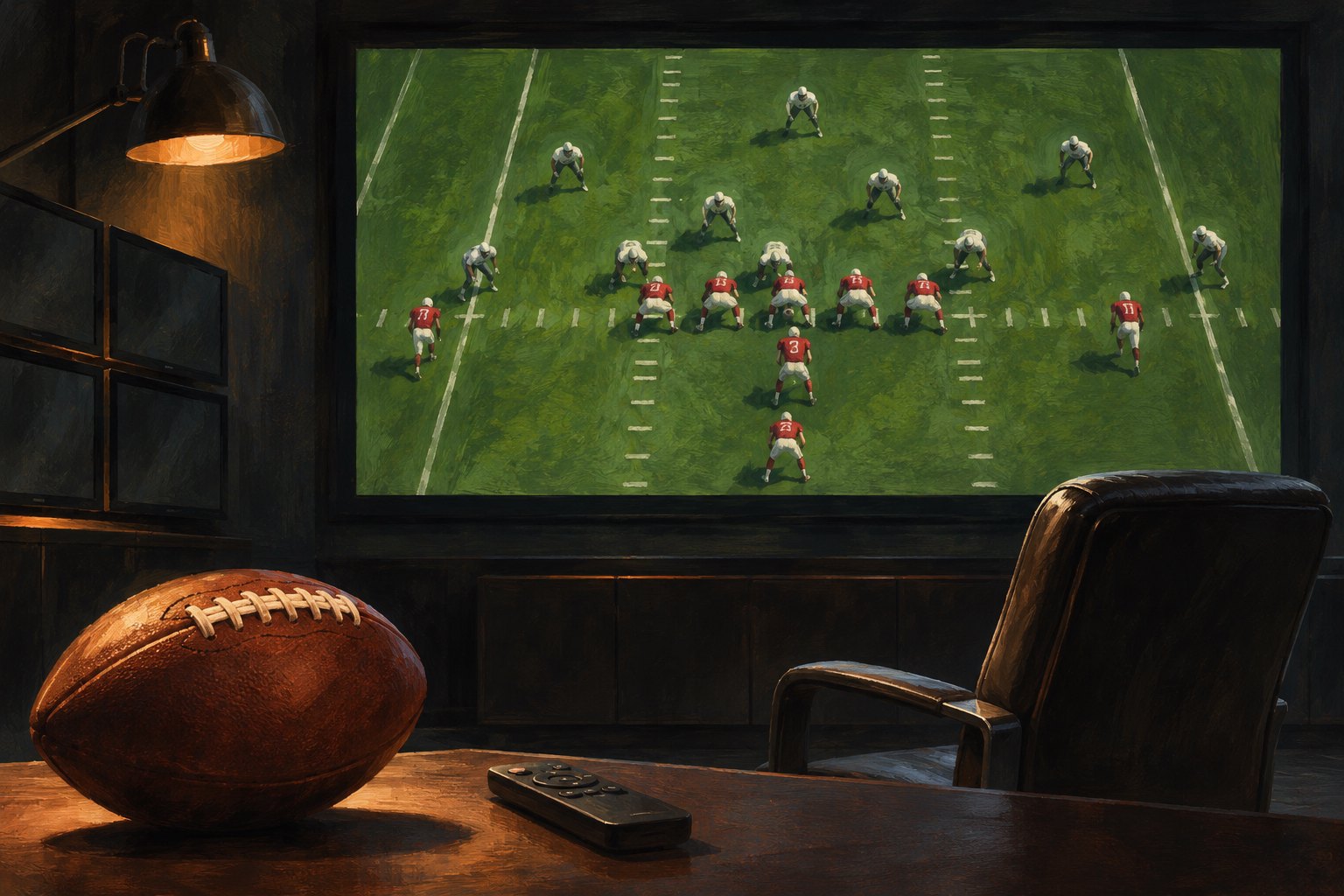
Camera framing introduces another limit. If an angle excludes part of the field, it cannot settle every question about what happened there. A close view may illuminate contact while obscuring wider spacing. A broader view may clarify movement while making a small physical adjustment difficult to see. An explanation becomes stronger when it respects those limits.
A Practical Way to Watch the Breakdown
You do not need a complete command of football terminology to watch actively. A few deliberate passes through a sequence can help separate what the image shows from what you infer.
- Watch the action continuously. Establish the basic sequence before isolating details. Notice where the play begins and where it finishes.
- Choose one participant. Follow that person from the start of the available footage, including moments when the ball moves elsewhere.
- Find the change. Look for the point when spacing, direction, or access to an opponent changes. That moment may precede the highlight’s obvious payoff.
- Compare the explanation with the image. Identify the visible detail supporting the commentary. Keep a proposed assignment separate from a movement you can directly observe.
- Return to normal speed. Reconsider how much time the player had to recognize and respond to the situation.
The final step is especially valuable. Slow motion helps viewers inspect mechanics, but normal speed restores the urgency of the decision. Together, the two perspectives can make an ordinary-looking action more impressive—or reveal why an appealing explanation needs qualification.
Top Plays Tell a Selected Story
The phrase “top plays” establishes the limits of the collection. A selection of notable moments can show how something succeeded on particular occasions. It cannot, by itself, establish how reliably the same approach worked across every game on the trip.
That does not diminish the pleasure or instructional value of a highlight breakdown. It simply keeps the conclusion proportional to the evidence. One sequence can reward close attention without becoming a verdict on a player’s season, a unit’s consistency, or the direction of the entire team.
The distinction connects with our commentary on judging Cam Ward’s progress separately from a game’s result. Here, the emphasis is on selection: understanding an individual success and establishing a repeatable pattern are different analytical tasks.
The Deeper Appeal: Redistributing Credit
For me, the strongest promise of Barber’s Film Session premise is the possibility of redistributing attention. A highlight tends to make one participant memorable. Close analysis can reveal how that moment depended on people whose work was less immediately visible.
That offers a more interesting way to appreciate football than merely replaying its biggest gestures. The viewer can begin to notice preparation, restraint, timing, and cooperation alongside speed and impact. Success becomes a sequence of connected actions rather than a single isolated image.
Barber’s northern road-trip breakdown invites that kind of second look. The most meaningful takeaway to seek is a specific detail you can recognize for yourself the next time you watch: a movement before the opening, a contribution outside the spotlight, or a decision whose difficulty becomes clear only when the replay runs at full speed.
Original content by this site's editorial team. Published: November 25, 2026 at 08:11:07 PST (Los Angeles time)