Zach Cregger’s Resident Evil makes an appealing proposition: a monster movie can feel enormous while keeping its human concerns small. Variety’s review describes an energetic, grotesquely playful survival adventure that avoids getting tangled in franchise exposition. The interesting question is what that approach means for the person trapped inside it. A creature can overwhelm the frame; fear needs someone whose next decision still matters.
Scope and spoilers: This is character-focused criticism based on the official premise and published reporting, not a firsthand screening review. It discusses the setup and one reported creature encounter, without revealing the ending.
A medical courier is an unusually useful horror protagonist
Austin Abrams plays Bryan, a medical courier whose night becomes a struggle to survive. Sony identifies the film as a new story directed by Cregger, with a screenplay credited to Cregger and Shay Hatten. Those basic details establish a useful dramatic imbalance: Bryan begins with an ordinary occupation rather than an identity built around fighting monsters. [Sony’s official film synopsis and credits](https://www.sonypictures.ca/movies/resident-evil).
The occupation matters because a courier’s work already depends on reaching somewhere. There is a destination, a responsibility, and an expectation that movement will produce a result. Horror can attack each assumption. A route becomes an exposure to danger; a delay acquires consequences; continuing and turning back both become decisions that need defending.
That is an interpretation of the premise, rather than a claim about Bryan’s unspoken motivations. Still, it provides a more productive way into the movie than asking whether its protagonist is sufficiently impressive. His dramatic value lies in the distance between what the job requires and what the situation demands.
A conventional action hero often enters a dangerous space with skills that promise eventual control. An ordinary worker invites another kind of investment. We measure the size of the problem against the limited experience available to solve it. Merely understanding what is happening can become an achievement.
Humor can reveal a frightened person’s defenses
One reported line offers a particularly economical clue to Bryan’s characterization. Screen’s review describes him responding with “Interesting” when tentacles emerge from a headless body. That tiny reaction belongs to a recognizable human vocabulary of understatement, absurdly inadequate to the event it is supposed to describe. [Screen’s review of Resident Evil](https://www.screendaily.com/reviews/resident-evil-review-zach-cregger-follows-weapons-with-high-octane-back-to-basics-reboot-of-hit-video-game-franchise/5220471.article).
My reading of that exchange is that the humor comes from a failure of language. Bryan has a word available, but it cannot contain the experience. Understatement creates a temporary distance between the person and the horror confronting him.
This is a useful distinction when judging comedy in a frightening movie. A joke can reassure us that the protagonist has everything under control. It can also expose how desperately someone wants to sound composed. The latter leaves room for vulnerability. Laughing at the mismatch does not require believing the danger has disappeared.
Delivery ultimately determines which effect reaches the screen. The same sentence could sound detached, disbelieving, or terrified. A quoted line cannot establish the entire performance, but it can identify the tension worth watching: whether Bryan’s verbal composure and physical predicament keep pulling in different directions.
The next choice matters more than the complete explanation
The challenge for this kind of Resident Evil story is to make uncertainty specific. General confusion is easy to manufacture. Suspense is harder: the audience needs enough information to understand why an immediate decision is difficult, even when the larger catastrophe remains mysterious.
Imagine the basic grammar of a survival sequence: a visible exit, an uncertain distance, a threat whose movement changes the available time. These are illustrative principles, not descriptions of particular scenes in Cregger’s film. They explain why a narrowly focused adventure can carry considerable dramatic complexity without extensive exposition.
From the character’s perspective, knowledge has practical value. Knowing the history of a catastrophe may be less urgent than recognizing what can reach him. That difference gives a filmmaker a principled reason to postpone explanation: attention follows immediate need.
It also creates a demanding standard for the action. The audience should be able to distinguish a bad choice from an impossible choice. Otherwise, every narrow escape risks feeling interchangeable. Legible obstacles allow viewers to participate mentally, testing alternatives even though they cannot influence the outcome.
Our earlier discussion of why a positive Resident Evil review should not be treated as a surprise considered the expectations surrounding the franchise. Here, the more useful question is how much a single decision can tell us about the person making it.
Monster spectacle needs a human measure
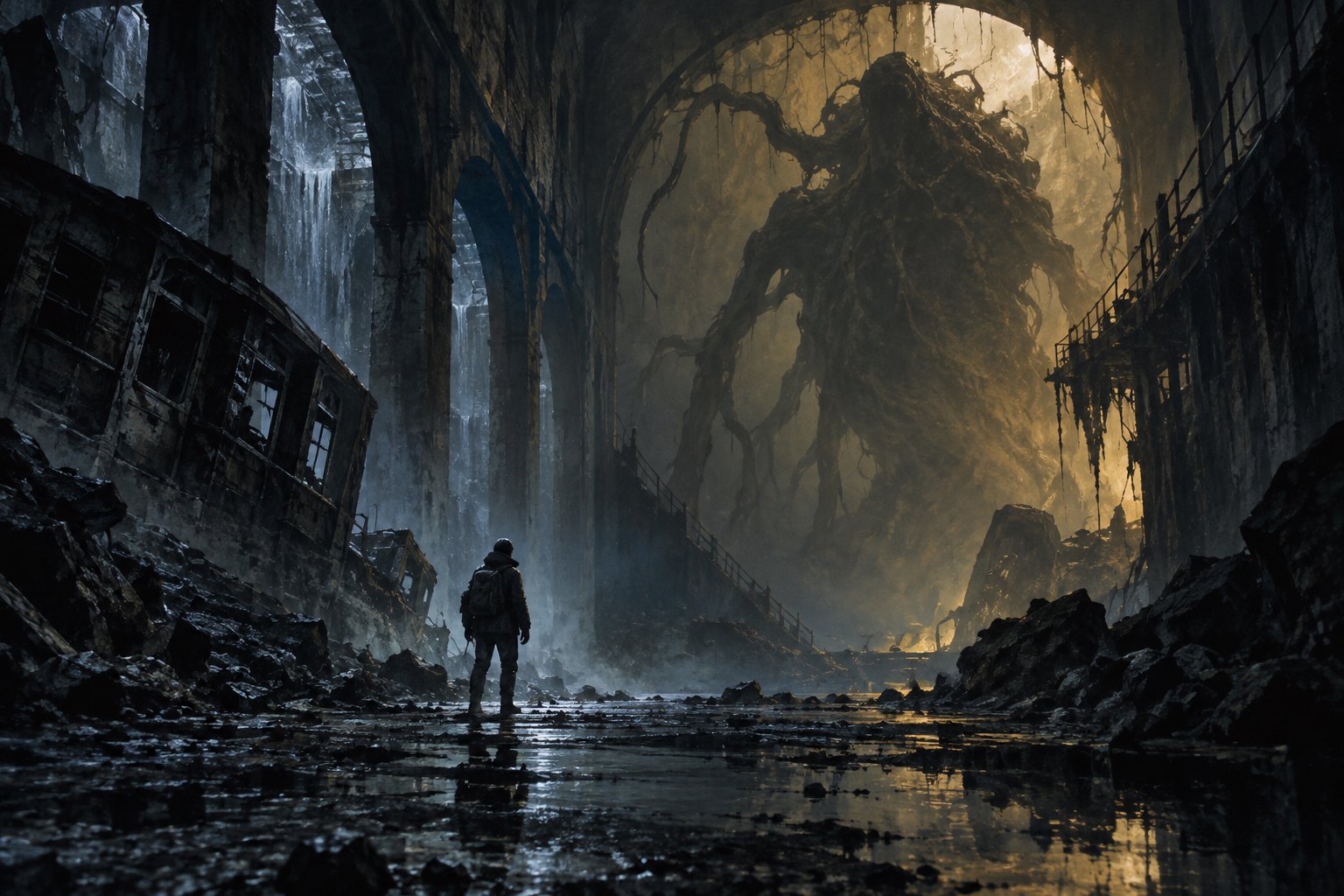
Variety’s emphasis on creature-driven entertainment suggests a film whose appeal includes the pleasure of outrageous physical invention. That is a legitimate ambition. Horror does not need to be solemn to deserve close attention, and disgust can coexist with delight.
But scale alone cannot produce escalation. A larger threat becomes dramatically meaningful when it changes the protagonist’s possibilities. What previously counted as shelter may no longer help. A successful tactic may cease to be useful. The important change is in the relationship between the person and the environment.
This is where character analysis and effects analysis meet. A monster’s appearance invites us to look; its effect on someone’s decisions gives us a reason to keep watching. Spectacle earns emotional weight when we understand what it costs to move through it.
The same distinction between attraction and achievement underlies our discussion of why a blockbuster milestone cannot settle questions of artistic quality. Recognizable branding can bring viewers into a theater. The film still has to establish the value of each moment.
The deeper question is what survival preserves
The most productive interpretation of Bryan’s predicament begins with responsibility. A courier carries something for someone else. Survival threatens to reduce that outward-facing role to the immediate needs of one body: keep moving, find safety, remain alive.
That tension gives the premise potential moral weight without requiring a speech about heroism. What happens to obligations when fulfilling them becomes dangerous? When does self-preservation become understandable, and when might it become an excuse? These are interpretive questions raised by the setup, not assertions about the ending.
For me, this is the strongest reason to take Cregger’s apparent appetite for monster fun seriously. Playfulness and human stakes are compatible. An ordinary person’s inadequate words, uncertain judgment, and stubborn effort can make an extravagant nightmare feel close enough to touch. The creatures supply the impossibility; the person confronting them supplies the scale by which we understand it.
Original content by this site's editorial team. Published: September 16, 2026 at 11:15:51 PDT (Los Angeles time)