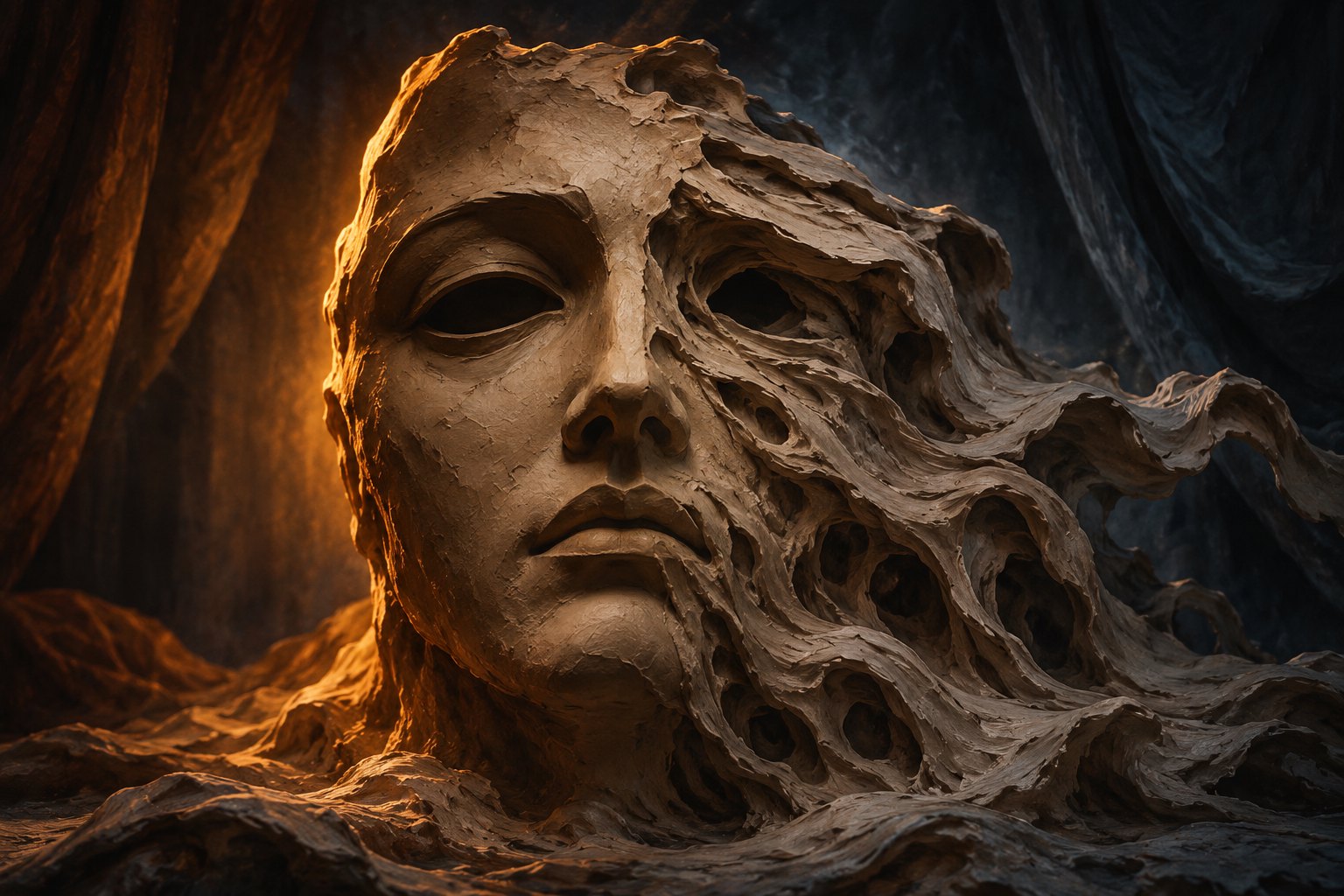
Ann Hornaday’s review of Pan’s Labyrinth appears in The Washington Post’s selection of ten essential pieces from her work. It offers a rewarding starting point for readers interested in what makes film criticism endure: the possibility that a review can send us back to a movie with more demanding questions.
A retrospective gathers a critic’s achievements; a reader can put them to work. With Guillermo del Toro’s Pan’s Labyrinth, that means looking beyond its extraordinary creatures to the decisions made by a frightened child. What does Ofelia learn about authority? When does disobedience become courage? And how does a filmmaker make those questions visible?
The interpretation below is our own. Hornaday’s place in the conversation is the invitation to look again, rather than an authority enlisted to settle every meaning.
Full spoilers follow, including the ending. The film contains graphic violence and is intended for mature audiences.
Ofelia wants somewhere she belongs
Written and directed by del Toro, the 2006 film takes place in Spain in 1944. Ofelia, played by Ivana Baquero, accompanies her pregnant mother, Carmen, to the military outpost of her new stepfather, Captain Vidal. His campaign against guerrillas surrounds the household with violence. Ofelia finds a different possibility in a nearby labyrinth, where a faun offers her a royal identity and a series of tasks.
For Ofelia, the attraction is more intimate than adventure. Vidal’s world has already assigned her a marginal position. She is a dependent child whose imagination inconveniences adults. The faun addresses her as someone whose existence matters to an entire kingdom.
That distinction makes her willingness to follow him understandable without making him trustworthy. A promise of belonging can be persuasive precisely when someone has little power. The film allows us to feel the promise before asking us to examine its conditions.
This is also where character analysis improves a review. Calling Ofelia imaginative describes a trait. Asking what her imagination gives her reveals the pressure driving her choices.
Vidal treats family as an extension of command
Sergi López’s Vidal organizes human relationships around obedience. His authority as an officer flows directly into his conduct as a husband and prospective father. Other people matter insofar as they preserve his order, meet his needs, or continue his name.
His anticipation of a son gives that cruelty a future tense. He wants to determine what survives him. Fatherhood becomes another opportunity to establish ownership, rather than a relationship requiring attention to another person.
From Carmen’s position, marriage offers the prospect of security in a dangerous world. From Ofelia’s, it introduces an authority she has little reason to love. Holding those perspectives together makes the household more troubling than a simple arrangement of villain and victims. The same institution can promise protection to one person while exposing another to fear.
That attention to unequal choices also shapes our reading of the Dashwood sisters’ financial and emotional insecurity: character becomes clearer when we examine which options a person actually possesses.
The faun’s instructions are not a moral compass
The fantasy story initially seems easier to navigate. Tasks have rules. Objects have purposes. Completion promises a reward. Compared with the household’s shifting dangers, even an alarming supernatural encounter offers the comfort of a legible structure.
But the faun’s insistence, “You promised to obey me,” exposes the problem. An instruction does not become ethical because its speaker belongs to a magical world.
The Pale Man sequence complicates matters further. Ofelia eats forbidden food, awakening a creature whose violence gives her mistake terrible consequences. Her disobedience here is impulsive. It would flatten the film to treat every broken rule as an act of liberation.
Later, when the faun demands her infant brother’s blood, refusal has a different meaning. She understands what compliance would require and will not purchase her own future with another person’s injury. The distinction is between wanting something and accepting responsibility for someone.

Mercedes gives courage an everyday form
Mercedes, played by Maribel Verdú, provides an adult counterpart to Ofelia. Her work within Vidal’s household makes her useful to him, while her concealed support for the rebels turns that position into an opportunity to resist.
Her courage requires observation and restraint. She cannot simply announce her principles and expect the world to accommodate them. She must negotiate the gap between what she believes and what she can safely reveal.
The doctor confronts a related conflict between professional care and military command. His objection to obedience “without questioning” identifies the responsibility Vidal wants his subordinates to surrender. Both adults show why conscience involves action under pressure, rather than merely possessing admirable opinions.
Seen beside them, Ofelia’s story belongs to a wider pattern of resistance. She is neither the only person capable of recognizing cruelty nor someone whose imagination automatically supplies the right answer. She must make a choice, just as they do.
Why the images matter as much as the message
My judgment is that Pan’s Labyrinth succeeds because its moral argument takes physical form. Doorways, passages, enclosed rooms, and obstructed routes repeatedly make freedom a problem of movement. Ofelia must find ways through spaces controlled by others.
The organic shapes of the fantasy world offer a different visual experience from Vidal’s regimented environment, yet they never guarantee safety. Beauty can attract; strangeness can mislead. The viewer must evaluate what happens inside an image rather than assume that enchantment equals goodness.
That is a useful standard for criticism, too. Describing a film as beautiful says little until the review explains what its beauty does. Does it shelter a character, tempt her, conceal danger, or make a loss unbearable?
Questions about how form directs our judgment also animate our analysis of creative authority in William Greaves’s filmmaking. Different films demand different approaches, but the responsibility to examine how they guide us remains.
The ending makes refusal more important than reward
Ofelia refuses to surrender her brother to the faun. Vidal then takes the baby and shoots her. The film gives us both Mercedes grieving over the dying child and Ofelia’s arrival in a luminous royal realm, where her refusal is recognized as the decisive test.
Those images leave room to discuss the relationship between fantasy and material reality. But reducing the ending to a puzzle about whether magic exists can obscure the choice that gives it emotional force.
Ofelia acts before she knows that refusal will be rewarded. She accepts the apparent loss of her promised future rather than harm her brother. Her compassion therefore cannot be dismissed as another successful maneuver in a game.
This is the deeper reason the film rewards sustained criticism. Its conclusion asks us to distinguish victory from integrity, and consolation from the erasure of suffering. Returning to a movie through an essential Hornaday review need not end with agreement about its greatness. The more valuable result is renewed attention: to a child’s decision, to the images surrounding it, and to what our own response reveals.
Original content by this site's editorial team. Published: October 26, 2026 at 05:11:18 PDT (Los Angeles time)