Rapture is an upcoming queer medieval horror film from writer-director Jordan Tannahill, with Kit Connor, Will Poulter, and Manu Ríos attached to star. Its attention-grabbing combination of recognizable actors and zombies has an equally compelling dramatic foundation: a religious community facing contagion, with an intimate relationship at the story’s center.
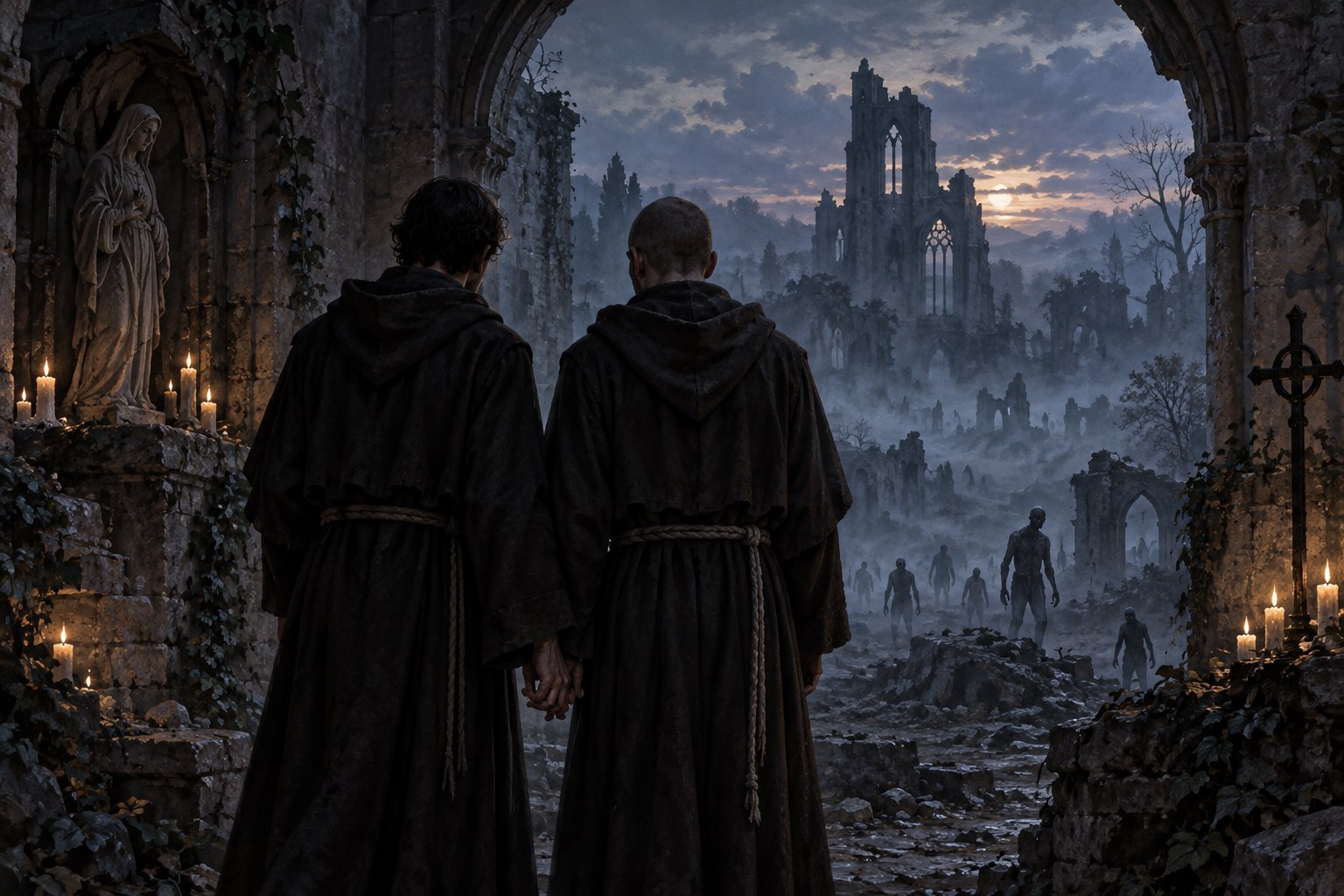
According to Out’s reporting, the setting is Yorkshire in 1348. A messenger brings a mysterious illness into a remote monastery; its victims become undead revenants. The monks divide over whether to help the sick or safeguard their community. Specific character assignments for the three leads have not been disclosed.
This is a premise-level critical preview, not a review of a completed film. The discussion covers announced story material without claiming knowledge of later events, performances, or the ending. There is no verified film dialogue to quote or basis for identifying Easter eggs.
What makes Rapture a queer horror story?
The clearest answer comes from Tannahill’s interview with Them. He identifies a passionate relationship between two young monks who grew up together as the emotional center of the film, calling the project “queer body horror.” That description establishes more than a broad label: it places an existing bond inside the catastrophe.
For me, the shared history is the most promising part of that setup. An established relationship gives a horror story something that immediate attraction cannot supply on its own: accumulated knowledge. Two people who have known each other for years can recognize changes that strangers would miss. A hesitation, an unfamiliar expression, or a withdrawn gesture can acquire significance without an explanatory speech.
That is a possibility built into the premise, not a description of scenes already available to assess. The eventual film will need to make that history tangible. Simply informing an audience that two characters love each other cannot substitute for showing how they listen, disagree, and respond to one another under pressure.
The relationship also creates room for conflicting loyalties. Affection for one person and responsibility toward a larger group do not always produce the same decision. A convincing drama could let both obligations remain meaningful, making intimacy a source of difficult choices as well as comfort.
The monastery turns survival into a moral argument
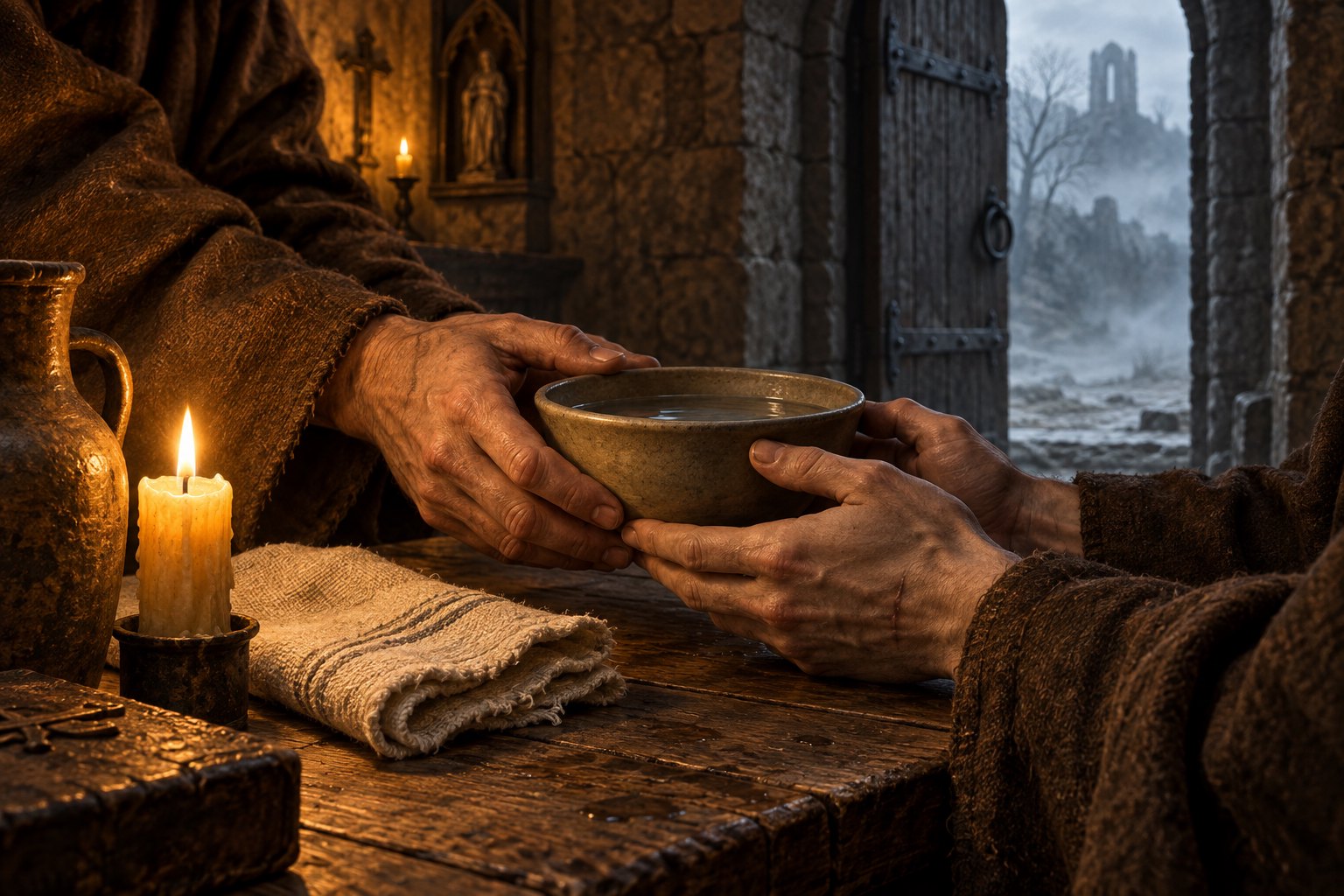
A monastery offers an especially charged setting for this premise because shelter has both a practical and an ethical meaning. Walls can keep danger outside. They can also determine who receives help and who is abandoned. The same boundary can look merciful from one side and brutal from the other.
From the perspective of someone already inside, restricting entry might feel like an obligation to protect others. From the perspective of someone seeking help, that reasoning offers little consolation. The dramatic opportunity lies in keeping both experiences visible. Fear should be understandable without becoming an automatic excuse for every action taken in its name.
I would judge the film’s moral conflict by whether its characters must bear the consequences of their principles. Compassion becomes dramatically substantial when it involves work, uncertainty, and sacrifice. Self-preservation becomes more revealing when a character has to acknowledge whose safety it excludes.
That distinction matters for the romantic storyline, too. Protecting a beloved person may be generous, possessive, or both. If the film allows those motives to overlap, its characters could become more interesting than representatives of opposing positions in a debate.
Why body horror could make intimacy more unsettling
Body horror directs attention toward physical vulnerability: the frightening possibility that a familiar body can change beyond its owner’s control. In a love story, that vulnerability has another dimension. The body undergoing change belongs to someone another character knows and values.
Applied to Rapture as an interpretive possibility, this suggests a tension between recognition and fear. How does someone respond when a person remains emotionally familiar but becomes physically frightening? The premise invites that question; it does not establish which character, if any, will experience that exact dilemma.
The camera’s treatment of bodies will therefore matter as much as the makeup effects. Lingering on a face can invite empathy or turn distress into spectacle. A close-up of contact can communicate reassurance, desire, hesitation, or danger. The film’s point of view will determine whether viewers experience vulnerability alongside its characters or merely observe it.
There is also an interpretive distinction worth preserving: putting queer intimacy inside a contagion narrative does not automatically make queerness the disease. A persuasive reading would need to follow the film’s actual choices about cause, sympathy, and punishment. The presence of desire and infection in one story is not enough to collapse them into the same symbol.
Our commentary on the dramatic possibilities of Lili Reinhart’s lesbian vampire adaptation approaches a related question: whether queer characters receive meaningful agency within the horror built around them.
The cast is an invitation, not a verdict
Connor, Poulter, and Ríos make an effective starting point for audience curiosity. But a cast list cannot tell us which relationships will dominate the screen, how the ensemble will function, or whether the performances will find distinct emotional registers.
The challenge I would watch for is differentiation. Under extreme pressure, characters can blur into interchangeable expressions of alarm. Strong performances make fear specific: one person argues, another bargains, another attempts to restore routine. Those are examples of acting possibilities, not reported behavior from these roles.
Likewise, romantic chemistry needs more than attractive casting. Attention, timing, and the way one performer changes in another’s presence can establish a relationship more persuasively than a declaration. The announced pairing of intimacy and terror makes those small adjustments particularly important.
Readers interested in how anticipated horror can be discussed without treating promotional clues as finished storytelling may also appreciate our analysis of Werewulf’s trailer and unfolding mystery.
When is Rapture coming out?
Out’s September 2026 report says filming is scheduled to begin in October 2026 and that no official release date has been announced. A planned production start is not a theatrical or streaming premiere, so a specific viewing date remains unconfirmed.
The deeper promise: what deserves to survive?
My reading of Rapture’s premise is that its richest question concerns the purpose of survival. Keeping a community alive and preserving the values that make it a community can become competing ambitions. A refuge that sacrifices every obligation toward others might endure physically while losing its moral justification.
The central relationship could give that abstract problem a human scale. Love does not automatically make someone brave or just. It can widen a person’s capacity for care, or narrow their attention to one cherished life. Allowing that uncertainty would give the horror emotional complexity.
That is why Rapture merits attention beyond its celebrity appeal. Its setup places tenderness, fear, and collective responsibility in direct contact. Whether the finished film fulfills that promise will depend on how convincingly its characters make choices when none can guarantee safety.
Original content by this site's editorial team. Published: September 27, 2026 at 06:26:29 PDT (Los Angeles time)