Ramayana is coming to Bay Area theaters for Diwali, bringing a particularly imposing expectation with it: the San Francisco Chronicle describes the production as India’s most expensive movie. For audiences deciding whether to make it part of their holiday plans, that distinction establishes the scale of the occasion. It cannot establish the quality of the experience.
The more interesting question is what all that ambition makes possible for the story. Can a monumental production make its characters feel close enough to understand? Will viewers remember an image because it was enormous, or because something emotionally decisive happened inside it?
This is a spoiler-free release commentary and viewing guide, not a review based on a screening. It makes no claims about the finished film’s performances, individual scenes, dialogue, or ending. The character discussions below identify questions for the adaptation rather than describe verified events in this version.
What the Bay Area opening tells us
The immediate news is straightforward: a major Indian production is reaching Bay Area cinemas for Diwali. That gives local viewers an opportunity to experience it together on a theater screen. The reported spending distinction adds interest, but it deserves careful handling. Without a clearly defined accounting basis, a budget superlative should remain attributed rather than become a precise financial comparison.
For a moviegoer, the useful distinction is between production ambition and dramatic achievement. Resources can support elaborate environments, extensive effects work, and a larger physical canvas. Whether those elements create suspense, intimacy, or awe depends on decisions that money alone cannot settle: where the camera looks, how long a moment lasts, and whose reaction gives it meaning.
That is the standard I would bring to Ramayana. Spectacle earns its place when removing it would diminish our understanding of the people involved. An impressive image can also be dramatically necessary; the challenge is making both qualities work together.
Reading the epic through its characters
A character-centered approach offers a useful way into a large adaptation without demanding advance knowledge of every name or relationship. Start with three questions: What does this person believe they must do? What might that choice cost them? Does the film let us perceive that cost?
Rama: making conviction visible
For Rama, the critical question is how the adaptation communicates conviction. A film can surround a central figure with admiring reactions, imposing compositions, and emphatic music. Those devices establish significance quickly. A deeper dramatic connection requires the audience to understand the choices beneath that significance.
I would look for the relationship between public bearing and private feeling. Does the performance have room for listening, deliberation, and emotional response? Can stillness communicate something specific? A restrained portrayal need not be remote, but its restraint must give viewers something to read. The strongest character work often makes a small change of expression feel consequential.
Sita: attention, perspective, and agency
With Sita, the central question is whether the adaptation gives sustained attention to her perspective. Screen time alone is an incomplete measure. A character can appear frequently while the editing continually directs us toward somebody else’s feelings.
Watch whose understanding organizes a scene. Are we invited to register what Sita notices, values, or decides? Does the camera remain with her response long enough for it to matter? Agency can emerge through speech, refusal, observation, or resolve. The relevant issue is whether the film makes that inner life legible, rather than asking viewers to supply it themselves.
Ravana: power with dramatic specificity
For Ravana, I would ask whether the presentation of power develops into a recognizable dramatic presence. Monumental design and a commanding entrance can establish scale. Characterization requires distinctions: how someone addresses others, responds to resistance, or interprets their own authority.
This does not require an adaptation to excuse harmful behavior. Understanding a character’s reasoning and accepting it are separate responses. Dramatic specificity gives conflict shape; without it, even an imposing figure can become an obstacle whose appearance does more work than the writing.
These questions connect with our discussion of how character perspective shapes a large-scale film adaptation. Across very different projects, choosing whose experience anchors the action changes what the audience understands.
A holiday screening can hold different expectations
A Diwali release invites the possibility of a shared outing with different generations bringing different expectations. One viewer may arrive with a deeply personal relationship to the material. Another may mainly want an absorbing evening at the movies. A third may be encountering these characters for the first time.
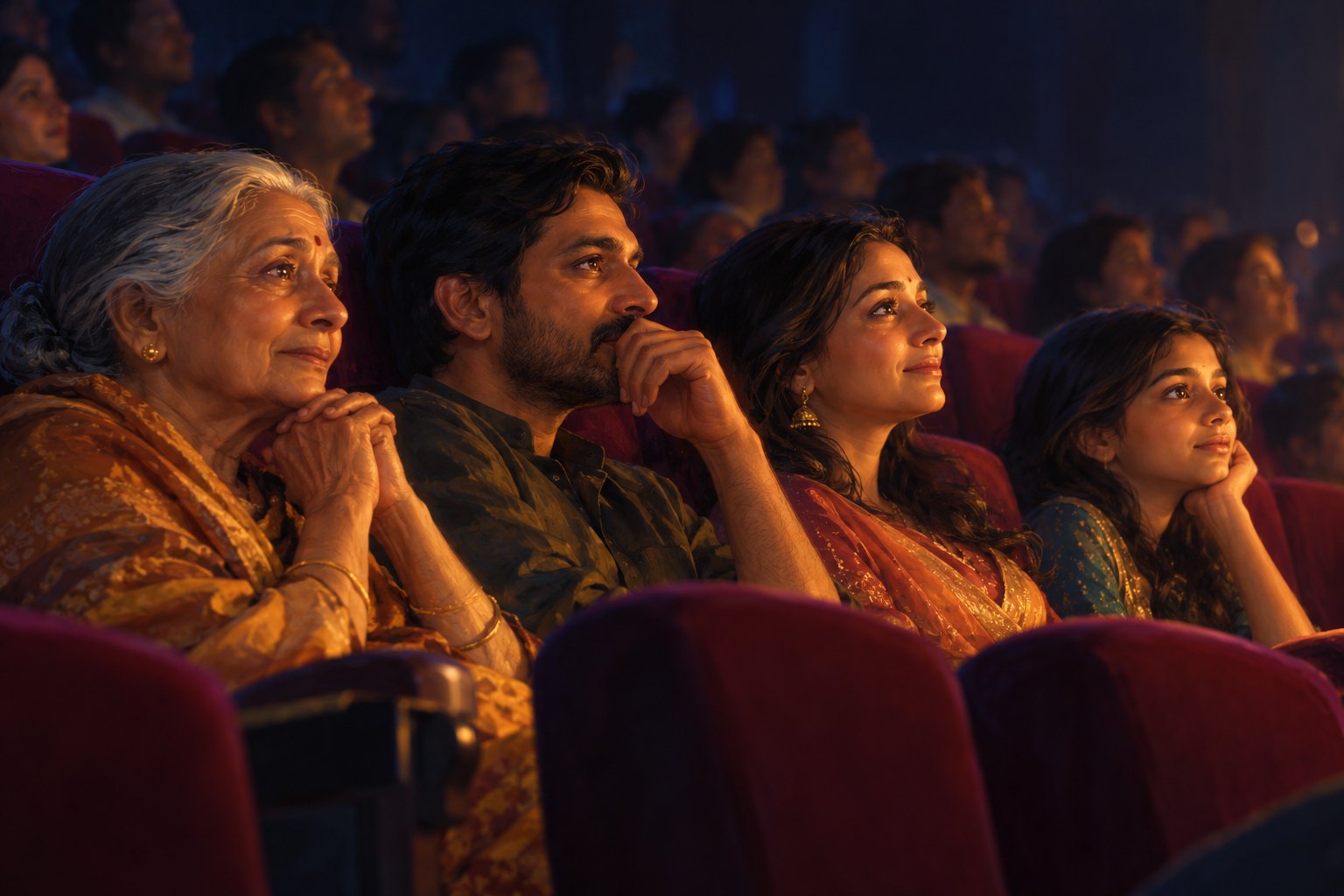
A successful adaptation should give those viewers enough emotional information to follow the drama together. That does not mean explaining every cultural reference. It means making relationships, immediate pressures, and consequences intelligible within the film itself. Recognition can enrich a scene, but the scene should also offer an experience to someone who does not recognize its significance in advance.
Respectful criticism makes room for these different responses. A viewer can value the occasion and still question the pacing. Another can admire the visual craft while finding a relationship underdeveloped. Neither response should be decided by the size of the production or the importance of the release.
What to check before choosing a screening
The broad Bay Area opening announcement is a starting point for planning. Before buying tickets, check the individual theater’s listing for the details that affect your group:
- Date and location: Confirm the actual performance you intend to attend.
- Language and subtitles: Choose a presentation everyone can comfortably follow.
- Runtime and rating: Check the listed version when planning with children or arranging transportation.
- Format and accessibility: Verify the advertised projection format and any captioning or accessibility services you need.
These details are more useful to a family outing than a general promise of cinematic grandeur. A suitable presentation helps everyone attend to the same story.
The lasting test is emotional scale
My critical preference is for an epic whose most expansive images remain connected to individual experience. A distant figure in a vast landscape can communicate vulnerability. A crowded composition can make isolation palpable. Scale becomes expressive when it changes how we understand a person.
Our examination of the relationship between spectacle and individual experience in The Devils considers a very different film, but the underlying attention to framing is useful here: who remains visible when the image grows overwhelming?
For Ramayana, the richest possibility is that grandeur might sharpen attention to obligation, attachment, and the consequences of choice. That remains a possibility to assess through the film, not an achievement to award in advance. Its Bay Area Diwali arrival provides the occasion. The characters must provide the reason the experience stays with us.
Original content by this site's editorial team. Published: November 1, 2026 at 05:04:28 PST (Los Angeles time)