R.L. Stine’s The Babysitter is coming to Tubi in 2027, according to an exclusive report from The Hollywood Reporter. For viewers looking for the essential release information, that is the reported destination and year. A specific premiere date should not be inferred from that window.
The announcement also presents an appealing creative question: how can an adaptation make an ordinary responsibility feel frightening without reducing its central character to someone who simply reacts to danger? A babysitter occupies an unusually tense position for a horror protagonist—responsible for someone else’s safety, temporarily working inside another household, and expected to exercise good judgment.
This is a spoiler-free adaptation preview, not a review of the finished film. The judgments below concern the dramatic possibilities of that setup. They do not describe confirmed scenes, performances, dialogue, or an ending.
What the 2027 announcement tells viewers
The central news connects three things: Stine’s The Babysitter, Tubi, and a 2027 release window. That gives interested viewers a project to follow, but it does not establish the quality of the adaptation or settle how its story will work on screen.
That distinction matters particularly for an adaptation with an identifiable author attached. Recognition can create expectations before audiences see how a filmmaker handles a scene. Readers may bring memories of the source material; newcomers may arrive with only the title. A successful film needs to engage both groups through the experience unfolding in front of them.
For now, the useful critical approach is to identify what would make this material effective. Assigning a rating, praising unseen performances, or presenting supposed memorable lines would give the announcement more evidentiary weight than it can carry.
A babysitter’s responsibility can give fear a purpose
My strongest hope for this adaptation is that it treats the central role as a job with obligations. Horror becomes more involving when a character has something to accomplish beyond surviving the next frightening moment. Responsibility gives decisions a cost: acting too quickly can create problems, while waiting too long can also be consequential.
Consider the competing demands built into babysitting as a general situation. Someone must remain attentive without becoming needlessly alarmed, follow another household’s rules, and decide when an unfamiliar occurrence requires action. These are possibilities inherent in the role, not a description of this film’s plot. They offer a foundation for suspense that does not depend on making a protagonist foolish.
The distinction is crucial. When a horror character ignores something unmistakably dangerous solely to prolong the story, viewers can feel the screenplay moving them into position. When that character makes a reasonable decision with incomplete information, viewers must share the uncertainty.
An adaptation that earns our investment should make the protagonist’s reasoning legible. We need not agree with every choice. We should understand the immediate goal, the available evidence, and what the character believes a mistake might cost. Fear becomes more personal when we can follow the thinking that precedes it.
Let the audience experience uncertainty from inside the scene
For The Babysitter, perspective could be as important as any individual scare. A camera can tell us something the protagonist does not know, or it can restrict us to what that person can observe. Both approaches can work, but they create different relationships with the character.
Giving viewers advance knowledge produces anticipation: we wait for someone to recognize a danger. Restricting our knowledge creates doubt: we assess an ambiguous situation alongside them. My preference here would be for a substantial measure of the latter, because it allows the person doing the babysitting to remain an active interpreter of events.
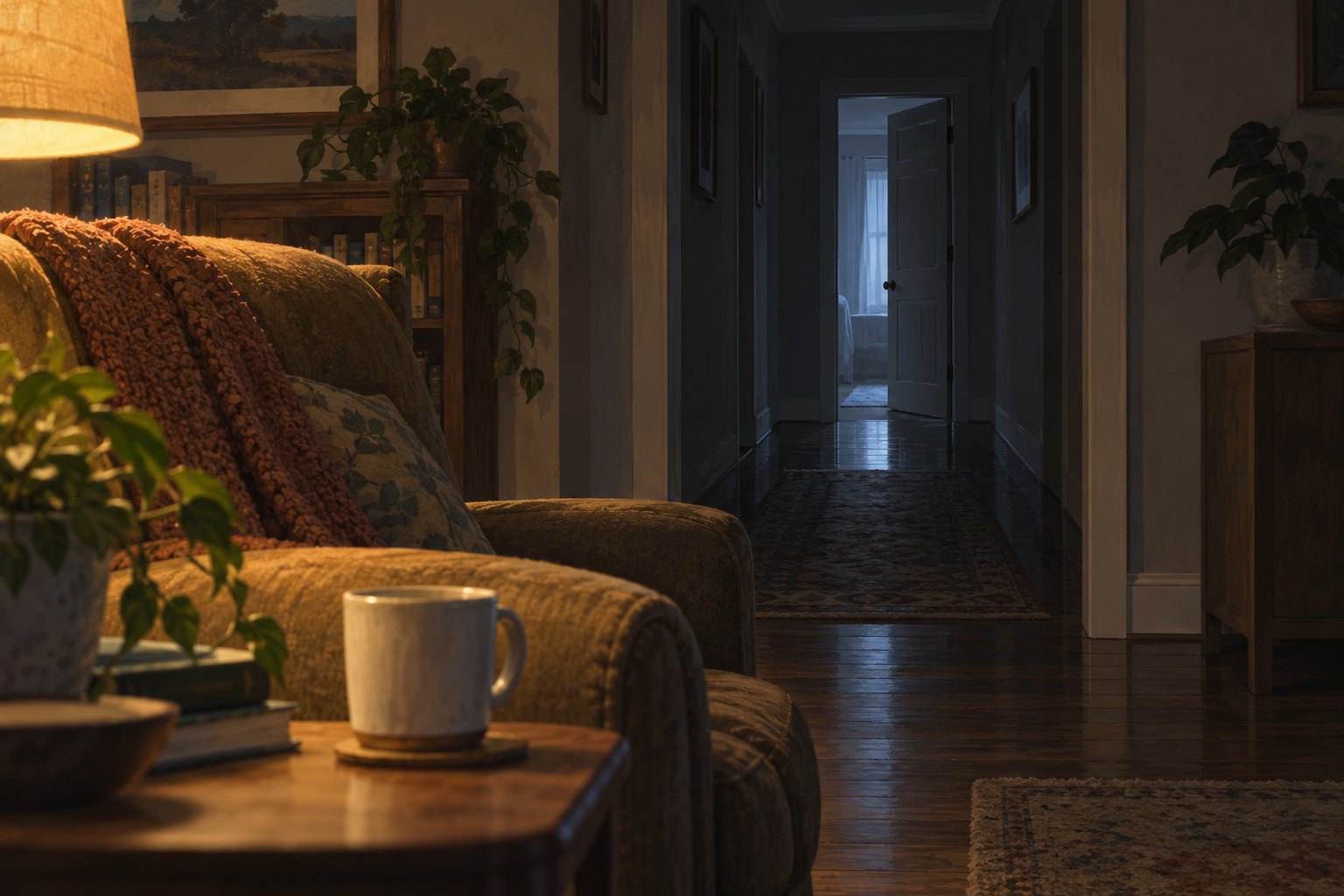
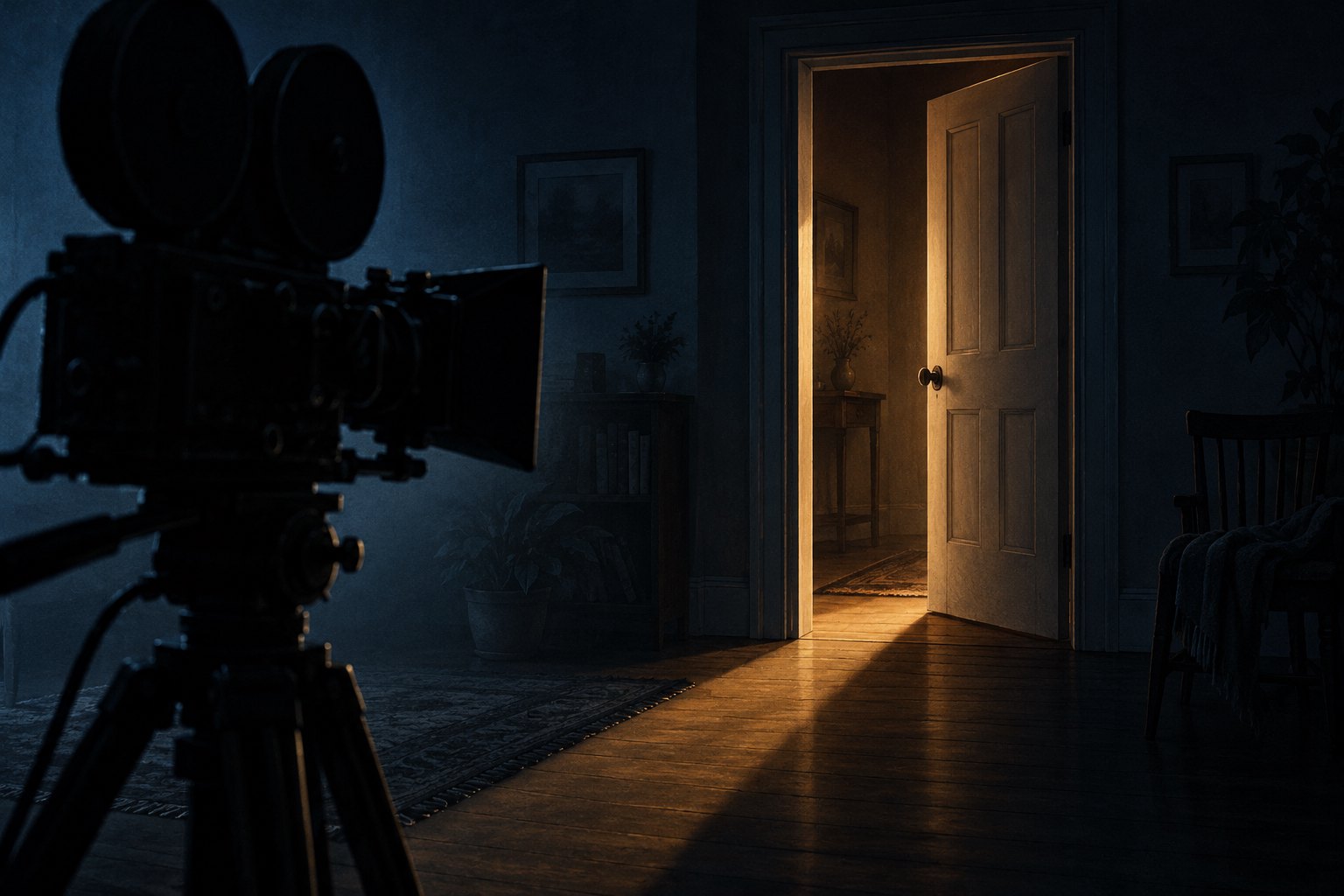
Domestic space offers a useful visual language for that uncertainty. A doorway divides what can be seen from what remains hidden. A hallway establishes distance. An ordinary room can feel different when the composition directs attention toward an unoccupied corner. These are filmmaking possibilities, not claims about shots in the adaptation.
Our discussion of how Wildwood’s scale relates to its characters approaches a related question: what does an environment mean to the person navigating it? Here, the compelling opportunity would be almost the reverse of expansive fantasy—making a limited space emotionally complicated.
Suspense needs development between the scares
A sequence of startling incidents can produce momentary reactions without building a satisfying movie. What matters between those incidents is whether the protagonist learns anything, revises an assumption, or changes a plan. Repetition becomes escalation only when something meaningful shifts.
This is where character-centered horror can distinguish itself. An early uncertainty might test confidence; a later one might challenge trust. The underlying event need not become louder or more visually elaborate each time. Its significance can grow because the person experiencing it now understands the situation differently.
We explored the importance of making limited screen time count in our commentary on Heidi Wong’s short-horror development deal. The same principle applies to a feature: duration alone does not create tension. Each scene needs a reason to follow the previous one.
Sound could play an especially useful role in such an approach. An unexplained noise can direct attention, but its effectiveness depends on context. What has the character already heard? What seems normal in this environment? Suspense becomes richer when listening is part of making a decision, rather than merely a signal that a sudden musical accent is approaching.
Faithfulness should include the character’s experience
Adaptations are often judged through a checklist of retained incidents. That comparison has value, but it cannot fully explain whether a film works. Prose can communicate uncertainty directly through a character’s thoughts. Film must find equivalents in performance, framing, editing, and sound.
For this project, my critical standard would be whether the audience understands the central character’s changing experience. A faithful sequence of events can still feel remote if we cannot grasp why those events matter to the person living through them. Conversely, a cinematic adjustment deserves consideration when it makes that experience clearer.
No particular alteration should be assumed at this stage. The point is to distinguish recognition from dramatic effectiveness. Remembering something from a book and feeling its force on screen are related pleasures, but they are not identical.
The deeper promise: being responsible does not mean being in control
The most interesting thematic possibility in The Babysitter is the gap between accepting responsibility and possessing the power to guarantee safety. That gap belongs to ordinary life before it becomes material for horror. Being trusted to handle a situation does not remove uncertainty, and trying to behave sensibly does not make someone invulnerable.
If the adaptation develops that tension through a convincing character, its scares could carry an emotional meaning beyond surprise. The audience would be watching someone negotiate the limits of competence under pressure. That is the prospect that makes the reported 2027 Tubi release worth following—and the standard the finished film will ultimately need to meet.
Original content by this site's editorial team. Published: October 11, 2026 at 20:36:26 PDT (Los Angeles time)