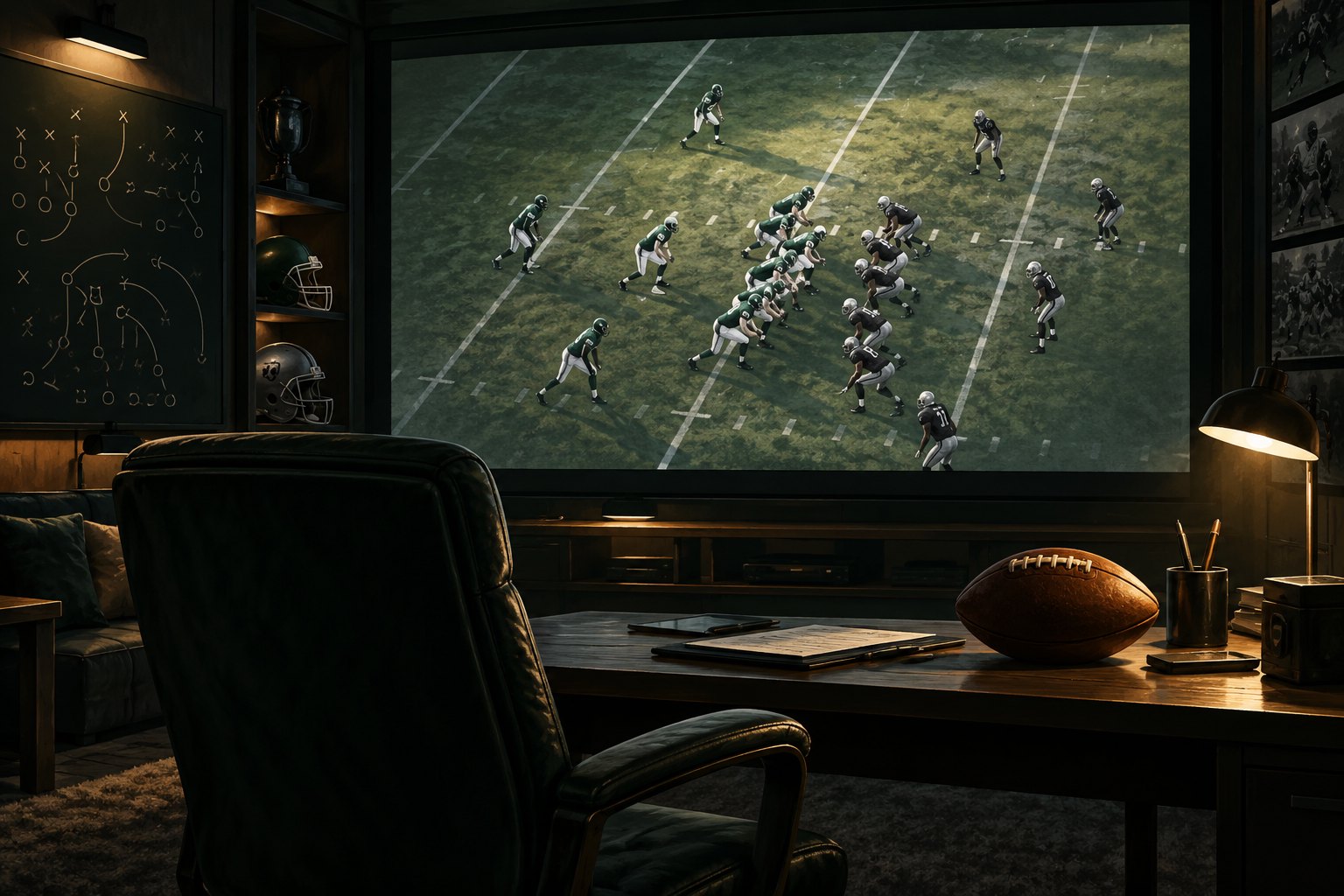
Quincy Enunwa’s Jets vs. Raiders Week 8 Film Breakdown, published by the New York Jets, concerns football footage: the movements, spaces, and decisions that turn a matchup into something viewers can examine. For anyone approaching it through an interest in screen analysis, the compelling question is how an analyst helps an audience notice what the ball initially distracts them from.
This is a viewing companion, rather than a play-by-play recap or an assessment based on a verified transcript. Specific selections, tactical conclusions, and quotations from Enunwa are not established here. The focus is a practical critical approach to the Jets–Raiders breakdown: how to read the images, evaluate an explanation, and keep a player’s perspective separate from the viewer’s privileged hindsight.
Start with the frame, then follow the player
A football broadcast gives the audience a convenient center of attention. Wherever the ball travels, the camera and the viewer usually follow. That makes the action legible, but it also establishes a hierarchy: the person carrying or receiving the ball becomes the apparent protagonist, while everyone else risks becoming background.
Film study can challenge that hierarchy. When watching the Jets–Raiders analysis, look first at what each shot actually includes. Can you see the full width of the formation? Does a receiver disappear beyond the edge? Is the defensive back’s initial position visible? These questions determine which conclusions the picture can support.
The distinction matters because a close view can reveal excellent physical detail while concealing the relationship that explains it. A receiver’s change of direction may be clear; the position of another defender may not be. A persuasive explanation should help the audience recognize both the useful evidence and the missing space.
Read the matchup through competing perspectives
Character-centered movie criticism often asks what someone wants, what they know, and what prevents them from acting. Those questions also offer a useful way into football footage, provided real athletes are not assigned invented thoughts or scripted motivations.
Consider a receiver and a defensive back as two people solving different problems in the same space. The receiver may need to reach a location at a particular moment. The defender may be trying to restrict that access while remaining responsible for another threat. Their movements become more intelligible when viewed as responses to one another.
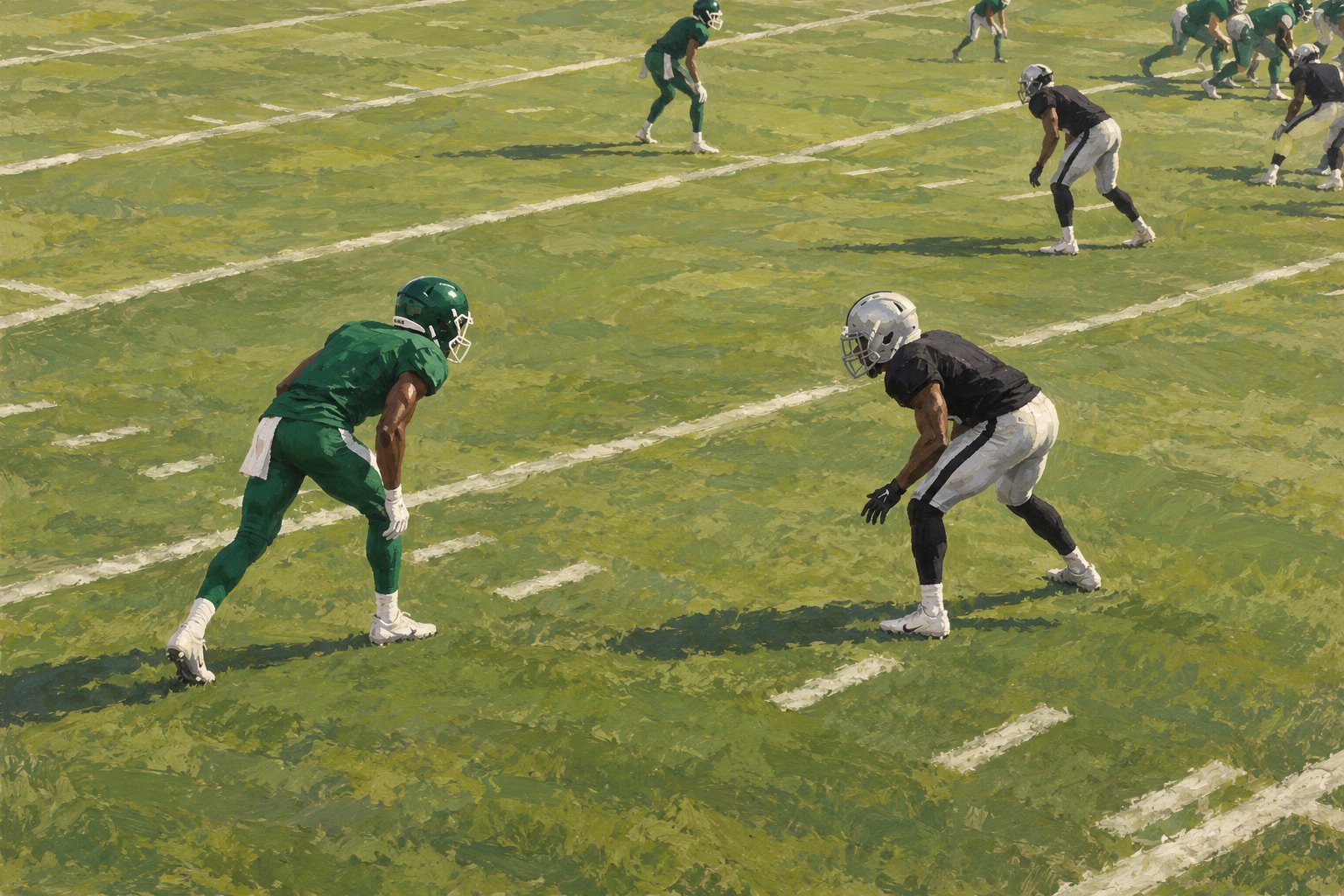
For the Jets–Raiders breakdown, this suggests a productive viewing habit: follow one participant through the entire visible sequence before switching sides. Watch where that player begins, when the body turns, and how the distance to the opponent changes. Then replay the same passage from the other participant’s perspective.
Neither pass gives access to the playbook. A defender moving inward is an observable action; the claim that he misunderstood an assignment requires additional evidence. Good interpretation preserves that distinction. It describes the movement confidently and treats the explanation with the degree of certainty it deserves.
Give off-ball movement its own viewing pass
The most useful discovery in a breakdown may involve someone who never touches the football. A route can affect a defender’s position. A block can preserve a narrow path. A player moving across the formation can change the spacing that another player encounters.
These are general possibilities to investigate, not descriptions of plays confirmed in Enunwa’s segment. Their value is that they redirect attention from the final action to the relationships that make an action possible.
Try watching a sequence without following the eventual target. Choose the nearest teammate instead. Ask whether that teammate’s movement changes the defender’s available space. Then check whether the proposed relationship remains visible when the play runs at ordinary speed.
That last step matters. A paused image can make a temporary opening look permanent. What appears generous in a still frame may exist only briefly during movement. The analytical challenge is to understand an opportunity as a combination of space and time.
Listen for explanations that the image can support
Enunwa’s name is central to the segment’s presentation. For the viewer, however, the strongest test of any analyst is whether the explanation makes the footage easier to understand independently. After hearing a point, can you identify the relevant movement on the next replay?
A useful explanation connects an observable detail to an observable consequence. It might identify a change in body position, then show how that change affects the next movement. A weaker explanation merely attaches a judgment to the result. Praise and blame can be entertaining, but they do not necessarily teach the audience how a sequence works.
Our companion discussion of Gene Chizik’s Florida film breakdown and the difference between decisions and results explores a related concern. Here, the additional question is visual: does the frame contain enough evidence to evaluate the decision at all?
Notice how the replay tells its story
A breakdown is also an edited screen presentation. Where a clip starts, when it freezes, and how often it repeats can influence what seems important. These choices deserve attention alongside the football.
If a replay begins after a player has already changed direction, viewers may miss the action that prompted the change. If it repeatedly isolates a failed finish, the earlier work can disappear from the story. Conversely, a wider or longer sequence may complicate a simple account of individual success or failure.
This is where football footage connects most directly with film criticism. Editing organizes our access to events. As our discussion of character perspective in the Mouthwashing adaptation considers in a different medium, the information an audience receives shapes its relationship with the people onscreen.
A practical way to watch the breakdown
- Watch once without pausing. Identify the main point being made before examining individual frames.
- Choose one visible relationship. Follow a receiver and defender, or a blocker and opponent, rather than trying to track everyone.
- Separate observation from explanation. Note what visibly happens before deciding why it happens.
- Return to ordinary speed. Check whether the timing supports the impression created by slow motion.
- Keep the conclusion proportional. One sequence can illustrate a possibility without establishing a recurring tendency.
The deeper value of looking away from the ball
My critical preference is for analysis that distributes attention. The most revealing account of a football sequence often gives significance to work that the initial viewing made easy to overlook. That does not require turning every movement into a hidden masterstroke. It requires patience with the image.
Approached this way, Enunwa’s Jets–Raiders Week 8 breakdown becomes an occasion to practice a broader viewing skill: recognizing that the most conspicuous action and the most explanatory action may occur in different parts of the frame. The reward is a richer understanding of shared space, limited information, and coordinated effort—the human relationships that make moving images worth studying closely.
Original content by this site's editorial team. Published: October 30, 2026 at 11:04:25 PDT (Los Angeles time)