Quentin Tarantino’s next screenplay reaches theaters on November 25, 2026, when The Further Mis-Adventures of Cliff Booth opens in IMAX, ahead of its December 23 Netflix debut. Brad Pitt returns as Cliff, but the directing credit belongs to David Fincher. That distinction matters: this is a continuation of a Tarantino creation through another filmmaker’s eyes, rather than his return to directing after Once Upon a Time in Hollywood. The credits and release dates are confirmed in [Netflix’s official announcement](https://media.netflix.com/en/only-on-netflix/82054606?countryCode=DK).
The most interesting reason to anticipate it is smaller than the names above the title. Cliff has always been a man who makes other people’s lives possible while keeping his own difficult to read. Moving him to the center of a movie creates an opportunity to examine what his easygoing competence conceals.
This is a character-focused preview and retrospective, not a review of the unreleased sequel. Major spoilers for Once Upon a Time in Hollywood follow; discussion of the new film is limited to its announced premise.
What the new Cliff Booth movie actually promises
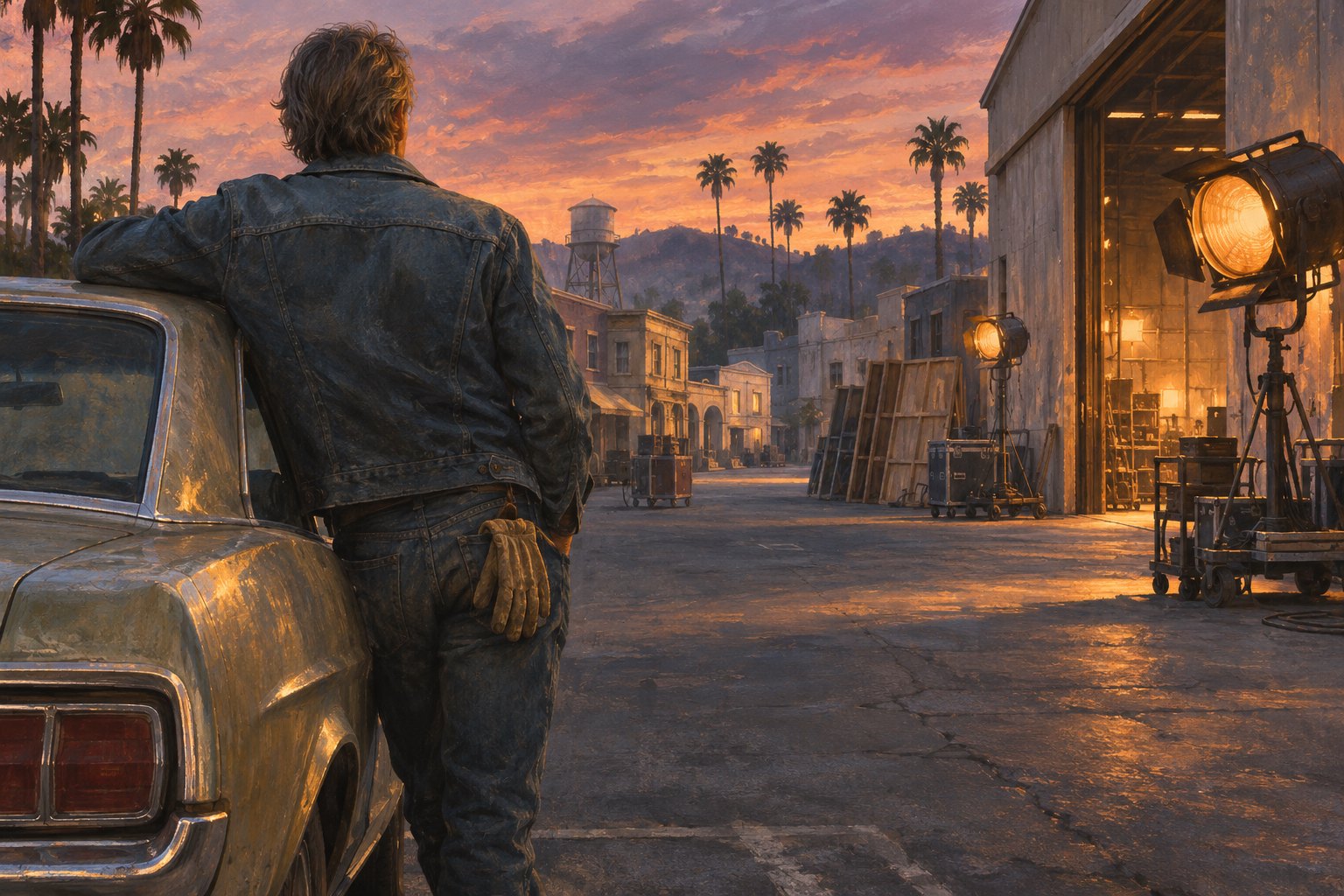
The new story takes place in 1977. Cliff earns money bartending and working as a projectionist, while also handling problems as a Hollywood fixer. Talent agent Karen Crosby, played by Elizabeth Debicki, approaches him on behalf of television star Charlie Peters, played by Scott Caan. Charlie’s reputation includes performing his own stunts.
That last detail is particularly suggestive. A former stunt double entering the orbit of a star celebrated for physical self-sufficiency creates an immediate tension between image and labor. It does not establish that Charlie is dishonest, or reveal what Cliff must do for him. It does establish a promising subject: the distance between what a celebrity represents and the people needed to keep that representation intact.
Fincher has described the project as an opportunity to develop his understanding of Cliff eight years later, and has cited Shampoo while discussing its Los Angeles milieu. Those comments suggest an interest in the social world around the character, beyond his capacity for violence. [Netflix’s production feature](https://www.netflix.com/tudum/articles/the-further-mis-adventures-of-cliff-booth-photos-plot) provides that context; how successfully it becomes drama remains an open question.
Cliff’s real job has always been carrying someone else
In the original film’s introductory interview, Cliff describes his relationship with actor Rick Dalton in four words: “I carry his load.” The joke is also an unusually efficient character statement. Stunt work turns dependence into entertainment: the audience sees a star doing something dangerous while another person absorbs the risk. Cliff’s friendship extends that arrangement beyond the camera.
His other compact response, “I try,” gives that service a different emotional register. He does not advertise friendship as a sacrifice. His understatement makes affection seem habitual, almost practical. Both lines are discussed in [this close reading of the original film](https://szptp.home.blog/2020/03/29/on-quentin-tarantinos-once-upon-a-time-in-hollywood/).
My reading is that this restraint supplies much of Cliff’s appeal. Rick needs reassurance that he still matters. Cliff rarely appears to request equivalent reassurance. Their scenes become funny because one man broadcasts every fluctuation of confidence while the other absorbs the noise. Yet emotional composure should not automatically be confused with independence. A person can seem entirely comfortable while organizing his life around being useful to someone else.
That is the strongest dramatic opportunity for the sequel. Once usefulness becomes a profession rather than an expression of friendship, its moral terms change. A friend can recognize a need without negotiating a fee. A fixer must decide which needs deserve assistance—and whether payment makes that decision easier to avoid.
Why the original friendship works—and where it hurts
Rick’s career anxiety gives the first film its vulnerable center. Cliff is his stunt double, driver, assistant, and friend. Later, Rick tells him he can no longer afford his salary. The relationship survives that conversation, but its economic foundation becomes impossible to ignore. These events belong to the [original film’s established story](https://en.wikipedia.org/wiki/Once_Upon_a_Time_in_Hollywood).
The scene’s emotional force comes from the absence of a simple villain. Rick’s financial limitation need not make his affection fraudulent. Cliff’s understanding need not mean the separation costs him nothing. Friendship and employment can be sincere at the same time, which makes their collision more uncomfortable than a straightforward betrayal.
Pitt’s relaxed presence gives those tensions room to remain unresolved. To me, Cliff is most compelling when the film allows warmth and opacity to coexist. We enjoy his company without receiving a complete account of his interior life. Turning that supporting character into a protagonist will require more than increasing his screen time: the new film must find pressures that make his choices legible without explaining away his mystery.
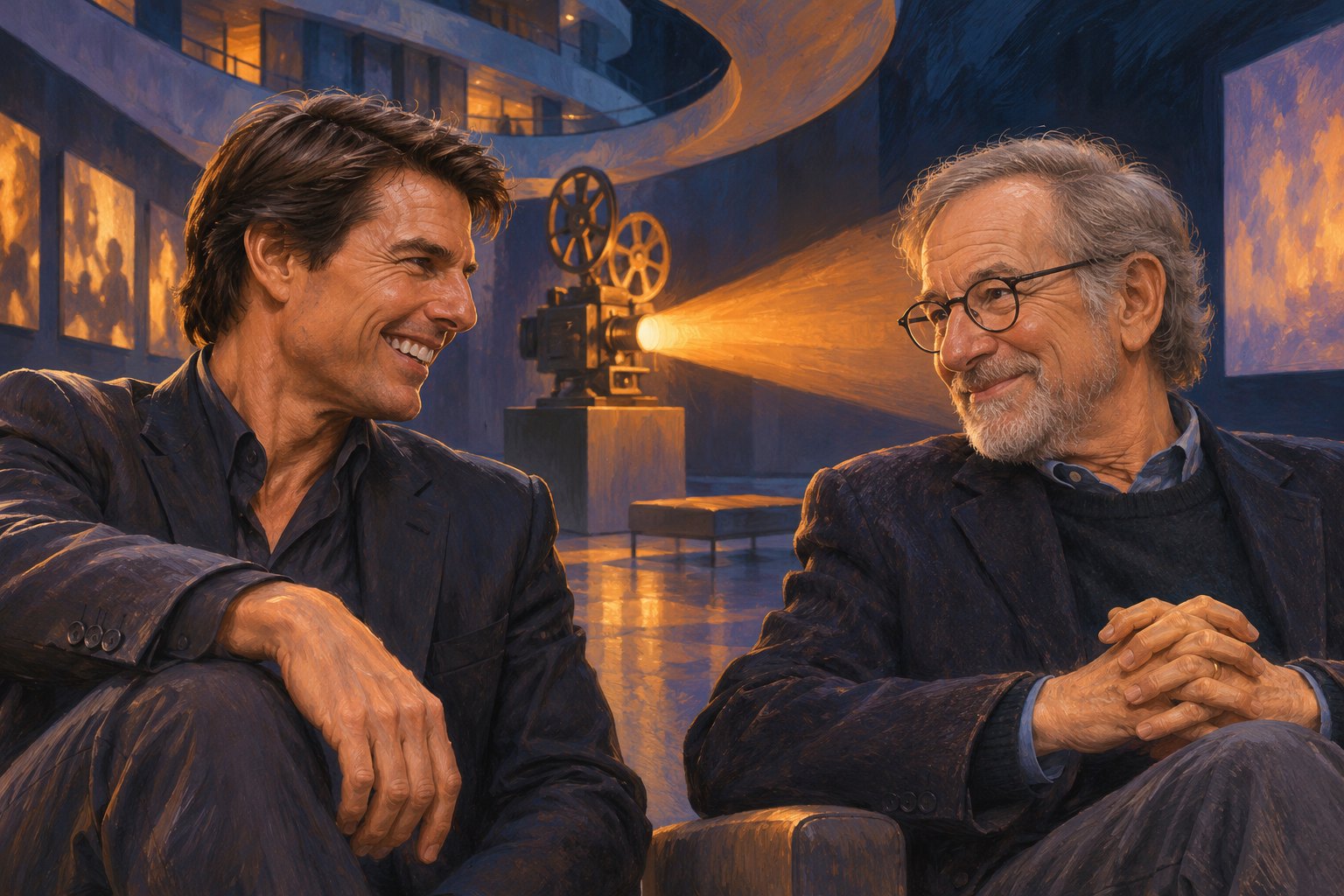
That challenge connects with our analysis of how Spielberg complicates Tom Cruise’s screen authority. A familiar star persona becomes dramatically useful when the film tests the confidence audiences bring to it.
Competence is not the same thing as goodness
At Spahn Ranch, Cliff checks on George Spahn and later responds violently after his tire is slashed. In the finale, he and his dog fight the intruders at Rick’s home. Those encounters make his physical capability reassuring within immediate danger, but they do not settle every question about his character.
The distinction is essential to understanding why he can sustain another film. Audiences tend to treat efficiency as evidence of moral authority. Someone who recognizes a threat and acts decisively can feel trustworthy before we have examined the limits of that trust. Cliff benefits enormously from this response.
A crime story could interrogate that reflex. It could ask whether solving a client’s problem also harms someone outside the client’s circle, or whether loyalty becomes an excuse for refusing to ask questions. These are possibilities suggested by the fixer premise, not claims about scenes in the sequel. They are also more interesting tests than simply finding someone strong enough to challenge him.
The projection booth offers a revealing new image
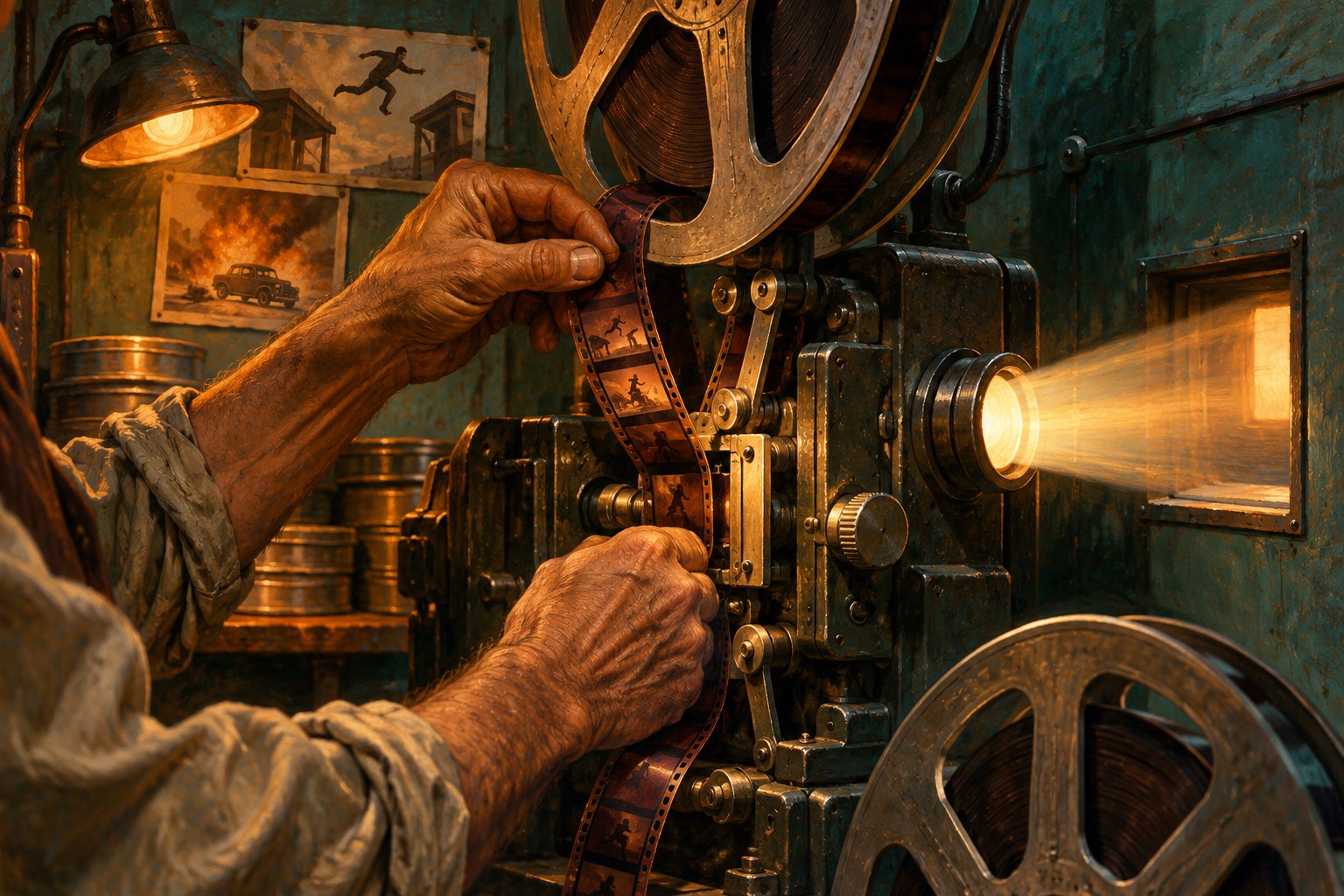
Cliff’s announced work as a projectionist is especially apt. A stunt performer helps create an illusion while remaining outside the audience’s attention. A projectionist makes that illusion visible while working behind the viewers. Both occupations reward competence that can disappear into the experience it enables.
That parallel is an interpretation of the premise, not proof of a theme the completed film develops. Nevertheless, it offers a useful way to watch: notice whether Cliff’s ordinary work receives patience and texture, or merely supplies colorful background between confrontations. Our examination of why film projection matters to the viewing experience explores the value of that usually unseen craft.
The deeper question behind Cliff’s return
The original film’s ending saves its imagined world through a spectacular eruption of violence. Rick then receives an invitation into Sharon Tate’s home while the injured Cliff leaves in an ambulance. Read through their working relationship, that separation has a quiet sting: one man approaches a new social possibility after the other has again absorbed physical danger.
For me, that is the unresolved idea worth carrying into The Further Mis-Adventures of Cliff Booth. Being indispensable can look like freedom while keeping a person permanently at someone else’s service. Cliff’s confidence makes that condition pleasurable to watch; it does not necessarily release him from it.
November 25 brings the chance to discover whether his new story confronts that contradiction. The most rewarding continuation would make us reconsider what we admired the first time: the steady friend, the capable worker, and the dangerous man occupying the same easy smile.
Original content by this site's editorial team. Published: November 15, 2026 at 12:14:54 PST (Los Angeles time)