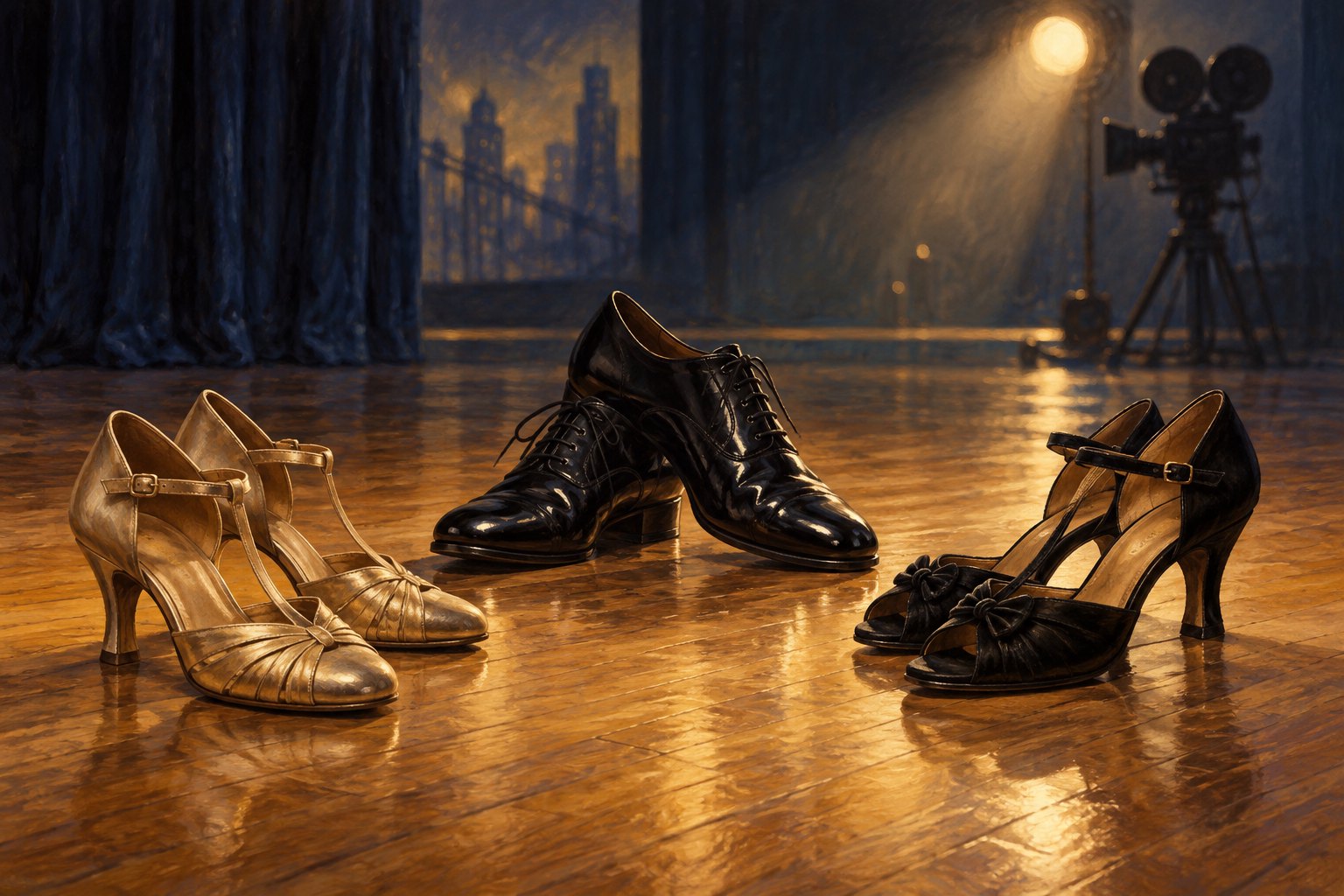
Margaret Qualley and Sabrina Carpenter are joining Tom Holland’s Fred Astaire biopic, according to The Hollywood Reporter. The announcement gives audiences three prominent names to follow. It also brings a more interesting question into focus: how will a movie about a dancer make movement carry the emotional weight that biographical dramas usually assign to dialogue?
My interest in this casting rests on that possibility. Holland, Qualley, and Carpenter will ultimately be judged through performances shaped by framing, editing, and sound. The decisive moments may be the ones in which a viewer understands a character’s feelings before anyone explains them.
This is a spoiler-free critical preview, not a review of the finished film. The casting news does not establish the movie’s scenes, dialogue, or dramatic structure. There is therefore no basis here for quoting its characters, evaluating its ending, or identifying Easter eggs. What can be examined is the specific filmmaking challenge the announcement puts in front of us.
The casting creates interest; movement must create meaning
A famous performer playing a famous performer creates an immediate comparison. Viewers look for resemblance, recognizable gestures, and evidence of technical preparation. Those things can help establish credibility, but they cannot sustain a dramatic portrait by themselves. An accurate pose tells us what someone looks like. A choice made during a performance can tell us what that person wants.
For Holland’s portrayal of Astaire, the distinction matters. A dance sequence could establish accomplishment while leaving the character emotionally remote. Alternatively, the same sequence could reveal how he responds to uncertainty, attention, or another performer’s timing. Those are potential dramatic approaches, not descriptions of the screenplay.
Qualley and Carpenter’s involvement makes the execution of shared performance especially worth watching. Screen chemistry is partly a matter of attention: where someone looks, how quickly they respond, whether they anticipate another person or wait to be surprised. Dance gives those decisions a physical form. The camera has to make them legible.
Our earlier examination of the distinct character challenges surrounding Qualley and Carpenter’s casting approached the project through its roles. Here, the question is how the filmmaking itself might turn a performance into a point of view.
Camera distance determines what we can understand
A full-body shot gives the audience a particular kind of information. We can see balance, direction, the distance between performers, and the preparation that makes a movement possible. When feet, posture, and expression remain visible together, a gesture belongs to a whole person rather than becoming an isolated flourish.
That would be valuable in an Astaire biopic because achievement needs a readable shape. If viewers can follow a movement from preparation through completion, they can appreciate both its precision and its dramatic context. They can also notice hesitation or adjustment without needing an explanatory reaction shot.
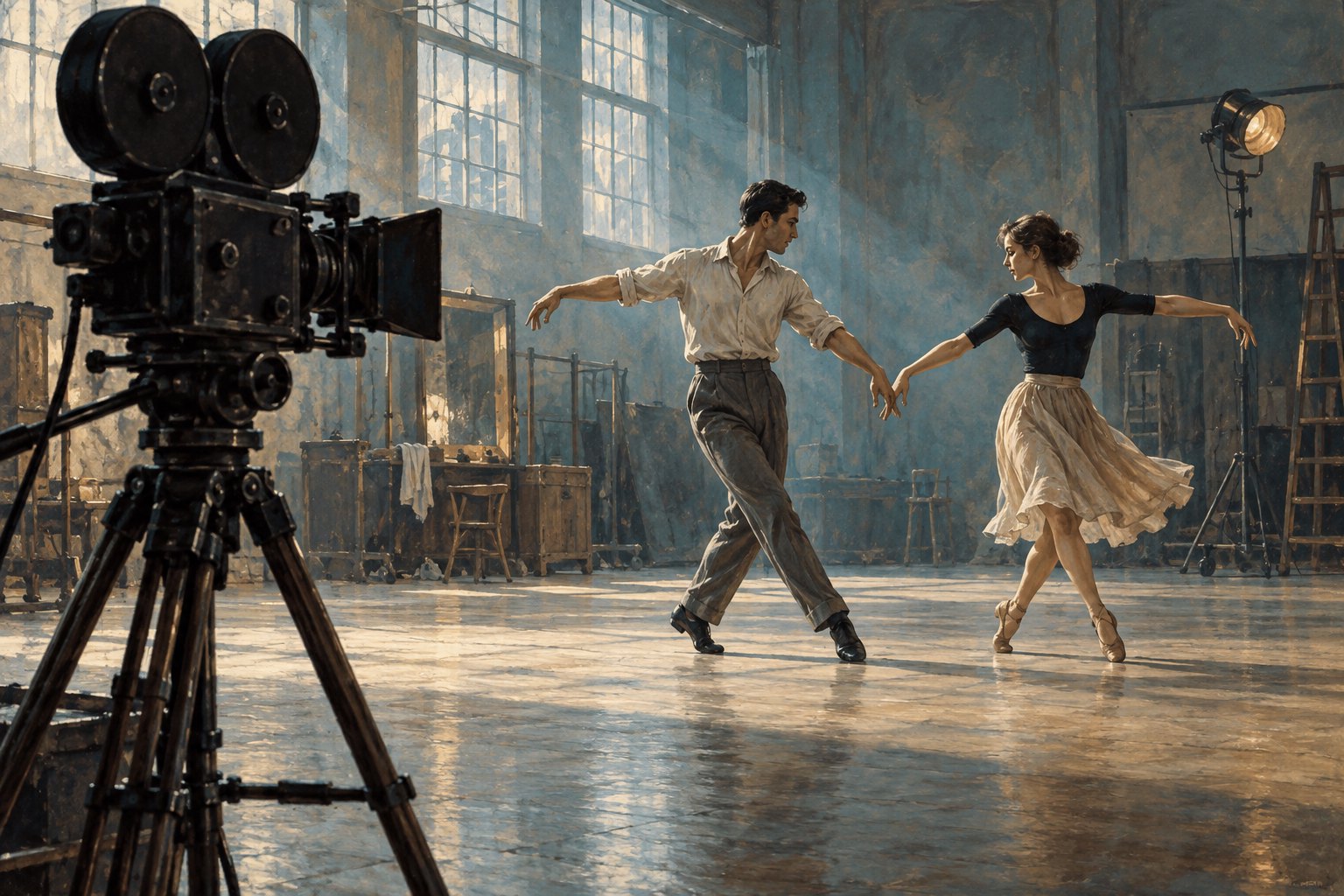
But an unbroken wide shot is not automatically superior filmmaking. A close-up can locate an emotional turning point that would otherwise disappear inside a larger arrangement. A cut can redirect attention at precisely the moment a character’s confidence changes. The useful standard is whether each choice clarifies the performance.
For this cast, I would particularly value shots that allow a response to develop. A performer receiving another person’s movement can be as expressive as the person initiating it. Cutting away too early can erase that exchange; holding the frame can let us discover it.
Rehearsal could reveal character through repetition
If the film includes rehearsal, those scenes would offer an opportunity to make work dramatic without turning every setback into a crisis. Repetition naturally invites comparison. We remember an earlier attempt, register a change, and begin to understand what the performer considers worth correcting.
The key would be specificity. A general montage of effort tells us that someone worked hard. Returning to a clearly established movement could show what improved and why that improvement matters. The difference might be technical, emotional, or both. None requires a speech announcing the lesson.
From a character’s perspective, rehearsal also changes the meaning of being watched. An audience sees a presentation; another person in a practice room may see the unfinished thought behind it. A biopic can use that difference to explore how someone behaves before certainty arrives.
That is one reason I would resist judging these performances solely through spectacular moments in promotional footage. Preparation, listening, and recovery might carry as much dramatic information as the finished number. Whether the movie makes room for them remains an open question.
Editing needs to preserve cause and effect
A dance sequence can be energetic and still feel dramatically empty. Rapid cutting, changing angles, and swelling music may create excitement without establishing what is changing for the people onscreen. The viewer feels momentum but cannot explain its significance.
A stronger approach would let us track an intention and its consequence. Who initiates a change? Who recognizes it? Does someone maintain control, adjust, or discover a different possibility? These questions need not imply conflict. Agreement can be dramatic when we understand what it took to reach it.
This connects to the broader argument in our essay on making physical action meaningful through character choices. Spectacle becomes more involving when viewers can connect what happens outside a person to what changes within them. In the Astaire project, choreography could provide that connection.
The test is simple: after a number ends, can we say something new about the character? If the answer is only that the performer is talented, the sequence may have delivered entertainment while leaving a larger dramatic opportunity unused.
Sound can make polished movement feel physical
The soundtrack will also shape how close viewers feel to the performances. Music can give movement sweep and structure. Audible contact with the floor, changes in breathing, and the acoustic space around a dancer can give it weight.
Neither approach needs to dominate. A sequence could emphasize musical flow, while another could bring bodily effort forward. What matters is how the balance serves the character’s experience. A room that sounds exposed can feel different from a performance space filled with accompaniment, even before the camera changes position.
This is a useful area to listen for when evaluating the eventual film. Do the sound choices help us experience concentration, ease, or strain? Or do they apply the same emotional finish to every scene? Variety would allow Holland, Qualley, and Carpenter’s performances to register through more than expression and dialogue.
The deeper opportunity: making ease understandable
The most compelling possibility for this Astaire biopic is a portrait of how expressive freedom is achieved. A polished performance can appear spontaneous even when its effects depend on carefully coordinated decisions. Cinema can help an audience perceive those decisions without draining the pleasure from the result.
That does not require treating every graceful moment as evidence of hidden suffering. Joy deserves dramatic attention too. So do curiosity, satisfaction, and the pleasure of getting something right with another person. A movie can take artistic work seriously while allowing its achievements to feel exhilarating.
Qualley and Carpenter joining Holland makes the project newly interesting as an ensemble performance prospect. My hope is that the film gives its cast room to communicate through movement and gives viewers enough visual and aural clarity to notice. The richest portrait would leave us with more than recognition of a celebrated figure. It would make us understand how a person thinks while dancing.
Original content by this site's editorial team. Published: September 26, 2026 at 00:59:26 PDT (Los Angeles time)