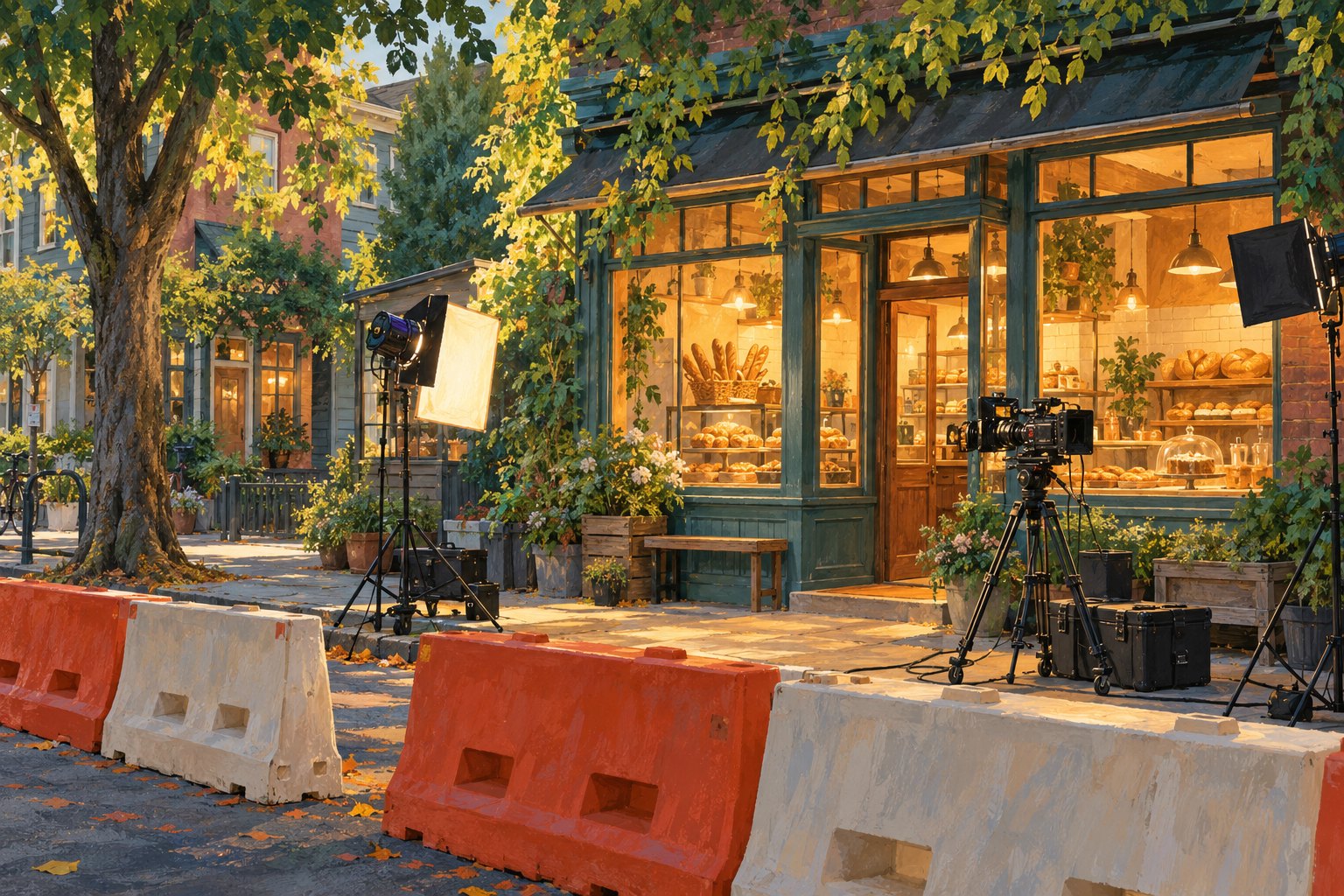
A Portland romantic comedy needed more than a cozy corner to capture its bakery setting: according to The Oregonian’s reporting, filming at a beloved Southeast Portland bakery involved closing an entire block. The movie attracting that local attention is In Spite of Ourselves, a romance whose premise gives its Portland setting a potentially meaningful role in the relationship.
That production story is an appealing introduction. A familiar neighborhood business becomes part of a fictional couple’s world, and a place associated with everyday routines takes on cinematic possibilities. But the more interesting question is what the location contributes once the novelty of recognizing it wears off.
This is a spoiler-free preview and critical discussion of the confirmed premise, not a review based on a screening. The available material supports discussion of the characters’ starting points and the significance of place. It does not support a verdict on the performances, an account of the ending, or quotations presented as memorable dialogue.
What the film’s confirmed premise tells us
Written and directed by Josh Loeb, In Spite of Ourselves stars Conor Leslie and Brett Dier. Its central characters are Hannah, a Portland baker, and Archie, a Los Angeles comedian who struggles with commitment. Their initial attraction leads to two happy weeks together; distance and insecurity then complicate the relationship. Those details come from the [film’s official synopsis](https://www.inspiteofourselvesfilm.com/).
The premise places an important distinction at the center of the romance: enjoying time together and building a life together are different achievements. A brief relationship can develop inside an unusually forgiving stretch of time. Sustaining it requires choices about work, geography, and obligations that attraction alone cannot settle.
That is the promising dramatic question here. The bakery connection gives this otherwise familiar romantic setup a concrete local point of interest. Whether the finished film turns that opportunity into persuasive character development remains an open question.
Why the bakery deserves more than a beauty shot
For a romantic comedy, a bakery offers immediate visual appeal. Bread, windows, counters, and shared tables can suggest comfort before anyone speaks. Yet comfort is only one way to understand such a space. For the person working there, it can also mean repetition, responsibility, exhaustion, pride, and a schedule that does not rearrange itself around a new relationship.
My interest in the setting begins with that difference in perspective. A customer can experience a bakery as a pleasant interruption in the day. A baker experiences the work that makes the interruption possible. A film that respects both perspectives has a chance to make its romantic environment feel inhabited.
That does not establish how this particular movie depicts bakery work. It establishes a useful standard for watching it. Does the camera merely admire the products, or does the storytelling make room for the person producing them? Does the workplace express a character’s priorities, or simply supply attractive scenery?
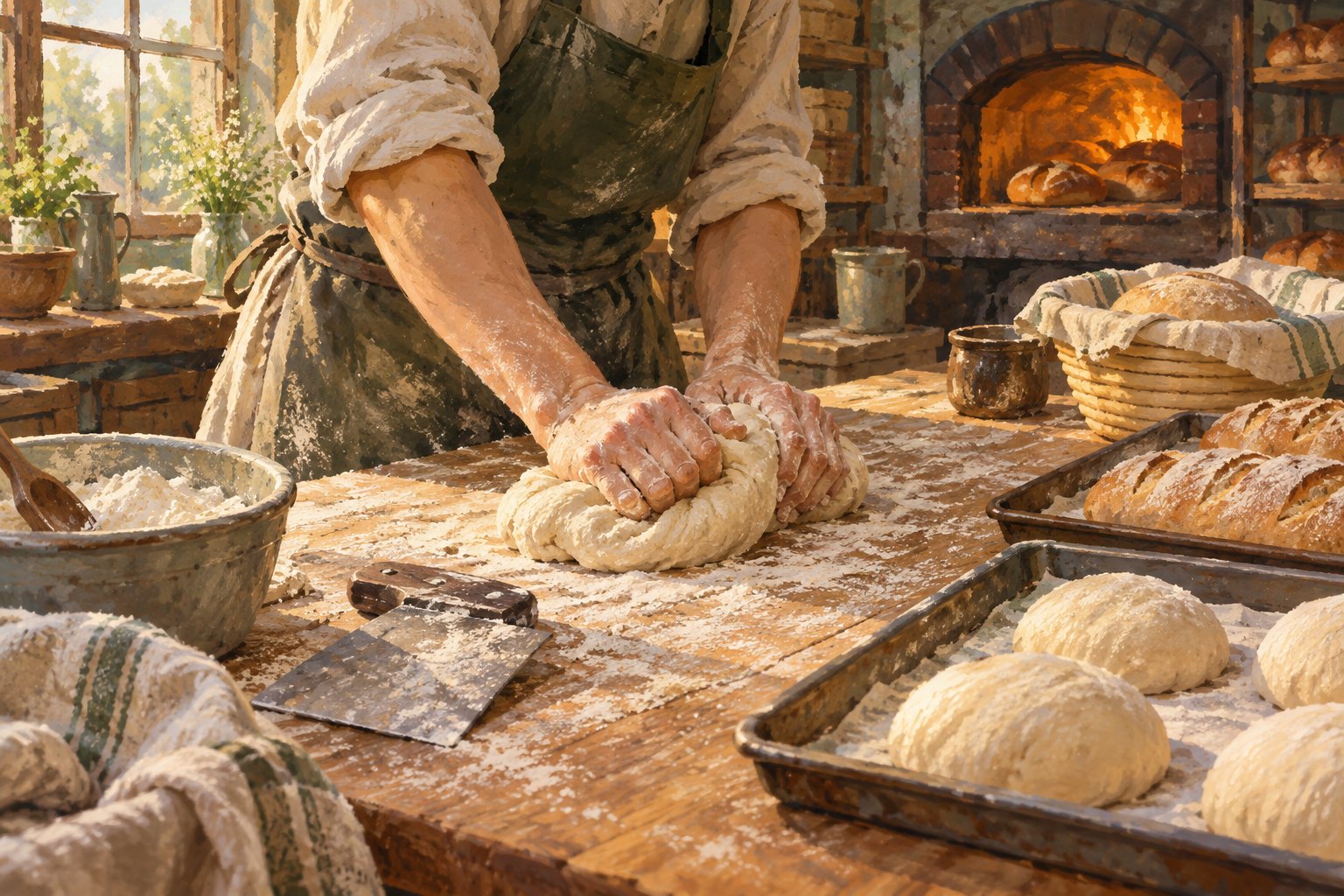
A romantic setting becomes dramatically valuable when it carries obligations as well as atmosphere. Someone’s ordinary working day can tell us what a relationship would actually need to accommodate. That is often more revealing than another beautiful establishing shot.
Looking at the romance from both sides
A character-focused reading should resist assigning the leads convenient moral roles before their behavior earns them. Having roots does not automatically make one person emotionally mature. Being mobile or uncertain does not automatically make the other person incapable of care. The interesting material lies in what each person asks of the other—and what each is willing to offer.
For a story involving different home cities, practical questions can become emotional ones. Who travels? Whose work is treated as flexible? Is someone’s attachment to a place respected, or dismissed as reluctance to change? These are questions to bring to the film, not descriptions of scenes that have been verified.
The strongest romantic conflicts allow two understandable desires to collide. Viewers should be able to grasp why a person wants to stay and why another feels pulled elsewhere, even when one of them behaves badly. Understanding a motivation gives a disagreement weight; it does not excuse its consequences.
Our discussion of what makes memorable screen partnerships work explores a related principle: two characters become compelling together when the relationship changes how each understands themselves. Attraction starts that process. Choices make it visible.
What a block closure reveals—and what it cannot
The reported closure is a production fact, not evidence of artistic success. It tells us that bringing the movie into this neighborhood required a physical footprint beyond a single interior. It cannot tell us how long the finished sequence lasts, how effectively it is edited, or whether the romantic exchange at its center lands.
There is nevertheless something revealing about the gap between filmmaking and the feeling it tries to create. An apparently effortless encounter can depend on substantial preparation. A location associated with spontaneous visits has to become a controlled working environment before the camera can capture a fictional moment there.
For local audiences, recognition adds another layer. A familiar storefront can make a film feel close to home, but recognition and characterization are separate pleasures. The stronger test is whether viewers who have never visited Portland can understand why this particular environment matters to the people onscreen.
That distinction also informs our look at neighborhood filming and human-scale storytelling in A Man on the Inside. Location coverage can open a useful conversation about a production’s surroundings without standing in for criticism of the finished work.
The deeper promise: romance that fits an ordinary life
The most compelling possibility in Portland’s bakery rom-com is that its welcoming setting might support a less comfortable question: can affection survive contact with the life someone already has?
That question gives everyday spaces their emotional power. A workplace, a neighborhood, and a familiar routine represent investments made before a new partner arrives. Treating those investments seriously allows romance to become more than an escape. It becomes a negotiation between people whose lives both deserve attention.
For now, the bakery shoot is a reason to be curious about In Spite of Ourselves, rather than a reason to declare it a success. The film’s eventual achievement will depend on whether its people feel as specific as its surroundings—and whether choosing one another means understanding the ordinary days that come with the choice.
Original content by this site's editorial team. Published: September 30, 2026 at 11:45:09 PDT (Los Angeles time)