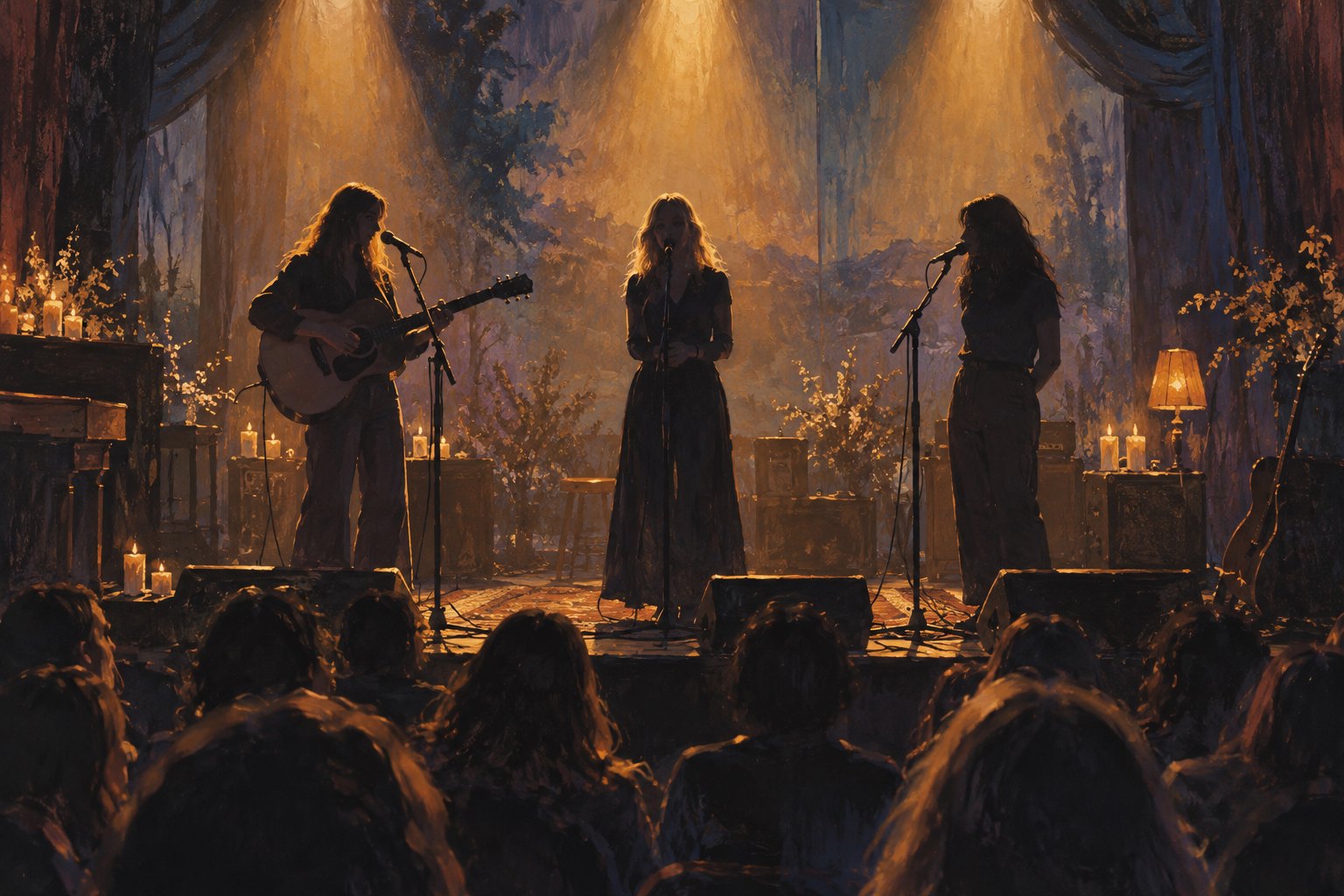
Phoebe Bridgers and boygenius are the subjects of a new short film featuring live performance, as reported by Pitchfork. For fans, the immediate attraction is seeing the musicians perform together. For film viewers, the premise offers another point of entry: watching how individual expression becomes a shared undertaking, and how a camera can make that exchange visible.
This is a critical viewing guide, not a review based on a screening. The confirmed starting point is the live-performance short itself. Specific shots, spoken exchanges, and musical moments are not assessed here as though they have been watched. Instead, the focus is on the questions that can make viewing more rewarding: whose perspective the film creates, how it distributes attention, and what its images contribute to the music.
Start With the Performance, Then Notice the Film
The most useful first approach is also the least complicated: watch the performance through before breaking it apart. A short film can lose its emotional shape when every gesture becomes an isolated clip. Allowing its beginning, middle, and ending to register makes it easier to distinguish a sustained experience from a collection of appealing moments.
On a second viewing, ask what you remember visually. Was your attention attached to a face, a physical movement, or the relationship between people in the frame? Those memories help identify what the filmmaking adds. A recording documents that a performance happened; a film also decides how that performance will be encountered.
My critical preference is for performance filmmaking that makes attention feel purposeful. A beautiful image earns its place when it clarifies something about the musical exchange. Beauty alone can become decoration, especially when the viewer is already emotionally invested in the people onscreen.
Read the Performers as People, Not Fictional Characters
A character-focused approach needs adjustment here. Bridgers and her collaborators are real people performing, not fictional figures whose private motives can be explained through a screenplay. Their visible behavior can be described, but it cannot automatically establish what they feel about one another.
That distinction matters when watching musicians with whom audiences feel familiar. A glance may be a practical cue. A pause may involve concentration. A smile may register pleasure without revealing its precise cause. Affectionate interpretations are understandable, but they remain interpretations unless the film provides firmer grounds.
A more productive question is what each performer is doing within the collaboration. Who initiates a phrase? Who supports it? When does an individual presence become part of a larger sound? These questions treat musical work as meaningful action rather than searching every expression for a personal confession.
This approach also gives the viewer something concrete to follow. Instead of deciding whether a moment proves closeness, look at how the performers coordinate. Timing, restraint, and responsiveness can tell a compelling story without requiring an invented account of anyone’s inner life.
Who Gets the Frame?
The pairing of Bridgers’ name with boygenius creates an interesting tension between individual recognition and collective identity. That is a question for the film’s form, not proof of conflict among its participants. Does the camera encourage viewers to follow one person, or does it help them understand an ensemble?
A close-up can reveal the physical effort of singing: the management of breath, the preparation for an entrance, the release after a phrase. But it also excludes everyone outside the frame. A wider composition can preserve simultaneous activity, letting viewers choose where to look and notice someone who is listening rather than leading.
Neither choice is inherently more honest. A close-up may be the clearest way to communicate a moment’s intensity; a wide shot may conceal an important detail. The useful test is whether the framing serves the performance or merely reinforces an existing hierarchy of fame.
Listen for Changes in Perspective
Shared singing can change how a lyric feels without changing its words. A line carried by one voice can suggest an individual address. When another voice enters, a listener might hear reassurance, contradiction, solidarity, or a widening emotional perspective. Those possibilities depend on the arrangement and delivery, not simply the number of singers.
For this Bridgers and boygenius short, listen for whether your sense of the speaker changes as the performance develops. Does the music seem to gather people around one perspective, or allow several perspectives to remain distinct? A useful interpretation should be able to point to something audible that supports it.
It is equally important to separate a song’s speaker from its performer. First-person language does not make every line a literal disclosure. The emotional conviction of a performance can be real even when the words involve imagination, dramatic distance, or a perspective the singer is inhabiting.
No dialogue or lyrics are quoted here without verification. Memorable language deserves its actual context; attaching an unconfirmed line to a performance would distort the very relationship between words and delivery that makes filmed music worth examining.
Editing Can Create a Relationship—or Clarify One
When a film cuts from a singer to another person’s face, viewers naturally connect the two images. The second shot can appear to answer the first, even when the edit alone establishes that relationship. This is one reason reaction shots deserve the same scrutiny as more conspicuous stylistic choices.
Watch for whether cuts help explain the music’s structure. An edit might draw attention to a new voice, a change in intensity, or a performer preparing to enter. Alternatively, it might interrupt a developing exchange before the viewer can understand it. Speed is less important than the reason for moving.
Sound also shapes the apparent space. The balance between voices, instruments, and any audible room sound influences whether a performance feels immediate or remote. That feeling should not be confused with proof that the recording is unmediated. Intimacy can be carefully constructed and still have artistic value.
What Watching Together Adds
A live-performance film gives audiences a shared object of attention. Two viewers can hear the same passage and follow different people, then discover something through comparing their impressions. Our discussion of what communal film viewing makes possible explores that broader value of watching and talking together.
Familiarity can deepen this experience, but it can also preempt it. Fans may arrive with a strong account of what a performer represents. As our commentary on seeing an artist beyond a compelling personal narrative argues, the story surrounding an appearance should leave room for attention to the work itself.
The Deeper Question: Can the Camera Show Listening?
The most promising interpretive angle for this short is collaboration as an active process. Singing is visible and immediately recognizable as performance. Listening is quieter, but it helps make shared performance possible: anticipating an entrance, leaving space, adjusting emphasis, or sustaining attention while someone else carries the musical thought.
Whether this particular film captures those details requires viewing the finished work. They nevertheless provide a more revealing standard than celebrity proximity alone. The strongest reason to watch Bridgers and boygenius together is the possibility of understanding something about how the performance comes into being.
For me, a successful live short leaves the music newly legible. It makes a familiar voice feel connected to other people’s choices, or reveals that an apparently effortless moment depends on careful mutual attention. That is the cinematic possibility to look for here: not simply a closer view of the performers, but a clearer view of what they make together.
Original content by this site's editorial team. Published: October 12, 2026 at 13:34:00 PDT (Los Angeles time)