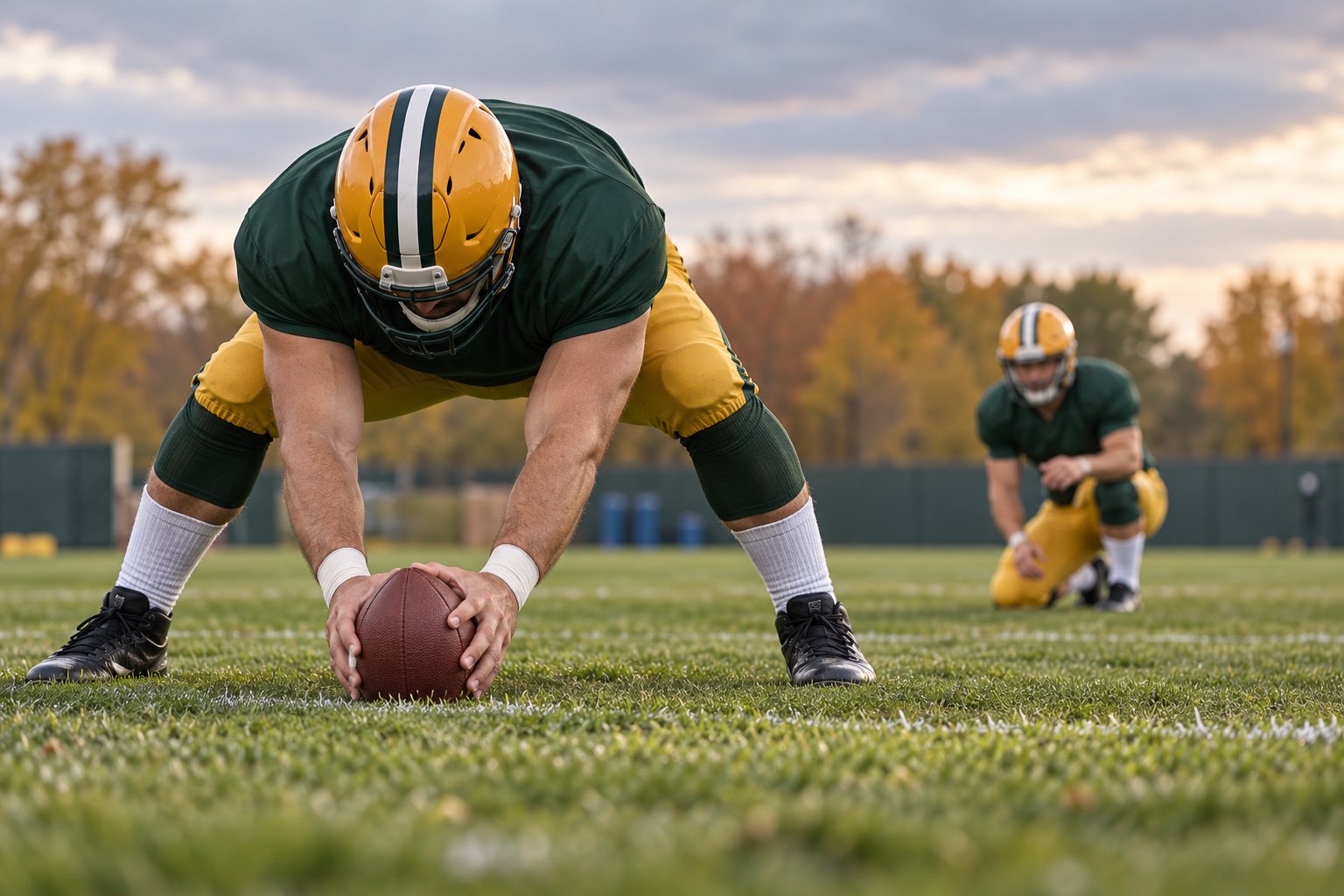
The Packers’ Week 7 long snapping deserves attention at the beginning of the kicking sequence: the delivery to the holder. Before judging the strike, watch where the snap arrives, how the holder receives it, and whether the ball is settled for the kicker. Those details help explain the operation in ways that a simple make-or-miss result cannot.
Acme Packing Company has made long snapping on Week 7 kicks the subject of a Packers Film Room article. That establishes the focus of its coverage; it does not, by itself, establish which snaps were inaccurate or who was responsible for any particular outcome. The analysis here is a viewing guide to that issue, rather than a play-by-play verdict on footage we have not independently examined.
Here, film means game footage. The compelling subject is the relationship among three specialists whose work is easy to compress into one person’s success or failure. Watching from each participant’s perspective makes the sequence more legible—and makes quick blame less persuasive.
Start With the Snap’s Destination
A place kick begins with a delivery that has to serve the next action. The snapper is not simply sending the football backward into open space. The holder needs to receive it in a position from which it can be brought to the placement spot while the kicker’s approach unfolds.
For viewers examining Green Bay’s Week 7 operation, the first useful question is therefore specific: where does the ball arrive relative to the holder’s waiting hands? Follow its height and lateral position. Then watch the holder’s response. A noticeable reach is an observable detail; calling that reach the cause of a missed kick requires additional evidence.
Keep the distinction between a catchable snap and an easy-to-handle snap in mind. A holder might secure the ball while making an adjustment that is difficult to notice at broadcast speed. Conversely, a movement that looks dramatic in slow motion might be part of a controlled, successful reception. Neither appearance alone settles the quality of the delivery.
The Holder Is the Crucial Middle of the Sequence
The holder connects the snapper’s delivery to the kicker’s strike. That makes the holder’s hands especially useful to watch, but also easy to misread. Their movement reflects both the incoming ball and the work required to prepare it for contact.
Look for the transition from reception to placement. Does the ball move toward the ground in one continuous action? Is there a visible bobble or a second effort to gain control? Does the holder reach away from the intended spot and then bring the ball back? These questions describe what a replay might reveal without assuming what happened on a particular Packers attempt.
Ball orientation matters to the inspection, too. Viewers often notice the laces because they provide an obvious visual reference. But one frame showing laces during the catch cannot establish their position at contact. The holder may still be rotating the ball. Follow the complete action before interpreting the still image.
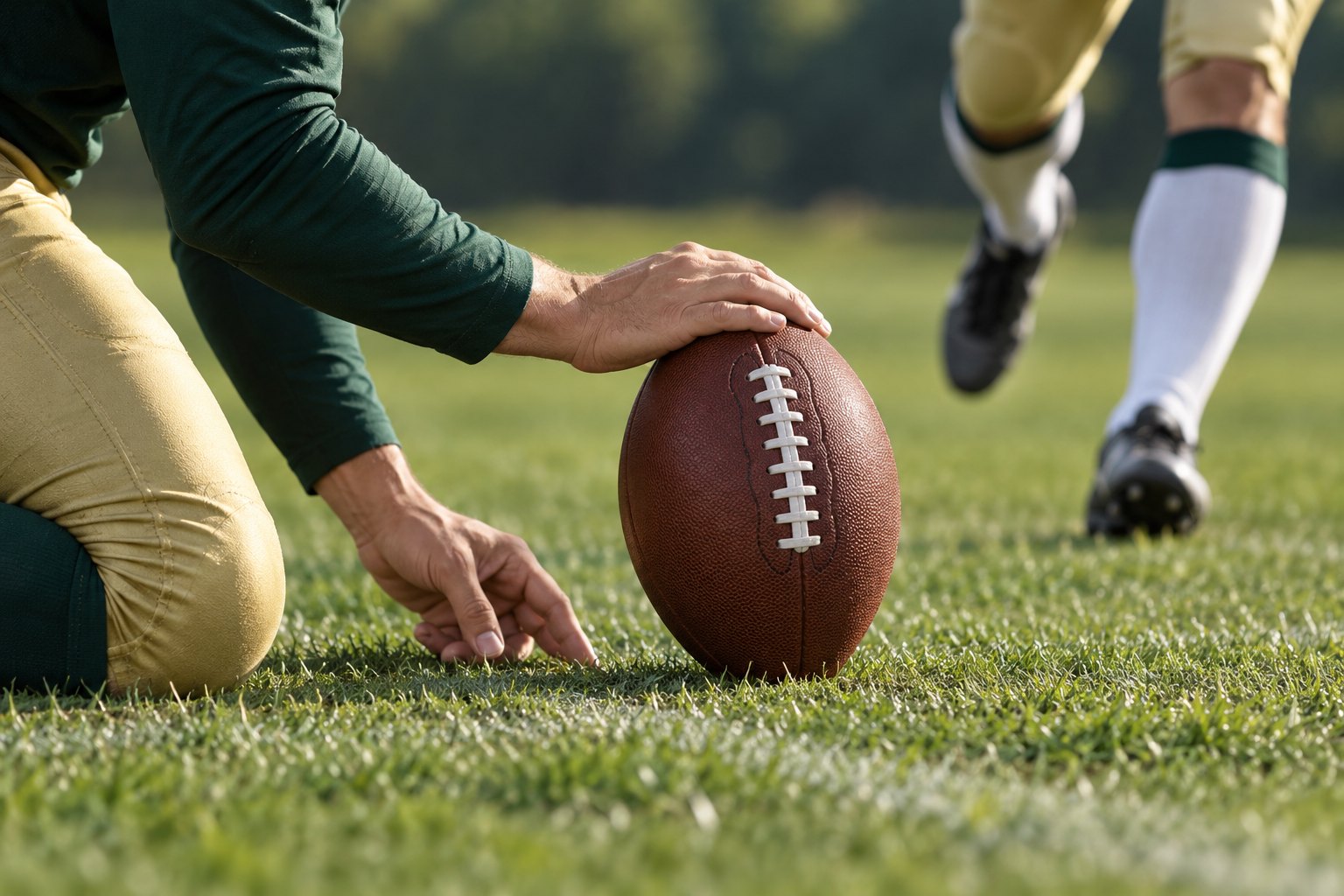
From the holder’s perspective, the task is coordination under pressure. A useful review should recognize successful recovery as well as visible difficulty. If an adjustment is necessary, the next question is what it changes—not merely whether it looks awkward.
Watch the Kicker Without Making the Kicker the Whole Story
The kicker supplies the most visible action, so attention naturally follows the foot and then the ball’s flight. To evaluate long snapping, however, keep the approach in the frame alongside the holder. The relationship between those actions is more informative than either one viewed alone.
Ask when the ball becomes stable relative to the approaching foot. If the replay clearly shows continued handling late in the sequence, that is worth examining. It still does not establish the kicker’s internal reaction, the intended placement, or the precise effect on the strike. Those are separate claims.
A made kick does not prove that every preceding movement was ideal. A missed kick does not identify an inaccurate snap. The result is evidence about the attempt’s outcome; the sequence is evidence about how the participants performed their respective tasks. A fair assessment needs both.
A Practical Way to Rewatch the Week 7 Kicks
Repeated viewing works best when each pass answers a different question. Otherwise, it is easy to replay a mistake until a first impression starts to feel like proof.
- Watch the complete attempt at normal speed. Establish the overall rhythm before isolating details.
- Follow only the snap. Track its route to the holder and note any clearly visible reach or change in receiving position.
- Follow only the holder. Examine control, movement toward the placement spot, and the final positioning of the ball.
- Watch the approach and placement together. Consider how the two actions overlap rather than judging them as separate clips.
- Return to normal speed. Check whether slow motion has exaggerated the apparent duration of an adjustment.
When multiple attempts are available, include successful kicks in the comparison. Reviewing only misses selects the evidence around the outcome you already know. A movement that appears on both makes and misses may still matter, but it needs a more careful explanation than a highlight clip can provide.
This is closely related to the distinction explored in our discussion of individual flashes and repeatable performance in Eli Raridon’s film breakdown: one revealing moment can justify further attention without establishing a lasting pattern.
Camera Angles Set Limits on the Verdict
Footage gives viewers access, but the angle determines what that access includes. An oblique view can make depth difficult to judge. Bodies can obscure the ball. A close crop may show the holder’s hands while excluding the kicker’s approach. Missing information should remain missing rather than being filled in with confidence.
Use precise descriptions. “The holder reaches to receive the snap” is narrower than “the snap ruins the kick.” The first can be supported by visible movement. The second requires a causal argument that accounts for the remainder of the play.
The same interpretive caution appears in our essay on documentary access and the limits of visible evidence. A camera can reveal an action while leaving its meaning unsettled. In a kicking review, that distinction protects both the viewer’s understanding and the fairness of the assessment.
The Deeper Value of Looking Before the Strike
My view is that long-snapping analysis is most valuable when it expands responsibility rather than simply relocating blame. The snapper, holder, and kicker perform connected tasks. Understanding those connections lets viewers appreciate a well-managed reception, identify a visible disruption, and recognize when the evidence cannot support a stronger conclusion.
That is the useful lens for the Packers’ Week 7 discussion. Begin with the delivery, follow the hands, and retain the full sequence. The most revealing moment may occur before the foot reaches the ball—but it earns its significance through what the footage actually shows.
Original content by this site's editorial team. Published: October 26, 2026 at 23:11:07 PDT (Los Angeles time)