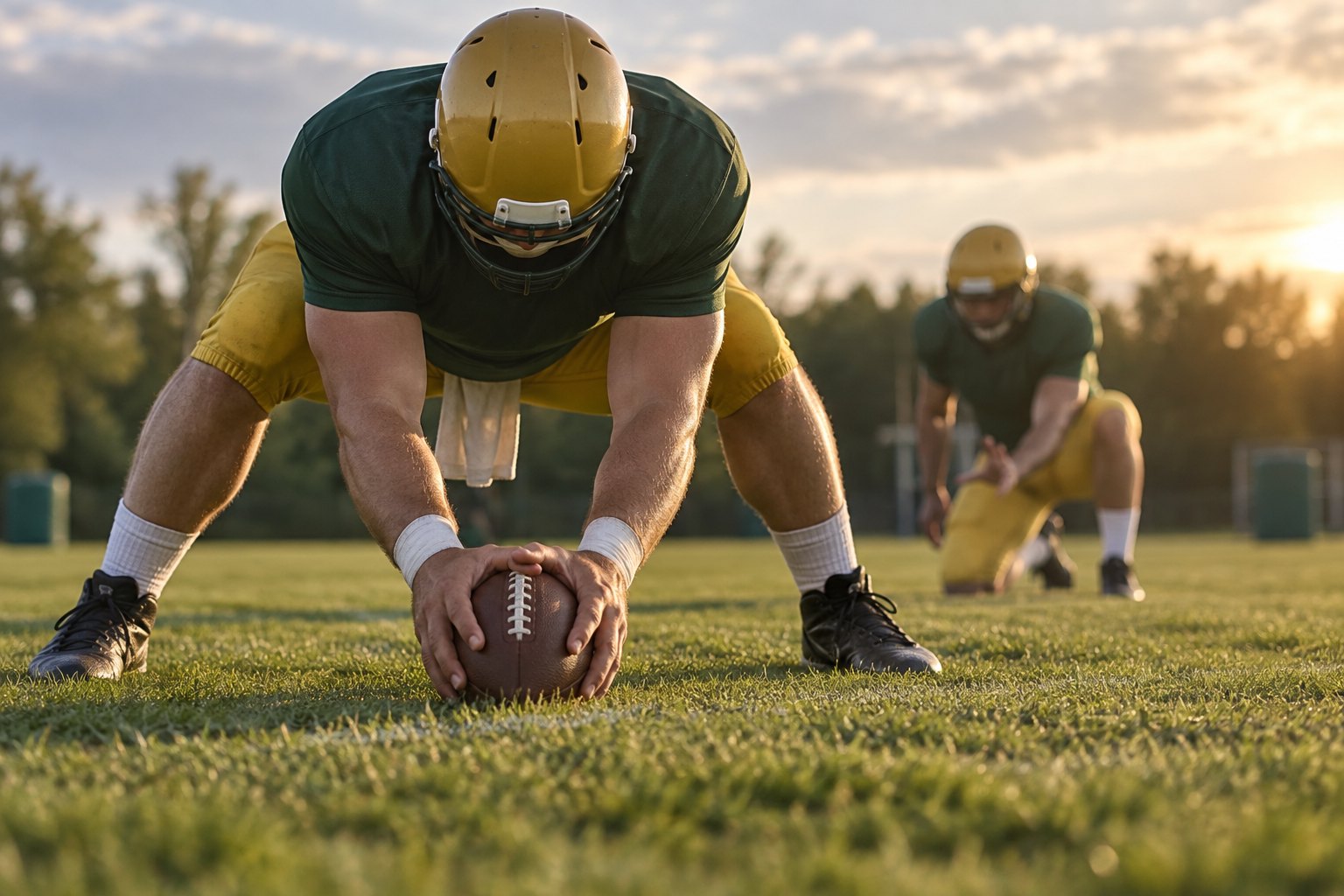
The Packers’ Week 1 long snapping deserves attention because a place kick begins well before the kicker touches the ball. The useful question is whether the delivery gives the holder and kicker a manageable, repeatable exchange. Watching only the ball’s final flight skips the work that makes that flight possible.
Acme Packing Company has put Green Bay’s Week 1 snapping on kicks under its film-room lens. That establishes the subject, but it does not by itself establish a faulty snap, a technical diagnosis, or responsibility for a particular result. The analysis here explains what to look for in that exchange; it makes no player-specific finding about the Packers’ opening week.
Start with the holder’s receiving window
A long snap on a place kick has a destination more precise than somewhere near the holder. The holder needs to receive the ball and bring it into position while the kicker’s approach unfolds. For viewers, the first useful reference is the holder’s setup before the ball arrives: where the hands wait, where the body is balanced, and where the ball will be placed.
Then follow the delivery into that receiving window. Does the holder reach upward, move across the body, or gather the ball close to the turf? Describe the movement before deciding what it means. A visible reach is an observation. Calling it a damaging error requires evidence of how it affects the rest of the operation.
That distinction matters because a holder is an active participant. Some hand movement belongs to the ordinary work of receiving and positioning the ball. The more revealing question is whether the reception forces an additional adjustment that disrupts placement or leaves the kicker dealing with a changing target.
The holder connects the snap to the strike
From the snapper’s perspective, the immediate task is delivery. From the holder’s perspective, delivery is only the beginning. The ball still has to be controlled, positioned, and steadied. Those connected jobs make the holder the most useful place to focus when assessing whether a snap creates downstream difficulty.
Watch the sequence in order: first contact with the hands, movement toward the ground, placement, and stabilization. If the ball briefly escapes control or needs another gathering motion, that is relevant. If the holder completes the exchange smoothly, avoid inventing a hidden crisis simply because a frozen image makes the reception look awkward.
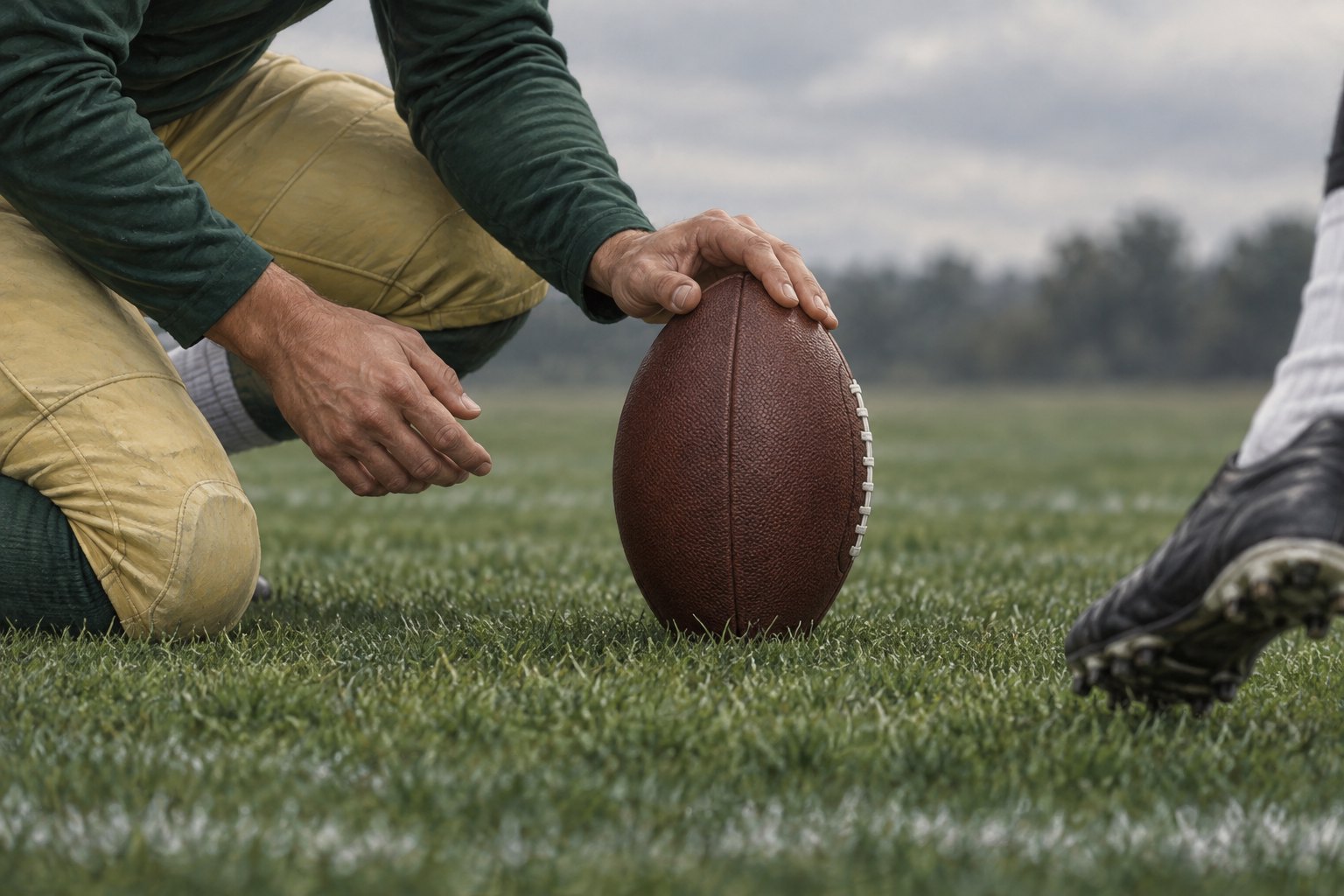
The laces also deserve attention, but they are one part of the sequence. Look at the ball’s orientation when received and when placed. A final image cannot explain every movement that produced that position. Without a clear view of the exchange, assigning the orientation entirely to the snapper or holder goes beyond what the picture establishes.
Watch the kicker without inventing an inner monologue
The kicker’s perspective adds another constraint: the exchange happens while an approach is developing. A ball that eventually reaches the intended spot may still arrive there through a sequence worth examining. The relevant relationship is between the moment the ball settles and the kicker’s arrival.
Footage may show a change in stride, a hesitation, or a placement that remains unsettled late in the action. Those observations can support a question about coordination. They cannot, on their own, establish that the kicker lost confidence, expected a bad snap, or mentally reacted to a teammate’s mistake. Those are claims about a person’s experience, not visible mechanics.
For the Packers’ Week 1 review, this is where disciplined commentary becomes especially valuable. A persuasive explanation connects an observable event to an observable consequence. It should identify the adjustment and show what followed, while leaving uncertainty intact when the camera does not provide an answer.
Why a made kick is an incomplete grade
The scoreboard records the result of a kick. It does not separately grade the snap, reception, placement, protection, and strike. A successful attempt can include a recovery by the holder. An unsuccessful attempt can follow a delivery that appears controlled. Neither outcome automatically resolves the quality of every contribution.
This is the same distinction explored in our commentary on what a win still leaves for film review to explain: a result starts the evaluation, but the sequence supplies the explanation. With place kicking, the temptation to work backward from success or failure is particularly strong because the ending is so easy to recognize.
My view is that the most useful snapping analysis asks about repeatability. Did the exchange give each participant a stable task, or did someone have to rescue the sequence? That question values successful adjustment without treating the need for adjustment as irrelevant. It also avoids turning every imperfect-looking movement into a verdict.
A focused replay routine for Packers fans
You do not need to follow every player at once. Give each replay a specific job, and keep a short distinction between what you can see and what you are inferring.
- Watch once at normal speed. Follow the overall rhythm from release through contact. Note any apparent interruption without immediately assigning responsibility.
- Return to the reception. Identify the holder’s starting position and the movement needed to secure the ball. Check whether the camera actually shows both.
- Follow the placement. Watch for control, orientation, and stability. Distinguish a continuous motion from an additional recovery.
- Reconnect the kicker’s approach. Examine whether the ball is settled as the kicker arrives. Avoid treating slow-motion duration as the player’s real experience.
- Compare available attempts. Look for recurring features, and record when a different angle or obstructed view makes comparison unreliable.
Our guide to reading Week 1 footage beyond the highlights discusses the broader problem of framing. Here, the narrow application is crucial: an angle that shows the rush clearly may conceal the holder’s hands. No amount of confident narration restores a missing view.
The deeper point: credit belongs to the exchange
Long snapping brings an overlooked kind of teamwork into focus. The snapper delivers a ball that another player must transform into a target, and the kicker arrives expecting that target to be ready. Each contribution is judged partly through the conditions it creates for the next person.
That makes the Packers’ Week 1 topic worth examining even without a dramatic verdict. The best film-room interpretation makes that cooperation visible. It gives credit for clean delivery, recognizes a holder’s recovery when the footage supports it, and evaluates the strike in the context of the preceding exchange. The kick is one result, but understanding it requires watching the handoffs of responsibility that come first.
Original content by this site's editorial team. Published: September 16, 2026 at 08:52:10 PDT (Los Angeles time)