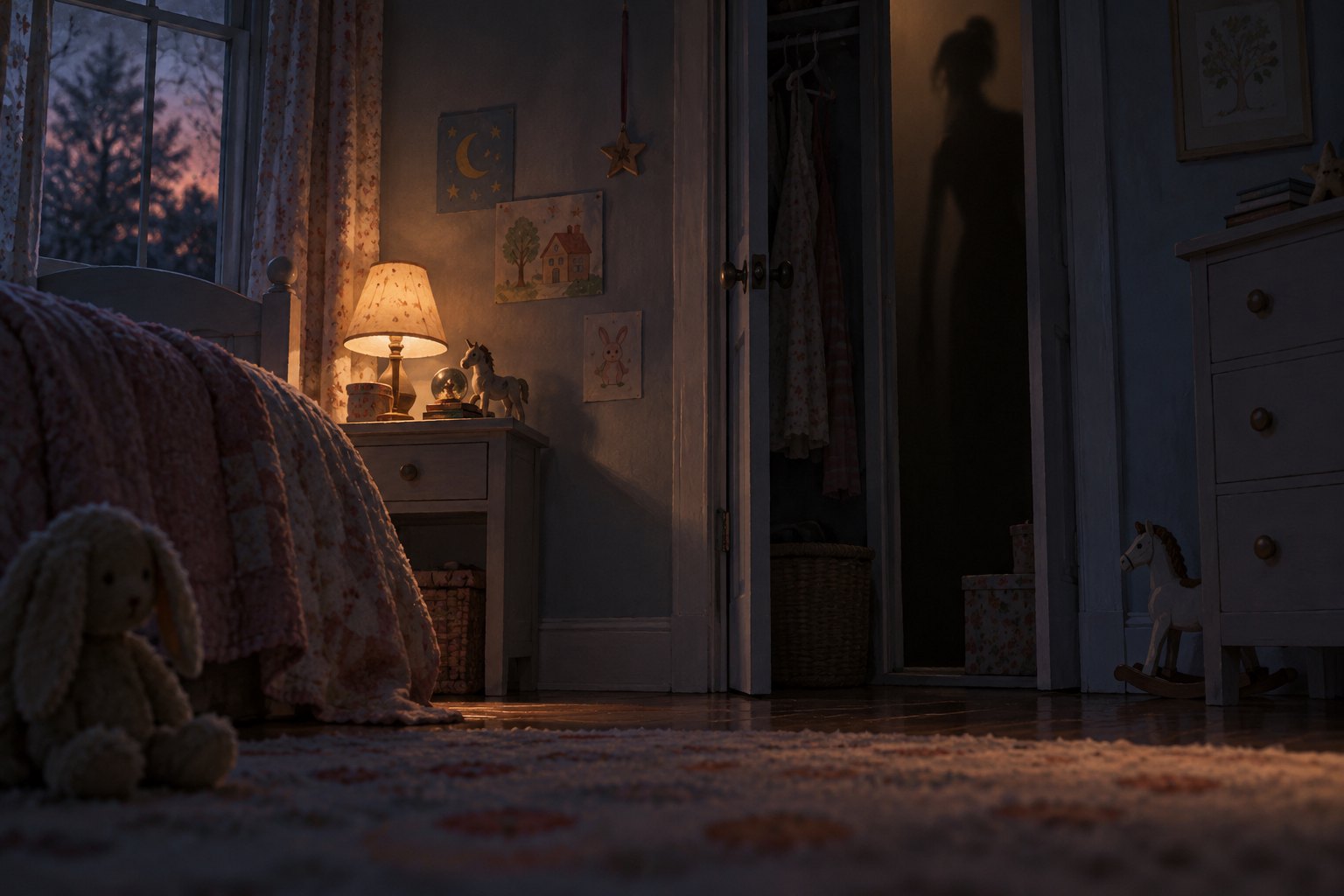
Other Mommy has a premise that should make familiar horror devices feel painfully personal. A threatening presence resembles the person a child associates with protection. The problem suggested by The Daily Northwestern’s dismissal of the film as clichéd is therefore more specific than a shortage of new monsters: recognizable scares can overwhelm the particular child experiencing them.
That distinction matters. A closet, an unnatural smile, or a distorted body can still frighten an audience. But for those images to linger, they need to change our understanding of Bela and the adults around her. The most useful question about Other Mommy is whether its supernatural spectacle develops its family drama—or repeatedly interrupts it.
Spoiler note: This character-focused commentary draws on the documented premise and published descriptions of selected scenes. It discusses the central threat and some scare imagery, without revealing the ending.
Bela’s perspective gives the familiar setup its purpose
Rob Savage’s film follows Bela, played by Arabella Olivia Clark, whose relationship with a sinister presence develops inside an already troubled family. Jessica Chastain plays both her mother and the entity’s maternal likeness. The film adapts Josh Malerman’s Incidents Around the House; its central request is chillingly simple: “Can I go inside your heart?” These basic story elements are documented in the [Indonesian Film Censorship Board’s film guide](https://lsf.go.id/film/other-mommy/1573).
For an adult viewer, a duplicate mother immediately suggests deception. For Bela, resemblance can also suggest reassurance. That difference creates the story’s most productive imbalance: the audience may recognize danger before the child has the experience to name it.
Read through her perspective, the question about entering her heart is frightening because it borrows the vocabulary of affection. Children hear that love belongs in the heart. The entity turns that familiar metaphor into a demand for access. Its language makes resistance feel like the refusal of intimacy.
My reading is that this is where the premise most effectively escapes cliché. Bela’s vulnerability does not require stupidity or reckless curiosity. It arises from an ordinary need for companionship. The storytelling challenge is to make that need tangible enough that her attention to the creature remains understandable, even when its appearance tells adults to run.
A frightening face needs a convincing relationship
Chastain’s double role establishes a powerful visual contradiction. A single face can represent care and danger, familiarity and intrusion. Yet resemblance alone cannot explain why Bela would remain emotionally engaged with the presence.
A persuasive relationship needs behavior: attention, patience, recognition, a sense of being understood. Without enough of that connective material, an apparent companion risks becoming an obvious villain whom the screenplay keeps a child near for convenience. That is a structural problem, even if the resulting images are effective.
The crucial distinction is between understanding that a monster wants something and understanding why its intended victim might listen. The repeated request supplies the first. Bela’s emotional life must supply the second.
That also offers a useful way to assess the film without turning the discussion into a contest over how often viewers jump. Each encounter should alter the relationship. Does Bela learn something? Does her interpretation change? Does the creature exploit a new vulnerability? Repetition becomes dramatic escalation when the answer changes; otherwise, another appearance can merely restate the premise.
The family should be more than an explanation for the haunting
The parents’ troubled relationship gives the threat an opening, but marital difficulty should not function as an all-purpose explanation for everything that happens. Bela, her mother, and her father have different stakes in the same household. A convincing family horror story lets those differences remain visible.
For Bela, adult tension is something she must interpret without possessing all the facts. For a parent, the same tension may involve responsibilities, disappointment, or private shame. The child can experience distance without correctly understanding its cause.
This is why the mother’s characterization matters beyond Chastain’s opportunity to play two contrasting figures. Emotional unavailability, exhaustion, and lack of love are different things. Collapsing them into one condition would make the maternal double too easy to read: an imperfect woman on one side, a monstrous substitute on the other.
Common Sense Media describes Bela’s father as an engaged caregiver and her mother as busy but protective. Its review also questions the film’s treatment of motherhood. Those observations suggest a valuable critical tension: the human mother’s limitations deserve examination without becoming proof that she somehow explains or deserves the supernatural threat. See [Common Sense Media’s character assessment and review](https://www.commonsensemedia.org/movie-reviews/other-mommy).
Our earlier discussion of Other Mommy’s opening-weekend reception approached the film through its commercial arrival. The more revealing character question is how much complexity survives once the family becomes the machinery driving the next frightening encounter.
When a playground becomes another haunted room
One particularly useful example is the children’s play-area sequence. Published scene descriptions identify threatening tunnels and a ball pit, taking spaces designed for harmless exploration and making them dangerous. [Common Sense Media’s scene guide](https://www.commonsensemedia.org/movie-reviews/other-mommy) documents those elements.
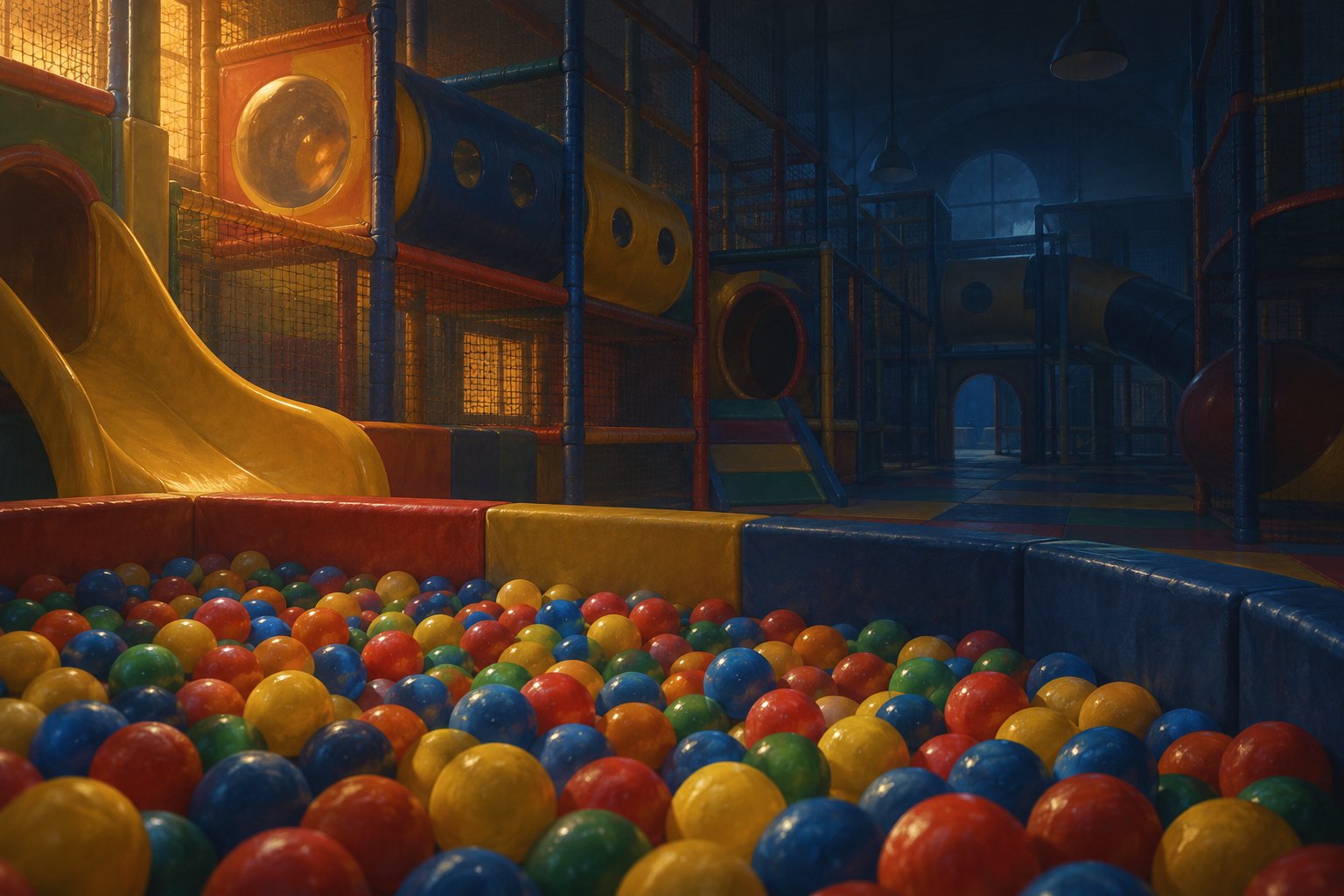
As an idea, this fits Bela’s perspective especially well. A play structure already creates uncertainty through limited sightlines, hidden exits, and temporary separation from adults. Horror can intensify those ordinary sensations without requiring a child to enter an obviously forbidden place.
The interpretive value lies in what happens to play. Exploration normally offers manageable risk: disappear into a tunnel, emerge elsewhere, find the adult waiting. Turning that arrangement threatening attacks an everyday expectation that the world will return a child safely to familiar people.
But even a strong setting needs consequences beyond the immediate escape. If the next sequence simply establishes another dangerous location, the film risks becoming a succession of attractions. Sustained dread depends on what Bela carries from one encounter into the next. Our analysis of how short horror builds fear explores the related importance of making individual scares serve a larger emotional movement.
The deeper horror is affection that will not accept refusal
The strongest interpretation of Other Mommy begins with the word “can” in its central question. The entity appears to request permission. Yet its increasing aggression makes that apparent politeness suspect. A request stops being freely answerable when refusal brings punishment.
Through that lens, the maternal disguise represents more than an unsettling imitation. It gives coercion a familiar face. Bela is placed in the impossible position of being asked to treat another being’s appetite as an obligation of love.
This is also the clearest standard for judging the cliché complaint. Familiar imagery earns its place when it exposes that pressure more precisely. It becomes expendable when it simply reminds us that the creature is dangerous. The distinction is between a frightening event and a frightening relationship.
The premise’s lasting insight is that care must leave room for another person’s separateness. A child can love someone and still be entitled to refuse them. Other Mommy offers a compelling framework for that nightmare; the criticism surrounding its familiar devices ultimately asks whether the film gives Bela’s experience enough weight to fulfill it.
Original content by this site's editorial team. Published: October 11, 2026 at 23:35:03 PDT (Los Angeles time)