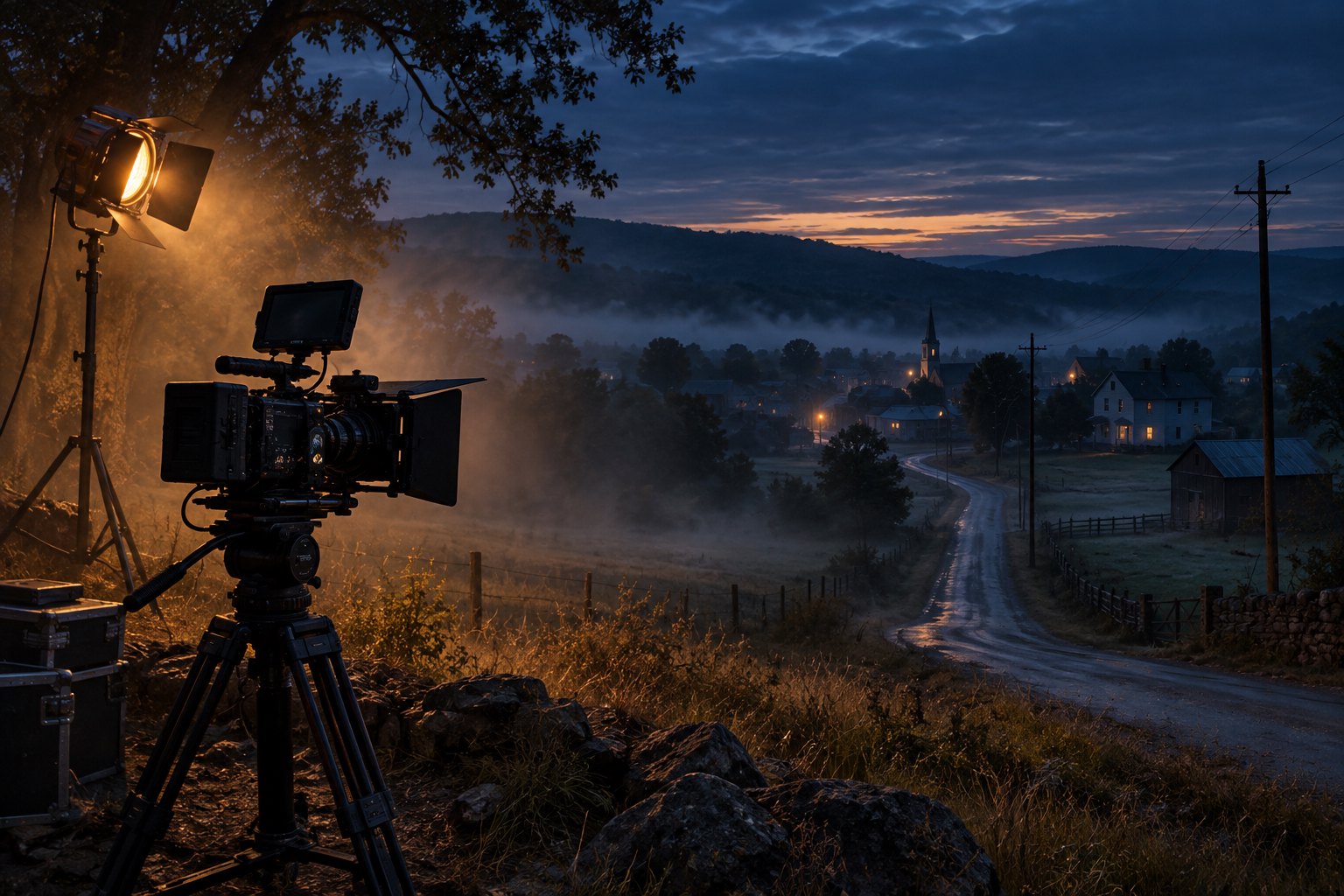
Original Sin: Prelude to Biohazard is filming near Danville, according to WNEP. That gives horror fans a concrete production development to follow, along with a title that places two different kinds of dread beside each other: the moral weight of wrongdoing and the physical threat suggested by a biological hazard.
Those associations make an intriguing starting point. They do not establish what happens in the movie. The available information does not support a verified plot breakdown, character analysis, release date, or assessment of the performances. This is a spoiler-free production preview; a full review, including any discussion of memorable dialogue, must wait for the film itself.
What the Danville filming news establishes
The central news is straightforward: a horror production bearing this title is shooting near Danville. For readers looking for the movie behind the local filming activity, that is the essential identification. The report should not be stretched into a theatrical announcement, a streaming release, or a promise that audiences will see the finished film soon.
Location also needs careful handling. Filming near a town does not necessarily mean the story takes place there. A building, road, or interior can stand in for somewhere else, and the eventual edit determines how much of a location viewers recognize. Nothing in the basic filming news establishes Danville as the movie’s fictional setting.
That distinction connects with our commentary on how a local movie shoot changes the way people see familiar surroundings. Here, however, the most distinctive point of interest is the film’s name and the storytelling expectations it creates.
A title that puts guilt beside danger
Read simply as language, Original Sin: Prelude to Biohazard pulls in two directions. “Original Sin” invokes an originating wrong and the possibility that its consequences extend beyond whoever committed it. “Biohazard” suggests material danger: something that can harm a body regardless of whether its victim deserves punishment.
This is an interpretation of the wording, not a synopsis. It does not confirm religious imagery, an outbreak, a laboratory, or any particular creature. The title alone also cannot establish a connection to another entertainment property. Familiar terminology can invite associations that the actual production has never claimed.
Still, the contrast is worth examining. Moral guilt depends on questions of choice, knowledge, and responsibility. Physical exposure may be indiscriminate. If the finished movie explores that gap, it could find tension in the difference between causing harm and suffering it. A character might bear responsibility without facing the greatest danger, while someone blameless might face consequences they cannot understand.
For my taste, that possibility is more compelling than a title that merely promises escalating destruction. Horror gains emotional force when the audience has to think about who could have acted differently—and who never had a meaningful choice.
The character question: Who knows enough to act?
Without verified character details, it would be premature to assign anyone the role of survivor, instigator, or villain. There is, however, a useful question to bring to any eventual footage from this project: how closely does the movie connect our understanding of danger to a character’s understanding?
Suspense changes depending on that relationship. When viewers know more than a character, an ordinary decision can become agonizing. When viewers know less, a character’s hesitation can turn into a mystery. When both discover something together, recognition itself can supply the scare. These approaches create different kinds of involvement, even before effects or violence enter the scene.
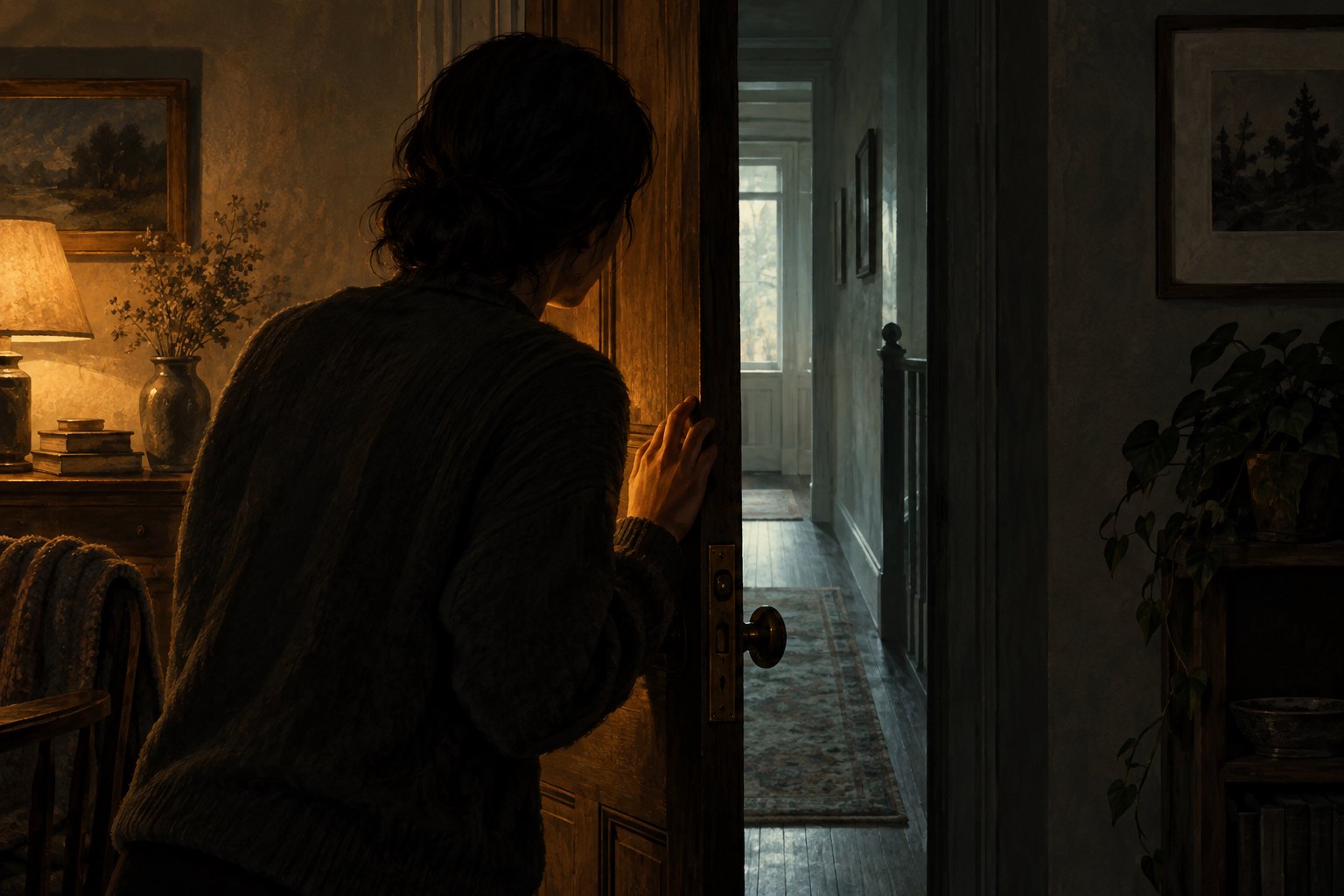
The illustration above represents that general principle of restricted knowledge; it does not depict a scene from the film. A partly open doorway is unsettling because it allows a person to see enough to hesitate but not enough to decide confidently.
For Original Sin, the title makes knowledge especially interesting as a potential critical lens. Responsibility looks different when someone understands a danger, misunderstands it, or deliberately conceals it. A future character-focused review should examine those distinctions through actual decisions on screen, rather than treating every bad outcome as proof that a character behaved foolishly.
“Prelude” creates its own storytelling challenge
The subtitle’s most consequential word may be “Prelude.” It frames the film as something that comes before something else, but the name alone does not tell us what that relationship means. It is insufficient evidence of a planned sequel, an established continuity, or a specific ending.
As an audience expectation, though, it creates a challenge. A beginning still needs a dramatic shape. Viewers need a reason to care about what the people in this installment want, what prevents them from getting it, and how their choices change their circumstances.
My standard for this kind of storytelling is straightforward: the present-tense experience should matter even if no further installment follows. A film can leave the scale of a threat unresolved while completing an emotional movement. A relationship can change irreversibly; a belief can collapse; a choice can acquire a cost. None of those possibilities requires explaining every corner of a fictional world.
That will be a useful distinction when promotional material arrives. Our discussion of what a trailer can reveal about a finished film offers a related caution: an effective promise and a satisfying dramatic experience are separate achievements.
What would make the next update useful?
For readers following the Danville-area production, the most valuable next information would answer specific questions rather than simply repeat that filming is underway:
- An official synopsis: Who is the central character, and what situation puts that person under pressure?
- Confirmed credits: Who is directing, writing, and performing in the film?
- Representative footage: What do framing, sound, pacing, and performance reveal about its approach to fear?
- A release announcement: When and where will audiences actually be able to watch it?
These details would allow discussion to move from the implications of a name toward the substance of a movie. Until then, claims about standout performances, memorable lines, plot twists, or hidden references would have no reliable foundation.
The deeper possibility behind the name
The strongest idea suggested by Original Sin: Prelude to Biohazard is that consequences can outgrow their origin. Read that way, the title raises a question about responsibility: what happens when the harm caused by one decision reaches people who had no part in making it?
Whether the film actually pursues that idea remains open. For now, the filming near Danville is the news, and the collision between guilt and danger is the reason for critical curiosity. The eventual test will be whether the movie gives that collision a human perspective—someone whose choices, limitations, and losses make its ominous title mean something.
Original content by this site's editorial team. Published: September 24, 2026 at 23:56:39 PDT (Los Angeles time)